CONTENTS
 Western culture and the world
 Jewish, Greek and Roman cultural contributions
 Christianity
 The breakup of Christendom
 The impact of the wars of religion on England
The textual material on this webpage is drawn directly from my work, America’s Story – A Spiritual Journey © 2021, pages 12-46
WESTERN CULTURE AND THE WORLD
America was not founded outside of some kind of larger social context. In fact, quite the opposite was the case. Although America seemed to have been built “from scratch” beginning in the early 1600s, it did so with a full understanding of the cultural legacy it had inherited from the motherland back in England, and England’s own larger European context. In fact, it was deeply motivated by the desire to build in America a much purer form of exactly that very social inheritance, especially in the setting up of New England. That social inheritance was not universal, but was – in the setting of the larger world and its many different civilizations – quite unique. And that very uniqueness is what we will be looking at in this chapter. The heart of the “Western” social ethic. Westerners, unless they have lived and worked substantially in other non-Western cultures, tend to suppose that what they understand to be true about life is something of a “universal” for all humankind. This is hardly the case. In fact, this naïve supposition has been the source of major problems for Westerners – and for America in particular, ever since it took leadership of Western civilization after World War Two. Because of its development via the Jewish, Greek and Roman experience – synthesized beautifully in the Christian religion – Westerners see life as shaped by deep personal involvement of adventuresome individuals. Western individualism is in fact a key component of Western civilization, found in everything from capitalism, to Darwinism, to Humanism, to modern science, to democracy (and much more). But it is summed up most perfectly in Christianity, which, through the teachings and example of Jesus, makes the bold assumption that we all are potentially sons and daughters of God Himself, divinely empowered individuals able to take on life personally because of this empowerment. There are huge moral and spiritual responsibilities placed on the shoulders of those who rise to this understanding, which could be (even should be) any of us. But we have the wise guidance of holy scripture to help us make the right choices in taking up these personal responsibilities freely.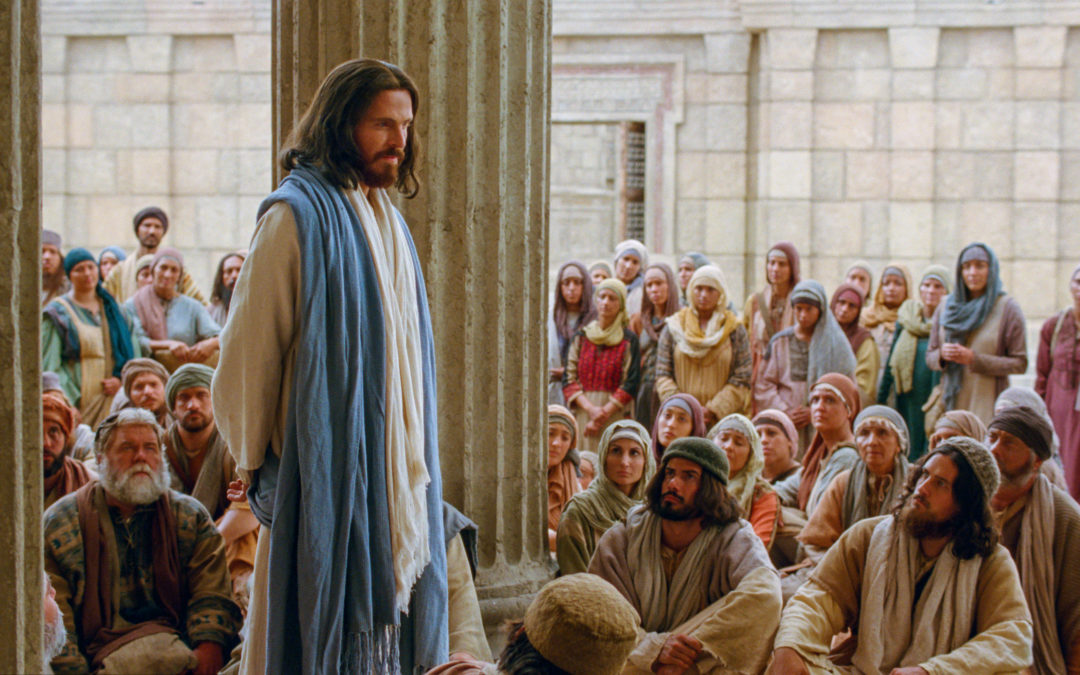
Jesus teaching the true “way” in the Temple courts John 7:14-53
Of course this understanding allows the option of not following such divine guidance, because Westerners are not God’s puppet but instead fully free agents. Indeed it is God Himself who ordained our human nature, wanting us to choose freely to join him in celebrating His awesome Creation. If we did not have the option not to do so, it would cheat the decision to actually do so of its real significance. Westerners, especially recent scientists such as Einstein, Schrödinger, Bohr, Polkinghorne, etc. in fact have made it quite clear that human life exists in the midst of this universal vastness specifically for this purpose: to join the Creator of it all in celebrating with Him (Einstein’s “Herr Gott” or “Lord God”) the beauty of it all. As far as we know, we are the only part of Creation that is fully aware of its own existence! This indeed is the very purpose of quite conscious or “awake” human life itself. And thus it is that we freely design societies that allow the people themselves to use this special human talent to observe, to learn, to design even their own lives, as they themselves personally choose to do so. Personal “freedom” that allows this dynamic to flourish thus comes to be a Western value of supreme importance. Of course, freedom raises its own problems, because there is at the same time a primal instinct in humans to want to control the world we live in,to remove its obstacles, its complexities, in order to make it more understandable, more predictable, more manageable. And that includes the world of others, because other people can become quite problematic for us. Dominance, even dictatorship, is a possible result of such human impulse. But supposedly, this is why we have Scripture to warn us, to guide us, to keep us within workable social boundaries. Otherwise either pure chaos or pure dictatorship would come of the full use of absolute human freedom. And there are plenty of examples of this in human history, especially in Western history. And some of these are quite recent, in fact even very operative among us today. The Hindu social ethic. Other cultures have gone at life in ways quite different from this Western pattern. For instance, Hinduism, which has long dominated the Indian subcontinent, sees life resulting from what we Westerners might term “fate.” All of life is shaped by a cumulative record of actions, good and bad, that result from our behavior. In fact it is this record that shapes our destiny, not just in this life but in lives to come – just as the present has been shaped by the record of human action in previous lives. And how do we come to understand the source of our personal fate? It is clearly shaped by the social position we found ourselves born to. We take on a new life as members of a particular sub-caste or jati (India has thousands of just such different social groups or jatis), a community shaped by very clear rules that will determine our social record (and how well or poorly we perform accordingly), and whether we advance or retreat over the flow of many rebirths to a higher or lower social status. This is a quite compelling social system. There is no room for personal negotiation, no opportunity for an individual to come up against some very serious cosmic judgments that lie beyond his or her control. You must obey, or you suffer. Interestingly you can build a very strong social order on just such an approach to life. The rules of Hinduism are so fixed that Indian society needs no dictator to make the whole thing work. Social responsibility is completely that of the individual Hindu – to obey and prosper – or otherwise suffer, if not in this life at least in the lives to come. When Americans look at India, they see “democracy” in action, or at least that is what they think they are seeing. India indeed has governing institutions quite familiar to Westerners – part of the British inheritance, which Gandhi, the “father” of modern India, himself disliked intensely! He himself as a young man tried very hard to become “English,” to escape the fate of being Hindu. But he found that his brown skin was very much a problem in this endeavor to enter fully (in high social standing) in English society. He eventually turned bitterly against things English, but could not bring himself to support the Indian caste system on which Indian society rested. In the end, India came under the industrial modernizer Nehru (and his family) and India managed to move into a world that accepted some of the Western legacy, while keeping the Hindu legacy still intact. Tragically however, it took the slaughter of hundreds of thousands of Indians (including Gandhi himself) to make the transition (1947-1948). But India seems to enjoy a quite workable system today. Buddhist Asia. Buddhism was born in India centuries before even Christ entered the picture, as something of a reaction to the inflexible social restrictions of Hinduism. Buddha, as an Indian prince-turned-guru (teacher or prophet), tried to create a social system that would be fairer to those who suffered the most socially, economically and politically from the rigidness of the Hindu system. He failed in this socio-political enterprise. However he did end up discovering a way of escaping the rigid Indian caste system, by simply quieting, even deadening, one’s concerns over life’s many obstacles. He discovered that a deep spiritual passivity would not only remove the frustrations of this life, but in letting go of the hold of the Hindu social ethic, offer even freedom from the problem of having to be reborn, of having to have another go at life in order to improve a person’s place in the scheme of life! No more rebirths meant freedom or Nirvana. But Buddha’s Nirvana was a freedom that resulted not from activity (Western style) but from passivity. For a while (several centuries) Buddhism spread widely across India. But theological splits within the religious community, plus the determination of the Hindu priests or Brahmans to retake control of Indian life slowly drove Buddhism from its homeland in India. But by then it had spread eastward into Southeast Asia (Burma, Thailand, Cambodia, Vietnam, etc.), into Nepal and Tibet, and ultimately into China, Korea and Japan.
Buddhism provided spiritual comfort to the masses of farmers or peasants across the land as they dealt with the many challenges of nature, of insects, disease, floods, droughts, and raiders and plunderers, all of which so often made life very difficult. This tendency toward passivity also made it easier for certain warlords to take command over their region, some even becoming emperors, rulers able to offer protection against the larger threats to local life. And out of this arrangement, life in Asia could take on civilized ways, as long as emperors were able to carry off their responsibilities and as long as the challenges did not become overwhelming (which they could indeed become from time to time).
Democracy was not what the people wanted … or even understood. They simply expected that those that took responsibility for life’s larger issues (ones that Buddhism could not take on personally) would do their job. And if so, then Heaven itself would bless the people and the land. They did not ask to be part of the decisional structure. That was the role of the rulers. But they did have their expectations that their world would be served wisely and well by those in charge.
Basically this is what guides China today. This is also what Johnson was up against in Vietnam in the 1960s when he tried to encourage the South Vietnamese to take up the responsibilities of democracy, democracy conducted in the same manner that Americans supposedly governed their lives. But Johnson was working entirely outside of the Asian (largely Buddhist) social context, and had no idea at the time of how problematic that would be for him and his grand plans. For instance, when in the early 1960s Buddhist monks took to the streets to protest against outside intrusions into their culture – one monk even burning himself to death – they were not clamoring for democracy, nor for Communism. They just wanted everyone to go away and let them get back to the kind of life they well understood.
Islam. Islam is a first-cousin of Christianity, but forged out of a very different social metal than the deeply Westernized Christianity. Muhammad was completely fascinated by Christianity, and thought of himself as actually someone operating along the lines of the Judeo-Christian prophets. But he was Semitic in mentality, meaning, he saw life as a tightly structured social realm. Social authority was necessarily very strict (the desert environment in which he lived offered little room for social error), and very hierarchical. In fact, Islam conveys the meaning not of freedom, but of submission, submission to those standing in authority above you. A son obeyed his father, a father obeyed his clan chief, who in turn obeyed his prince, who in turn obeyed God. And there was also a strong element of religious authority in the mix. In fact, Muhammad’s successors (caliphs) carried in their all-important political-social governance both secular and theological authority.
For a while (several centuries) Buddhism spread widely across India. But theological splits within the religious community, plus the determination of the Hindu priests or Brahmans to retake control of Indian life slowly drove Buddhism from its homeland in India. But by then it had spread eastward into Southeast Asia (Burma, Thailand, Cambodia, Vietnam, etc.), into Nepal and Tibet, and ultimately into China, Korea and Japan.
Buddhism provided spiritual comfort to the masses of farmers or peasants across the land as they dealt with the many challenges of nature, of insects, disease, floods, droughts, and raiders and plunderers, all of which so often made life very difficult. This tendency toward passivity also made it easier for certain warlords to take command over their region, some even becoming emperors, rulers able to offer protection against the larger threats to local life. And out of this arrangement, life in Asia could take on civilized ways, as long as emperors were able to carry off their responsibilities and as long as the challenges did not become overwhelming (which they could indeed become from time to time).
Democracy was not what the people wanted … or even understood. They simply expected that those that took responsibility for life’s larger issues (ones that Buddhism could not take on personally) would do their job. And if so, then Heaven itself would bless the people and the land. They did not ask to be part of the decisional structure. That was the role of the rulers. But they did have their expectations that their world would be served wisely and well by those in charge.
Basically this is what guides China today. This is also what Johnson was up against in Vietnam in the 1960s when he tried to encourage the South Vietnamese to take up the responsibilities of democracy, democracy conducted in the same manner that Americans supposedly governed their lives. But Johnson was working entirely outside of the Asian (largely Buddhist) social context, and had no idea at the time of how problematic that would be for him and his grand plans. For instance, when in the early 1960s Buddhist monks took to the streets to protest against outside intrusions into their culture – one monk even burning himself to death – they were not clamoring for democracy, nor for Communism. They just wanted everyone to go away and let them get back to the kind of life they well understood.
Islam. Islam is a first-cousin of Christianity, but forged out of a very different social metal than the deeply Westernized Christianity. Muhammad was completely fascinated by Christianity, and thought of himself as actually someone operating along the lines of the Judeo-Christian prophets. But he was Semitic in mentality, meaning, he saw life as a tightly structured social realm. Social authority was necessarily very strict (the desert environment in which he lived offered little room for social error), and very hierarchical. In fact, Islam conveys the meaning not of freedom, but of submission, submission to those standing in authority above you. A son obeyed his father, a father obeyed his clan chief, who in turn obeyed his prince, who in turn obeyed God. And there was also a strong element of religious authority in the mix. In fact, Muhammad’s successors (caliphs) carried in their all-important political-social governance both secular and theological authority.

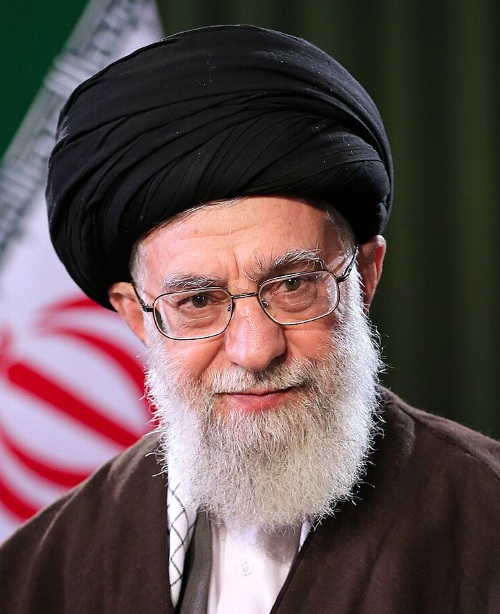
Muslim clerics (Ayatollahs) governing modern Iran: Ruhollah Khomeini (1979-1989) / Ali Khamenei (1989-2026)
Thus to a true Muslim, all this talk of Westerners about personal freedom seems to derive from Satan himself, for such freedom would, in the thinking of a typical Muslim, be entirely disruptive of the Muslim social order. Indeed, the efforts of Westerners to get the Islamic world to take on Western democratic ways is about as appealing to “true” Muslims as, for instance, Communism is to most Americans. It’s just not going to happen. The Muslim world has its own ways of governance – patterns established long ago – and still dictated by the commands of the Qur’an (Islam’s holy book), a grand work derived from the supposedly divinely-inspired pronouncements of Muhammad – and thus not negotiable! Period.JEWISH, GREEK AND ROMAN CULTURAL CONTRIBUTIONS
As with all cultures, Western or Christian culture is a unique blend of various contributing sub-cultures, ones however which combined around the idea of the importance of the sovereignty of the individual. This is partly a Jewish idea, partly a Greek idea, and partly a Roman idea, into which Jesus came to sum up the idea of the sovereign individual. Each of these sub-cultures helped to develop that key idea. And so it would profit us greatly in coming to an understanding of the deeper character of our Western civilization if we took a closer look at each of these contributing sub-cultures. And it is most logical to start with the earliest, and in a way the most determinative, of these ancient sources: Judaism.
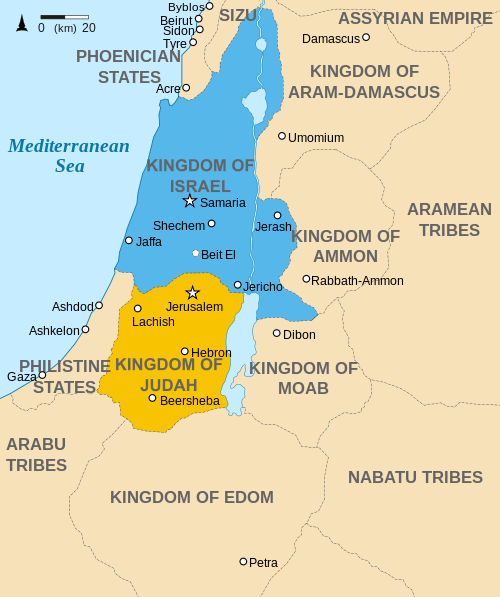
Israel-Judah around 830 BC
The Jewish contribution to Western culture. Anciently, Israel (of which the Jews were the southern-most of the 12 tribes) at one point went at life pretty much like all the other nations of the day. Their capital city, Jerusalem, possessed not only royal palaces but also a Temple, where – under the leadership of the Levitical priests – they performed animal sacrifices in worshiping their god Yahweh.

A cutaway view of the Temple
But in becoming a rich and successful people, the Israelites soon fell away from their devotion to Yahweh, who then abandoned them to the folly of their own political planning and operating. They became reckless in their messing with the growing powers of the Egyptian Empire to the south of them and the Assyrian Empire to the East of them. If they had been wise, they would have stayed out of the growing struggles between these two neighboring empires, for this was not God’s plan for them. And they had prophets who warned them of the dangers of such foolish involvement in the larger political battles going on at the time. Eventually Israel got itself in trouble with Assyria, and the cruel Assyrians marched ten of the twelve tribes of Israel off to captivity, where they scattered the Israelites among the peoples of their empire, and soon much of the Israelite identity simply dissolved, never to recover again.
However, the Southern Israelite kingdom, basically made up of the tribe of Judah (thus the Jews) had more wisely stayed out of these political doings, and Assyria left them alone. But such wisdom did not pass on (as so often happens) to a new generation of Jews, who got mixed up in the struggles between Egypt and the newly rising power of Babylon, which had just succeeded in overthrowing Assyrian power. Finally now it was the Jews turn – at least their leading citizens – to be carted off to Babylon.
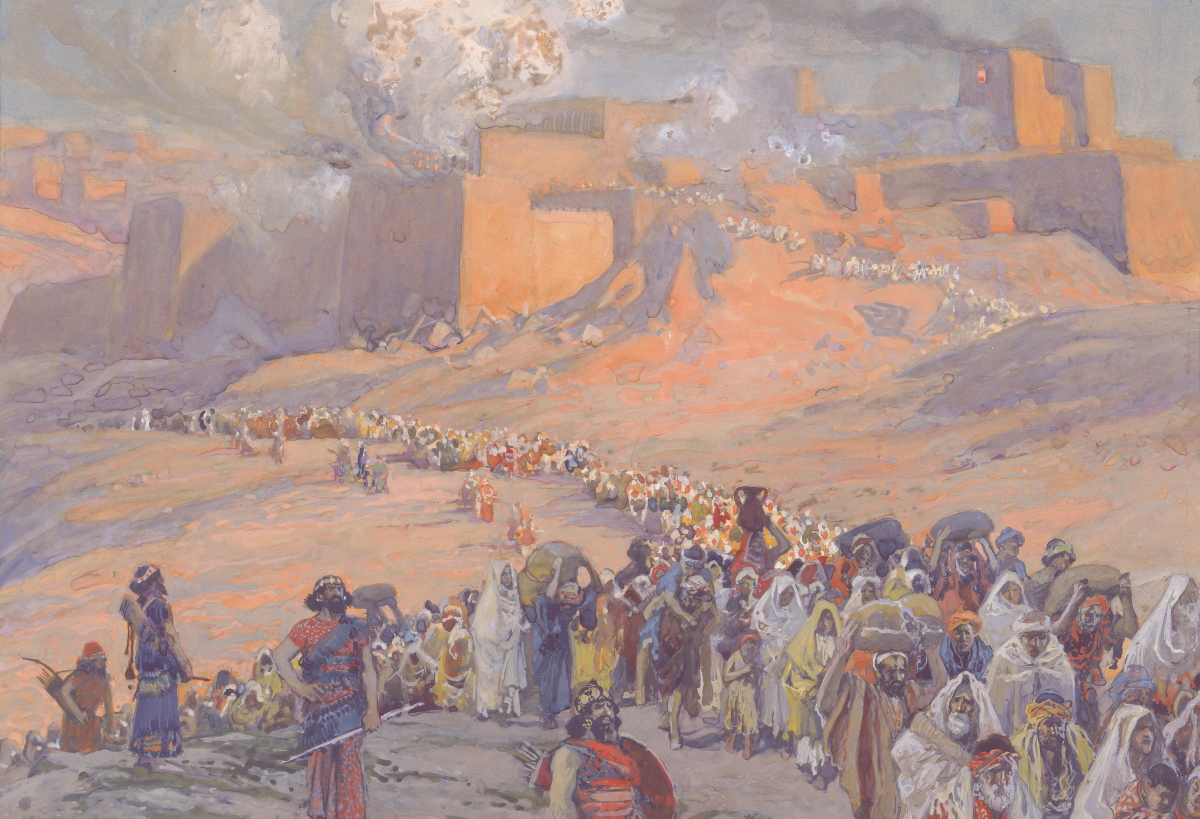
The Jews being led into captivity at Babylon (in two waves – early 500s BC)
But by the grace of God, the Babylonians let the Jews at least remain together as a community in captivity. Thus the Jewish identity was not lost. But still, as a people’s religion defined the very nature of their societies back then (and still today) they were in a bit of a quandary. The Babylonians would not let them build in Babylon a temple to their god Yahweh (the one in Jerusalem in fact had just been torn down by the Babylonians), and thus it seemed at first that there would be no way for those relocated to Babylon to hold onto to their unique social identity.
But they did have one very precious item that they could cling to, which would serve to keep them mindful of their existence as a distinct people: their own tribal narrative – a history of their tribal ancestors and their relations with their god Yahweh, a story which reached all the way back to what they understood as the very beginning of humankind itself. There in Babylon incredible religious scholarship would develop under the guidance – not of the (unemployed) temple priests, but instead by religious teachers or rabbis, who collected this far-reaching narrative and turned it into a piece of holy writing, something that the members of the Jewish community could study, meditate on, and be guided by socially. And they could do so wherever they found themselves, even there in Babylon. All they needed was some kind of community center, the synagogue, where they could gather locally on a regular basis (at least weekly on the Sabbath) and hear a teaching – usually some form of commentary on their holy Scriptures – presented by their teachers (rabbis) and elders.
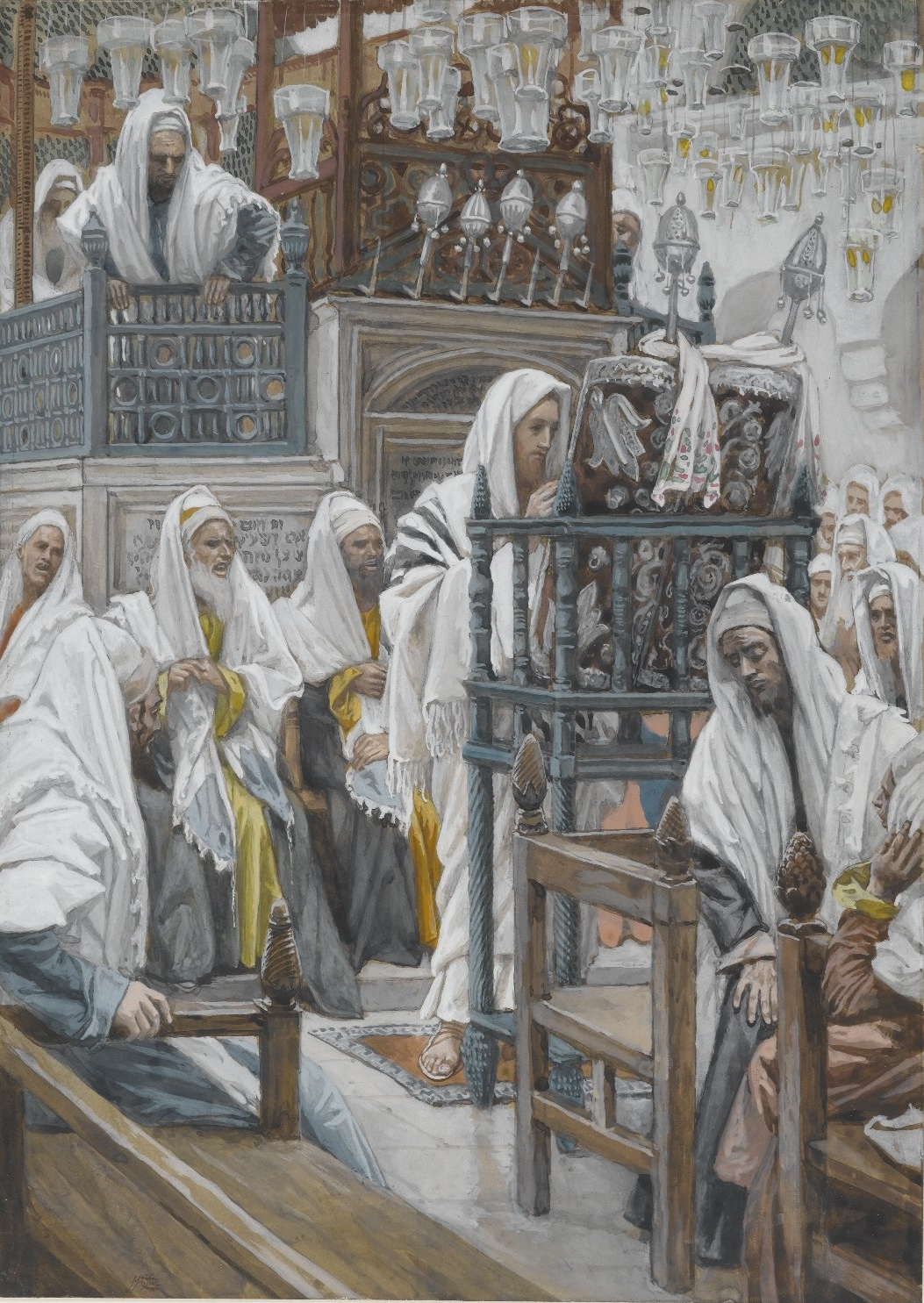
And it was all very democratic, in the way that all young men were expected to demonstrate – as a rite of passage into manhood – the ability to perform this kind of rabbinical Biblical study and teaching. In a way it was an early version of the “priesthood of all believers”!
This also gave the Jews the idea that they served the interests of God in the broader realm of humankind, for they were led now to understand that God was not just a Jewish God, but was the God of all people, Babylonians, Egyptians, and everyone else. And as a special covenant-people of God’s own choosing, they had the larger responsibility of bringing their awareness of God’s role in life to all the people, non-Jews as well as Jews. Thus they became quite active in Babylonian affairs, as a “people of God”, a “Light to the Nations.”
Eventually the Persians conquered the Babylonians, and allowed the Jews then to return to their lands in Israel. But most chose to remain behind in Babylon and continue their special lives there (Babylon and then Persia would continue to serve as a key center of Jewish scholarship and religious activity). Those that did return to Jerusalem naturally rebuilt their Temple. However, they did not let go of the Jewish spiritual practices developed during their Babylonian captivity, but instead kept Jewish life active around the local synagogues, under the leadership of the rabbinical scholars. And that would continue all the way down to the time of the Roman Empire, and the arrival of Jesus. In fact, it still continues to this day, wherever the Jews find themselves in this world of ours!
Greek (more specifically, Athenian) “Democracy.” “Democracy” is a term used today by Americans to describe what it is that they understand America to be in its very essence – unfortunately not always with the clearest understanding of what is involved with such a concept or social identifier. But it is a powerful idea nonetheless, made somewhat dangerous at times because, unlike the Founders of the American Republic over two hundred years ago who understood the possibilities and dangers both of the idea of democracy, to Americans today it has become something like a religion in itself.
Most Americans know that the idea of democracy was a political legacy given Western Civilization by the ancient Greeks (500s-300s BC).

Actually it was practiced widely around the ancient world, and not just in Greece – developed out of the need of tribal peoples, generally everywhere, to consult with clan or household elders whenever an important decision affecting the tribe had to be made: when to hunt, when to go to war, when to make a physical move. It was necessary to get every clan, every household of the tribe on board with the decision – for unity of purpose was essential to the survival of the tribe. Thus democratic consultations would continue until some kind of general agreement was possible prior to taking action with respect to the event in question.
Thus it was that the very ancient or early city-state Athens was quite reliant on the democratic process of holding meetings to discuss common matters – and have an affirmative vote from the participants in order to move things forward.
But when the population of Athens began to grow, participation of all Athenian citizens in such decisions became problematic. There simply were too many people involved to conduct such business in an orderly fashion. Consequently, small groups of people – especially ones that could claim a longer line of Athenian ancestry – would tend to take control, turning themselves into something of a ruling class. And the xenoi (foreigners) not born of Athenian ancestry, who were even more numerous than the Athenian citizenry, had no place at all in this process, not to mention the slaves, who outnumbered even the xenoi.
Unsurprisingly, as class distinctions developed, so did class conflicts. Several efforts were made to improve the democratic process (a toughening of political requirements under Draco (thus the term “Draconian,” something very brutal as social measures typically go), countered a generation later by Solon – who attempted a fairer distribution of responsibilities and rewards. However, this did not make a huge difference in the Athenian political lineup. Finally, in reaction to Peisistratus’ tyrannical rule (a “tyrant” was actually originally a strong-handed defender of the rights of the poor) and the rising danger of mounting Persian power to the East, the popular politician Cleisthenes was led to reform the constitution by simply re-classifying the Athenians into ten residential or neighborhood “tribes” and having these tribal districts represented at the Assembly by citizens chosen by lot. Fair enough! And thus it was that Athens affirmed itself as a “representative” democracy.
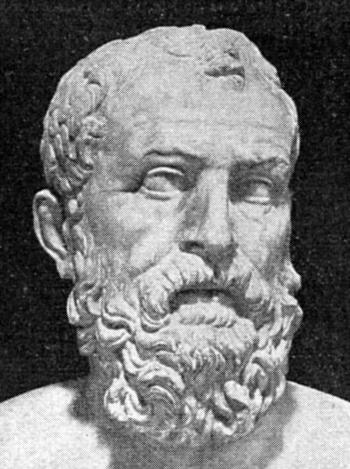

Solon Cleisthenes
For a time this reform, plus the mounting danger of an aggressive Persia taking control in the eastern Greek lands of Ionia, brought unity to the Athenian population, bringing even the Greek city-states to amazing unity under Athenian leadership. It even forced Athens’ chief political rival in Greece, Sparta, to cooperate with Athens militarily. And this unity finally allowed the Greeks to defeat the Persians at Marathon (490 BC) and Salamis (480 BC).
From this point on (the mid-400s BC) Athens took on the position as Greece’s leading city-state, particularly when other city-states agreed to send funding to Athens to support the unified Greek defenses of the new Delian League against a resurgent Persia.
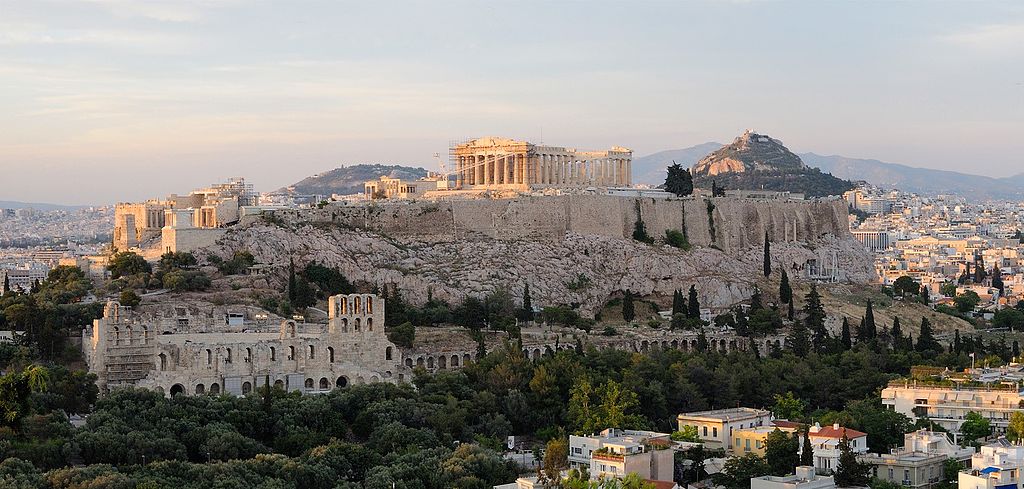
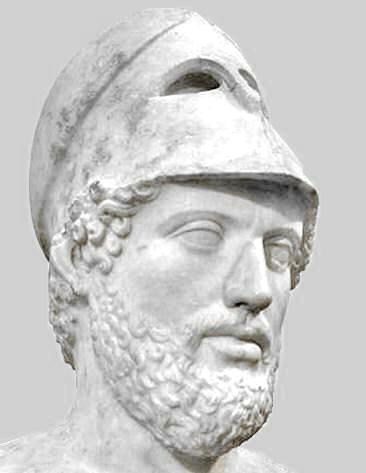 And this marked the “Golden Age” of Athens, under the capable political leadership of Pericles (excellent orator, statesman and general) during the period from the mid-400s BC to his death in 429 BC, a time in which Athens was also producing the historical insights of Herodotus (to about 424 BC), the creative works of the dramatists Euripides and Sophocles (to 406 and 405 BC respectively) and the outstanding philosophy of Socrates (to his death in 399 BC).
But moral problems within Athens itself had begun to mount during that same period. Peace had brought not democratic nobility of spirit, but a new greediness, stoked by the political self-interests of a series of leading Assembly speakers, clever Sophists or “wise ones,” able to convince – through the most clever use of “reason” – the representatives of the people to do the most unwise, most self-destructive things, merely because it played to the interests of one or another of these “demagogues.”
For instance, the demagogues led the Assembly to the decision to use the money sent by the other city-states to Athens for Greek mutual defense instead to simply beautify Athens itself (new buildings, improved streets, grand statuary, etc.), despite the protests raised by its Greek allies. Ultimately these other city-states would look to Sparta to champion their cause against an increasingly greedy Athens, and ugly war resulted.
How stupidly selfish Athenian democracy had become. And the Athenian representatives would also foolishly ostracize (expelling for ten years) Athens’ very best military leaders – actions inspired by jealous Assembly speakers. What was this democratic body thinking? All of this helped lead to Athens’ ultimate defeat in a series of Peloponnesian Wars (the second half of the 400s BC).
Thankfully Sparta ignored the demands of its city-state allies (Thebes, Corinth and others) to enslave the defeated Athenian population, but resolved instead simply to tear down Athens’ city walls, leaving the city defenseless militarily from that point on (404 BC). This was the beginning of the end of Athenian greatness.
But the foolishness of Athens’ democratic Assembly did not end there.
In 399 BC, the wisest philosopher of the ancient world, Socrates, was voted the death penalty by the democratic Assembly – because he annoyed Assembly speakers by calling into question the wisdom of their words and behavior.
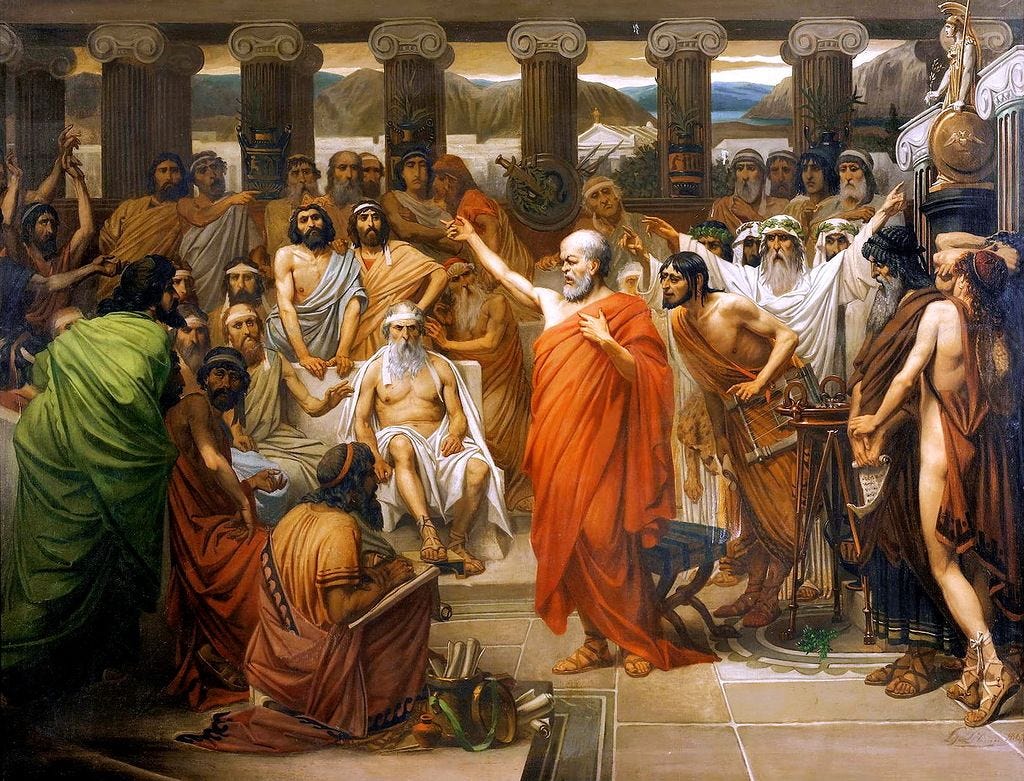
In sum, democracy Athenian-style had led that society down a very self-destructive road.
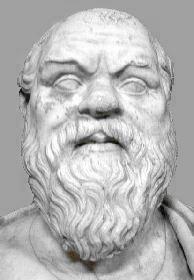
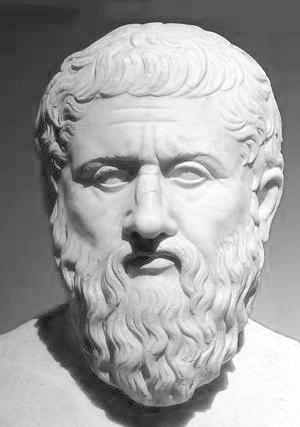
Socrates Plato
Socrates’ pupil Plato tried to find a better approach to political wisdom by developing in a key philosophical work, Politeia (commonly known by its Latin name, Republic) his own idea of what a well-run society should look like. But the success of such a venture depended entirely on the wisdom of the leading politician, not the wisdom of the people (which Plato doubted was obtainable anyway).
This would be the beginning of the tendency of intellectuals to design from their desks beautiful societies, or “utopias” (a Greek word meaning literally “nowhere”!) – built entirely on their own powers of rational planning, and not on the basis of actual human experience (which tends to be not very pretty much of the time).
But Plato would have the rare opportunity as an intellectual to discover how well his ideas actually worked, when he was invited by the young tyrant of Syracuse, Dion, to put his philosophy to work there. The end result when Plato faced political reality was total disaster for Syracuse (20 years of chaos under the social breakdown that his experiment ultimately produced) and Plato’s own arrest, imprisonment and sale into slavery, which he was finally purchased out of by a sympathetic fellow philosopher.
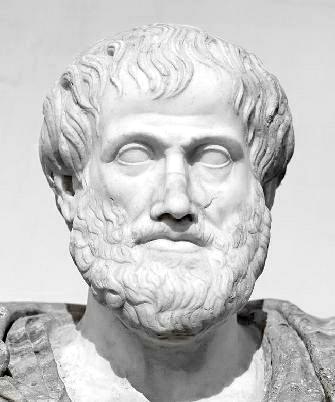 Plato’s own student, Aristotle, was more cautious in his approach to political design, actually studying historically various patterns of social governance. In his famous works, Politics, he stated that on the basis of his research, the measure of good or bad in a society and its government appeared to depend not on the constitutional form of government itself – whether a government was made up of one (as in a monarchy) or a few (as in an aristocracy) or the many (as in a democracy) – that is, not by how many ruled, but by how morally they ruled. A rule of one could be good – or bad – depending on the moral quality of the ruler. A rule of the many could be good – or bad – as for instance a rule by an enlightened citizenry would be considered good … whereas rule by a frenzied mob would most definitely be viewed as some perverse form of popular tyranny. Thus to Aristotle, “good” or “bad” depended not on how many ruled but how well the society was ruled by its own high moral standards. Failure to hold to its foundational standards would soon enough bring any society to ruin.
As we shall see further on in this narrative, the Founding Fathers of the American Constitution (1787) were college men, back when college or university education meant principally a study of the humanities (philosophy, theology, history, law, and the social sciences). Thus they were very aware of both the political history of ancient Greece, and the philosophy of the Greeks, especially Plato and Aristotle. We shall see more of how this influenced their decision deeply as to how to build a new Federal system uniting the thirteen newly independent American states. Full democracy was not their goal. Democracy was included as part of the dynamic. But they attempted to put it under the considerable restraint of a constitutional “checks and balances” system. More about that later.
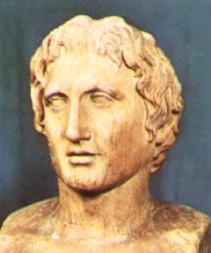 Alexandrian Greece. While we are on the subject of ancient Greece, it is important to bring into the narrative the role that a single individual, Alexander of Macedon, would play in the development of the ancient world. He was the son of Philip II of Macedon, the latter a strong warrior who many of the Greeks had looked to in order to bring Greece out of the disorder ongoing in that land since the days of the Peloponnesian Wars. Philip, anticipating a permanent (or dynastic) call to Greek governance, prepared to have at his side a son, Alexander, well informed in the ways of the people Philip intended to rule. So he sent Alexander off to study under the very wise Aristotle. But Philip was killed in 336 BC, and his 20-year-old son suddenly found himself at the head of his father’s project.
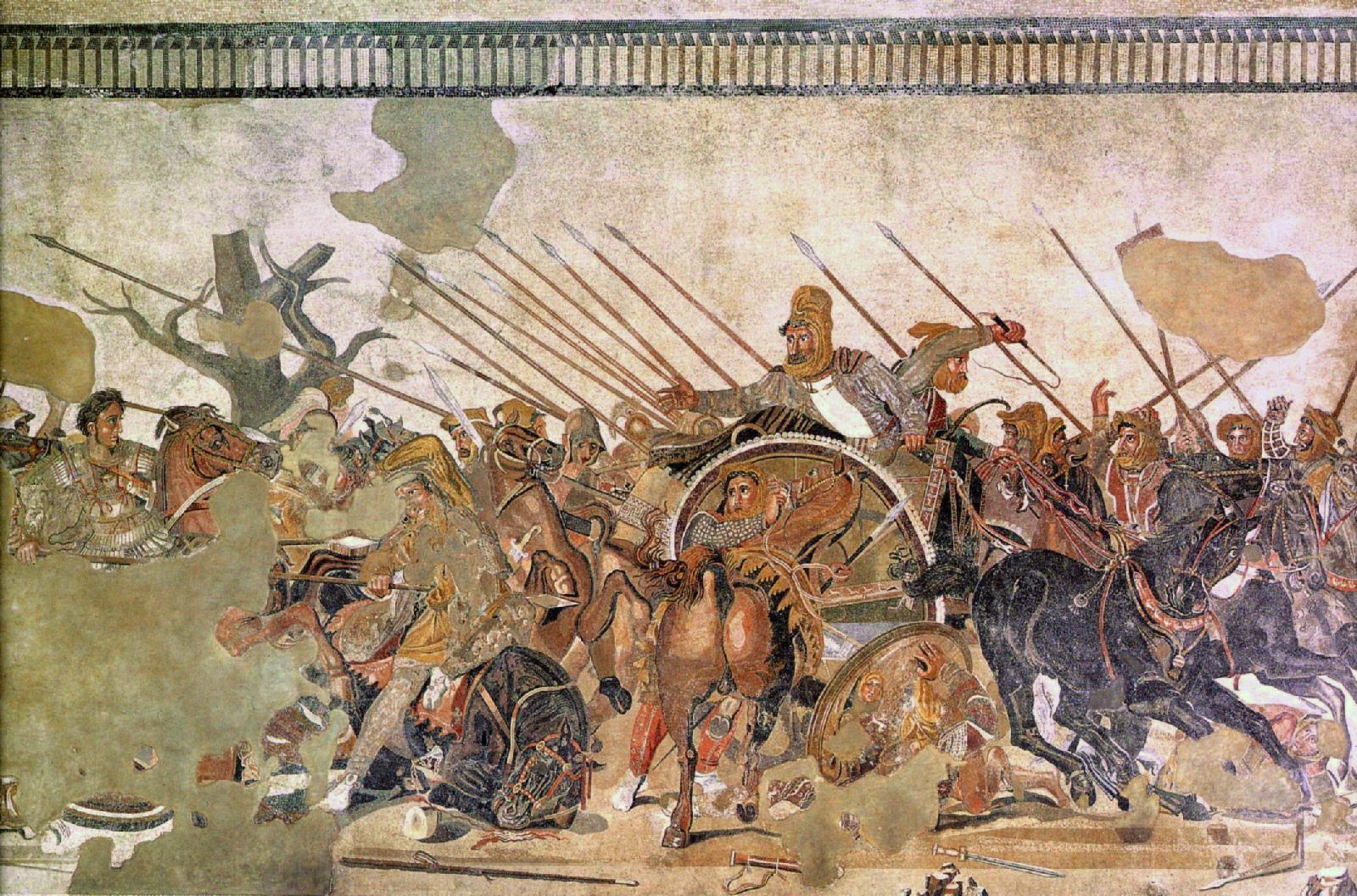
Most amazingly, Alexander proved to be as much a leader as his father. He was finally able to assemble the Greeks into some kind of united community, to take on the powerful Persians directly – in Persian territory itself this time. There would be no more just sitting passively waiting to fend off another Persian assault, as had been the pattern previously. Alexander intended to go at the Persians in their own world.
He first captured the lands bordering the Eastern Mediterranean, including even Egypt. He then swung his army eastward and crushed the Persians’ own efforts at self-defense in 331 BC.
But Alexander had a roll going, and kept on conquering, deeper into central Asia, and even down into the Indus River valley.
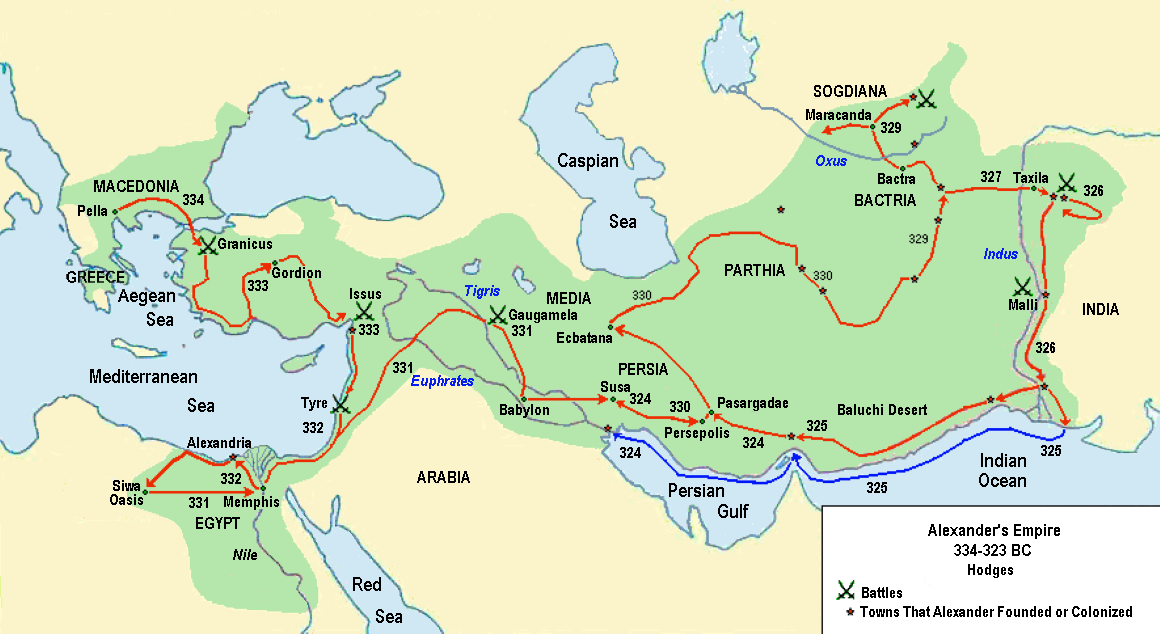
But his soldiers were at this point exhausted and wanted to go home, or at least back to Babylon, the former Persian capital, but now theirs as well. Thus he turned around (however, losing half his men trying to get across the Baluchi Desert). But back in Babylon, Alexander was himself soon to die (323 BC), probably his death resulting simply from sheer exhaustion.
Alexander thus left a huge Greek legacy for his successors to deal with (they ultimately split Alexander’s huge empire into a number of smaller empires). And it left a lasting Greek cultural imprint on the entire region, not only in the Eastern Mediterranean but even into the Mesopotamian lands (principally today’s Iraq) and large sections of central Asia.
The importance to Americans of this Alexandrian legacy is that Greek culture was so dominant in the times of Jesus and the first century church that all of Christianity’s foundational writings were done in Greek, not the local Semitic language (Hebrew and Aramaic) of the lands where Christianity was birthed, or even the Latin of the then-dominant Roman Empire.
The Roman Republic. Actually, America long-identified itself as a republic – not as a democracy. There is a difference. A republic refers simply to the idea of the actual ownership of a society – not the particular method by which it goes about the business of being governed. The word “Republic” comes from the ancient Latin res publica or “thing of the people.” A Republic belongs to no particular ruling dynasty (such as the kings or emperors), no ruling class, no particular tribe, sect or socio-economic group within a society. It belongs to all the people of that society.
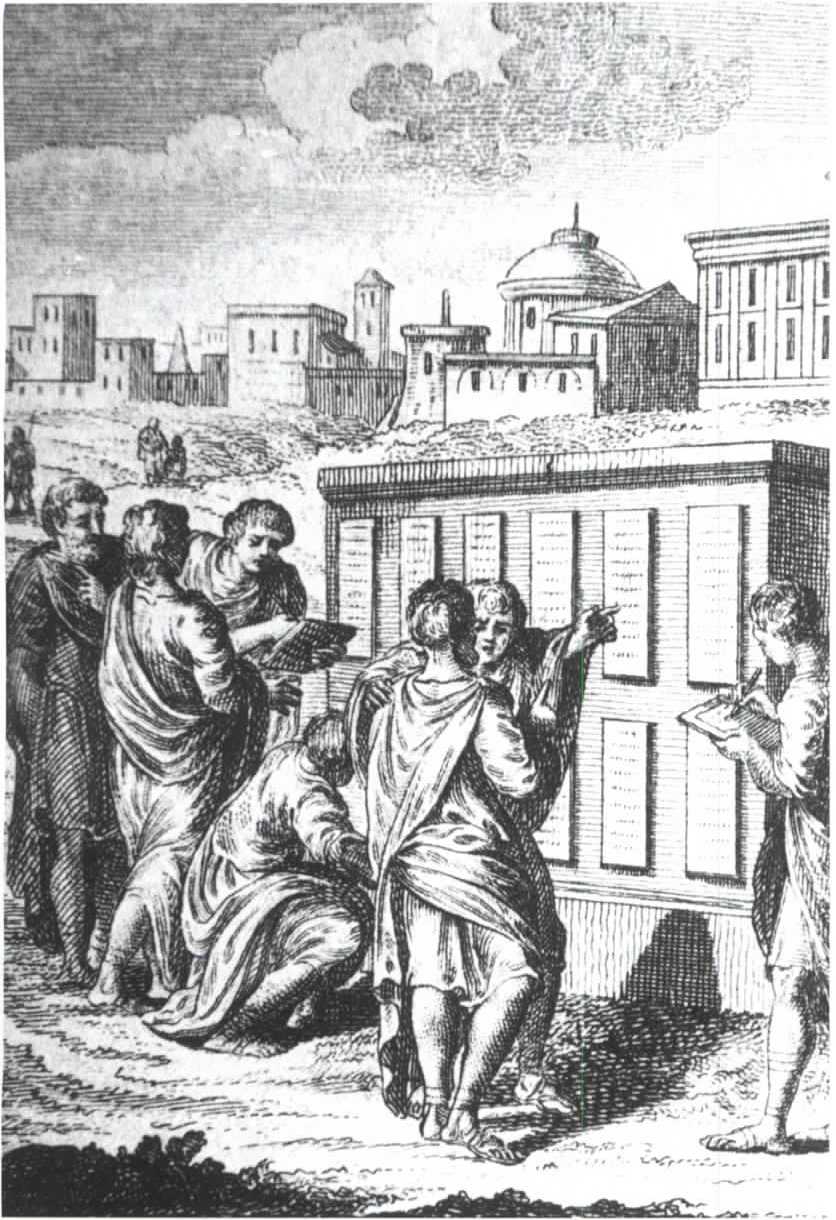
And for such an understanding, we Americans are deeply indebted to the Romans, for it is from them that the concept originated. Under the Romans, their government or “republic” was originally designed to be a government not of human wills, whether the will of one person or even the many. The Roman Republic was intended to be a government of laws, a permanent body of rules that would describe the order that all Romans were to live and thrive under – an unshakeable legal order that would continue forward in a precisely-defined way regardless of whatever personalities played their assigned parts in this order. A Republic was intended to be a system of fundamental or unchanging constitutional laws – not a system governed by the whims of human ambition and personal political interest, no matter how “rational” these whims might claim to be. And these laws were supposedly eternally valid, because they found themselves detailed on 12 bronze tablets (450 BC) posted in the Roman Forum (central market and religious center) for all to see. And all Romans knew these laws well.
This was the key to Rome’s early success in its expansion across Italy, and then across the Mediterranean world (and Europe north of the Alps as well). Unlike tribes and nations that have a very hard time bringing conquered peoples into their social order as fellow members (choosing instead to enslave them or butcher them on the spot), the Romans offered participation of those they recently conquered in their society as full members, provided they were willing to come under Roman law and live accordingly as Roman citizens. That was not only fair, it was powerfully effective in developing Rome’s wide-spread multi-ethnic republic.
And it created a powerfully effective socio-economic order. Given their legalistic mindset, Romans almost instinctively organized the world around them physically and materially as they conquered it, building roads (still standing today in many places) to provide rapid communication, troop movement and ultimately commerce connecting the Roman center to its outlying territories. Wherever they conquered they planted military camps (naturally on a perfectly uniform grid pattern!) … which became the heart of new commercial towns which quickly grew up around these garrisons. They cleared the seas of pirates and kept marauding tribal raiders from central and east Europe closed out beyond a well-defended line running from the Rhine River in Germany to the Danube in the Balkan Peninsula. Consequently, the Mediterranean world that Rome had “conquered” experienced an unprecedented peace and prosperity, one that made Rome the very model of civilization itself to millions of people.
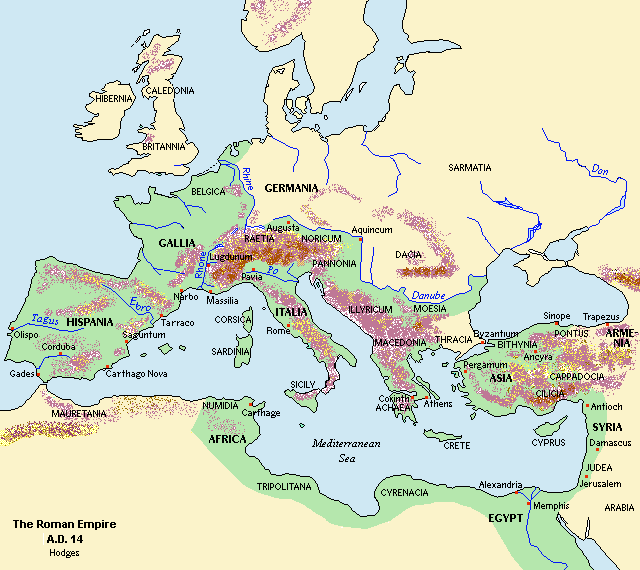
The Empire replaces the Republic. But again, such politics – even Republican politics – is not a perfect thing. It involves people. And people can be very messy to work with.
Over time, but particularly during the wars with the Carthaginians (the three Punic Wars from the mid-200 BC to the mid-100s BC), the Roman Senate had become the center of all Roman power. It was a club of old Roman families (the “patricians”) joined by a select group of “commoners” (the “plebeians”) of recently acquired wealth, which closed its ranks against the rest of the Roman common or plebeian citizenry. In short, the Senate had turned itself into a ruling oligarchy. Meanwhile rising taxes necessitated by ongoing war, and competition from the growing amount of slave labor acquired in these wars, were bringing the more middle-class Roman plebeians to ruin. And yet real Roman power, especially the power of the Roman military, was built on the loyal services of these commoners as citizen-soldiers. Something drastic needed to be done to save Rome from collapse or revolution.
Thus as was the case for Athens, efforts were undertaken by leading Roman citizens to reform the system, opening up bitter debate as to exactly how that was to work. “Reform” invites new forms of reasoning into the older legal order, reasoning which can go most any way, or at least in the way of the most powerful of the social groupings within society. In short, the ancient Roman Constitution proved to be not quite as permanent or unchanging as a body of laws.
Social problems thus merely increased as various identity groups wielded reason against each other as Rome sought to upgrade the now-changing constitution. Tragically, identity politics was overwhelming the constitutional republic.
The Gracchi brothers, Tiberius and Gaius, as Tribunes (Rome’s political officers representing the interests of the commoner plebeians), attempted reforms in favor of the plebeians (133-121 BC), which were blocked by a jealous Senate. The brothers were either clubbed to death by a mob or forced into suicide in advance of a mob, stirred to action by the Senate.

The Gracchi brothers
This brought forward the military leader Marius (108-100 BC) who tried to use his power to clean out the corruption in both the military and the massively expanding Roman bureaucracy. But in the end, he was unable to stop the Roman fall into deeper “Social War.” This in turn led General Sulla to march his troops into Rome (a highly illegal act), designed to undercut the plebeian reform party and strengthen the position of the Senate. Thus Rome came under the first of its military dictators (82-79 BC) or “emperors” (from the Latin imperator or military commander).


Gaius Marius Lucius Cornelius Sulla
But the chaos only deepened, especially with Spartacus’s slave uprising (73-71 BC). At this point, the Senate looked completely to the Roman military to save Roman society. This resulted in the selection of three generals – Crassus, Julius Caesar and Pompey – to bring Rome back under control. But instead, it simply put Rome through the process of a growing political competition among these three military giants. One last effort was made – by Cicero – to bring Rome back under constitutional rule. But getting nowhere, Cicero retired from politics, the last significant spokesman for Roman Republicanism. Finally, with Caesar coming out on top in the competition among the generals – by marching his troops on Rome in 49 BC – Rome now found itself under full military rule. The Republic had just begun its conversion from Republic to Empire (imperator-ruled).

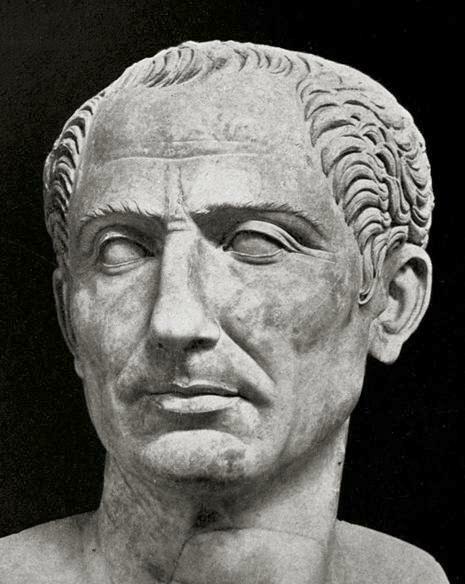

Marcus Licinius Crassus Julius Caesar Pompey
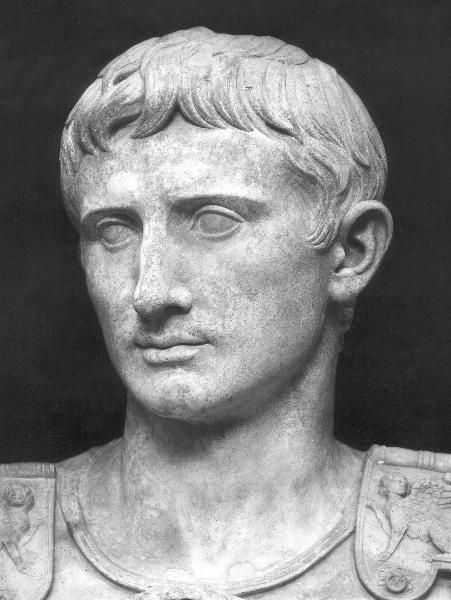 And it would be Caesar’s adopted-son (actually nephew) Octavian “Augustus” Caesar who would complete the conversion, as he tightened up Roman “Republican” society just as a general would tighten the ranks of his army. His absolute hold over Roman society did finally bring about much-needed social order. But it also ended forever the role of the Roman commoners in determining the shape and behavior of their society. Rome was now ruled “from the top down” by a rigidly organized Roman military imperium. The “Republic” now existed in name only.
For a while this looked as if it had been exactly the right development needed by a mighty Rome. And this “for a while” was set in place by indeed a number of very capable Roman emperors – Octavian Caesar, Tiberius, Vespasian, Domitian, Trajan, Hadrian, Antoninus Pius and finally Marcus Aurelius – who governed the Empire during most of the first two centuries of the Christian era.
But from the death of Marcus Aurelius in 180 onward, Rome (or its military legions that actually did the selection of Rome’s imperial leadership) seemed unable to come up with talented leadership. To a great extent this was caused by the deep infighting that went on among the legions as one or another legion would promote its own general as Rome’s new emperor. The situation got so bad that in a 50-year period (running from 235 to 285), constant overthrow or assassinations of emperors (25 in total!) going on within the higher ranks of the military caused Rome to tumble into deep moral corruption and social chaos. And thus did Rome begin its fall from greatness – to the status of its Republic being no more than a fond memory, actually a tragic memory.
The critical importance of America’s own Christian roots. But, of all the different social legacies that went into shaping American society – Jewish, Greek, Roman and, Christianity – it has been the last of this list, Christianity, that served ultimately as the foundational element of American society.
It was Christianity and its accompanying social order that birthed and then developed English America politically, economically, socially, etc. – serving as America’s moral-spiritual foundations on which a new American society was built, even many generations before the establishment of the American Federal Republic in 1787.
America was not just suddenly founded with the writing of its Republican Constitution that particular year – or even with its Declaration of Independence a bit earlier in the well-known year of 1776. Rather, America was birthed on very strong Christian foundations a whole century and a half earlier, in the early 1600s. Indeed, the moral-spiritual features of Christianity had already served quite a long time as the young nation’s social-moral foundations before these key events of the later 1700s came about.
These 150-year-old American religious norms and principles (largely Calvinist in nature) had a tremendous impact on the way that the Fathers or Framers of the 1787 Constitution understood social obligation, and the way that the Framers held personally a deep sense of social right and wrong. Indeed, Christianity had long formed the moral foundations by which, as a free but united people, all Americans knew how to discipline themselves, in order to live in an orderly, cooperative fashion. Living by that Christian moral-spiritual code, Americans needed no dictator (or English king!) to tell them how to live. God’s own instructions, found clearly in the Christian Bible, gave them just such guidance.

Christianity provided an unvarying body of personal and social instructions, already thousands of years old, ones in need of no “progressive” updating, such updating as both Athens and Rome went through repeatedly in a desperate attempt to improve their fundamental social orders. Such Athenian and Roman efforts at rational social reform inevitably unleashed greater personal debate, as their leaders found themselves in deep personal disagreement over the direction that such reform should take! And ultimately, those disagreements became very brutal, resulting in the need to call on a dictatorial hand to restore order.
No, the Framers of the Constitution were not social reformers, nor were they dictators, but simply leaders charged with the responsibility of confirming in the creation of a new political order the social-moral-spiritual traditions that had long guided the colonies, traditions that they expected to now guide the thirteen newly-independent states in their quest to continue to work together in union as a free people – rather than as political competitors. Anyway, more (much more) about this later!
That same Christianity also continued to give vision and moral guidance to the American Republic for many more generations after its founding in 1787. Indeed, elements of it continue to perform that vital service even today.
But Christianity today also finds itself greatly on the defensive – as numerous Americans of major political influence want to see America made more “progressive,” by “separating” (removing) Christianity and its long-standing social-moral principles from the ever-widening jurisdiction of a very “reformist” Federal government or “state” – a “progressive” state which today reaches into every dimension of life in America possible.
Those that now press the issue of “separation of church and state” – claiming that the Constitution itself requires the removal of religion from America’s public domain – do not realize (or at least do not want to acknowledge) how deeply Christianity shaped America and its values, importantly including the understanding and motivation of those who first put the Constitution together.[1] Indeed the whole of Western Civilization as it has come down to us through many, many centuries, is a by-product of the Christian religion.
Of course many of those who want to see Christianity dismissed from public life actually know very little about Christianity itself – believing (without serious investigation into the matter) that it is restrictive in its quest for social order – and presumes a ridiculously superstitious belief in some kind of power or God who exists above the mechanically operating “natural” or material order – a God able to set aside the mechanical and self-running laws of science in order to favor (miraculously) individuals and societies that follow his guidance.
And such critics are partially correct – for Christians (as well as a lot of very highly respected modern scientists!) do believe God to be quite active in the life of this planet – because they have personally witnessed events that support this understanding. But of course not everyone has seen such occurrences – or even wanted to see them.
Another piece of confusion that arises when modern Secularists or “Progressives” attack Christianity is that Christianity is treated as if it were some single social phenomenon. But it has, in fact, (politically speaking) been many things, things frequently much opposed to each other – and occasionally – and tragically – even bloody in that opposition.
But apart from the politics that gets into even the Christian religion itself, there have always been a number of key ideas that truly define the faith – and which, if practiced faithfully, indeed give Christian society a high degree of unity, peace, and prosperity. America has long served as an example of just that very possibility.
 Jesus – the pathway to the Fathership of God. Jesus the Christ or “Anointed One,” as founder of this Christian religion that was so foundational to American birth and development, was something of a Jewish teacher or rabbi – except that he did his teaching out in the open fields as well as in the local synagogues. He preached a call to come to God personally – like coming to your own Father (and thus he spoke of God as “Abba” or “Daddy” in the language of the day) – so familiar in expression that it shocked proper Jews who thought he was not showing respect to Almighty God. He preached not only to proper Jews (who anyway thought that they did not need his advice) but also to the rejects of Jewish society – and even to non-Jews or Gentiles.
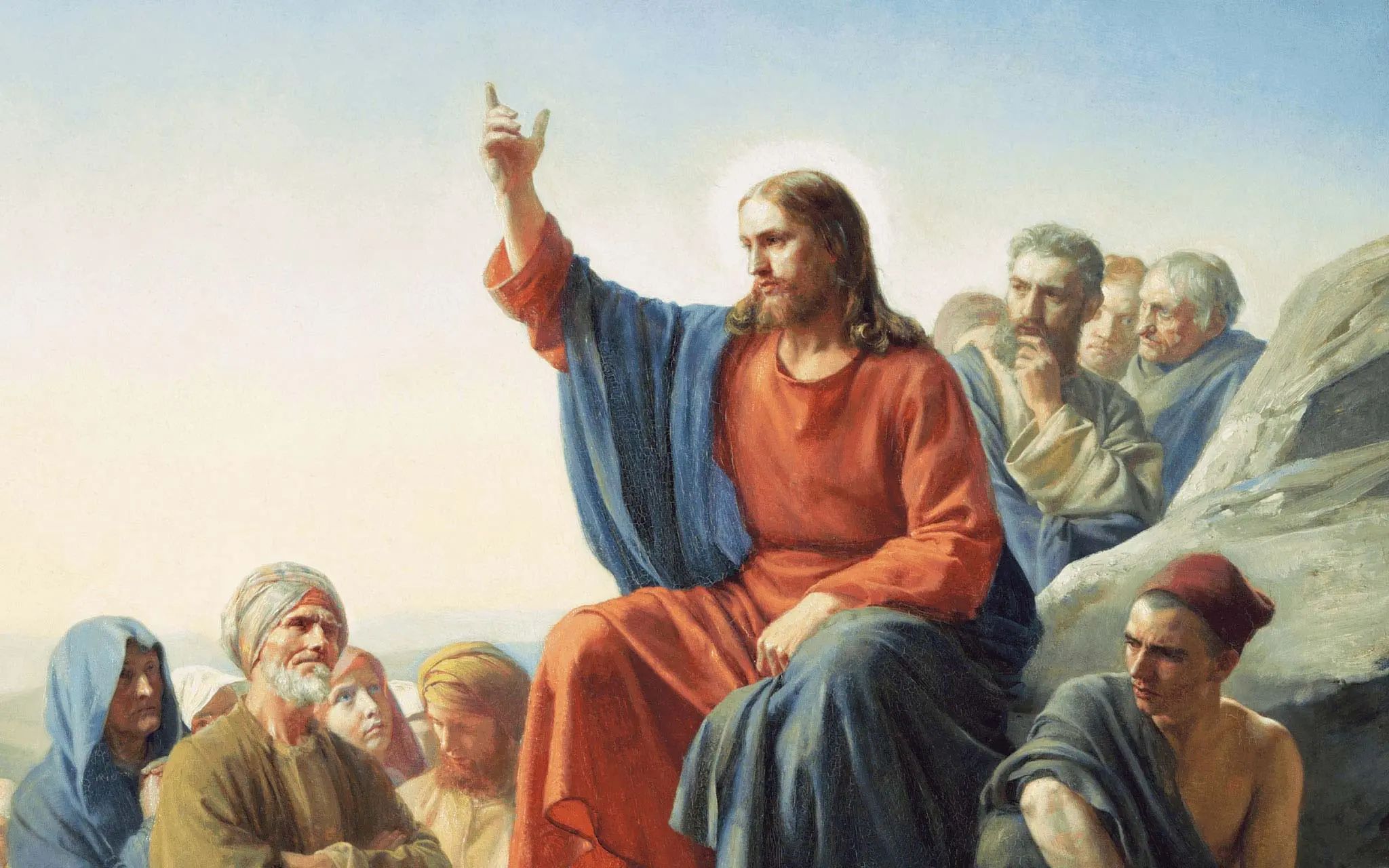
In fact, that broadness of his spiritual reach was the very heart of his ministry, the demonstration that God as Father was not interested in the various ways that we humans divide the surrounding world into various identity groups, ones to be loved and supported and those to be despised and forcefully rejected. And Jesus’s wide-ranging realm of love included not only tax collectors and women of questionable repute (major sinners in the Jewish social scheme), but also foreigners such as a Roman centurion and the despised Samaritans, and even lepers. And he also had a high regard for the importance of children, a group of small beings who had not yet earned the right of high regard or social respect in the thinking of the time (and maybe still even today). Furthermore, he drew into his closest circle of friends people of no greater status than that of fishermen.

Jesus calling his disciples …
here telling the wearied Peter to head back out and cast his nets again
In short, Jesus was no practitioner of identity politics. Quite the opposite. His ministry was a clear demonstration of the fact that our Heavenly Father made no such human distinctions in his love of humankind. That was man’s own particular failing: to judge others on the basis of where these others stood in the comparative realm of identity politics.

Jesus inspires a rejected Samaritan woman at the well
Jesus demonstrates the power of such faith. And just as shocking, Jesus performed signs and wonders or miracles, calming the storms,
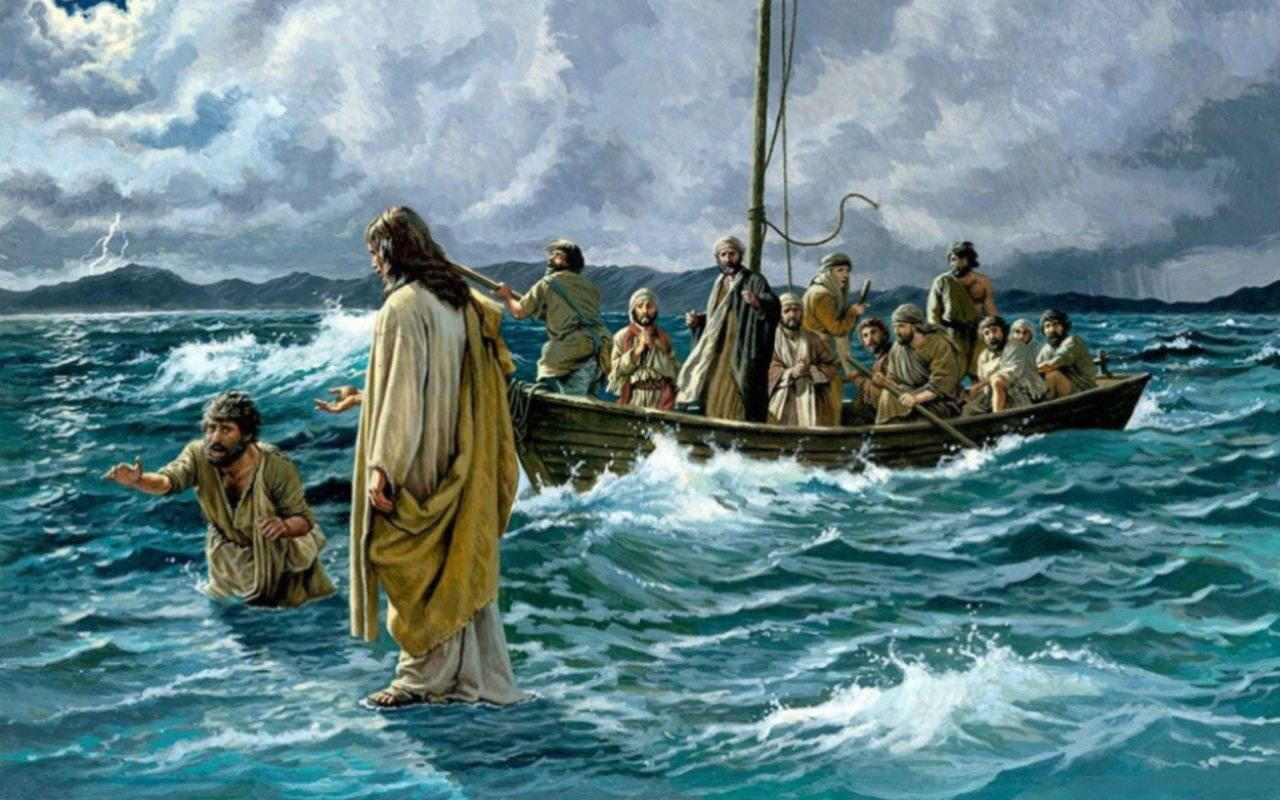
He calls Peter to use pure faith to come to him on the water
performing deep physical healings even of lepers,

raising individuals from death (even as in the case of his friend Lazarus from the grave itself)
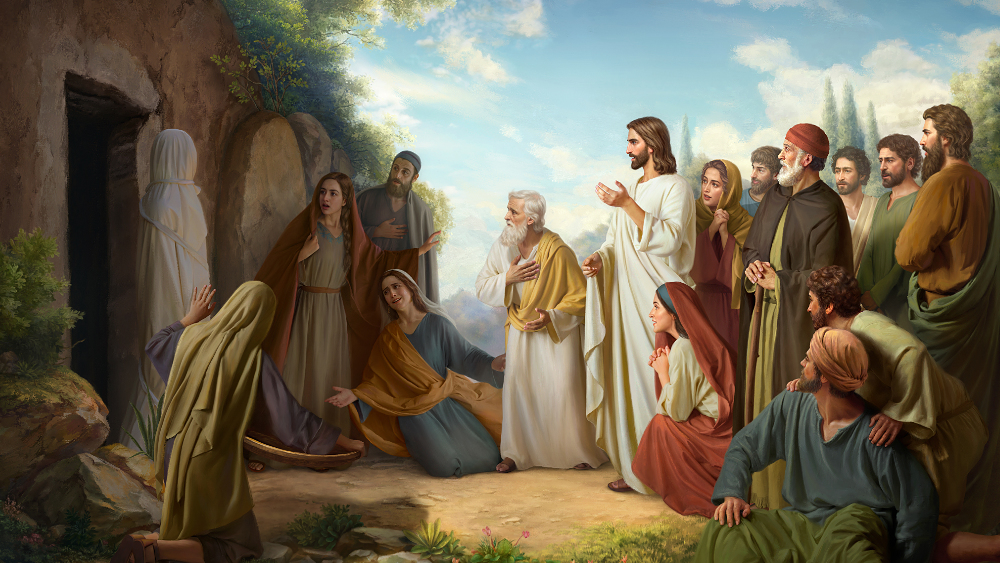
– all undertaken to drive home his point about the importance of getting into a right relationship with God as Father. With God as personal Father, even the laws of the physical universe must submit to strong human faith.
Of course people of reason (they existed back then no less than they do in today’s “scientific” culture) were disbelieving and even hostile to such demonstrations of Jesus’s authority, which he assured others was also – through the simple power of faith in God as Father – within their reach as well.
The cross of Jesus Christ. Ultimately the Jewish political authorities had enough of Jesus’s threat to their well-structured universe[2] by way of his miracles and most unusual street ministry, and had him arrested and turned over to the occupying Roman governor of the day, falsely accusing Jesus of encouraging rebellion even against Rome itself – something to get him to be put away by the cruel Roman device of hanging criminals on a wooden cross until they died a slow and agonizing death. And so it came to Jesus.
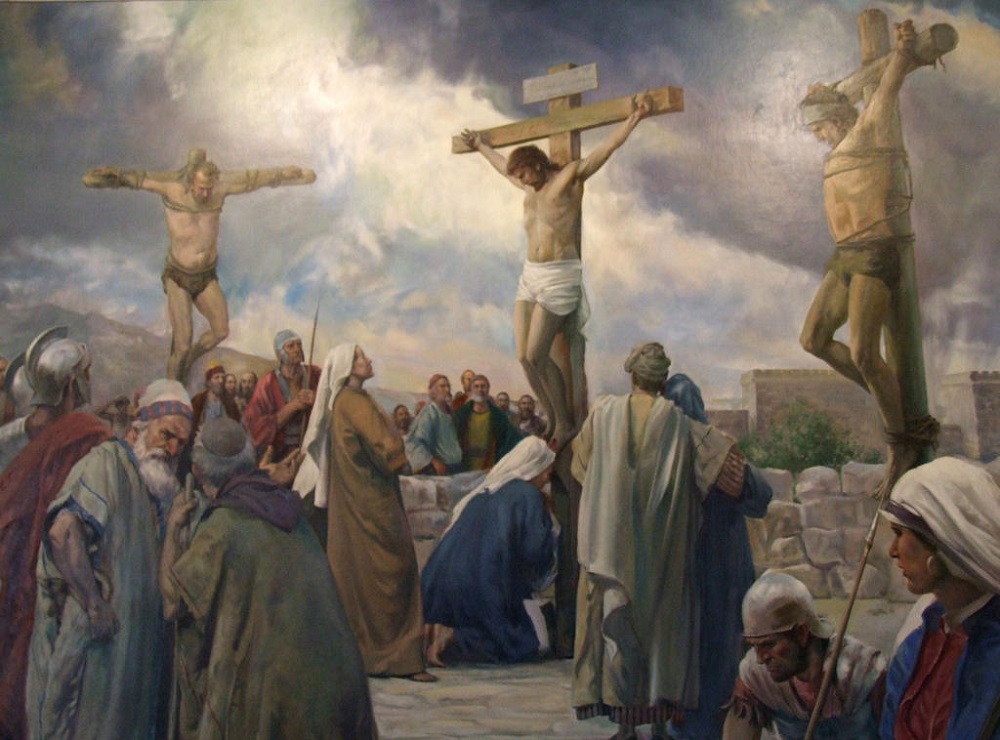
But then hundreds of his followers were most certain that he returned (briefly, for 40 days or so) from the grave

and again taught them his gospel (good news) message before being taken up to Heaven to join the Father at God’s right hand – and by doing so, releasing the Holy Spirit to come among the people (on the day of Pentecost) in order to continue the work themselves that Jesus had started.
It is ironic that the Roman device, the cross – that was intended to force the most humiliating death as possible on a criminal – would itself become the very symbol of Christianity. This is because Jesus’s death on the cross was understood by his followers to be an act of cosmic significance: the blood sacrifice or sin-offering required by the power of Heaven as the price for entry into eternity. But Jesus himself was without sin … and so the sins he was paying for in his self-sacrifice on the cross were not his own. Instead the sins being paid for by the cross were in fact the sins of the entire range of humanity.
But how could one man’s sacrifice be sufficient to pay for the sins of all humankind? Actually, Jesus was ultimately understood to be not just a mere man – but was fully divine – and thus able, as God himself, to offer himself in sacrifice for the sins of the world. A very loving God had, in essence, offered himself through his Son as the payment for the sins of all mankind – at least for those, anyway, that were willing to put themselves under such divine grace and receive, at the foot of Christ’s cross, God’s full forgiveness. Furthermore, in doing so, they also received a new, powerful life from the hand of God – without being in any way specially deserving of such favor. In this new life they would live by and through the power of God’s own Holy Spirit, to help them take on the challenges of life – including even the challenges presented by their own moral frailties. And they would continue to be fully empowered to meet the particular challenges presented to them individually – and jointly (as members of a Christian society) – until they were to draw their last breath, and at that point, when their work on earth was done, join their Heavenly Father in eternal paradise.
Trinitarianism. This idea of a loving Heavenly Father, sacrificing on the cross his own divine Son for the sins of the world, and then empowering those who accepted for themselves this act of divine forgiveness with the gift of God’s own Holy Spirit – all of this came together as a key belief system known as Trinitarianism: a single God in three “persons” – Father, Son, and Holy Spirit.
Unitarianism. However, receiving the salvation that God himself lovingly offered by way of Christ’s cross turned out not to be such an easy concept to get over to many people – because it is a more natural instinct of man to want to earn his own moral credits himself – as a matter of moral pride. Setting aside that pride and receiving the undeserved saving grace of God himself just was more than most normal egos could handle.
Those that could not or would not rise above the idea of earning moral merits through one’s own good works argued that Trinitarianism sounded like merely another version of Dionysian Greek religion or philosophy. Indeed, members of the Roman world who lived in the predominantly Greek cultural areas of the Empire were more able to understand and embrace Trinitarianism. But those of the Semitic world of Syria, Palestine and Arabia, for instance, refused to embrace Trinitarianism because it did not conform well to their cultural understanding of moral behavior and social obligation. But this would also include many German tribes north of the Roman borders, who did come to accept Christianity, but also only of the Unitarian variety.
Ultimately, as Unitarian Christians, they understood Jesus as a fully human creature – not another form of God while on earth. To Unitarians, Jesus was a human without sin to be sure, which made him a perfect moral example worthy of complete devotion by others – one indeed so perfect in behavior that at his death he was raised in heaven to sit at the right hand of God as God’s favored Son. And as far as the notion of an assisting Holy Spirit – Unitarianism found no place in its understanding to include such a concept. That was way too Greek for a Semitic or Germanic mind to grasp.
Trinitarianism versus Unitarianism would remain an ideological tension that would reach through the long history of Christianity and its impact on the larger world – even down to today.
The Early Church. Those who early took up the “Way” of Jesus the Christ during the first couple of centuries of the Christian community did so in a rather typical Jewish way – gathering together regularly at least weekly on the “Lord’s Day” (Sunday), although largely in secret because it was very dangerous to be a Christian at that time. Here they would recall the sayings of Jesus, pray together, and just in general fellowship as mutual followers of Christ.

Christian religious art hidden away from Roman authorities in the Roman catacombs – Catacomb of Ss. Pietro and Marcellinus
 Efforts were soon made to bring together for study various narratives about Jesus’ life and ministry (the gospels) – plus letters circulated among the various churches written by key Christian leaders advising them on the Christian life, many of these letters written by the Jewish convert, Paul (formerly Saul). Thus was formed the foundations of the Christian New Testament, the second part of the Christian Bible, following the longer Jewish or Old Testament portion of the Bible. Such writing served not only as the central document that described Christian life in the years of Christ and immediately thereafter – but also as a social model instructive for Christians at all times and for all generations.
Intense Roman persecution. During those first few centuries, Christianity was not well accepted, either in its Jewish homeland or in the broader context of the Roman Empire. It was subject to waves of intense Roman persecution – not because of its rather un-Roman religious beliefs (Rome was actually very tolerant of an amazing wide variety of religious beliefs held by their citizens), but because the Christian religion refused to also acknowledge the divinity of the Emperor (emperor worship). This was too drastic a departure from Rome’s imperial policies. Thus the Christians were hunted down ruthlessly, and then put to death for their refusal to worship the Emperor. This involved even gruesome public displays of Christian slaughter by wild animals or gladiators, or anything designed to entertain the Roman spectators.
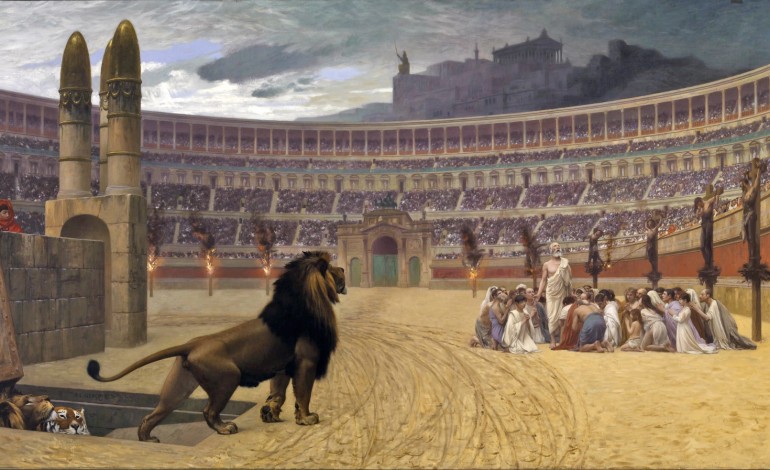
But ironically, Christian martyrdom merely became an even more-powerful social force spreading within the Empire – because of the very quiet bravery of Christian martyrs undergoing such cruel Roman death. Romans grew increasingly impressed with Christianity’s ability to give its followers such incredible personal moral and spiritual strength, even in the face of a most terrible death. Christian morality stood out glowingly in high contrast to the obvious moral collapse going on within a darkening Roman Secular/Materialistic imperialist culture.[3]
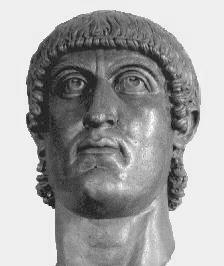 The “Romanization” of Christianity: “Christendom.” Then Christianity’s fortunes – and its very character – changed dramatically when the Roman Emperor Constantine decided in the early 300s not only to accept Christianity for himself, but also to make it the new moral-spiritual foundation of the decaying Roman Empire.
At the time, Christianity was having a huge impact on the Roman Empire, so much so that the Emperor prior to Constantine, Diocletian, had conducted one of the cruelest efforts to eliminate Christianity (thereby supposedly bringing Rome back to good order), but had succeeded no more than the emperors before him. Then when he died, four imperators competed for the position as grand ruler of the Roman Empire.
 One of them, Constantine, in 312 received a vision in the night before a crucial battle with a competitor (the latter was equipped with a much larger legion supporting him), a vision that told Constantine to place the chi-rho (Greek symbols representing Christ) on his men’s shields, indicating that they were doing battle for Christ as well as Constantine. And indeed, the victory of Constantine the next day was so impressive that it confirmed for him the critical importance of Christianity, although his familiarity with the religion was rather shallow at the time.
In any case, it would be another ten years before his sole claim to emperorship would be completed. But nonetheless, in conjunction with an imperial ally, Licinius, Constantine the next year (313) issued the Edict of Milan, ending all further persecution of Christianity.
Indeed Constantine even took for himself the title pontifex maximus, making himself also the religious head of the Roman Empire, and as such began to reorganize the Christian religion, Roman style. He called conferences with the bishops or Christian leaders to clear up the clutter of three centuries of unsupervised religious development, by clarifying the doctrines (or “creeds” or “confessions”), deciding which of the considerable body of Christian writings were to be officially authorized as “canonical,” and by developing a huge, bureaucratic ecclesiastical (church) structure to supervise the life of this religious community, whose religion had now officially become the moral-spiritual underpinning of Constantine’s Empire.
Thus this 4th century Imperial Christianity would look very different from the 1st century Christianity described in the Bible. Besides the whole Christian social order being put under massive Roman bureaucratic supervision, Jesus would be elevated in status to that of Christus Rex or Christ the King – friend and colleague of the Roman emperors – the person supposedly authorizing and thus conferring ultimate legitimacy on the Roman emperor then in power. This in effect took Jesus out of the hands (and the hearts) of the common people, forcing them to look elsewhere for personal spiritual support.
This then led to the adoration of Mary, the mother of Jesus. In fact it became her, rather than Jesus, that the common people now generally turned to for emotional support – something along the lines of the very popular Earth Mother worship (Isis, Astarte, Aphrodite, Demeter, etc.) which had just been suppressed by Christian Roman authorities.
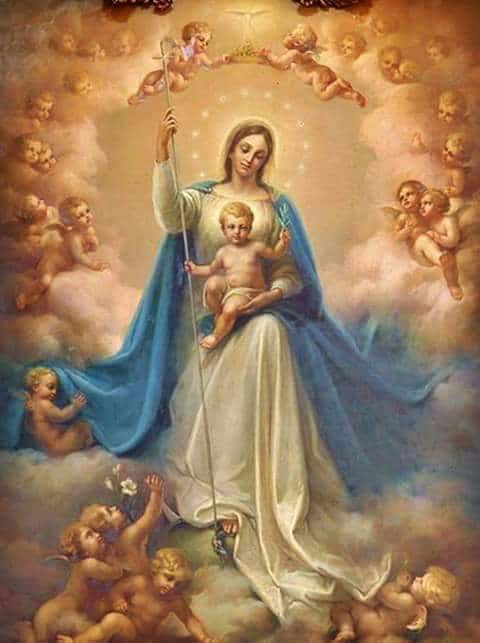
And along those same lines, certain Christian saints reputed to have special powers in particular areas of life came to replace the pagan deities that people once prayed to for favor in dealing with daily life and its specific challenges.
In short, in becoming Rome’s official religion, Christianity got “Romanized.”
Religious works vs. divine grace. This Romanization of Christianity would also have a tendency to move Christianity slowly over the centuries towards Unitarianism – as salvation or access to heaven depended less and less on God’s grace and the individual’s repentance and transformation in being confronted by that grace – and more and more on the powers of the official Roman Church to offer salvation to the Christian faithful. The Church now required regular periodic confessions to a priest (followed up by certain works performed by the penitent sinner as specified by that priest), allowing the person to be qualified to receive the holy sacraments or blessings of the priest in order to help cleanse the sinner of his or her sins. Thus it was that works slowly took the place of Divine grace in the way the Church instructed the faithful concerning the requirements for salvation, and the reward of eternal life.
But Rome declines in the West anyway. Not only did Constantine reshape Roman culture by adopting Christianity as Rome’s new moral spiritual foundation, he also moved the political center of the Empire east, from its original base in Italy to a new position at the point where the Black Sea empties into the Aegean Sea (Eastern Mediterranean) – anciently the city of Constantinople (named after him), today’s Istanbul, Turkey. He did so to move his operations closer to where the political (or more particularly, military) action was – against the Persians to the East and against the Germanic tribesmen to the North (the Balkan Peninsula) pressing the Empire from both directions. But this move of the Imperial capital east from Latin-speaking Rome to Greek-speaking Constantinople left the old Italian city of Rome forlorn – pathetically so.
Thus it was that German tribes migrating into central Europe from the Northeast (under pressure from the Asian Huns coming in from further East) found the eastern half of the Roman Empire a solid barrier to expansion. But as they slid westward, they found a very different dynamic: only a very weak Rome trying to hold its own … an easy pickoff.
Indeed, in 410 Visigoth chief Alaric and his Germanic tribal troops breached the walls and plundered the helpless city of Rome.
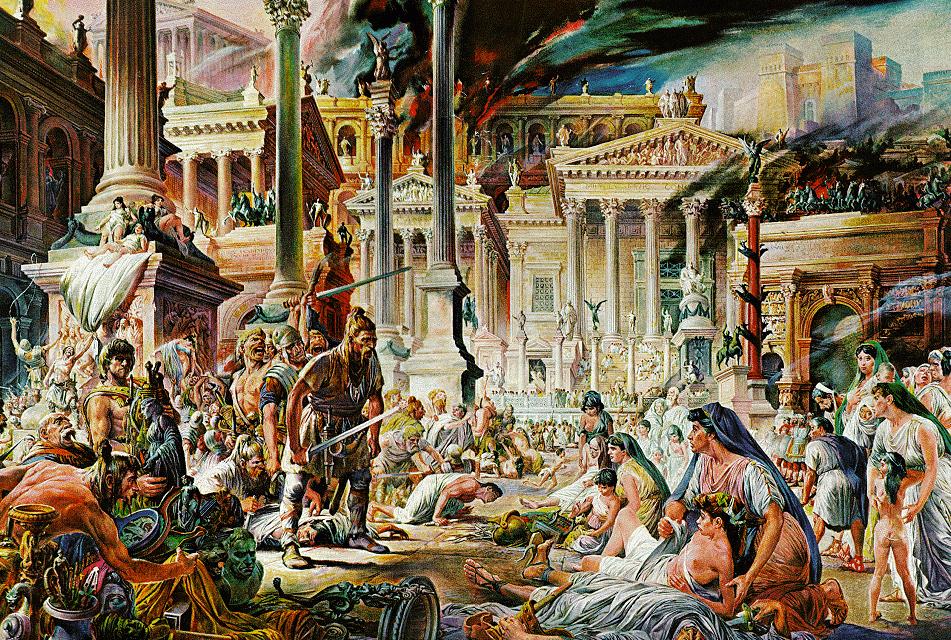
This was then the signal for the Germanic tribes of north central Europe (Goths, Franks, Alemanni, Burgundians, Angles, Saxons, Frisians, Thuringians, Vandals, etc.), to invade the western half of the Roman Empire in earnest.

It is important to remember that these Germans came not to destroy Rome but to capture the elegance of the once-famous Rome. But there was very little elegance left to capture at this point. Roman civilization had simply broken down in the West.
Now travel on the Roman roads became dangerous, leading to a decline of commerce and trade. Consequently, urban life decayed and eventually disappeared in most areas of Western Europe. Survival now depended on the ability of the new tribal societies simply to support themselves locally from the bounty of the small farms that became the sole foundation of the Western European economy. Materially an economic, then social, Dark Age fell upon the West.
Christian survival in the West. Nonetheless a series of talented Christian Bishops of Rome, who remained behind in the ancient capital city, continued to command considerable respect within the Western Christian community – and slowly came to be recognized as the head of the Christian Church in the Latin West – eventually gaining the title “Pope,” meaning something like Father – but Father (Papa) above all other priestly Fathers! Especially notable among these popes were Leo I (pope, 440-461) and Gregory I (pope, 590-604), who managed to preserve and strengthen what little remained of Roman or Latin moral-cultural order in the West.
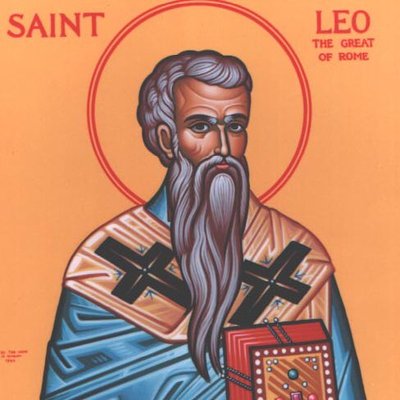
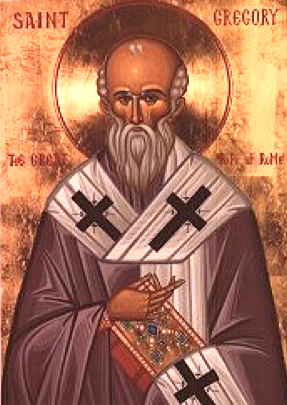
Indeed, the church of Rome not only survived the Germanic impact but converted some of the most important tribes to Trinitarian Christianity and restored the city of Rome to a position of some degree of religious cultural importance – at least within the West itself. [4]
 And there was the British monk, Patrick, who brought Trinitarian Christianity to neighboring Druid Ireland in the early to mid-400s. In Patrick’s 30-year mission to the Irish, he established over 300 churches and he baptized over 120 thousand Irishmen. In turn the converted Irish would soon themselves become Christian missionaries to the Germanic and other Celtic tribes to the East of them, most notably: Columba (mid-to-late 500s) to Scotland; Columban (late-500s) to the Burgundians, the Alemanni and Celtic Gauls on the European continent; and Aidan (mid-600s) to the Angles, Mercians and East Saxons of Britain.
 And there were other such missionaries, monks and priests who acquitted themselves quite honorably along vital moral-cultural lines, especially once the monastic movement had been disciplined by Benedict (early 500s), whose monastic rule was widely honored throughout the West. These monks were sent out among the Germanic tribes to convert them not only to the Christian religion but also to the Roman Catholic political-religious order that accompanied that religion. In many cases the effort by monks pointed only to the first part of the program: the saving of souls. But the popes had more of the second part of the deal in mind.
Ultimately tribes had to decide where they belonged in the Christian program … on their own as autonomous Christian tribes, or as components of the larger Western Christian or Roman Catholic community. Thus, for instance, in 664, a religious council or “synod” gathered at Whitby (north central England), where the majority of the delegates voted to end the self-supporting religious life in England introduced by the Irish monks who had originally brought Christianity to the kingdom. The Synod decided instead to bring the Northumbrian tribe or kingdom within the religious realm (and its particular Latin rites) overseen by the Pope at Rome.
In effect this decision conveyed the idea that the Pope was the ultimate authority, both religious and political, within Western Christendom. Of course tribal kings tended to ignore in practice the moral-legal distinctions of this relationship. But the popes, especially the more active political popes, were very aware of this special entitlement they possessed.
Charlemagne and the European feudal order. Then in the late 700s a Frankish tribal king, Charles or “Charlemagne” (Charles the Great)[5] succeeded in conquering nearly all of the other Germanic tribes of continental Western Europe.[6]
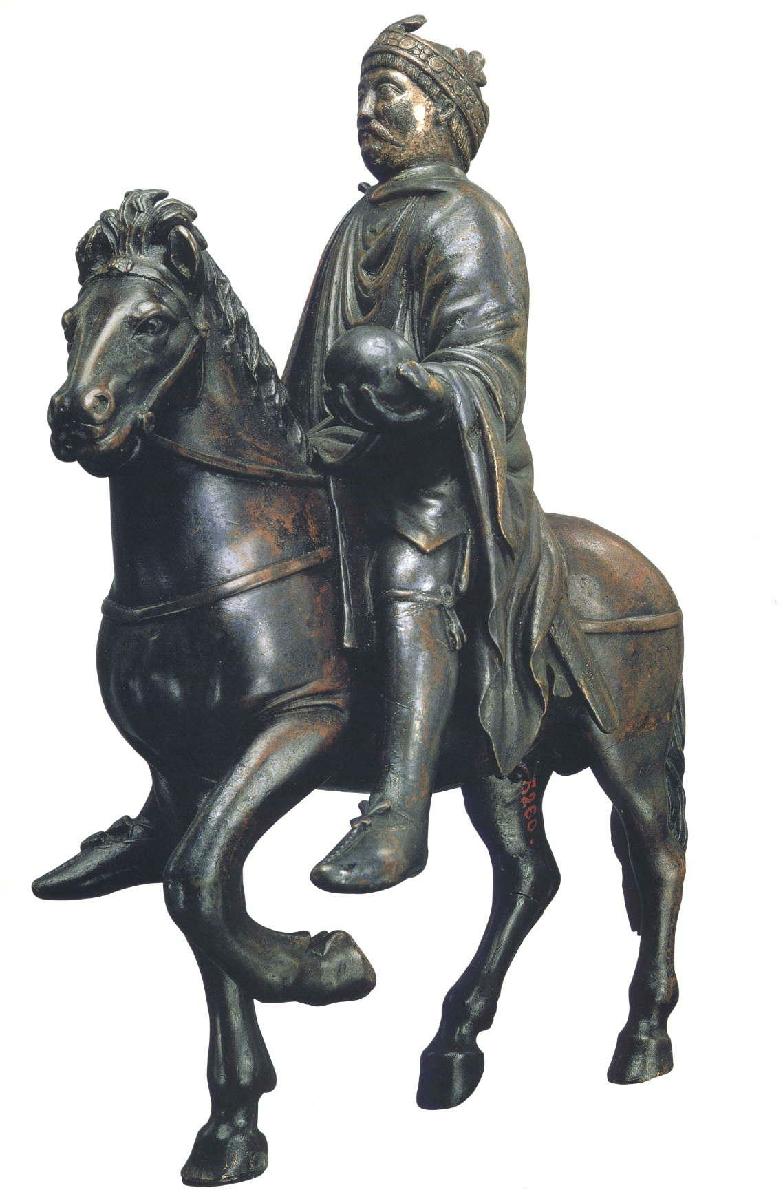
Such political power did Charlemagne accumulate for himself that he was able to end the independent existence of these various Germanic tribes, not only forcing a new unity on much of Western Europe but also making himself now the single landowner of Western Europe! The former tribal lands were now his – personally his. And when the Roman Pope certified Charlemagne as Emperor, any moral basis for contesting this development was eliminated.
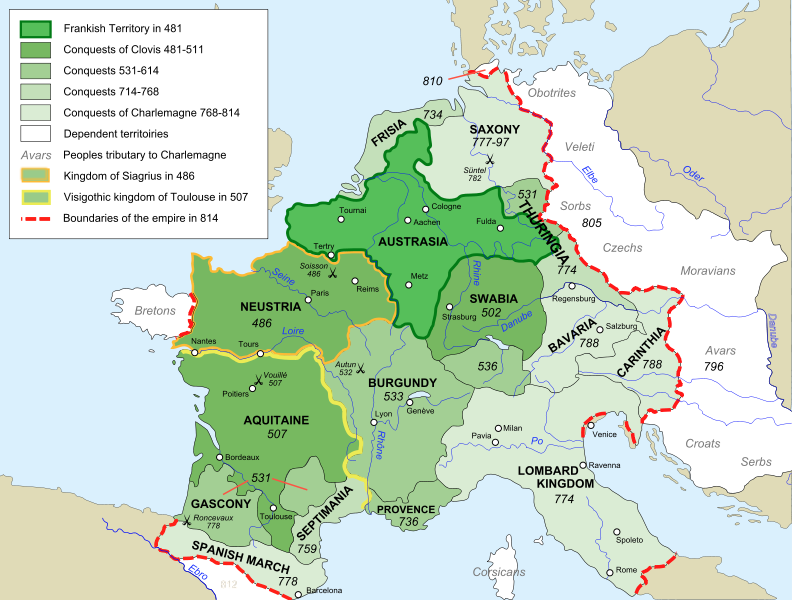
Map showing the growth of the Frankish Kingdom
(From: William R. Shepherd, “The growth of Frankish power, 481–814,” Historical Atlas, 1926 edition, p. 53)
But this was an enormous reach of territory for a single individual to be governing – as Charlemagne had no vast bureaucracy, civil or military, by which to manage his lands. So, appointments were made by Charlemagne (and his descendants), to certain well-respected supporters or vassals – authorizing them to govern certain areas of his Empire – all in Charlemagne’s name of course. These vassals were then permitted to become lords themselves of these assigned territories, appointing their own supporters, their own vassals, to help manage smaller regions within their own appointed land. Completing this ruling class were then numerous warriors or knights who came into full service to the local lords, offering these lords military support and receiving in return the right to share the dining tables and residence in the castles of their lords.
Over a period of time, these feudal responsibilities tended to be passed on from fathers to sons. Thus it was that Europe’s ruling class came to be made up only of individuals born to this small group of privileged families. Likewise, those who tended to hold the higher offices in the Church – which authenticated or legitimized this social arrangement – also were themselves usually drawn from these same families. As far as the rest of the 95% of the population, they remained permanently locked out of entry into this privileged ruling class. Instead, as peasants, they tended the fields and performed the manual labor needed by the local lords and ladies. And this was then the feudalism that would govern European life for centuries.
Viking blood added to the mixture. But about the time Charlemagne was bringing Western Europe under this feudal system, attacks were happening along the edges of his vast Empire – and across the way even in the British Isles. Northmen (Normans) or Vikings coming from the Scandinavian North were beginning to conduct horrible raids on Christian Western Europe – stopping cold the cultural advance that had almost got up and running with Charlemagne’s social-political revolution. These Viking raids effectively plunged Christian Europe back into the Dark Ages.

The 793 Viking attack on the abbey at Lindisfarne announces the beginning of the very, very bloody Viking raids
However, around the start of the second Christian millennium (ca. 1000 AD) the barbaric attacks of the Vikings or Normans slowed up considerably, giving Europe something of a degree of peace, the first in a long time. Part of this was due to the settling of the Normans within the communities they had once raided ruthlessly – the Vikings or Normans adopting both the local languages and the Christian religion of the people they had overrun – now becoming as dukes or even kings, protectors of those same communities – such as French Normandy, the English Danelaw, eventually England itself (1066), and even places as distant from the North as the Mediterranean island of Sicily.
The Crusades – and encounter with Islam’s great wealth. But even with their settling in, the Normans lost none of that energy – though this energy was now tamed and converted to the powerful service of Christian or Western society.
And in 1095 this energy would be called on by the Christian Pope to rescue the Holy Lands from the Muslim Turkish “infidel” who had made Christian pilgrimage to the Holy sites of the East very difficult, if not even impossible. The Normans – but also the Germanic kings and noblemen (as well as multitudes of commoners) – boldly answered the call to go crusading (“to take up the cross”) in the Holy Lands of the Mediterranean East.

against the Muslims ruling the Eastern Holy Lands

The taking of Jerusalem by the crusaders – 1099
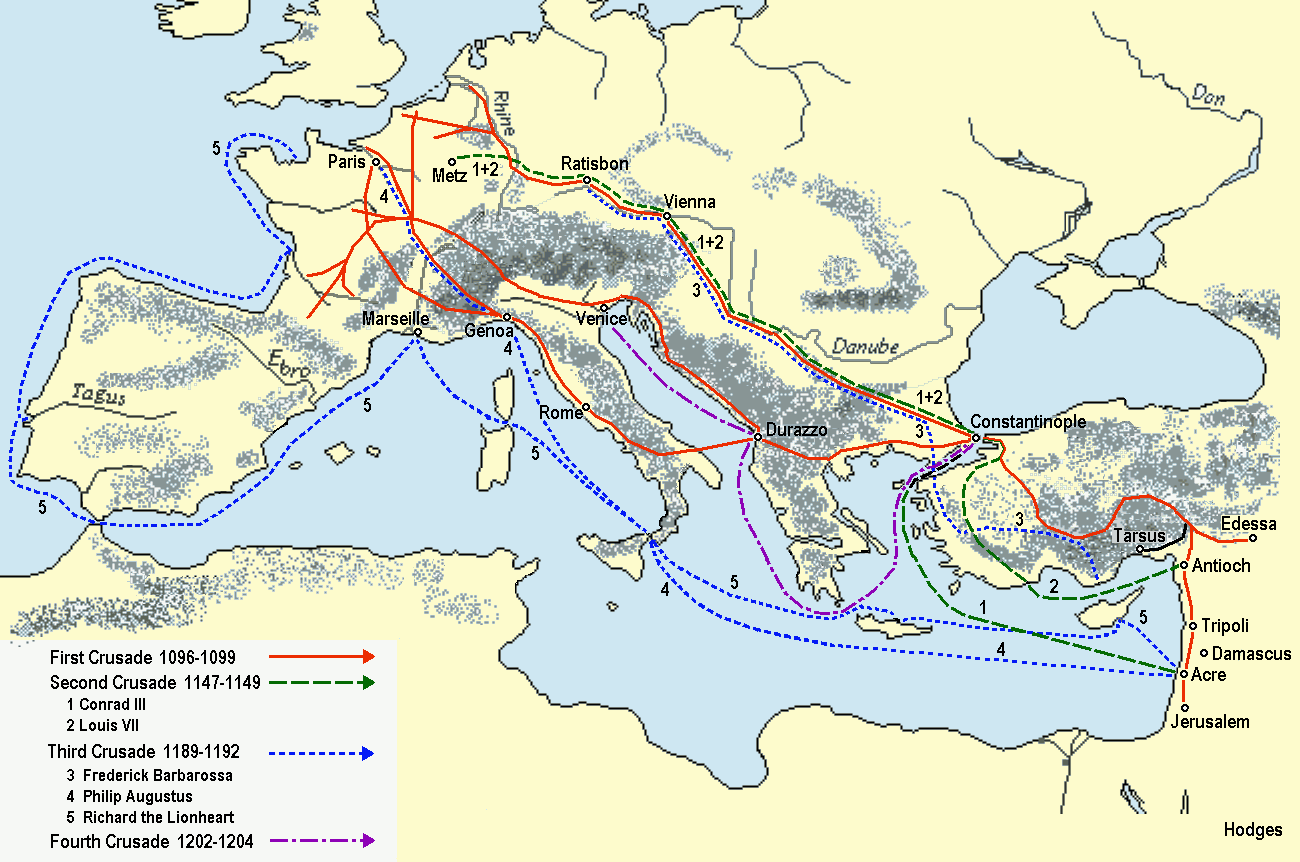
The Crusades which followed over the next two centuries (1100s and 1200s) in turn inspired two major developments in Christian culture or civilization at the time. First, it involved the outpouring of a renewed religious spirit eager to spread the Christian faith to the Muslim lands of the East. This spirit could be found high and low in Christian society – although the European feudal nobility of kings and princes quickly took the lead in the enterprise.
But secondly, the Crusades brought the rather materially primitive Europeans into direct contact with the East’s fabulous wealth, such wealth as Western Europe had not seen since the fall of Rome many centuries earlier. Not surprisingly, the Crusaders themselves wanted to participate in that world of wealth. Some of the Crusader noblemen even settled themselves amidst the wealth of Islam, establishing Norman kingdoms in the recently conquered lands of the Middle East – sort of “going native” – not exactly abandoning their Christian faith, but wanting very much to combine their Christian world with this higher level of Muslim material wealth. But this new hunger for material wealth would include also those crusaders who returned to their kingdoms and principalities in Europe after having fulfilled their pledges to crusade for Christ in the East.
The Franciscans and Dominicans. In the early 1200s a spiritual “awakening” was to come to a young, very wealthy and very brash Francis of Assisi, through both a series of personal hardships and a mystical call to give his life over to serving the poor, as Christ himself exemplified.
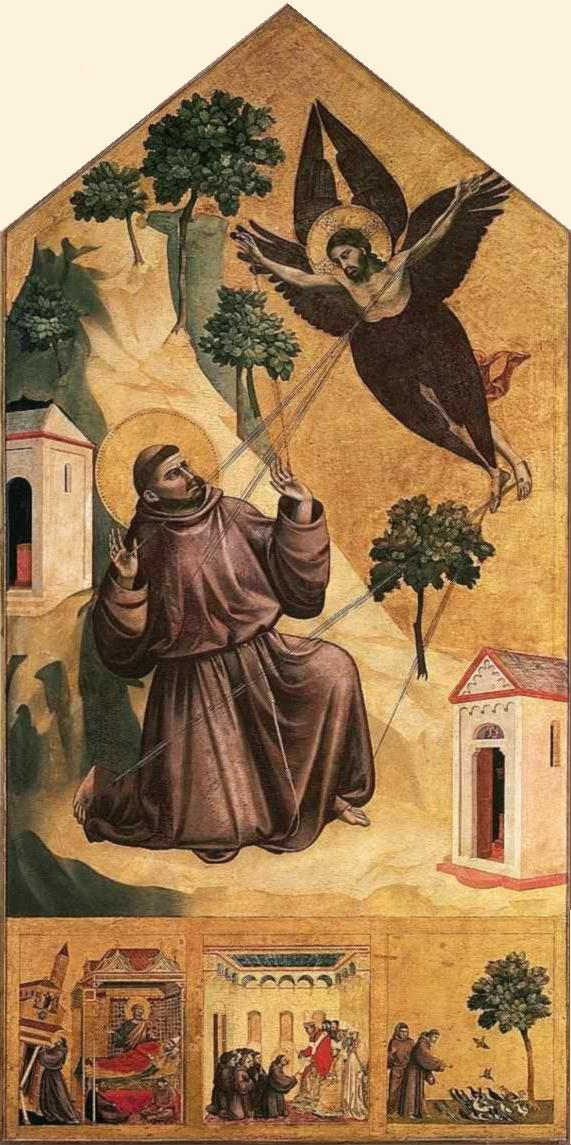
Francis receiving the stigmata – by Giotto
In fairly short order a much-transformed Francis attracted a large number of other young Italians to such service, forming something of a monastic community, which the Pope then forced him to bring under Roman or papal supervision (lest he be declared a heretic). Out of this the huge Franciscan movement developed, one that would eventually take multitudes of Franciscan monks to all corners of the world, and one that finds Franciscans even today serving the poor both in urban ghettos and rural villages everywhere.

Pope Innocent authorizing the Franciscans – by Giotto
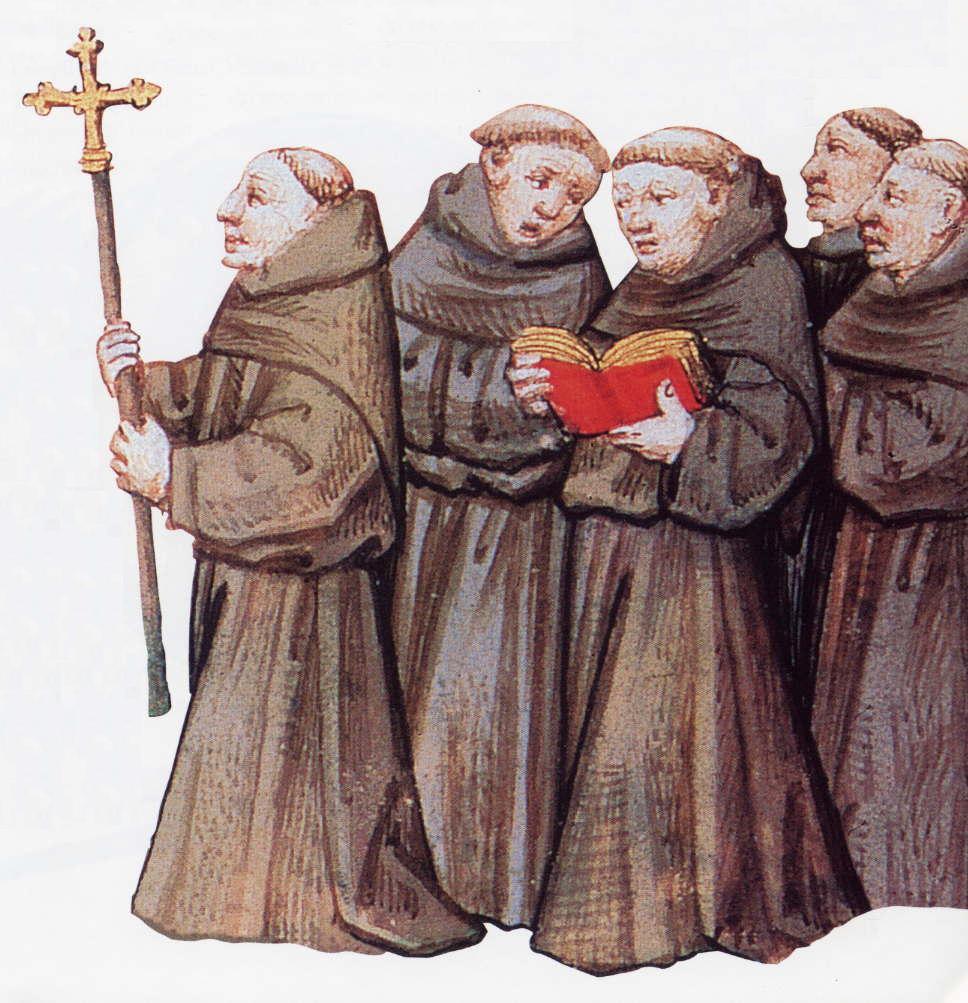
Franciscan “gray friars”
At about the same time (also the early 1200s) another individual, the Spanish priest, Dominic de Guzman, began to train Christian teachers in order to rebuild proper faith in the Church and its Christian ministry. Here too his new monastic movement (with considerable papal support) spread rapidly around Europe, as vast numbers of Dominican monks or “Friars” were sent out to teach and enforce Christian orthodoxy.
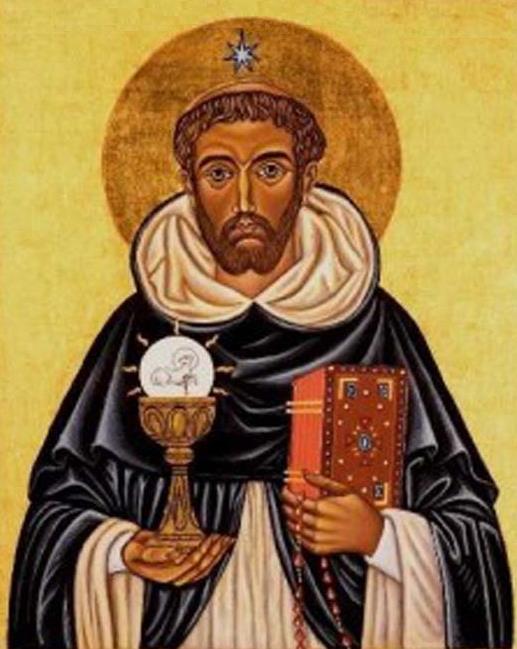

Dominican “black friars”
The rise of urban Europe. Meanwhile, taking advantage of Europe’s awakened consumer or materialist spirit brought on by the crusades were a number of port-cities located strategically along the sea routes that made for easy access to the wealth of the East. Prominent in this regard within the key Mediterranean region were a number of city-states of Italy, not at all feudal domains but instead types of urban republics – the most important being Venice (which actually went on to develop a vast commercial empire linking Europe and the East) – but including importantly also Genoa (another shipping center) and Florence (a banking center situated in the center of the flow of moneyed wealth East and West). But coastal cities of the Atlantic – such as Portugal’s Lisbon, Flanders’ Antwerp, Bruges, and Ghent and England’s London (not on the coast but accessible to the high seas by way of the Thames River) – and the cities of the Hansa League of northern Germany, such as Lübeck, Hamburg and Danzig and the Rhine region such as Cologne also got involved – and also grew quite wealthy from this new East-West trade.

A view of Venice
Scala – Florence

Canaletto – The Doge’s Palace – Venice (ca. 1730)
The Royal Collection – Windsor Castle
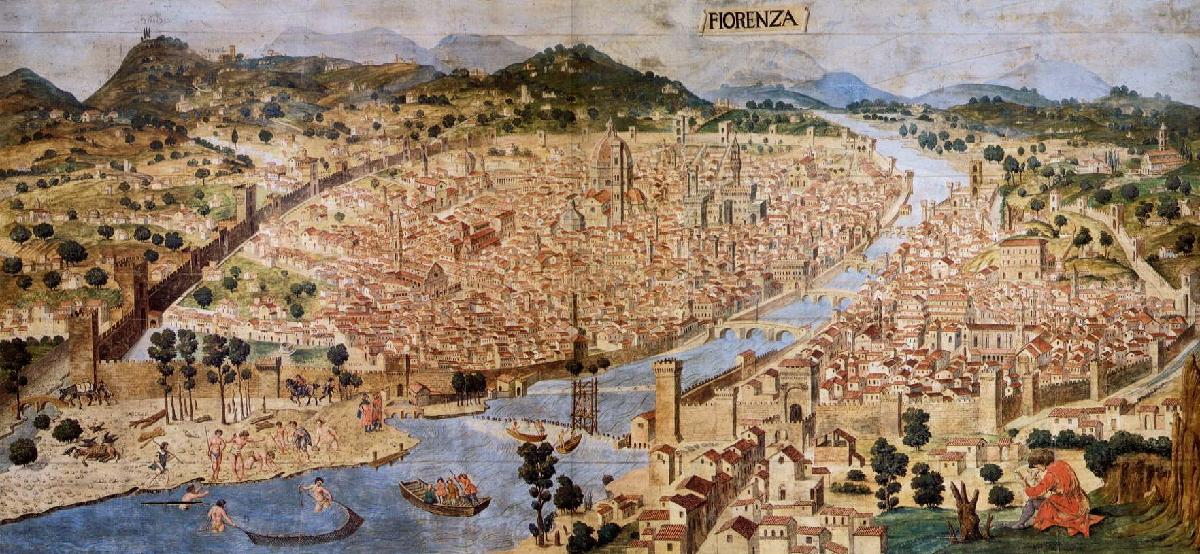
Florence, Museo de Firenze Com’era
Renaissance Europe. By the 1300s and 1400s, Europe was being stirred by this flow of wealth and power to a vast cultural awakening, later termed the “Renaissance” (French for “rebirth”). God and Christ soon became upstaged in popular interest by simply the life of man himself, and his new-found ability to bring his world seemingly under human mastery. Thus “Humanism” increasingly became the cultural motif of Renaissance Europe.
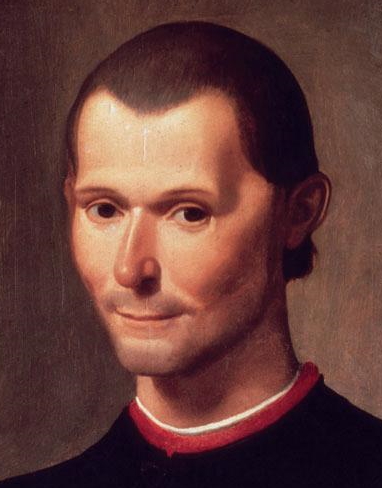 A classic example of such Humanism was found in the works of the political analyst, Niccolò Machiavelli. In his early 1500s study, The Prince, Machiavelli insightfully described the way for a dictator to bring unity to a conflicted society, through everything from brute force to simple political deception. Humanists would later denounce Machiavelli for his less than elegant depiction of the human spirit. But they would also find it impossible to prove him wrong. In any case, none of this had anything to do with traditional Christianity and its role in European society.
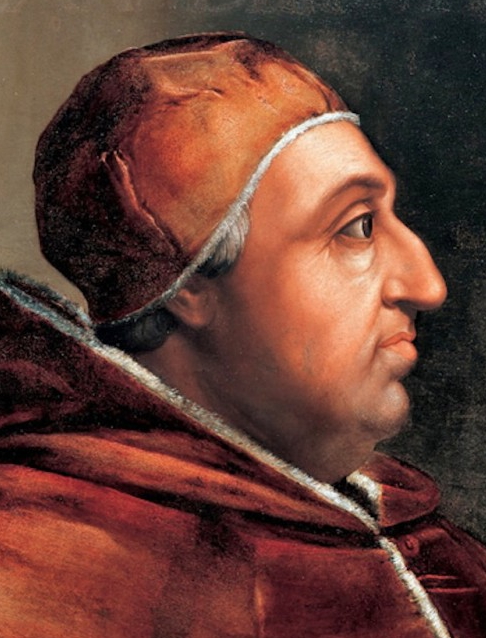 Indeed, traditional Christianity at the time was suffering deeply under the greed and political corruption of the Church, even papal authority itself, such as the very corrupt Pope Alexander VI and his Borgia family which directed the church during the period 1492-1503, in political opposition to the powerful della Rovere family (Pope Julius II, 1503-1513) and the Medici family (Pope Leo X, 1513-1521). The Church had become a matter of constant, sometimes even brutal, politics – and very little spirituality.
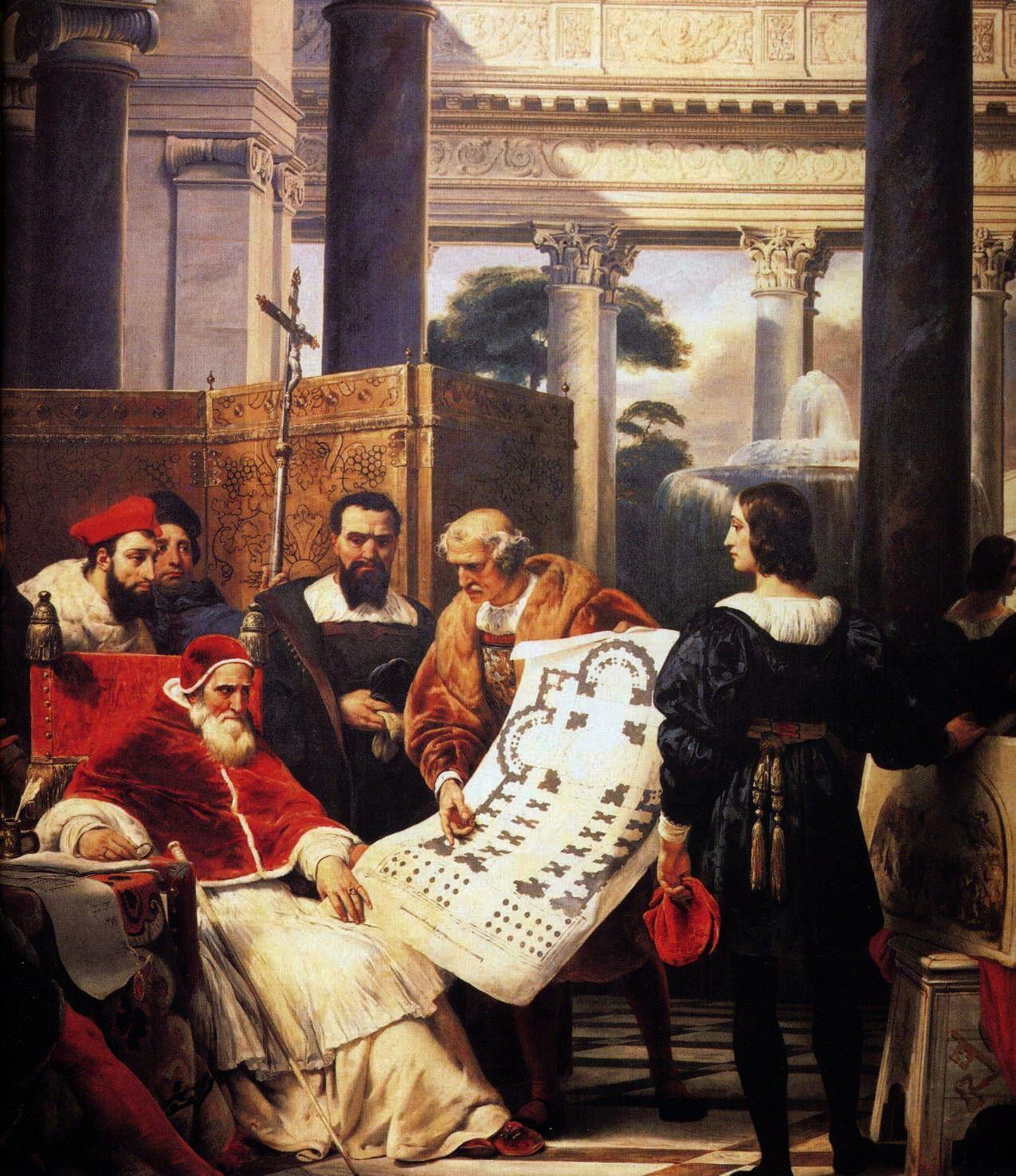
Michelangelo, Bramante and Raphael meet with Pope Julius II
with plans for new (and very expensive) Vatican cathedral
Paris, Musée du Louvre
[1]Nor do they understand or admit that their “Secularism” is itself a particular worldview or religion, a religion that through the federal courts they have succeeded in establishing as the only religion allowed to be taught in America’s public schools, thus preventing the people from the free exercise of their right to have their children raised in accordance with their own Christian worldview or religion. And ironically, it is the federal courts themselves, the supposed guarantors of last resort of America’s constitutional freedoms, not Congress, that has been used by the Secularists to dismiss the guarantees of the freedom of religion promised by the Constitution’s First Amendment!
[2]Today we would term their well-structured universe as one that was “scientifically ordered.” Jesus seemed not to be limited in his thinking and behavior by such “science.”
[3]The Roman government’s offering of “bread and circuses” to the masses to keep them supportive of a decadent imperial order was a classic case of a ruling elite failing to understand what it is that makes for a vibrant society, one defended willingly even to the point of death by its members. Cheap material rewards offered by a ruling class will never rescue a society whose moral order is failing.
[4]Some of these tribes, particularly the Goths, were already Christian, though Unitarian or “Arian” thanks to the missionary effort of Ulfilas and the leadership of the Gothic chieftain Fritigern in the 300s; Rome was “Trinitarian” and thus looked on these tribesmen as not yet fully Christian, and thus in the need of conversion.
[5]He was the grandson of Charles Martel (the “Hammer”) who had made his own great place in history by being able to stop the spread of Islam into Europe by defeating Muslim forces at the Battle of Tours (732) in central France. He went on to establish the Carolingian dynasty ruling France, which Charlemagne was soon to head up.
[6]The Saxons and Celts of the British Isles excepted, as they continued to lay outside Charlemagne’s conquered territory. Likewise, most of Spain also fell outside Charlemagne’s realm because it remained under Arab-Berber Muslim control, and would do so in part for the next 700 years.
THE BREAKUP OF CHRISTENDOM
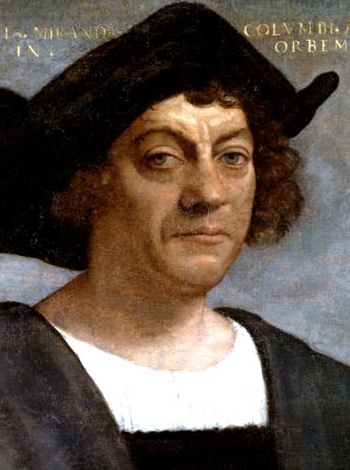
Dynastic rivalry. While all this was going on in Rome, the feudal dynasties of the quite rural European interior did not want to be left out of this scramble for wealth and power that was clearly benefiting these rising city-states of Italy, Flanders and other coastal regions. Thus the Portuguese kings of the House of Aviz in the mid and later 1400s sent explorers from coastal Lisbon to look for a direct passage to the wealth of the East by going around Africa – thereby avoiding the expensive Italian and Muslim middlemen of the cross-Mediterranean route.[7] Not to be outdone by the Portuguese, the Spanish monarchy of Ferdinand and Isabella at the end of the 1400s commissioned the Genoese sailor Christopher Columbus to locate a supposedly more direct route to the wealth of Asia by heading west directly across the Atlantic – presuming that Asia was only a short distance to the West. What a surprise Columbus had when he ran into islands just offshore of a vast landmass whose existence Europeans were completely unaware of.
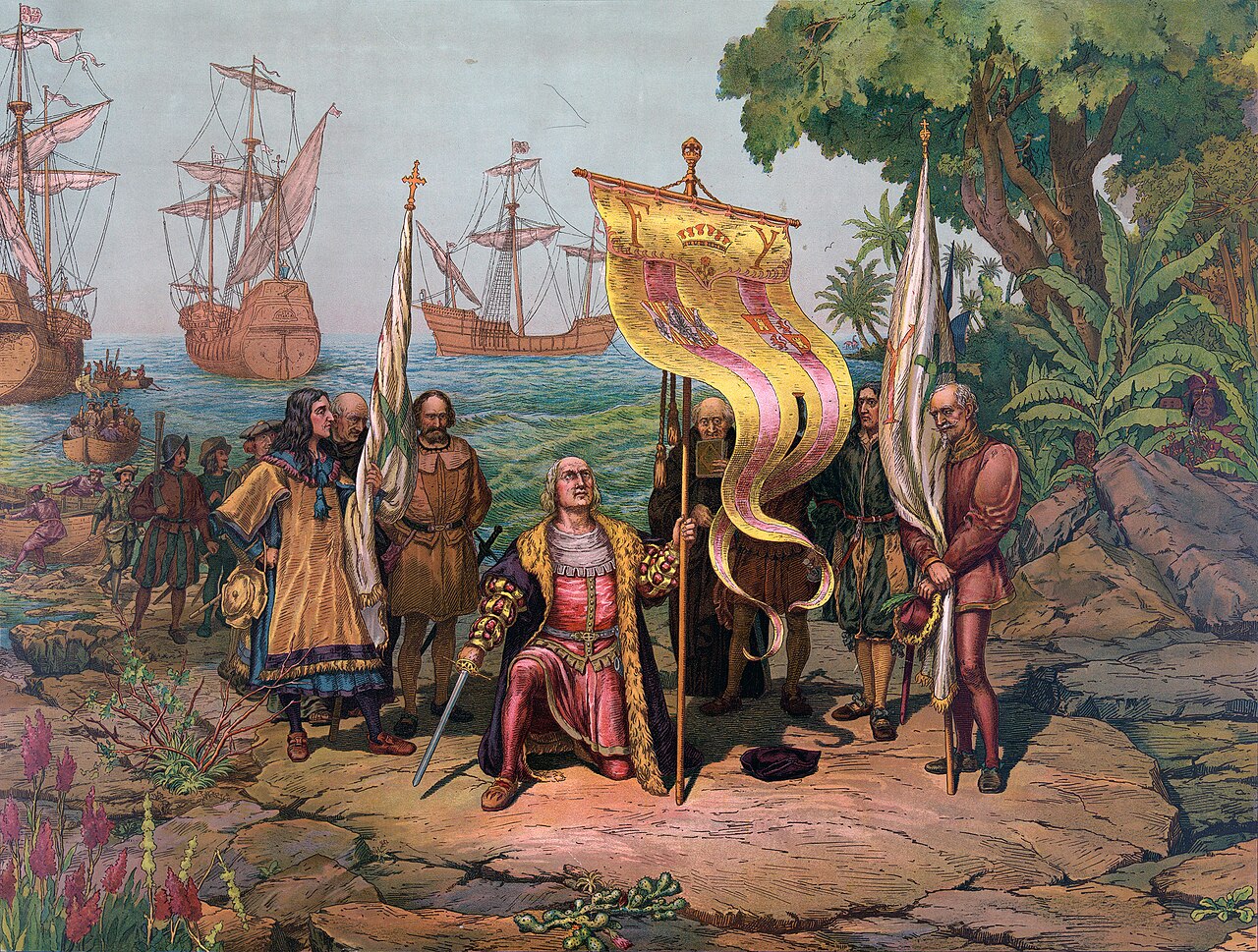
This discovery would ultimately inspire Spanish adventurers to head to this new land (given the name “America”) – when rumors of vast quantities of gold were soon verified with the discovery – and plunder – of both Mexico and Peru (early 1500s).
At this point the Spanish Habsburg dynasty (actually originally Dutch) loomed far above all other European dynasties (the Valois of France and the Tudors of England, for example) in wealth and thus also power. Habsburg Spain would in fact continue to dominate Europe totally during the 1500s – thanks to this huge flow to Spain of plundered American wealth in gold and silver.
The call for reform of the Church. However, by the early 1500s, something else was stirring in the hearts of the Europeans – some of them anyway. The personal empowerment in wealth and the opportunity to explore life more deeply during the European Renaissance served to challenge inquiring minds to examine more closely the way European life itself was structured.
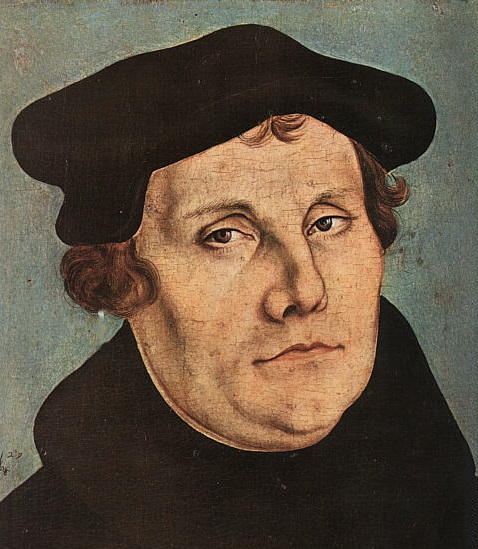 Luther. While the Italian scholar and diplomat Machiavelli was exploring the hard realities of this growing power and its impact on European society, the German monk Martin Luther was looking more deeply into this matter of the Christian Church itself in how all this material power had sent the Church far, far away from the original Christian spiritual roots outlined in ancient Scripture (the Bible) – which Luther had been assigned to teach to his fellow Augustinian monks in Germany.
Luther was so bold as to challenge the Church publicly to return to the original ways of Biblical Christianity – which Christians were taking a new interest in (the Bible was just coming into massive publication thanks to the recent invention of the printing press). This was a serious challenge to the traditional authority of the Church – presided over by the Pope but defended also by the ruling dynasties of Europe, pledged to defend that Christian faith – not only against Muslims beyond the Church but against heretics within the Church itself.
 Foremost in answering this responsibility as Defender of the Faith was the very wealthy and very powerful Charles of Habsburg, King of Spain, but also Holy Roman Emperor – actually mostly just an honorific position as feudal lord of the Germanic lands of central Europe.
But Luther found support in his challenge to the Roman (or Catholic) Church from a number of princes and dukes of Northern Germany, feudal lords who chafed at Charles of Habsburg’s imperial rule over their German lands. And thus, because of that support, Charles was not able to silence this Christian rebel.
But beyond this political break from the Catholic establishment supported by Germany’s princes Luther was not willing to go. When German peasants attempted to put their social-political as well as their theological destinies in their own hands, Luther came out in full support of the efforts by the German princes to put down this populist rebellion[8], even when the oppression turned extremely violent (approximately 100,000 peasants killed).

The Battle of Frankenhausen – May 15, 1525
Luther simply would not go further than theological reform. And thus feudal society dominated by a variety of German princes would remain the status quo for Germany all the way up to the beginning of the 20th century!
Calvin’s Geneva. This spirit of rebellion against the Catholic establishment was also picked up by the naturally inquisitive leaders of Europe’s rising merchant cities, a highly literate group fully capable of looking on their own into this religious question unleashed by Luther – through a careful reading of the newly printed Bibles that had recently begun to be translated from the Latin into their national languages – something outlawed by the Church, which claimed that only trained priests were qualified to understand the Bible correctly. But the simple reading of Scripture by literate urbanites seemed to refute this priestly claim – supporting Luther’s idea of “the priesthood of all believers.” The Catholic (“Universal”) Church was outraged – but the urbanites were delighted – and hungry for more.
 Some two decades after Luther had challenged the Catholic Church, John Calvin wrote a huge work (Institutes of the Christian Religion – in Latin in 1536 and French in 1541)[9] in the hope of convincing French King Francis to support the reform of the “Protestants” – as they were at this point being termed. But the effort merely forced Calvin to have to flee an angry French king. Calvin eventually ended up in Geneva, where he was asked to try to follow up on church reform in Switzerland started out in Zurich by Ulrich Zwingli (who had begun his Swiss Reform Movement at about the same time as Luther’s efforts, but who had been soon killed in a religious battle with Swiss Catholics). Geneva’s urban leadership wanted Calvin to put his Reform ideals (quite similar to Zwingli’s) into operation in this highly independent Swiss city.
On a second attempt, Calvin’s Christian theological and social reforms began to take hold in Geneva. And Calvin’s Genevan reforms went well beyond Luther’s, focused not just on the reform of the Christian doctrine according to 1st century standards, but also on calling all members of the Genevan community to strive to live and work together even in their daily lives in accordance with the social standards of first-century Christianity, when Christians took on not only society’s theological challenges, but also its political, economic and social challenges as well, as a key part of the Christian life.
In this, Calvin also stressed the idea of equally important service to society on the part of all of its members, because he understood that all people – although called to different tasks in life – were fully equal in the eyes of God – and thus must be also be treated with equal respect in their mutual service to the community. Even their social leaders were simply servants, not masters of society, elected to office to work in accordance with the will of the community itself.
Calvin’s reforms shook the feudal world with this idea of a basic human equality which placed on everyone’s shoulders (including the elected officers of the community) the mutual responsibility of seeing that society lived, in all its ways, according to God’s Biblical standards. Calvin’s reforms consequently directed Christian society to be a community of self-governing individuals, living together in a mutually interdependent manner – powerfully so because their work together was guided and strengthened by the Holy Spirit.
Calvin’s Genevan Reformation thus not only put forth Church-shaking “Reformed” theology, it presented an actual demonstration of revolutionary social philosophy in action.
Soon the word spread around Europe as to what was going on in Geneva, and would-be Christian reformers began to flock to Geneva to see what a community attempting to live according to Biblical standards in all its social capacities actually looked like. They came from England to study the Calvinist experiment in Geneva – and returned to their English homeland as “Puritans” – calling for the Church of England (and thus English society as well) to be purified in accordance with Biblical standards. They came to Geneva from the Dutch lands of Flanders and Holland and returned to their lands to institute the Dutch Reformed Church; they came from the German lands along the Rhine River and returned to build there the German Reformed Church; they came from France and returned as Huguenots; they came from Scotland and returned as Presbyterians.
The Catholic Counter-Reformation. Finally, a Catholic Church Council was held at the city of Trent where, from 1545 to 1563, efforts were made to answer the Protestant challenge, in particular by tightening up church discipline, both theologically and politically.
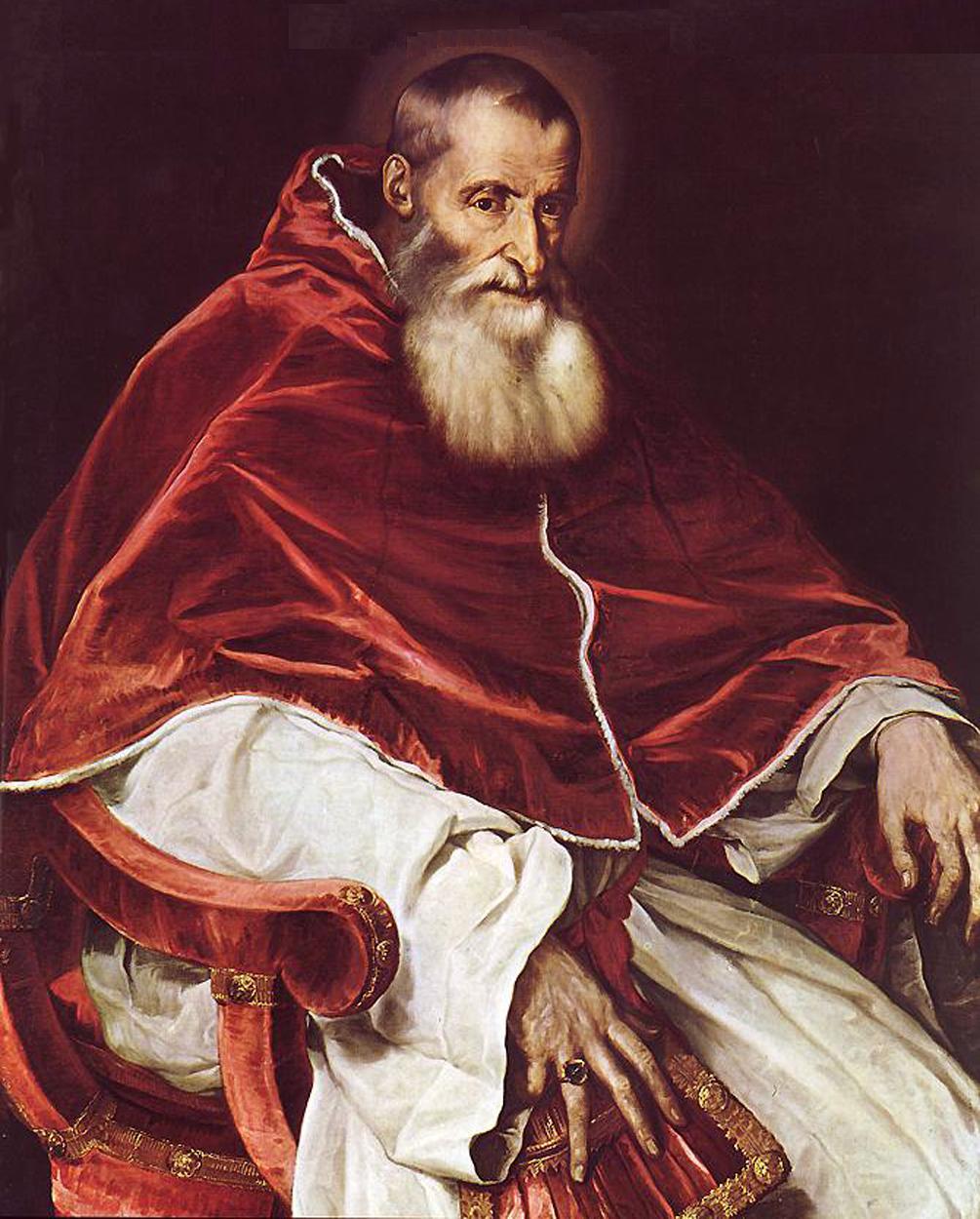
Pope Paul III – who convened the Council of Trent – painting by Titian
Naples, Galleria Nazionale di Capodimonte
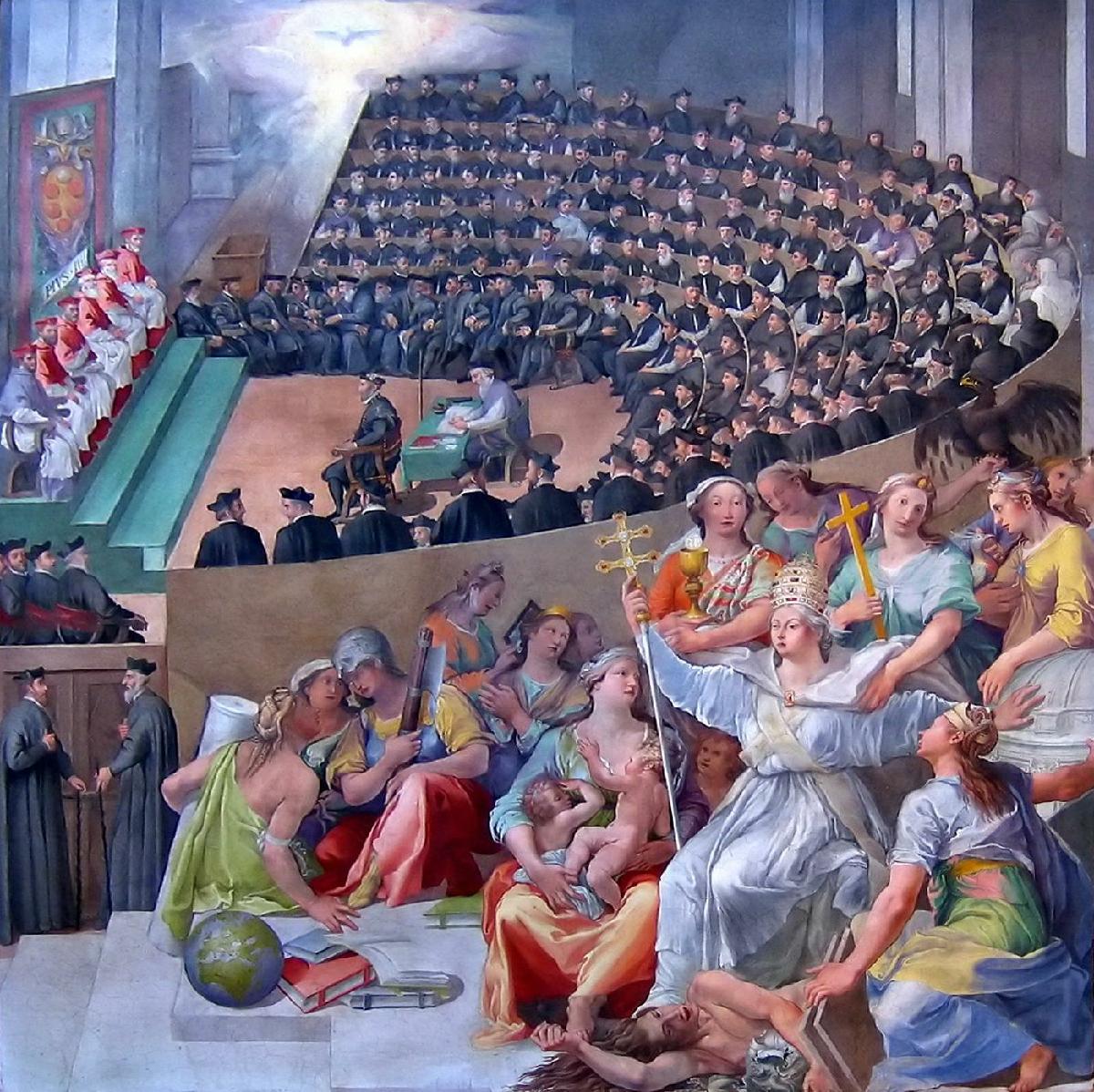
Besides trying to reinvigorate Catholic spiritualism, the decision was made to hunt down Protestant heretics and force their reconversion, or, alternatively, their exile – or even death – with the Spanish Inquisition (which had already gone after Spanish Jews and Muslims) leading the way.
 Also the Society of Jesus, a priestly order of “Jesuits” founded by Ignatius of Loyola just prior to the opening of the Council of Trent, would play a huge role in putting some intellectual discipline behind the old Catholic order, with each Jesuit sworn to a life of simplicity, study, and total loyalty (military style) to the direction of the Roman Pope and to him alone – overriding the demand of the kings and princes to be the dominant authorities in their own realms.
The religious wars. At this point Europe was being deeply shaken as kings and princes of the old Catholic feudal order joined the Roman Church to fight an expansive Protestantism. Leading in this as the supreme Defender of the “True” (Catholic) Faith was Holy Roman Emperor and Spanish King Charles (ruling during the first half of the 1500s) and then his son Philip II (ruling Spain during the second half of the 1500s).
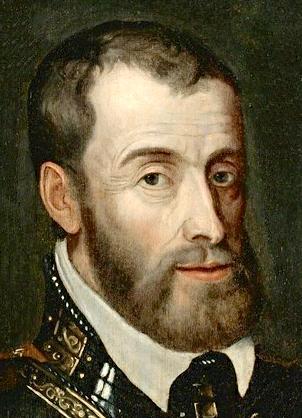
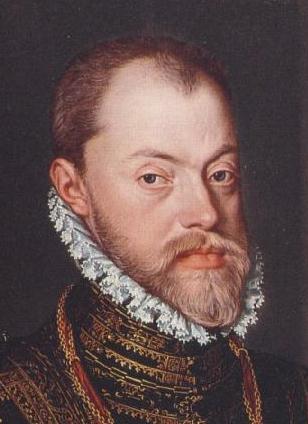
Charles Philip
They fought Protestantism fiercely, Philip unleashing his mighty armies on his cousins in the Habsburg’s Dutch homeland – forcing the southern Dutch, the Flemish, back into the Catholic fold. But try as he might, he could not bring the Calvinist northern Dutch of Holland to the same result.

The Spanish slaughter of the Dutch citizens of Oudewater
The town of Oudewater was conquered by the Spanish on 7 August 1575, and most of its inhabitants were killed.
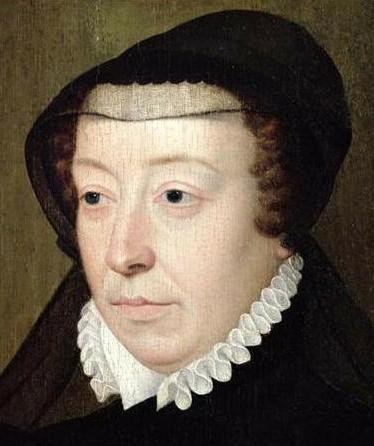 Meanwhile, French Queen Catherine de Medicis (ruled France from the mid-1500s until her death in 1589) managed to slaughter off the Calvinist Huguenot aristocracy (about half of the aristocracy at that point) at a Paris wedding they were invited to in 1572 – and then proceeded to go after the rest of the French Huguenots (killing tens of thousands in the process), effectively bringing the Calvinist Huguenot Reform to a halt in France.

An Eyewitness Account of the Saint Bartholomew’s Day Massacre, 24 August 1572 – by François Dubois
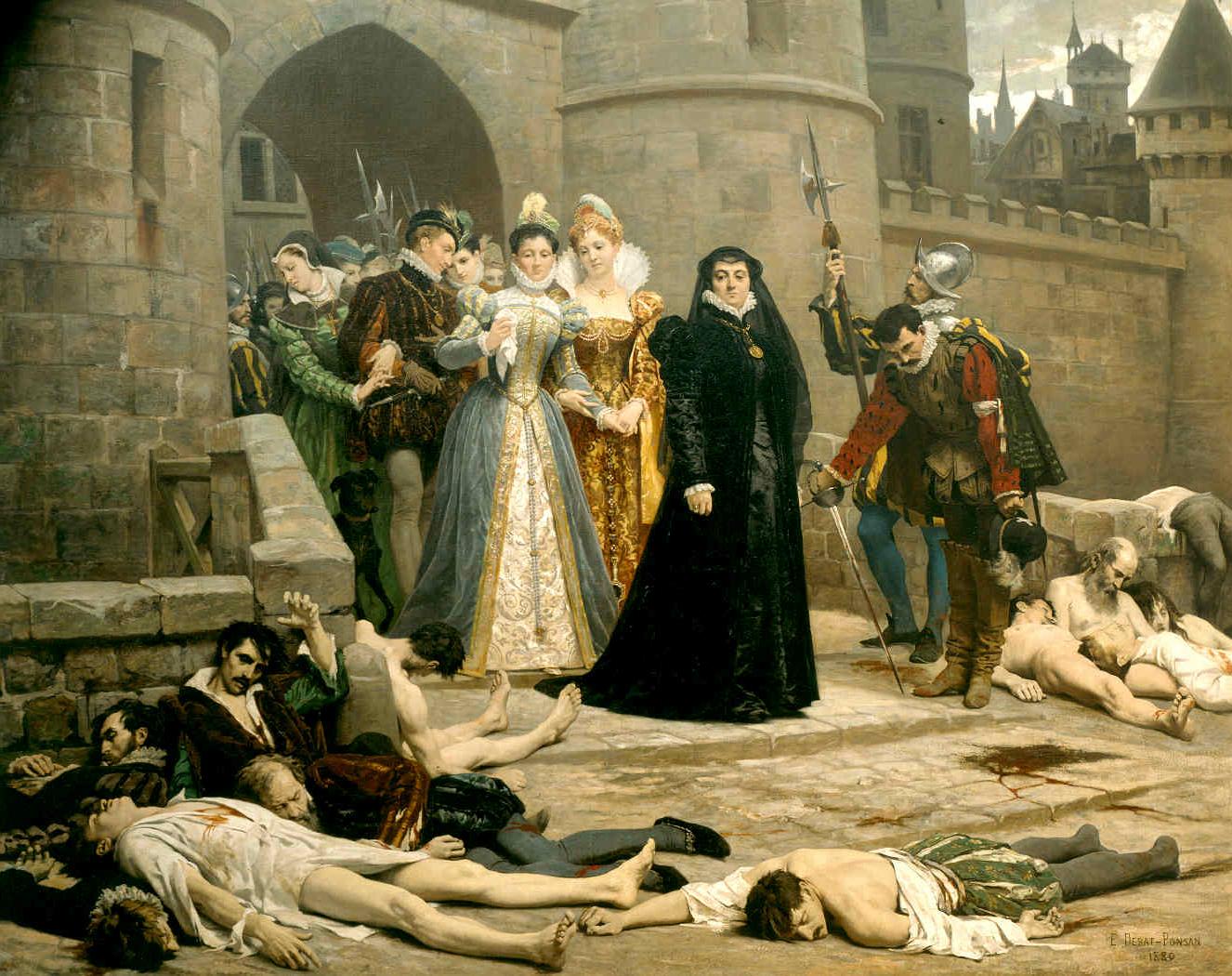
A morning before the Gate to the Louvre – by Édouard Debat-Ponsan (1880)
Catherine de Medici inspects the productivity of the Saint Bartholomew’s Day Massacre – 1572
Clermont-Ferrand, Musée d’art Roger-Quillot
By the early 1600s, Europe was caught up in full war between Catholics and Protestants, these wars becoming incredibly bloody, especially in the years 1618-1648 (thus termed the “Thirty Years’ War”). Finally in 1648, a religiously exhausted Europe came to an agreement (the Treaty of Westphalia) to simply recognize that further bloodying of the continent was not going to change the religious profile any. It was agreed that certain areas would henceforth simply be recognized as fully Catholic and others as fully Protestant. It was time to move on.
[7]Actually, before even reaching the lands of the East (India principally), the Portuguese had become quite wealthy in acquiring African gold and slaves.
[8]In his Wider die Mordischen und Reubischen Rotten der Bawren [Against the Robbing Murderous Hordes of Peasants] (1525) he advises the German princes to take necessary action against the peasants: “Let everyone who can, smite, slay and stab, secretly and publicly, . . . a poisonous, devilish rebel, like one must kill a rabid dog.”
[9]This work underwent numerous editions, increasing in coverage with each new issue, from a single volume of six chapters in 1536 ultimately by 1559 to four volumes of 80 chapters, indicative of his own development as a scholar-teacher.
THE IMPACT OF THE WARS OF RELIGION ON ENGLAND
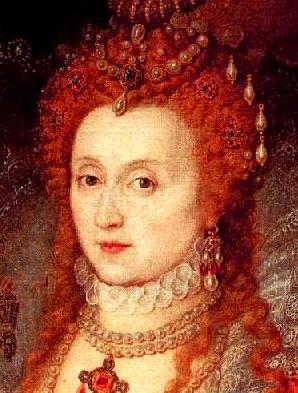 English religious neutrality under Elizabeth. England, at this time (second half of the 1500s) under the rule of Queen Elizabeth, managed to avoid this turmoil, due to Elizabeth’s ambiguous stance on the subject of Catholics and Protestants (she was seemingly sympathetic to both parties to the dispute). However, “The Most-Catholic Defender of the Faith” Philip II, in his failed attempt to send his mighty naval Armada to crush Protestantism in England in 1588, did not help the Catholic cause in England any. He in fact strengthened the Protestant national character of England when his mighty Armada went down to humiliating defeat at the hands of the British sailors, and God’s winds which blew the Spanish Armada into a trap it could not escape. From this point onward, English Catholics – fairly or not – would find themselves under suspicion as being less than loyal to their crown and country.
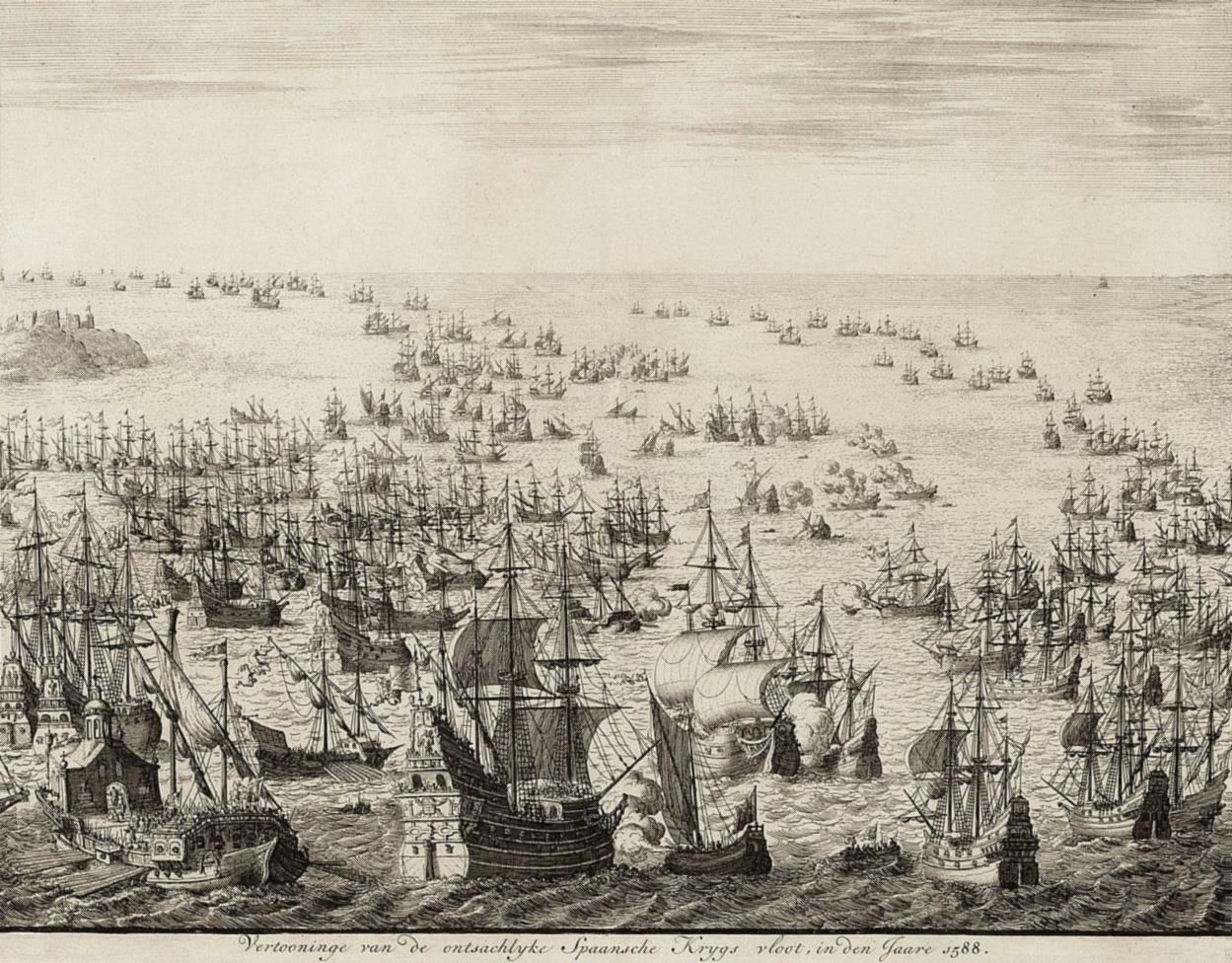
Jan Luyken – The display of the mighty Spanish Armada in the year 1588
Amsterdams Historisch Museum

Defeat of the Spanish Armada – Philippe-Jacques de Loutherbourg – 1796
depicts the battle of Gravelines – 8 August 1588
Ja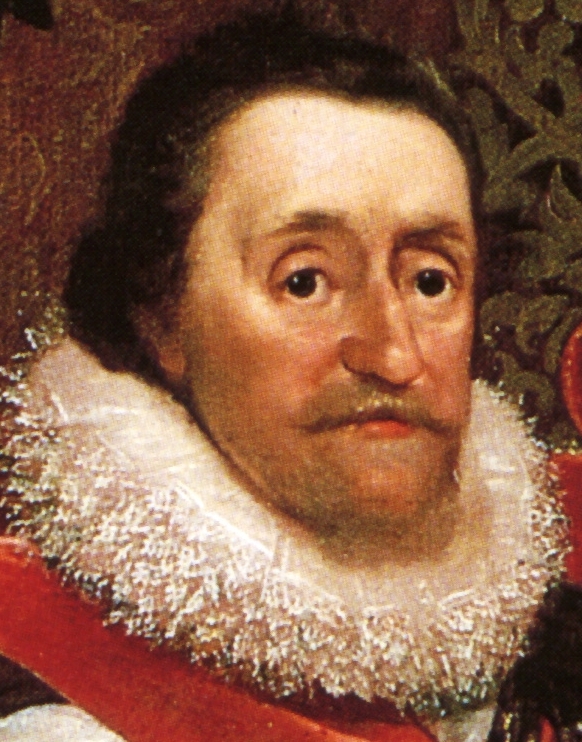 mes I. Then when the unmarried “virgin-queen” Elizabeth died in 1603, leaving no heirs of her own to inherit the throne, a cousin, Scottish King James Stuart, was called on to serve also as English King. With James being a “Presbyterian” Protestant, the Calvinist Puritans were hoping to see their sought-after church reforms taken up by the new king. They were to be greatly disappointed. Being now King of England, James was also the head of the Church of England, presiding over its episcopal hierarchy of archbishops, bishops and priests – and James was in no mood to have his ecclesiastical authority challenged by the mostly middle-class and lower-level-gentry Puritans. But at least he learned to tolerate them.
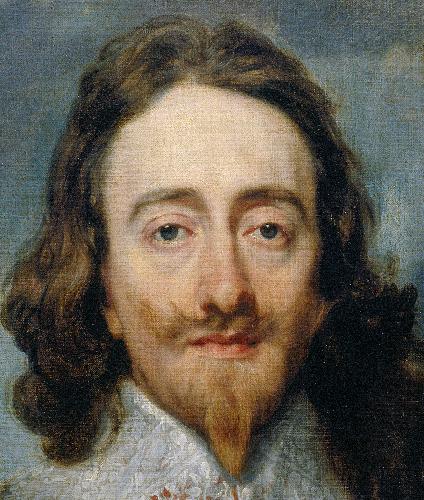 Charles I and the English Civil War. When James died in 1625, his place was taken by his son, Charles I. But Charles had distinct Catholic sympathies – and tensions thus grew between his supporters and the rising group of English Puritans. Many Puritans – by the thousands – chose to simply leave the growing field of conflict in England and head to America (New England principally, but also the islands of the Caribbean) to build a society there according to their Puritan ideals. But those Puritans that remained behind ultimately fell into full rebellion against Charles, producing a very bloody Civil War which pitted their own Puritan “New Model Army” (created in 1645 by the heavily Puritan Parliament) against the king’s royal army.
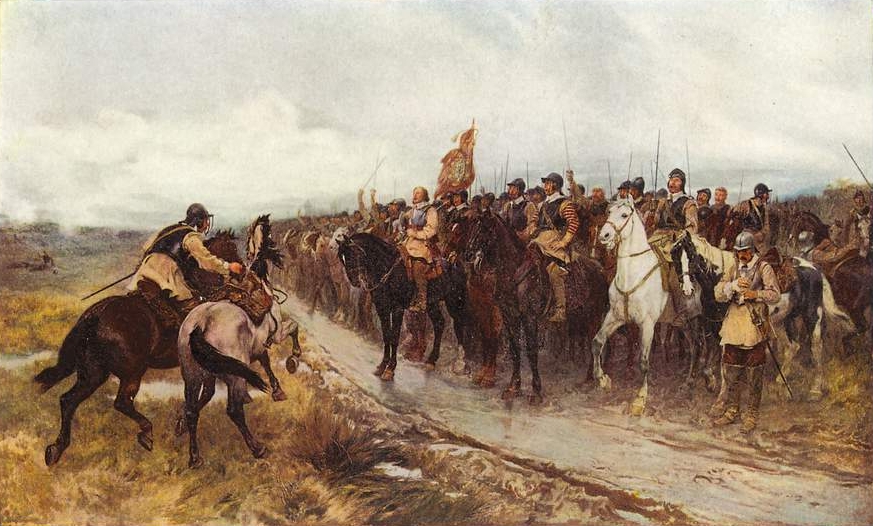
Ultimately, in 1649, Charles was defeated and executed, the remaining members of the Stuart family and their Tory supporters fled to continental Europe, and the Puritans took full control of England for the next decade (1649-1660), and governed the country, now operating as a Puritan Republic or Commonwealth.[10]
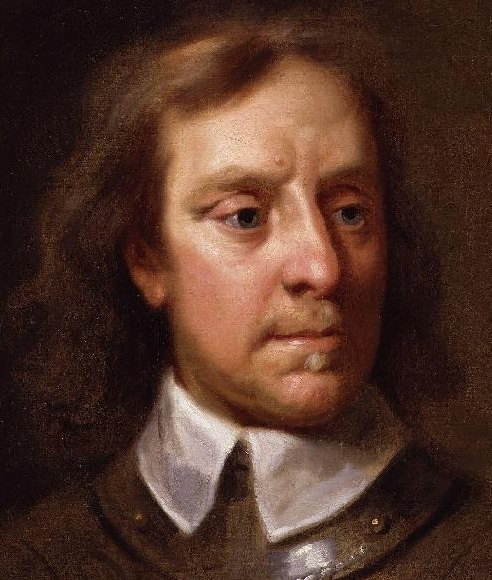 England’s Puritan Commonwealth … and the Restoration of the Stuart monarchy. But England’s Puritan Commonwealth, under the strict rule of Oliver Cromwell and his powerful Puritan army, did not find its way into the hearts of the majority of the English.
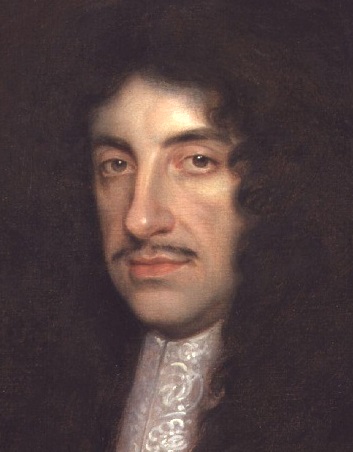 Thus also failing to find a potentially popular leader after Cromwell died in 1658 (his son was proving to be a big disappointment), the decision was finally made by Parliament in 1660 to call the Stuarts from exile – and turn the crown over to Charles I’s son, Charles II. Thus the Stuart monarchy was restored in England (the “Restoration”).
But the years of parliamentary rule during the Commonwealth had changed considerably the rules of English politics – so much so that the King and his Tory supporters had to proceed carefully in the presence of the strongly Whig Members of Parliament. The party of Whigs, although no longer Puritans by spiritual inclination, were nonetheless certainly Puritan offspring in terms of their quite post-feudal attitudes about government.[11]
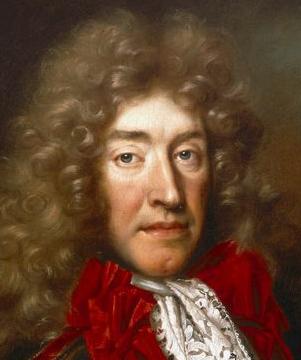 Charles II however was careful to watch his step in dealing with the Whigs – and managed to conduct a fairly successful reign as English (and Scottish) King. But his brother James II, who took over at Charles’ death in 1685 – was not so wise. He got caught up in the trendy fashion set by French King Louis XIV, who not only reigned over the most glamorous court in all of Europe, but also set the example of what truly autocratic rule should look like. Trying to imitate that dictatorial style of government in England would ultimately force James II’s expulsion from his throne in 1689. Subsequently the Protestant Dutch governor, William of Orange, and his wife (and James’ Protestant daughter!), Mary Stuart, were called on by Parliament to take the English throne as joint sovereigns.
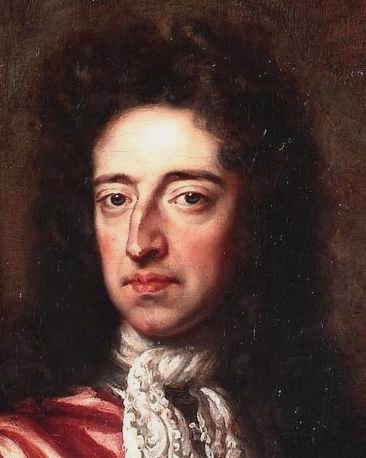

William Mary
The “Glorious Revolution”, and the “Human Enlightenment.” But Parliament’s success in establishing its own dominance in English affairs was not merely a political matter. It also had a tremendous intellectual, moral and spiritual impact on English society and culture. Just as the European continent turned away from divisive religious matters after the mid-1600s, so a similar development occurred in England at the end of the 1600s.
Replacing the old religious idea of God controlling all events in life, a new, quite Secular, worldview (ultimately religion) was coming into place, one which instead saw life as operating under rather fixed mechanical laws of “natural” cause and effect. Things just happened the way they did because they were designed by their very nature to operate that way. Thus “natural philosophers” began the study the “nature of things” (or “natural law”) in all realms of life, from the physical universe around them to the natural workings of man’s society, even the workings of the human mind itself. Consequently, the later 1600s became a time of intense social inquiry – in the quest of an improved natural design of society, one supposedly that would work better than the ones around them that had simply evolved over time through a brutal process of social struggle.
God did not factor into this rising intellectual world except perhaps as its ancient originator. But God no longer was involved – nor needed to be called on – in helping Europe’s enlightened natural philosophers engineer and direct what was expected to be a quickly improving world – a world soon to be brought under human mastery in this new “Age of Reason.”
Although people still attended church (at least one or the other of its major ceremonies, such as Christmas and Easter, but also weddings and funerals) and still considered themselves Christian, the reality was that Christendom was dead. Western culture by the end of the 1600s had stepped into the natural world of mechanically-operating materialism or Secularism – and its social-moral counterpart, Humanism. Leading the way were a number of famous natural philosophers, but most notably in England at the time, the physicist Isaac Newton and the social/psychological philosopher John Locke. These men would have a huge impact on their times, as significant as the impact that Luther and Calvin had on the previous century.


Isaac Newton John Locke
[10]Actually, the American Puritans kept their distance from the Puritan developments occurring back in England during the mid-1600s.
[11]These labels “Whigs” and “Tories” were terms of contempt that one party assigned to the other: Tories, the name for Irish Catholic bandits, assigned to those who stood with their Stuart king and his pro-Catholic sympathies, and Whigs, the name first for Scottish horse thieves and then later for Scottish Presbyterian rebels, eventually assigned to those pressing for a law which would exclude a Catholic from the English or British throne!
Eventually those terms would also be used to describe the groups in America in the 1770s who either supported, as “Patriots,” full independence from England (Whigs) or those “Loyalist” colonials who thought it criminal to rebel against their English king (Tories).