CONTENTS
 Bush, Jr. takes command
 The hunt for the 9/11 jihadists … and Bush’s nation-building
 Economic catastrophe (2008)
 The federal courts as America’s supreme law-making bodies
The textual material on this webpage is drawn directly from my work, America’s Story – A Spiritual Journey © 2021, pages 409-427
The national election of the year 2000. The Presidential electoral campaign of 2000 seemed to offer America an assurance that the politically mature path it had been on since the grand catastrophe of the 1960s and 1970s would continue. The two Boomer candidates competing against each other both came from political families well known to the American public – both the Bushes and the Gores. The Democratic candidate, Al Gore, had served eight years in the U.S. Senate – before being brought on board in 1993 to serve eight more years as Clinton’s Vice President. George Bush (we will call him “Bush, Junior” because he differs from his father, the former President, only in dropping one of his father’s middle names) was a newcomer to the national scene, but was in his sixth year serving as Texas governor as of the 2000 national election. Both seemed excellent choices.

Indeed, the election was a very close one, Gore actually winning the total popular vote – but losing the electoral vote by only 4 votes.
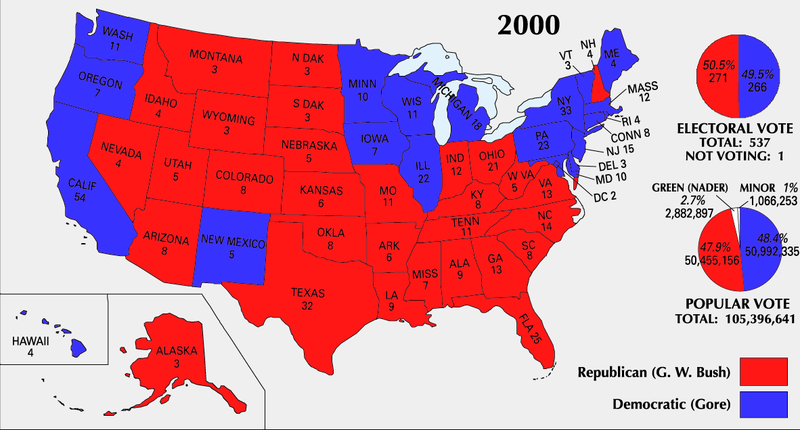
The Florida vote was so close (a mere several hundred votes separating the two candidates) that it went through a long period of recounts

– only to have the Supreme Court validate the decision of the Florida Secretary of State (a Republican) that Bush had won that state’s electoral vote – and thus the national election.
In keeping with long-standing American political tradition, Gore was gracious in accepting the final decision of the Supreme Court on the vote and stepped aside politely to let Bush take leadership of the nation.
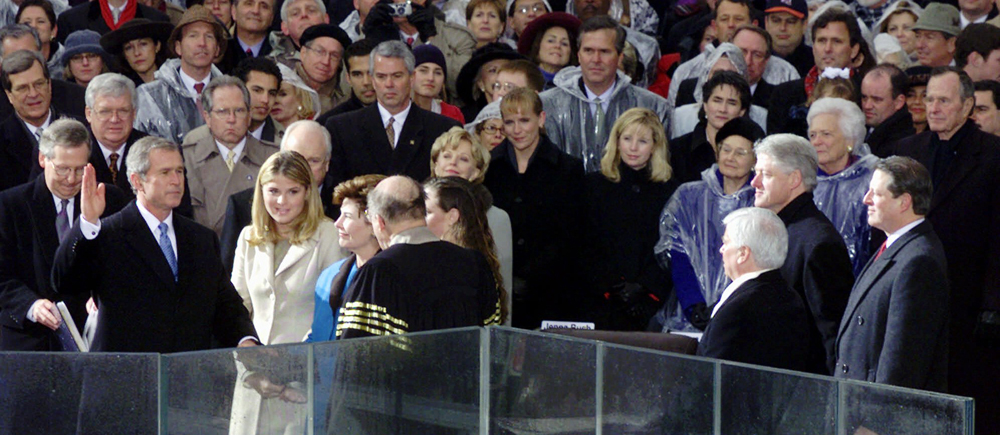
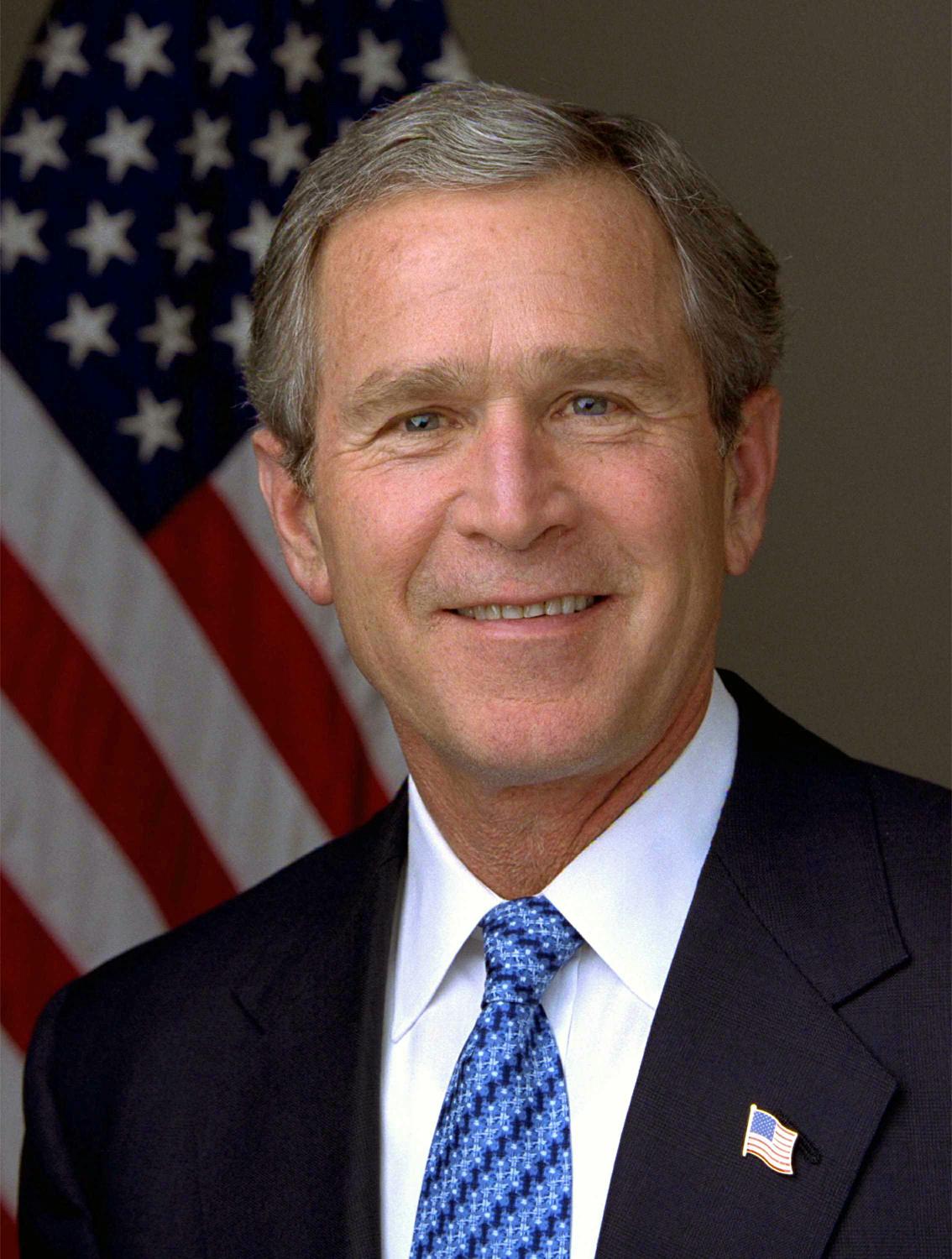 George “W” Bush. Bush, Jr. was, like Bill Clinton, born in 1946, and most certainly qualified as a Boomer, political idealism and all. We already know about his family background, and can safely say that although born of a traditional Connecticut dynasty, he was raised clearly as a Texan, and was most affirmative of that fact.
He not only saw the world as something that needed to be conquered, but also had a tough generation or two to follow – and measure up to in his own development. And it would always leave the haunting question to Bush, Jr., who would be left to wonder if it was on the basis of his own merits, or on the merits of his father and grandfather, that he was experiencing success in life. That’s one of the truly tough things that comes with being born to enormous social privilege.
He would of course be raised a Christian, but would have that faith tested deeply early on, when at age seven he had to watch his younger sister die of leukemia. And oddly enough, even his family name could not open the doors for him to study at Houston’s prestigious St. John’s School. That was hugely disappointing. But ironically, he was instead enrolled in the even more prestigious Phillips Academy up East in Andover, Massachusetts. So, was that God’s doing, or was it due to the fact that both his father and grandfather went there as well?
Interestingly, he rather enjoyed being the Texan amidst the polished up-East aristocrats, playing the “good-old-boy” Texan to the hilt! It gave him important social standing, which his mediocre grades did not! He became a leader thereby, and took this social profile along with him when he later (1964) entered Yale University (also a family legacy and certainly responsible for his admission, achieved in spite his poor academic record). And at Yale he kept up the profile as a smoking, drinking, fraternity boy, popular with the girls in the nearby girls’ colleges. And certainly not because of his grades, he was even admitted to Yale’s prestigious Skull and Bones Society (like his father).
However, he never became truly fascinated with the “polished” up-East world, and returned to Texas in 1968 and joined the Texas Air National Guard (family connections opening the way for him into this highly-sought-after unit).[1]

Then he went through his ten “nomadic years” – as he termed them. But those years included getting an MBA at Harvard Business School (1975), starting up his own oil business on his return to Texas, and then bringing that era to a wonderful conclusion in meeting, and three months later marrying (1977) a former 7th grade classmate, Laura Welch. This began the process of settling him down, especially when in 1982 twin daughters were born.

George W. and Laura Bush with their daughters, Jenna and Barbara – 1990
It was in meeting the traveling evangelist Arthur Blessitt in 1984 – and the following year, Billy Graham – that made Bush’s Christianity more than a mere church-going formality. In his new “born-again” life, he took up Bible and devotional reading and a life of prayer, and ended his drinking and eventually his smoking. In fact, so immersed in this evangelical world was Bush that, in helping out in his father’s presidential campaign (1987), he was assigned the task of developing invaluable liaison work with various American evangelical ministries.
Finally however, he was able (1989) to establish credibility by his own right, investing money from his oil business in the Texas Rangers baseball team, in the process, putting his name out front in Texas public affairs.[2]
Thus in 1994 he took up the challenge of running for public office as Texas governor (he had failed back in 1978 at a run for Congress) against the Democratic Progressivist and incumbent governor, Ann Richards, a daring thing to do. But it was a big year for the Republicans nationally (thanks to Gingrich) and Bush defeated her soundly, gaining 54.5% of the vote to her 45.9%.

Bush Jr. as Texas governor – with his wife and father – 1997
Besides taking a typical Republican stance on such items as cutting taxes, as governor he also presented himself as a “compassionate conservative” (in Boomer-talk, meaning sensitive to the injustices in the world), supporting educational reform, Hispanic community development (he loved to demonstrate his Spanish linguistic abilities), and community action programs through groups set up to work locally on social reform. And here is where his Christian faith played a big role, when he looked especially to “faith-based” groups to take the lead in developing and administering the local social programs.
He did so well at his job that he was reelected four years later – with an even bigger 69% support in the election, the first person in Texas history to win a back-to-back electoral victory as governor!
Now as his second term was coming to a close, he took up the idea of a run for the U.S. presidency.
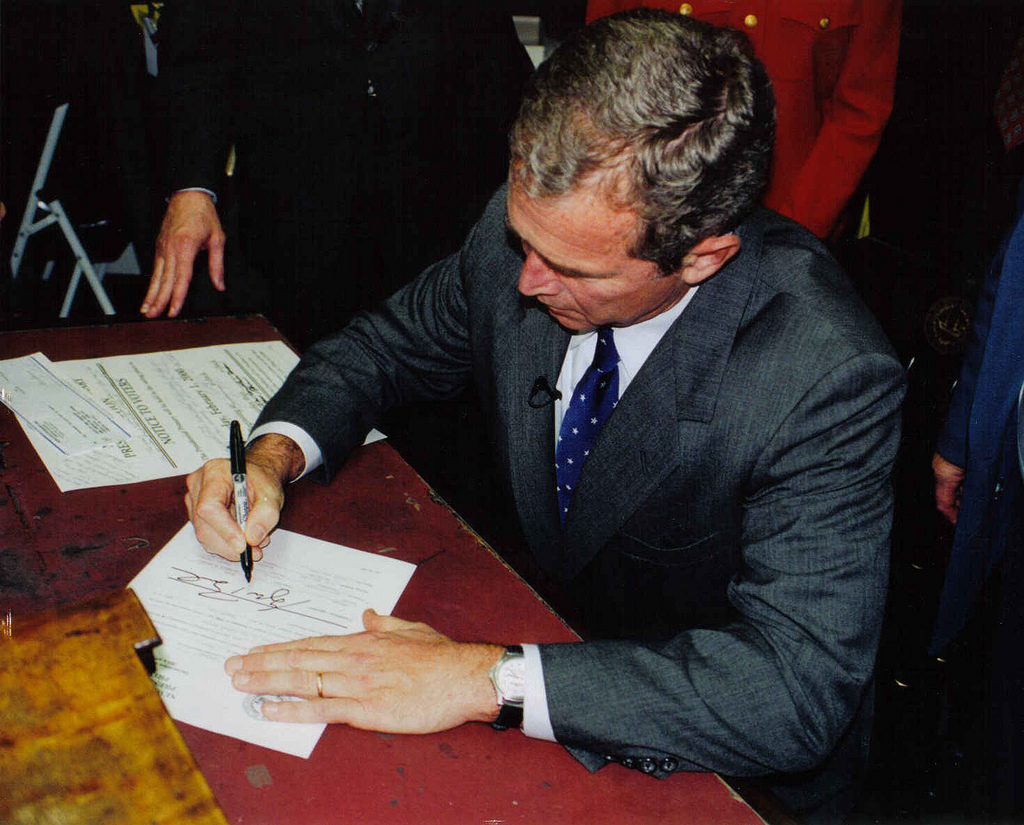
Bush in Concord, New Hampshire, signing to be a Republican candidate for president – 1999
It seemed to be a familiar world, and he felt quite confident that he could win the contest. And what he brought to the field of competing Republican candidates was his own record as a “compassionate conservative” governor, ready to see things run from Washington on much the same basis.
Eventually the Republican field was thinned down to just Bush versus John McCain, a war hero and Arizona senator. The campaign against McCain got ugly. But Bush came out on top in the contest.
Now in taking on his Democratic Party opponent, Al Gore, one of Bush’s lines of attack was all the costly and dangerous “nation-building” that the Democrats had involved America in during Clinton’s presidency (and – more importantly at the moment – Gore’s vice-presidency).[3]
In the end, probably most of the people who went to the polls to vote for Bush did so because he was the Republican candidate and because he was the son of a well-respected former American president. Otherwise there seemed to be very little differing the two candidates. Both ran as politically experienced “centrists.”
The Bush Administration. Bush had appointed a very diverse cabinet, knowingly or unknowingly likely to have conflicting views on strategic issues, especially those concerning foreign affairs.
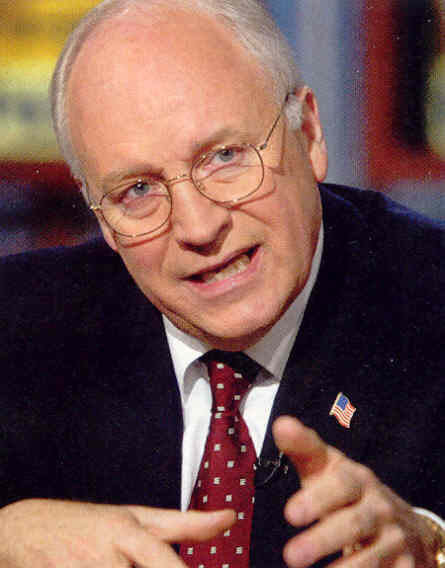 Chief among the voices that would have a strong impact on the way Bush saw and went after things was actually not an appointee, but his vice president, Dick Cheney. Cheney had served presidents as far back as 1974, rising to be Ford’s very youngish chief of staff. He then became a congressman (1978-1988), rising to the ranks as Republican minority whip, before being appointed by the elder Bush as his Secretary of Defense. He then retired to private service in some conservative think tanks before becoming chief executive officer (CEO) of the Halliburton energy giant (1995). Cheney would serve as something of a sounding board for Bush, Jr., Bush meeting with him privately after cabinet meetings to get Cheney’s opinion on matters, something Bush valued greatly.
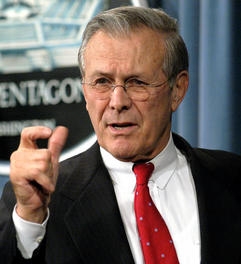 Then there was Donald Rumsfeld, who had also served on Ford’s cabinet (Secretary of Defense) and close Cheney associate since then. In fact it was on Cheney’s advice that Bush, Jr. appointed him as his own Secretary of Defense. Together, those two would dominate Bush’s foreign policy thinking, for better or worse.
 True, Bush had a Secretary of State, General Colin Powell, a veteran military advisor as Reagan’s National Security Adviser and Bush, Sr’s Chairman of the Joint Chiefs of Staff. But knowing the military quite well – its capabilities and its limitations, he typically advised a much more cautious approach to foreign policy matters than did the Cheney-Rumsfeld team.
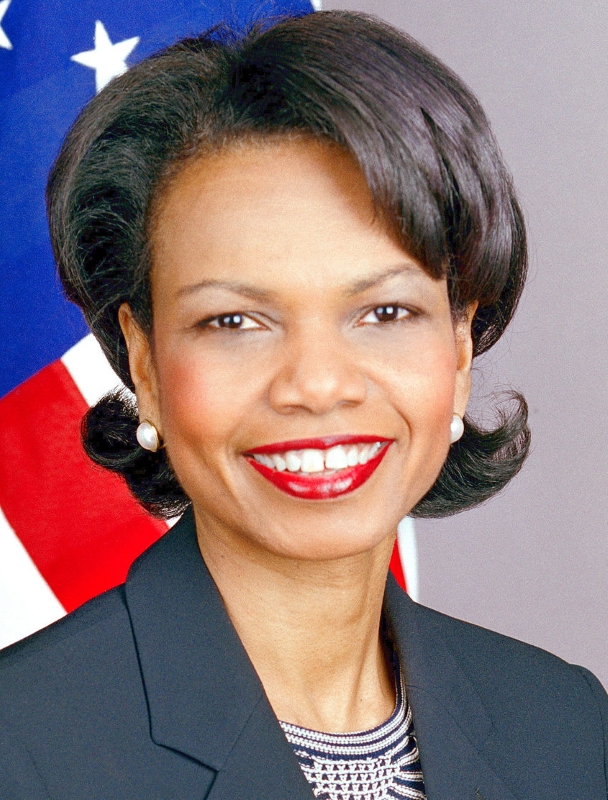 And allying with Powell was Bush’s own National Security Advisor, former Stanford University professor and then university provost, Condoleezza Rice. But the Cheney-Rumsfeld duo did not pay much attention to her, Rumsfeld at times treating her as if she were merely some university grad student offering limited advice on matters.
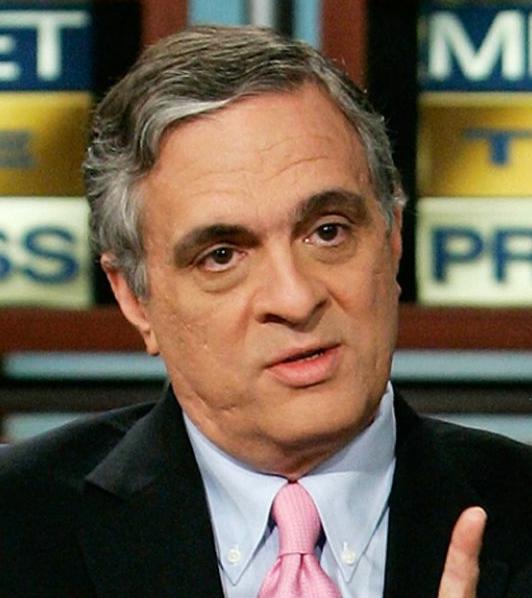 Then there was George Tenet, Director of the Central Intelligence Agency, a carryover from the Clinton Administration (the CIA and its officers were expected to be “non-political”). He too would find himself up against Rumsfeld in taking on the key issue of America’s “war on terror.”
This would be the team that would have to somehow work together to support its president, as he came to face major foreign policy issues that arose after the 11th of September during his first year in office.
No Child Left Behind. Actually Bush presumed that his real work as a “compassionate conservative” president would be in the realm of domestic affairs, and had taken on the challenge of national education reform with the same zeal that he had done so when Texas governor. But educational policy had long been a state and local matter, not one of Washington’s business. But Bush was able to put Republican support behind him (Democratic support was considered to be automatic in such matters) and thus found huge support in Congress for his “No Child Left Behind” (NCLB) Act. This program called for states to undertake standardized testing, and receiving federal financial support if they did so … with the expectation that those testing scores would also improve every year in the process.[4]

Anyway, Bush was in Florida for a well-publicized visit to a school there, designed to give support to his educational thrust, when an event occurred that would change everything about his presidency.
[1]During his 2000 presidential campaign, his joining the Air National Guard was cast simply as a way of avoiding the draft – and dangerous military service, such as his opponent Al Gore had undergone. Maybe. But Bush actually proved himself to be an excellent fighter pilot in training exercises, though he never saw actual active duty.
[2]And becoming a multi-millionaire when he sold his interests in the team nine years later, just prior to his run for the U.S. presidency.
[3]But ironically, Clinton’s nation-building (in Haiti, Bosnia and Kosovo) had actually been quite cautious and relatively restrained in extent, in stark contrast to what Bush’s nation-building (Afghanistan and Iraq) would soon come to be, especially as it became the all-consuming focus of much of Bush’s presidency! And the reason why this should be the case was never very clear.
[4]Not surprisingly, over the years, complaints grew that Bush’s program had teaching now shaped by the single consideration of improving test scores, making the education process itself very mechanical and not terribly effective in creating truly well-educated youth. In 2015 the program was finally replaced by one supporting the states, as they themselves saw the need for educational reform.
THE HUNT FOR THE 9/11 JIHADISTS … AND BUSH’S NATION-BUILDING[5]
9/11 and its aftermath. That morning he got the terrible news that deep tragedy had just fallen on New York City’s Twin Towers – the tragedy soon amplified by a similar hit on the Pentagon … and also a downed plane in the Pennsylvania countryside.
Four commercial airplanes had been hijacked by al-Qaeda jihadists. Two planes were flown straight into the New York World Trade Center buildings, eventually bringing them down, with 2,600 office workers, police and firefighters dying in the tragedy.
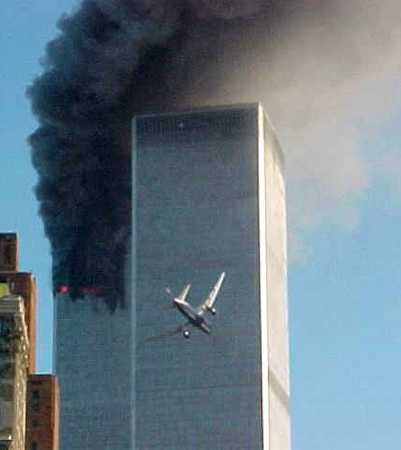

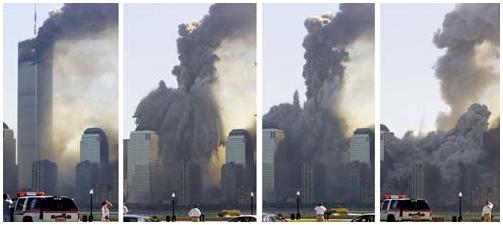
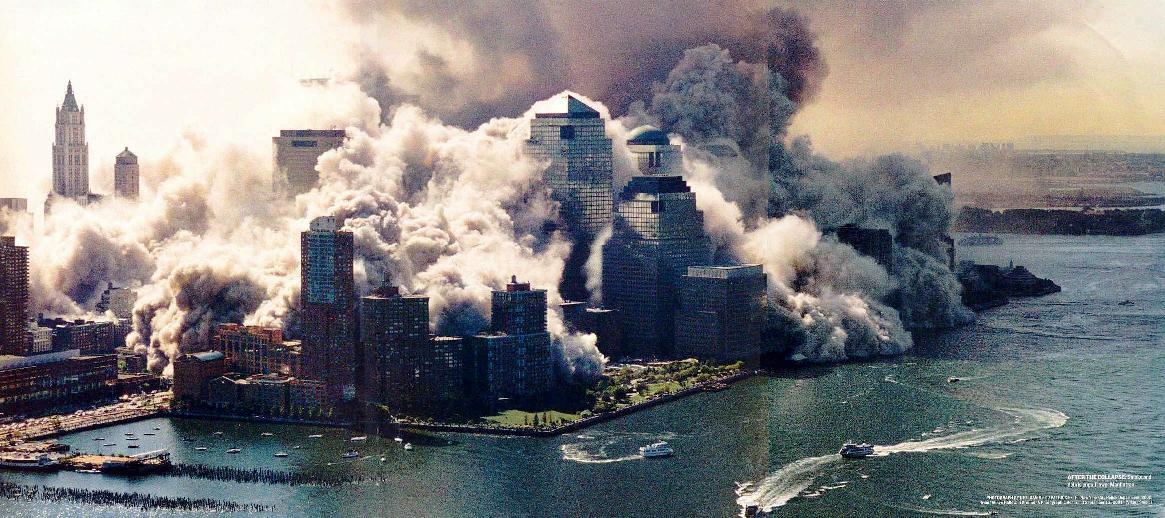
Another plane was aimed at the Pentagon building, killing 125 officers and workers there.

And one flight – alerted via cell phone by spouses that their hijacked plane was undoubtedly headed for a strategic site in Washington, D.C. – was brought down in rural southwestern Pennsylvania by very heroic passengers. All aboard were killed (40 passengers and crew as well as the hijackers).

But either the Capitol Building or White House (the probable goals of the hijackers) was spared the fate of the Twin Towers and the Pentagon.
America – and the world – was stunned, though parts of the Muslim world understood the jihadist source of the hit and celebrated this “victory” accordingly.
It is not that the world should have been completely surprised by this event.[6] A similar attack had happened only eight years earlier. And a key Afghan ally of America’s, Massoud, had been assassinated only a couple of days earlier – and the American intelligence community sensed that something big might be about to unfold. But the sharing of intelligence across the many agencies involved in such national intelligence activity was very poor – actually rather competitive, thus the subsequent creation of the Homeland Security Office in order to force better cooperation within the intelligence community.
In any case, it took no time to realize that behind this all was the hand of Osama bin Laden and his al-Qaeda jihadist group. His training camps in Afghanistan were well known to American intelligence, as well as the even more numerous camps located in America’s supposed ally Pakistan.
The “Bush Doctrine.” Thus on September 20th Bush went before Congress to announce his “Bush Doctrine” – namely that any country harboring such jihadist criminals must give them up, or suffer dire consequences from the Americans. Americans would go after bin Laden and his associates, wherever they might go.
At the time, supposedly the search for bin Laden involved only the Taliban group that had overthrown Massoud’s Northern Alliance group and taken control of Kabul, the Afghan capital. But clearly the Taliban were in no mood to give up bin Laden and his terrorist organization. To them the al-Qaeda terrorists were heroes, defenders of Muslim integrity.
And so the Americans would have to devise their own way to bring down bin Laden and al-Qaeda. Supposedly this would involve undercover work of CIA operatives – bribing local clan leaders to zero in on bin Laden. But even then, such action would involve some large-scale operations which certainly were going to involve deep conflict with the Taliban.
As it turned out, the Northern Alliance – even with its leader gone – was able to keep itself organized and, with the aid of NATO airpower, ultimately was able to chase the Taliban out of the Afghan capital of Kabul (mid-November) and off into the Afghan Tora Bora mountains. But still, this did not bring bin Laden or al Qaeda to account.

US Special forces troops working with members of the Afghan Northern Alliance during Operation Enduring Freedom – November 2001

Troops of the Northern Alliance entering Kabul – November 2001

Hamid Karzai sworn in as Afghan interim Prime Minister – December 2001
Nation-building in Afghanistan. At this point Bush seemed to see the Afghan picture in much, much bigger terms. With the expulsion of the Taliban from Kabul, Afghanistan supposedly could now be brought into closer alliance with America – by “democratizing” its political habits. The president’s wife, Laura Bush even went on radio to talk about how American action in Afghanistan could finally liberate Afghan women from the traditional oppression that they had suffered under for so long.

In short, the Bushes were now focused on “nation-building” in Afghanistan – a much, much bigger process than simply bringing bin Laden to justice.
While such talk impressed many Americans and Westerners, it also impressed many in the Muslim world – except in the very opposite manner. Americans find it virtually impossible to understand that not everyone else in the world goes at life, or even wants to go at life, the way they do. Muslims understand that the good life comes from a universe in which everyone finds a place of submission to the larger order of things, children to their parents, wives to their husbands, families to their elders or community leaders (from tribal sheiks to religious mullahs), regional community leaders to their ruling or presiding princes, amirs, kings and ayatollahs, and all of them ultimately to Allah. The central idea in Islam is “to submit.” Muslims are “those who submit.”
American (especially Boomer) talk about pursuing full personal freedom from any and all authority shocks Muslims, appearing to them as something very dangerous to human order, to the good life, especially to the pleasure and blessings of Allah himself. Thus when Americans go invading a Muslim country to bring “democracy” as part of a new nation-building venture, this is not destined to work the way Boomers believe it is supposed to. “Freedom of choice” to Muslims means the opportunity to show ever stronger support for those in authority, not infrequently in opposition to other groups seeking to do the same. If this is not handled carefully, such “democratizing” can easily plunge a Muslim society into a horrible state of civil war among local groups that have found no higher personality to unite around. Thus dumping Muslim “dictators” is a very dangerous program in the Muslim world.
And America was soon to discover this. And once again, America would also fail to take note of the actual dynamic – instead simply pushing ever-harder to make their version of social dynamics work in a setting where there was no natural inclination of the people themselves to go the way Americans thought things should go! Therefore, things would get very brutal, very fast.
With the decision to go to full nation-building in Afghanistan the operation was taken out of the hands of the CIA and put under direction of Donald Rumsfeld and his Department of Defense – that is, the American military establishment. But of course the U.S. military was by no means battle-ready at a moment’s notice for such an operation, and would need weeks of preparation, during which time bin Laden naturally slipped into the mountains – and then probably back into Pakistan.
And there in Pakistan, where the Americans had no authorization to pursue him, he would be safe from the American military’s effort to hunt down him and his organization. Because Pakistan was a supposed American ally, and because it was a nuclear power, and because Pakistan made it very clear that they too would under no terms give bin Laden and al Qaeda over to the Americans, Pakistan was one place – the key place in fact –where the Bush Doctrine did not apply. Thus in terms of political reality, the “Bush Doctrine” had no real meaning.
But in any case, the “democratization” of Afghanistan would supposedly justify any and all American political and military operations in Afghanistan – even if all that ultimately had nothing to do with bringing bin Laden to justice.
This would prove to be a major American foreign policy distraction –along the lines of Johnson’s Vietnam program – one which would prove very costly to the Americans, and to the Afghans. And it had strikingly similar qualities to the (failed) Soviet efforts earlier to bring Afghanistan into their political orbit. But Bush took no notice of the dynamics that made his program there look extremely costly – with little real political benefit likely to come from the effort.
But oddly enough, America had the rather substantial assistance of a number of its European NATO allies, in part due to the fact that they too had lost some of their own citizens in the Twin Towers tragedy. But what that had to do with Bush’s program of democratizing Afghanistan was just as remote for them as it was for America.
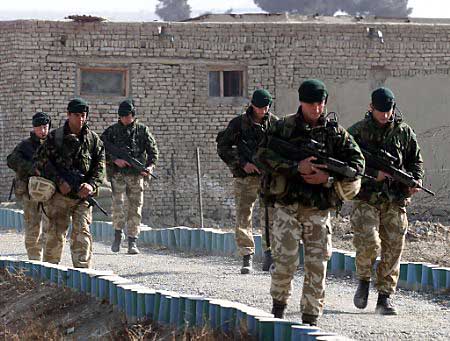
British marines in Kabul – January 2002

US General Tommy Franks greets Canadian troops – Kandahar – May 2002

German door gunner – Kabul Airport – May 2002
 Nation-building in Iraq. What then possessed Bush to turn his attention to Iraq remains to this day an unanswered question. Iraq’s President Saddam Hussein was a dictator, a flamboyant self-appointed candidate to become the leader of the entire Arab nation (all the Arab countries of the Middle East), in competition with other such Arab candidates. He used the usual Arab call to unity around the Jewish intrusion into the Arab world in the establishment of Israel and made all kinds of noise in that regard. And he built up his military accordingly in order to present a plausible claim to such candidacy.
But as we have seen, he overstepped himself in Kuwait and he and his army got burned badly. He was put under all sorts of military quarantine which restricted his venturesome ways – though not necessarily his language, used to keep himself “important” in the eyes of his own people. Bush Sr. had not bothered to do more than kick him out of Kuwait, but had gone no further in the matter of hemming in the loud dictator. As his then Secretary of Defense Dick Cheney would later explain, to have gone deeper into Iraq would have amounted to entry into a “quagmire.” Nothing would be gained – at great expense to everyone concerned.
But Bush Jr. somehow decided that the world would be a better place if Saddam were to just disappear. And it would also offer Iraq the opportunity to go “democratic.” That, to Bush, justified the huge enterprise. He was determined to go nation-building in Iraq, no matter what the cost involved.
But Bush’s cabinet seemed to be less than unanimous about undertaking this project. However, Dick Cheney, now Bush’s Vice President and closest advisor, was changing his tune – and was now fully in favor of jumping into the quagmire. Likewise his Secretary of Defense, Donald Rumsfeld, not only had the U.S. military standing in readiness, but had the perfect candidate in mind, Ahmed Chalabi, to lead Iraq to “democracy.” And the U.S. Congress, in October of 2002, not wanting to appear to be unpatriotic, authorized exactly such action in Iraq – by a huge majority: 297-133 in the House and 77-23 in the Senate.[7]
But unlike his successful efforts in enlisting allies for his Afghan program, he got very little support from the international community (Britain would however join Bush in this enterprise – at great loss to both Britain and its Prime Minister Tony Blair). At first Bush tried the “Bush Doctrine,” claiming Saddam’s support for al-Qaeda, and thus candidacy for American retribution. But nobody bought that explanation. Then in September 2002, Bush went before the United Nations General Assembly to put forward the claim that Saddam was violating the international restrictions he had been placed under since his rebuke over Kuwait – that Saddam was secretly developing weapons of mass destruction (WMDs).
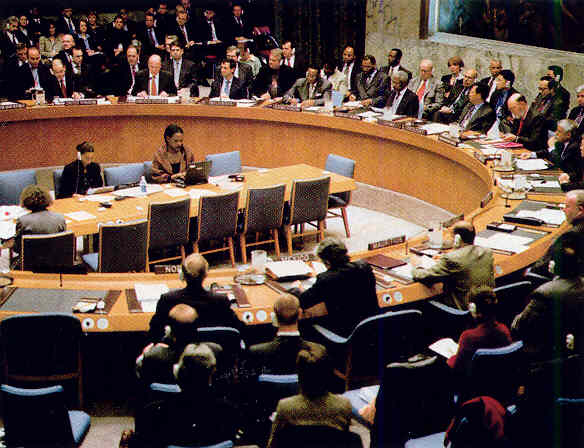
The physical evidence in this claim offered by U.S. intelligence was very questionable – and it quickly appeared that the larger world was not buying his story. Ultimately the UN simply decided to send more inspectors into Iraq to see what evidence they themselves could find on this matter.

But when, after months of searching Iraq, the UN inspectors were unable to come up with any such WMD evidence, an anxious Bush saw his case before the court of world opinion weakening rapidly. Thus he made one more effort to win the world to his cause, using the excellent international reputation of his Secretary of State, Colin Powell, to make a hopefully compelling presentation in February of 2003 before the United Nations on this WMD matter.
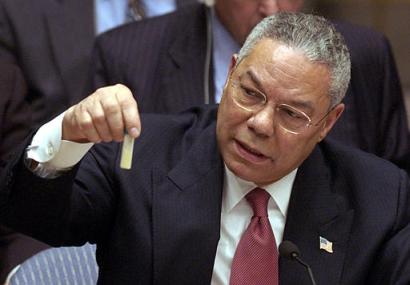
At the UN, Colin Powell holds a model vial of anthrax, while arguing that Iraq is likely to possess such WMDs – February 2003
Bush also had an American proposal put before the UN Security Council authorizing action against Saddam. But when it became apparent that France, Russia and Germany were strongly opposed to this, he had the proposal withdrawn.

Germany’s Chancellor Gerhard Schröder and France’s President Jacques Chirac – along with other US allies – make it clear that they are not with the US on the decision to invade Iraq
Bush thus decided that he was going to take out Saddam anyway, no matter what the rest of the world’s opinion happened to be on this matter.

On March 19, 2003, Bush announces the beginning of Operation Iraqi Freedom. “My fellow citizens, at this hour, American and coalition forces are in the early stages of military operations to disarm Iraq, to free its people and to defend the world from grave danger …”
Into the quagmire. Thus on March 20th, Rumsfeld’s military unleashed “Shock and Awe” (very heavy bombing) on the Iraqi capital of Baghdad. Saddam went into hiding and Iraq found itself leaderless as Americans, joined by British (and smaller units of Australian and Polish) military invaded their country.
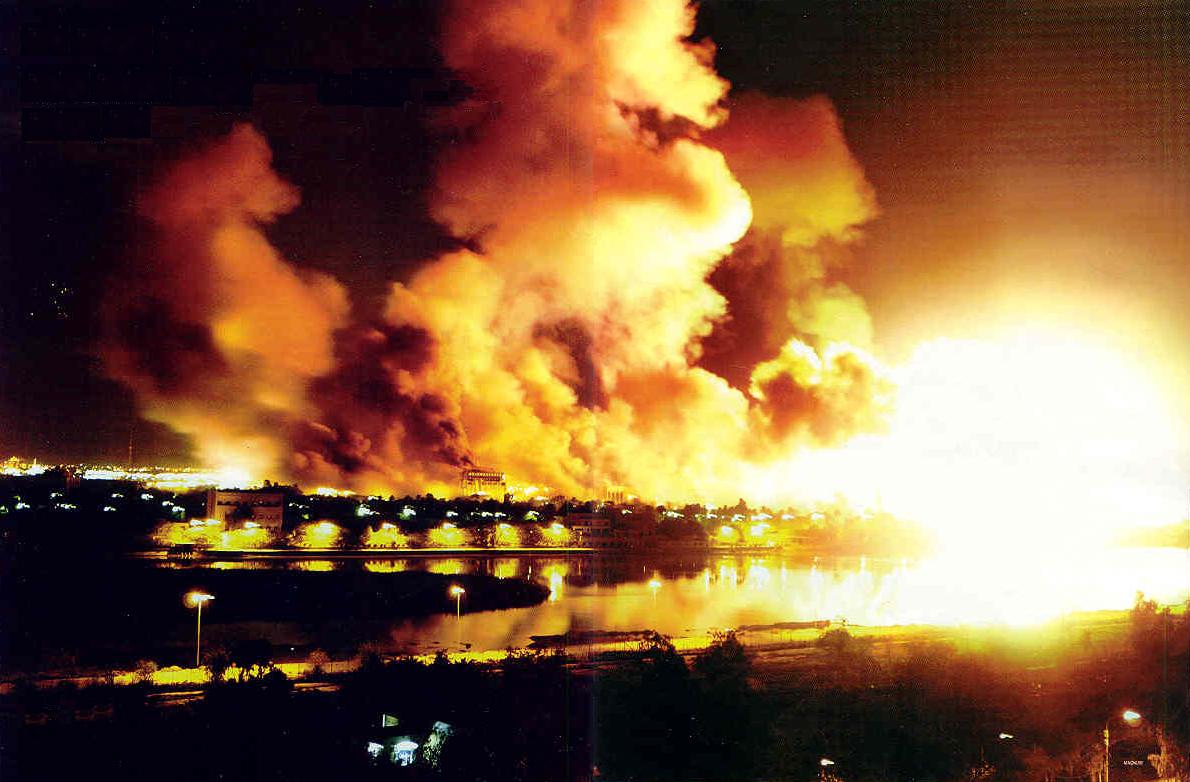
“Shock and Awe” over Baghdad by US bombers

British Royal Artillery in southern Iraq

US marines headed to Baghdad

Refugees fleeing the fighting in Basra
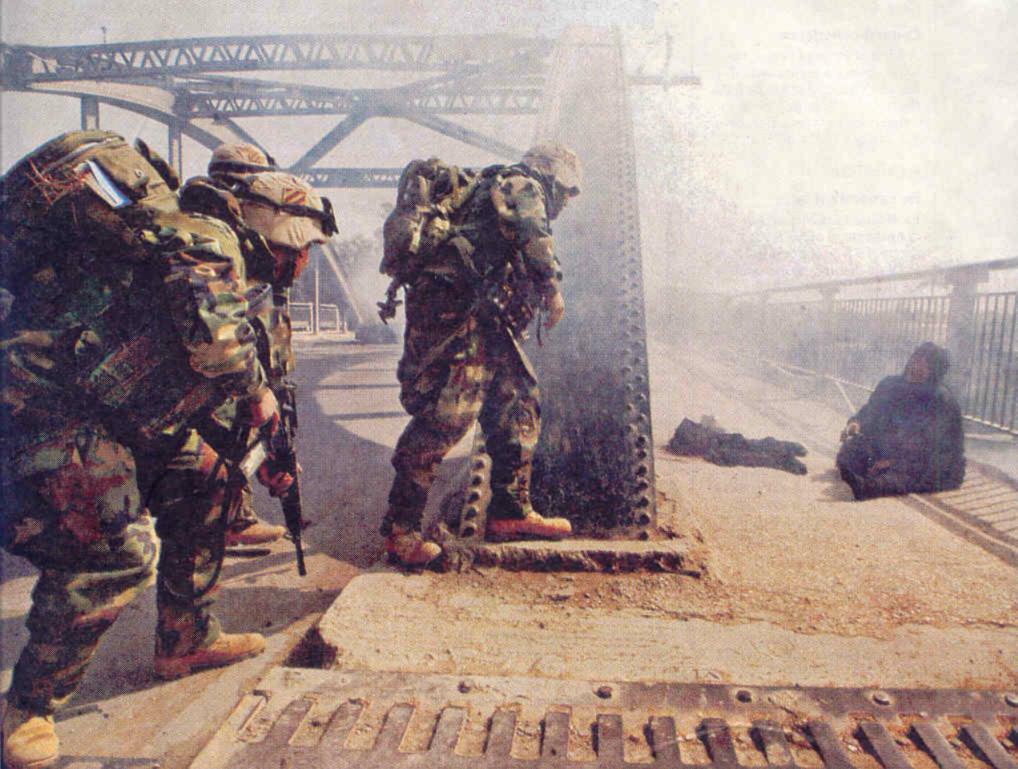
US soldiers, on a bridge over the Euphrates River, approach a wounded Iraqi woman caught in crossfire with Iraqi forces
Within a few weeks Iraq found itself delivered over to its new “democratic liberators.”
Then the quagmire revealed itself. Looting and ransacking of Baghdad got underway as people scrambled to get what they could of items before the economy shut down. Then the three major ethnic groups that had been held together only by Saddam’s tough hand fell into fighting among themselves: the Sunni Kurds in the North, the Sunni Arabs in the West, and the Shi’ite Arab community in the East and South. And the Turks next door – America’s long-standing NATO ally – became intensely upset with Bush and his American invaders because Iraqi social breakdown also jeopardized the social order in heavily Kurdish south-eastern Turkey. This would mark the beginning of the Turkish pull-back from its formerly close relationship with America.
Mission accomplished? But Bush ignored these deepening disasters, and on May 1st, arrived by jet aboard a U.S. carrier located offshore from San Diego (not somewhere in the Middle East!), Bush wearing a flight suit, although he himself had not piloted the plane.

He changed clothing and then appeared on deck to address the world with a very upbeat speech, with the huge banner “Mission Accomplished” displayed above the deck – in indication of how things supposedly stood on this Iraqi matter.
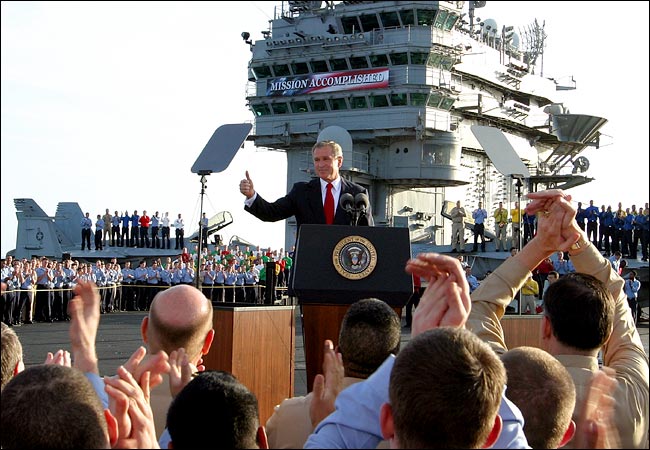
But at this point nothing except disaster had been accomplished!
 And that would immediately be worsened even further by Rumsfeld’s envoy, Jerry Bremer, sent to administer Iraq as Bremer himself saw the need. In early May, Bremer issued fundamental Orders 1 and 2. The first declared that anyone formerly connected with Saddam’s Ba’athist Party (virtually every professional in the country) would be prevented from serving in their former capacity in the “new Iraq.” And the second order, issued over the objection of the U.S. military commanders who had called on the service of the Iraqi army to keep some degree of order in the country, was to disband the Iraqi army – to un-employ hundreds of thousands of young men with rifles, and the knowledge of how to use them. So upset was the U.S. military command over this huge political blunder that all of the top generals chose to “retire” – leaving the new military matters in the hands of a very inexperienced American one-star general (actually Rumsfeld would direct overall U.S. military policy from DC anyway).
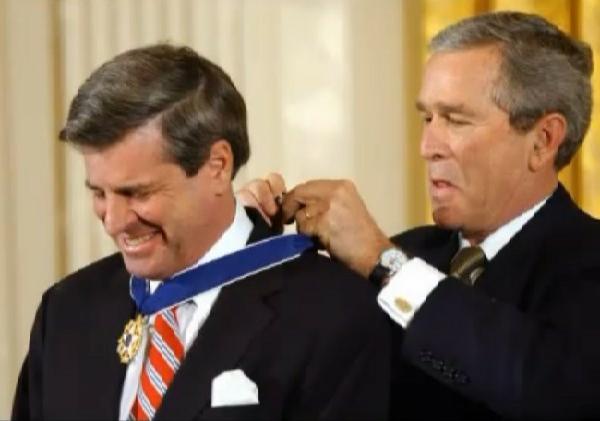
(In December of 2004, Bush awarded America’s highest civilian honor, the Medal of Freedom, to Bremer … Bush still unaware of what a disaster Bremer’s command of the Iraqi political situation had been. Sad.)
It was also at this point that anger aimed by the Iraqis against their fellow Iraqi social-cultural opponents now got turned on the occupying Americans and British, especially against the Americans. At this point the real Iraqi war got underway. And it would drag on for years – a true American (and British) quagmire.
Ultimately, Americans never came up with any evidence of Saddam having been developing WMDs. However, Saddam himself was finally captured, sentenced and then executed – for committing crimes no worse than the ones Lincoln had committed in order to preserve the unity of the U.S. against Southern rebels.
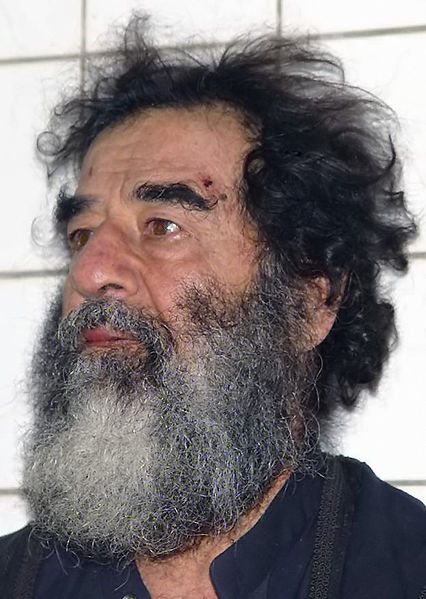
Saddam Hussein caught, “tried,” and executed – December 2003
Then Americans directed those Iraqis willing to take up the task of putting together a new Iraqi constitution – something that supposedly would finally justify this grand misadventure.
But politically speaking, all that would develop from this effort to “democratize” Iraq was to shift power from the Sunni Arab portion (about 20%) of the population, the sector that Saddam had counted on for his political support, to the Shi’ite Arab portion of the population (about 60%), the largest of the social groups and the one that had suffered minority status under Saddam. But oddly enough there was little gratitude from the Shi’ites for their “liberation” by the Americans and the British. Instead they simply took this opportunity for revenge against the Sunnis, and then turned on the Americans and the British when the latter group tried to settle the angry Shi’ite community down.

The pro-Iranian Shi’ite cleric Muqtada al Sadr, who mobilized a strong anti-American movement among the now-dominant Shi’ites
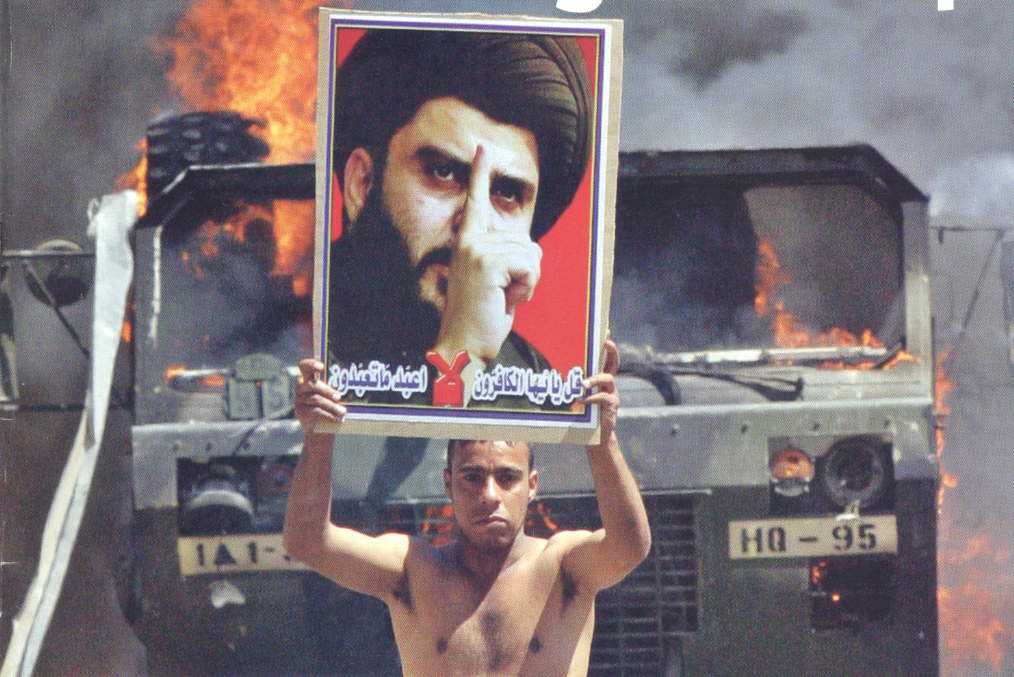
A Muqtada al Sadr supporter and a burning US army vehicle
And then there were the non-Arabic Sunni Kurds (another 20%), who had been waiting for decades for Kurdish independence (much to the anger of the Turks next door), the only group that showed some degree of real support of the American presence in Iraq.
Thus exactly how leaderless “democracy” was going to restore social unity in Iraq instead of merely intensifying these deeper social divisions would remain a mystery to Iraq’s American and British “liberators.” None of the Iraqis had ever even heard of Rumsfeld’s presidential candidate Chalabi (!!!) and so coming up with a leader was going to become difficult. Finally (October 2005), under the new constitution, national elections were held (boycotted by most all of the Sunni Arabs) and a Shi’ite, Nouri al-Maliki, was put forward as a leader of a coalition and thus also as prime minister.
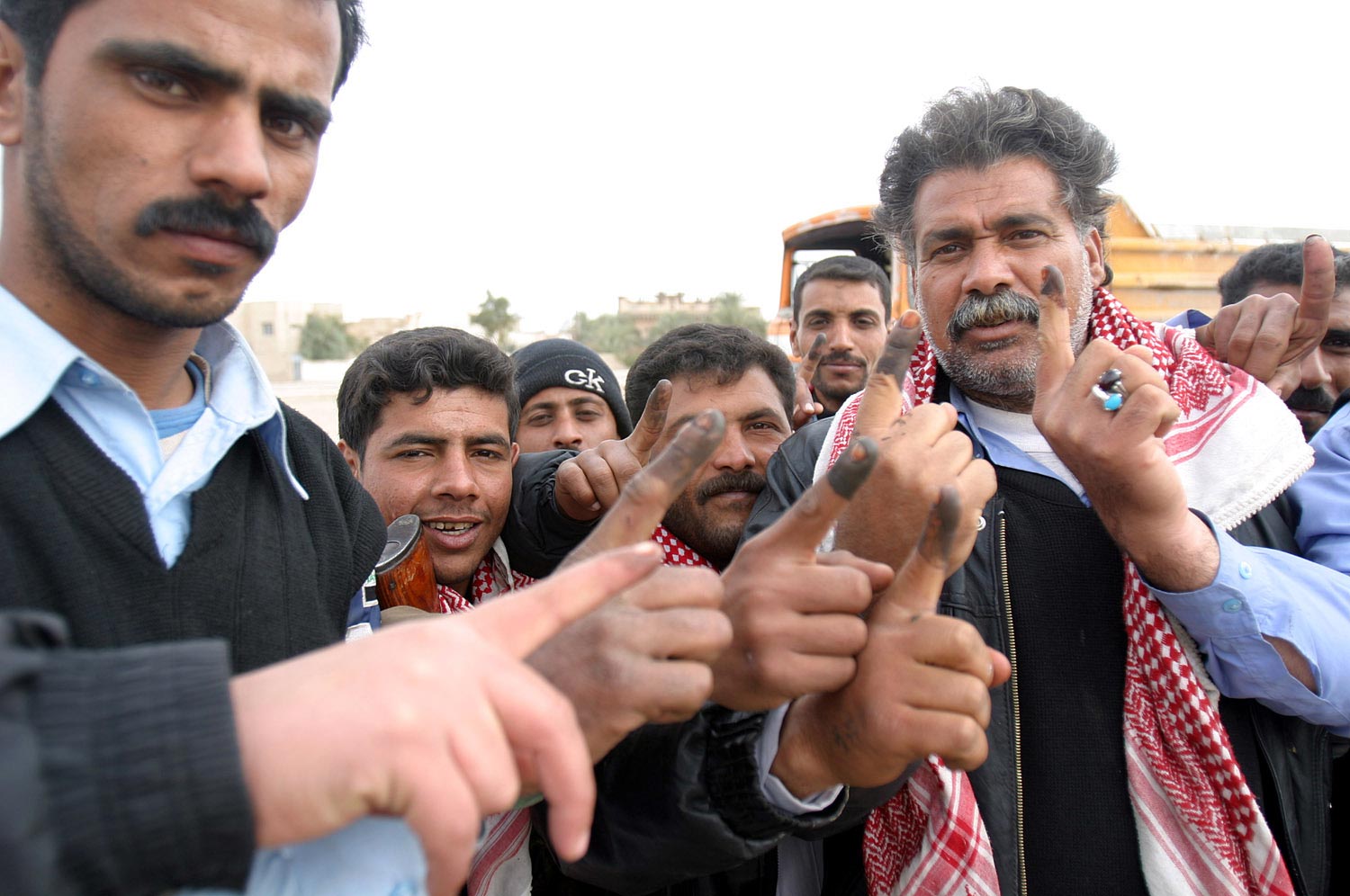
Iraqi voters with inked fingers – December 2005

Iraq’s new prime minister, Nouri al-Maliki … who turned out to be no great lover of his American “liberators”
But this in no ways settled down the violence that consumed Iraq. In 2006 the situation worsened deeply when some group blew up the al-Askari or Golden Dome in Samarra, one of Shi’ite Islam’s most holy sites. Shi’ites turned on Sunni mosques and murdered the imams found there. Soon death squads were roaming the country, especially in the Sunni West where American troops were expected to keep some kind of order (although Rumsfeld was trying to maintain a “small footprint” by keeping U.S. troops mostly restricted to the U.S. military bases in the country).
And wouldn’t you know, all this chaos (thanks to Bush) would allow al-Qaeda and other Sunni jihadists finally to make their way to Iraq and begin to base their operations there, a much more strategic location than Afghanistan or Pakistan in making anti-Western mischief throughout the Arab Middle East. Thus it was that the only true “mission accomplished” that occurred in Iraq was the one gained by the anti-American Shi’ites (religious kinsmen of the Iranian Shi’ites next door, Muslims pledged to bring “death to the Great Satan America”) in the Iraqi East and South, and the anti-American Sunni jihadists in the West and Northwest of the country.
Political repercussions back home in America. In the 2004 American presidential elections, Bush was able to gain reelection against the Democratic Party candidate, John Kerry – to a great extent because the election got to be not about public policy but about very personal matters.

The first presidential debate – October 2004 … Sen. John Kerry speaking – Pres. George W. Bush looking very annoyed
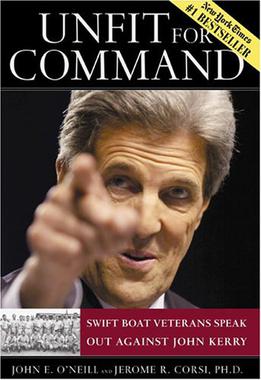
Kerry’s Vietnam service record was challenged (unfairly as it turned out) by a group of Vietnam veterans, sinking greatly Kerry’s political support.

CBS had countered this attack with its own report of service scandal on Bush’s part – and then had to repent when it was discovered that the material Dan Rather had been using as “evidence” was a forgery.[8]

While this CBS special was clearly intended to sabotage the Bush candidacy, it actually stirred sympathetic support to the besieged president! Thus it was that, quite exceptionally, Bush was reelected – virtually unheard of at a time when a leader’s war was clearly not going well at all.


But the 2006 Congressional elections would hit the Republican hard. They lost their majority in the House to the Democrats and had their position in the Senate reduced further, with also the two Senate independents tending to vote with the Democrats.
It was at this point that Bush got rid of Rumsfeld. He had removed Rumsfeld’s cabinet rival Powell back in 2004. But Bush was now reversing course (too late for Powell however) in getting rid of Rumsfeld. But the Republicans were very upset: why hadn’t Bush done this before the elections, when it would likely have helped the Republicans considerably?
The 2007 “surge” in Iraq. The situation in Iraq was growing worse, not better through previous (Rumsfeld) policies. And finally, on the basis of a study that Bush took a great interest in, the decision was made to end Rumsfeld’s “small footprint” strategy, increase considerably the number of U.S. troops in Iraq and pursue a very aggressive forward strategy, designated as a grand military “surge.” Not surprisingly it worked. It impressed the Shi’ite leaders enough that they decided to be more cooperative with the Americans, it allowed the British to back out of an Iraqi mess that had cost Britain’s political leadership deeply, and it cut back considerably the operational abilities of the Sunni jihadists in the northwest. And hopefully it gave the Americans (and their private “contractors”) the opportunity to do some serious training of the (now mostly Shi’ite) Iraqi army so as to be able to take control. And thus as Bush approached the last months of his presidency in late 2008, he was finally able to begin the drawdown of the American military presence in Iraq.
[5]For a truly in-depth coverage of this section, see my Volume III, The Dismissing of America’s Covenant with God (Westbow, 2020), pp. 206-232.
[6]Very, very ironically, in early September of 2001 (as a just-hired history and social studies teacher at a Christian school in Pennsylvania) I was making this introductory point that foreign affairs was not really an option for “Fortress America,” despite the huge walls of the Atlantic and Pacific Oceans that it seemed we could hide behind if we chose to do so. I knew that there were enemies abroad intending to bring the battle to America itself, despite those oceanic walls. I cited as the most obvious example Muslim jihadists, America-haters that I pointed out were certainly going to make another attempt on the highly visible and extremely valuable American national symbol, the New York Twin Towers. However, I had no idea that this prophesy would be fulfilled literally the very next day. My students never forgot this act of unintended prophecy. But tragically, I lost two former parishioners in that disaster. Thus this was indeed horribly painful prophecy, something I would hope never to be called on to do again.
[7]All but 8 of the 213 Republican congressmen approved the resolution; but 126 of the 208 Democrats did not. In the Senate, all but one of the 49 Republicans voted for approval. But so did 29 of the 50 Democrats (one independent voting “no”), those voting in favor including Hillary Clinton, John Kerry and Charles Schumer – who would of course later try to backtrack on that unfortunate decision of theirs.
[8]Scandal rather than serious news filling America’s media front-line reporting was not a new thing. Grocery store checkout stations had long been loaded with “newspapers” reporting such things as: “I was raped by a monster from Mars”; “Dog gives birth to a puppy with two heads”; etc. But when the nation’s prestige papers began to undertake this same behavior, along with national TV feeding sensationalist “news” to the public 24/7 as simply another form of entertainment, America’s news industry became itself a much-degraded American institution. The Walter Cronkite days of CBS news were clearly over.
The “easy money” disaster. But at this point, Bush had big problems at home to deal with – actually huge problems, because the American economy was facing a meltdown, such as it had not seen since the early 1980s, and possibly even since the days of the Great Depression. Much of the cause was foolish economic policies undertaken by the Bush Administration when the long economic growth experienced since those early 1980s and extended through the 1990s seemed to lose considerable steam in the early 2000s (the rapid expansion of the computer/electronic media industry had slowed up considerably, again because of relative market saturation). To encourage continuing economic growth, Bush decided to set aside regulations carefully put in place in the early 1930s – regulations designed to protect the American financial world from falling into a speculative bubble, such as the one that burst at the end of the 1920s. And yes, at first it looked as if the new “freeing up” of the world of American finance was giving the American economy the medicine it needed to get up and moving at the pace it had been doing so formerly.

Yes … but look where most of the nation’s wealth had been heading to … especially during the Bush years
Wikipedia – Financial crisis of 2007-2008
But this was timed with (and part of the cause) of another economic issue developing at the time: the huge growth in the American national debt. It went from 57% of the nation’s total economic output per year to 70% of that amount in Bush’s eight years in office, actually doubling from $5 trillion to $10 trillion in that same time. So critical had the national debt become that it looked as if merely paying the interest at the normal rate of about 6% on that debt would take up most all of the federal government’s discretionary funding (the part that is not already mandated, such as Social Security funding, and thus not accessible for government spending) leaving little funding available for the government’s operational programs – including the very, very expensive war in Iraq.
So a simple solution was offered by the Federal Reserve Bank: to lower the Fed’s discount rate – that is, the interest rate that the Federal Reserve charges the banking world for the financial backup banks need to conduct their own financial operations (a complete reversal of the high interest rate strategy enacted 30 years earlier by Federal Reserve chief Volcker!). Reducing that rate would also lower greatly the interest rate that the government would have to pay to cover its own enormous (and rapidly growing) debt. And thus it was that the Federal discount rate steadily came down, to a point where by 2008 it was running at the unheard of rate of less than 1%!!!
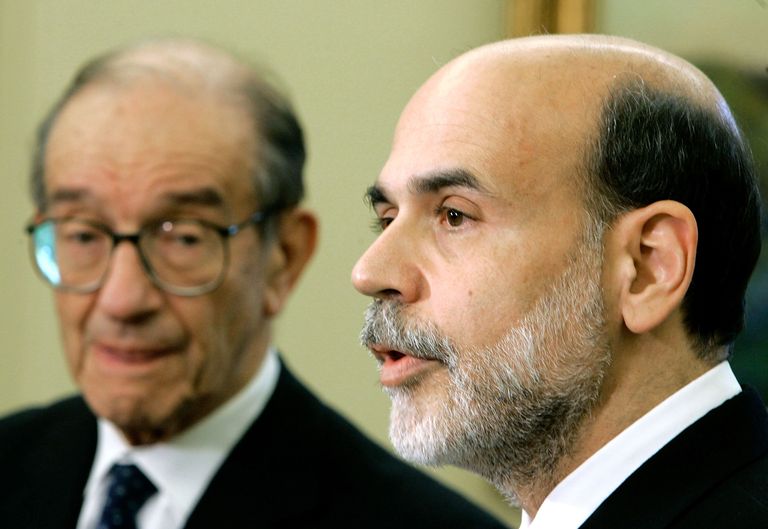
Former long-time Federal Reserve chairman Alan Greenspan … and replacement nominee, Ben Bernanke (2005)
This cheapening of dollar-financing not only helped the federal government cover its growing debt expenses, and not only did it help America’s world of financial capital (the bankers) give a boost in supporting America’s world of industrial capital (the producers), it also gave ordinary Americans a major incentive to finance the purchase of a new car (why not an expensive SUV?) or a much nicer and bigger home. With car and house loans running at amazingly low interest rates, why not?
And thus there was a rush to purchase these new goodies – especially in a hungry housing market moving faster than the rate of production (at first anyway) of these items, driving up their prices steadily (the price of a typical house would double over a ten-year period from the mid-1990s to the mid-2000s). Nonetheless, with interest rates so low, and with Americans now believing that financial indebtedness was simply a natural part of American life, Americans jumped into the market anyway – to pick up these items before the prices got any higher.
Banks also jumped into the frenzy, not wanting to be left behind in the buildup of their “assets” (the number of loans and mortgages they were holding), to make themselves rank higher in the numbers game played in the heart of this competitive financial world.
And now, with financial restrictions greatly eased, they could even extend “subprime” home mortgages to borrowers whose actual financial abilities (the ability to continue to make regular payments on loans over a 15 to 30-year period) were at best very shaky. This was most unwise. But the logic was that if the holders of the loan found that they could not continue to make payments, then the house could be sold – and, with the continuing rise in the cost of houses, everyone could even make a bit of a profit in the deal.
But wasn’t this cultivating exactly the same philosophy or financial mentality that led America into the grand stock-market crash of 1929?
Market saturation bursts the speculative bubble. Unsurprisingly, once again, market saturation entered the picture. Contractors had jumped at the opportunity to build new homes. Build, build, build. The housing market was hot, very hot.
But by 2006 there appeared a slowdown in the housing market, as contractors were finding a growing number of their new homes were simply sitting there empty, unsold – with little apparent prospect for a purchaser in sight. By 2007 it was quite apparent to all that that they simply had overbuilt housing units well beyond the interests or abilities of the world of home purchasers, even despite these low interest rates. Consequently, there was only one thing to do at that point: reduce prices in order to lure people to buy these unsold homes. But once one contractor did so, thus so did another, and then another. Suddenly the pricing or value of these homes begin to drop – dramatically.
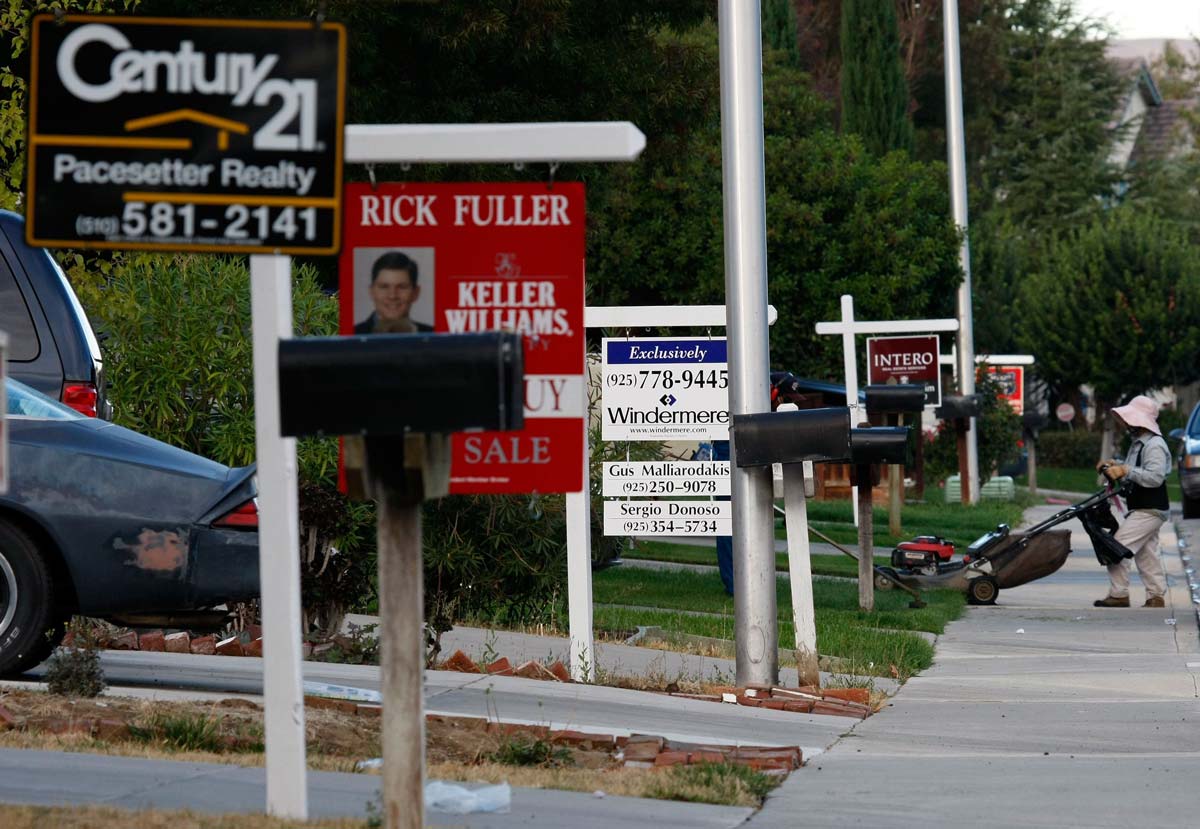
People are now hard pressed to find buyers for the houses they cannot continue to afford
At this point the presumption disappeared that subprime-mortgage holders, unable continue to make house payments, would be able to easily sell off their houses and walk away with a small profit. With the dramatic drop in housing prices, people’s mortgage commitments now exceeded the actual market value of their homes. People now found themselves trapped financially … able to escape that trap only by simply walking away from their home, losing whatever they had previously invested in that home, leaving their home now in the hands of the mortgage bank to deal with. And many people began to do just that.
But whereas a borrower could walk away with the loss, a bank could not. The house was the bank’s problem now – a huge financial problem now that the market value for that house had fallen well below what the bank itself had originally invested in it by way of the original home loan. The banks too could rid themselves of these liabilities only by trying to sell them off in a very horrendous housing market, involving huge financial losses with each house that they had to unload. But banks are in the business to make money, not lose money. Thus banks now found themselves in trouble, deep, deep trouble. The speculative house-financing bubble had burst and the results were very, very ugly.
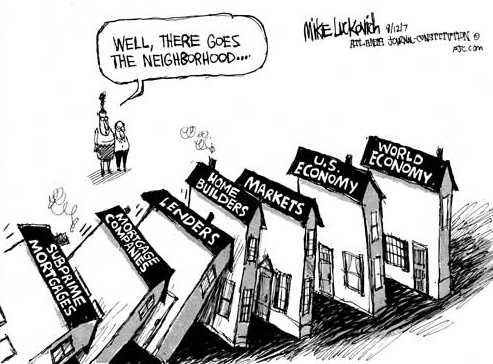
Panic sets in (2008). At first the huge investment bank Bear Stearns was in deep trouble. JP Morgan (supported by a $30 billion federal loan) agreed to buy out Bear Sterns, thus avoiding a catastrophe, and calming down the nervous stock market (for a while anyway). Then by the summer of 2008, America’s biggest mortgage companies, the Federal National Mortgage Association (Fannie Mae) and the Federal Home Loan Mortgage Corporation (Freddie Mac)[9] were on the edge of bankruptcy. Here too the federal government stepped in to offer $100 billion to get these two companies going again. Then in September Lehman Brothers was in similar trouble. But no purchaser could be found to buy out the company, even at a greatly reduced rate. Bankruptcy resulted.


Likewise, the stock brokerage company Merrill Lynch and the huge banking company Washington Mutual collapsed. Then the Federal Reserve itself stepped in to bail out ($180 billion) the massive insurance company, American International Group, when the AIG found itself facing bankruptcy.
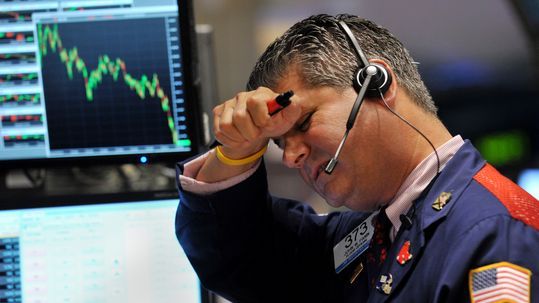
But the Republicans were ready to let the companies fall into bankruptcy (and restructuring); the Democrats however wanted to save the companies – and thus the jobs of all the workers whose support they depended on politically.
But by this time the stock market was finally in full panic mode. Bush then stepped into the picture in late September, presenting to Congress a request in the form of a $700 billion Troubled Assets Relief Program (TARP), to extend federal loans to troubled companies. The Republicans at first balked at this “socialist” idea.
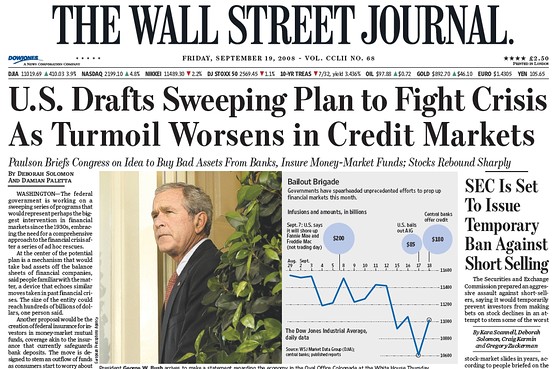
But when in response to this “no” the very next day the Dow Jones Stock Market index lost 778 points (the worst single-day drop in the history of the stock market), the Republicans were forced to back down and accept TARP.

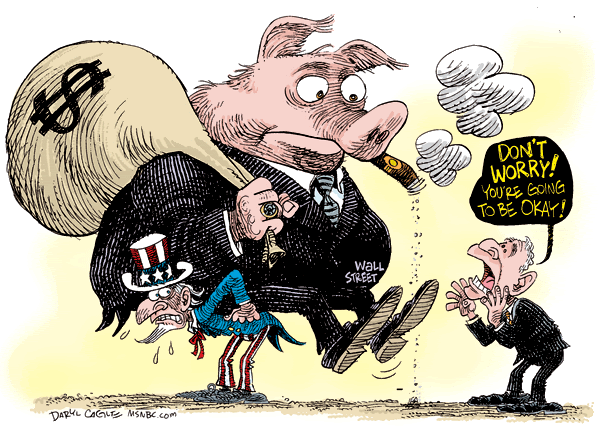
But it was not just the housing industry that was behind this crisis. The same was happening in the automobile industry. The “Big Three” Detroit auto manufacturers (Ford, General Motors and Chrysler) were also having big problems selling their cars.

Another car dealer having to go out of business
Gas prices were running at a high of $4 a gallon, causing a drop in the sales of Detroit’s best-selling SUV and pickup trucks (the big money-makers for Detroit). Where there was still any action in the automobile sector it was in the realm of the small sedans – where German and Japanese companies were actually doing quite well, especially with the models manufactured in America by a younger workforce (lower salaries and less expensive health and pension benefits required). These foreign companies had over the previous ten years increased their percentage of overall car sales from 30% to 47%. Detroit was falling into deep trouble. And thus it was (again despite Republican resistance) $17 billion of the TARP funds were directed to helping Detroit – with the proviso that the unions would be willing to accept cutbacks on their wages and benefits.
And then Bush left the office as American president. It would be somebody else’s job to steer the country through what remained of this economic mess.
[9]Despite the names, these are not federally-owned or federally-operated mortgage companies, only federally-originated – but definitely privately-run banks, operating like any other mortgage bank.
THE FEDERAL COURTS AS AMERICA’S SUPREME LAW-MAKING BODIES
It had not taken the American “progressives” or political “Left” long to figure out that it was not to Congress they were to go, but instead to the federal courts in having their political-cultural-moral-spiritual agenda enforced as the foundational worldview or religion, in opposition to the traditional Christian worldview – one which the “progressives” wanted gone, gone, gone. Congress still responded to the will of the vast majority of the American people, registered in their right to vote in defense of their fundamental values. But Leftists knew that they could have a simple decree by a handful of judges effectively revise the law of the land completely in their ideological favor, and that there was no recourse available to the American people once the lawyers in black robes had decided to favor the “progressive” views of those self-enlightened Leftists. The rulings of the federal judges were the absolute law of the land, Congress notwithstanding.
Newdow heads to court to undercut the Pledge of Allegiance. And thus in the year 2000 Michael Newdow sued the U.S. Congress over the phrase “under God” contained in the Pledge of Allegiance, claiming that this was harmful to his daughter.

He naturally went to the 9th Circuit Court (the American West Coast and Hawaii) – where “progressives” knew they could always count on great ideological favor. And indeed the court agreed with Newdow. However, this decision stirred a major reaction, including even in the U.S. Congress. Then the 9th Circuit Court bent over backwards to help Newdow, awarding him custody over his daughter, after the U.S. Supreme Court in 2004 dismissed his case when it was discovered that only his mother, a Christian, originally had such custody – and thus he had no right to present his case. Newdow then tried again in 2005, again getting another 9th Circuit Court decision in his favor.
This time the Becket Fund fought both Newdow and the Freedom From Religion Foundation (FFRF) that was supporting Newdow. Newdow went from court to court, fighting case after case not just about the pledge but also the use of prayer and the wording of the presidential oath at presidential inaugurations, both Bush’s and Obama’s in fact. But he was increasingly finding the decisions not going in his favor.
Judge Jones decides for America its fundamental worldview. But a decision that hit the Christian world hard was the 2005 Kitzmiller v. Dover Area School District case. Eleven parents, supported by the ever-vigilant ACLU, took the Dover (Pennsylvania) school district to the federal District Court of Judge John Jones.

The plaintiffs complained that a required reading of a short statement – recommending 9th grade students to also take into consideration (on their own, not in class) the Intelligent Design (ID) viewpoint that challenges Darwinism – violated the earlier 1987 Edwards v. Aguillard Supreme Court decision. This earlier decision had clearly outlawed the teaching of the doctrine of “creationism,” a Christian, and thus not scientifically “Secular,” view on the origins of the universe. And Intelligent Design was simply another form of creationism – and thus automatically “unconstitutional.”
Judge Jones knew exactly how he wanted the case to turn out and would not let those supporting the ID viewpoint bring in expert witnesses. He simply decreed that ID was merely a sneak attack in favor of creationism – and slapped a $1 million fine on the Dover School Board as a lesson to anyone else who would attempt such “breathtaking inanity” (his words). He intended his case to be a landmark case.
And indeed it was in the way it made very clear how the federal courts served as a highly authoritarian instrument by which a small group of people are able not only to impose their view on others, but to leave those others devastated should they dare to resist such authoritarianism. So much for “democracy” and First Amendment Freedoms (“Congress shall make no law respecting an establishment of religion, or prohibiting the free exercise thereof.”) This was classic authoritarian prohibiting of the free exercise of the people’s religious rights … a prohibition making it not only illegal but highly punishable just to mention that there are other viewpoints than the court-certified and thus “established” Darwinist view concerning the creation of the universe, and in general the court-backed Darwinist or Secular (atheist) worldview on all matters concerning life on this planet.
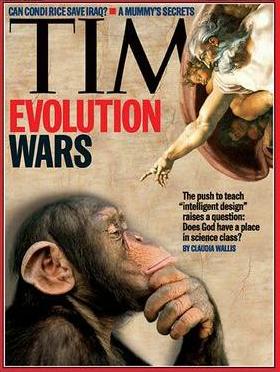

The reaction of Time Magazine and the TV program NOVA