CONTENTS
 America develops as an industrial power
 National politics during the late 1800s
 The cultural-spiritual challenges of the Industrial Age
 The rationalizing of Western culture
 American Progressivism
 America cultivates new social formulas
 American Christianity responds
The textual material on this webpage is drawn directly from my work, America’s Story – A Spiritual Journey © 2021, pages 159-202
AMERICA DEVELOPS AS AN INDUSTRIAL POWER
America’s Industrial Revolution. Meanwhile back East, a new social dynamic had been rising within the fast-growing American cities: modern industrialism. This was due in no small part to the Civil War and its lasting effect on the American economy. The war’s demand for steel, and the iron ore and coal to make it, and the railroads and barges to ship it, and the financial institutions to fund its initial outlay, and the laborers to work the whole system – had made a deep impact on what was formerly a largely agrarian society.
Although the U.S. government had played a huge role in getting the American railroad industry empowered through its liberal land-grants to railroad companies, non-governmental or private financial operations played a huge role in amassing the funds to streamline the railroad industry and its construction of thousands of miles of rail. And in turn, these rail lines crisscrossing the nation east and west greatly facilitated the movement of raw materials headed east and finished goods headed west, adding greatly to a fast-expanding national economy. And it carried a restless American population to new ventures, helping to keep the American dream very much alive.
And America demonstrated a very inventive genius in the role it played in creating and developing the telegraph and the telephone, helping to keep all this economic dynamic under careful human management.

Alexander Graham Bell in Boston demonstrating his new telephone – 1876
And this helped to connect the nation socially as well, as Americans acquired phone service to keep them in touch with the larger world. By 1893, when Alexander Graham Bell’s patent ended, there were 260 thousand American homes with phone service. And then smaller, local companies jumped into the phone business, so that even poorer Americans could now have the luxury of owning a phone.
And apart from the early railroad ventures during and immediately after the war, the government or state played only a minimal role in the development of this new industrial society – especially as the war and its needs receded from view and the system seemed to run simply under its own dynamics rather than on the basis of popular social political demands.
Nor was God invited to play a role in the development of this new society. Rather, America’s Grand Destiny now seemed to be driven forward largely by a small number of individuals who were particularly ambitious and fearless. These highly talented entrepreneurs – “Captains of Industry” they were termed, unless you tended to see them as “Industrial Robber Barons”! – were the driving force behind much of this huge economic expansion.
Indeed, this was a time in which the spirit of Darwinism soared high … for the basic theme of this rising social order was quite Darwinian: progress through survival of the fittest. To the strong belonged the spoils of their conquests. But for those who fell to the wayside in this struggle for survival there would be no tears wept. But the risk of this competitive struggle seemed worth it – at least to some who anticipated striking it rich in this new game of potentially limitless opportunity – if you were willing to play it hard and fast.
In this unfolding economic game played by these industrial/financial giants, fortunes could be made rather quickly – and they could also be lost just as quickly. And these fortunes could become quite awesome – often exceeding the levels of wealth of the European nobility. Indeed, according to a survey done in 1896,[1] of a total of 12½ million American families in 1890, 125,000 very wealthy families, or 1 percent of the total number of families in America, possessed over 50 percent of America’s total family wealth.
And so it was – at least for some Americans – very much a “Gilded Age” (Age of Gold)!
 Cornelius Vanderbilt. Early among these “Captains of Industry” was the New Yorker, Cornelius “Commodore” Vanderbilt. As a very competitive individual, he climbed his way out of poverty in the 1810s by operating a ferry boat (thus his nickname “Commodore”) between Staten Island and Manhattan, taking on ferrying monopolies in developing that business, until he had secured his own monopolies in the trade (late 1830s). He then branched out from there to own railroads that connected with his ferry lines, in 1847 even taking over a major line running between New York and Boston. Then two years later, with the California gold-rush madness hitting America, he moved into the shipping business on the high seas, attempting even the purchase of land to build a canal across Nicaragua. Instead he was able to build land and water connections between his Atlantic fleet and his Pacific fleet, the latter which took passengers onward to California.
Soon (the 1850s) this energetic entrepreneur took to manufacturing the new steam engines, which he then put to use in his trans-Atlantic shipping business. Then with the onset of the Civil War, he joined in by employing his flagship, the Vanderbilt, to hunt down Confederate raiders. After the war he and his son Billy bought up various railroad companies, and united them as the future New York Central Line, and went on to build a huge railroad terminal in Manhattan on 42nd Street, the forerunner of the enormous Grand Central Station.
And so it was that Vanderbilt became the richest monopolist of his days, failing only once against the very corrupt team of Gould and Fisk, who used politically-backed deception to bring one of his enterprises to ruin. Nonetheless he bounced back and at his death was able to leave his heirs a sum of $100 million,[2] including $1 million (at that time the largest donation ever) for the startup of a university that still bears his name today!
 Andrew Carnegie. Another such individual was the Scottish immigrant Andrew Carnegie (came to America in 1848 at age thirteen), who worked his way from an office clerk to the owner of America’s largest steel operation in Western Pennsylvania (Pittsburgh). As a young office clerk he impressed his bosses at the Pennsylvania Railroad Company, in everything from how he easily read Morse Code messages to his ideas how the company could operate more efficiently by bringing together under a single corporate structure various operations – from the securing of raw materials, to the manufacture of the machinery needed for the business, to the shipping of the end product.
Eventually he moved on to put these ideas to work under his own initiative, as he got personally involved in Pittsburgh’s iron industry. Little by little his own business expanded, as he took on engineers to develop the steel industry, and as he branched out into subsidiary operations, such as building the iron bridges needed by the rapidly expanding railroad industry. He even went into the coke/coal energy business, buying up operations needed to feed his own iron and steel plants. By the end of the 1800s, he was producing steel at the rate of 6,000 tons per day.
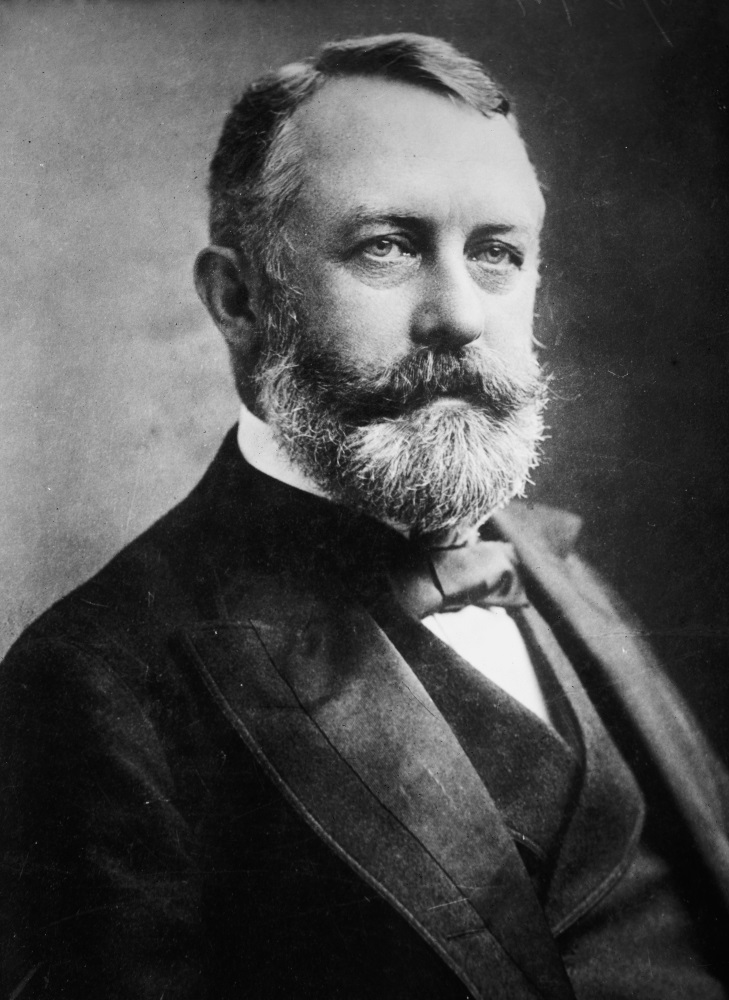 But ultimately he had to confront the problem that the industrial revolution itself had produced, the low wages of the workers – supposedly necessary in order to maintain the profits required for business expansion. Labor union activity was running very high at the time, and a quite bloody confrontation developed between Carnegie’s corporate supervisor, Henry Clay Frick (Carnegie was away in Europe at the time) and the strikers at the huge Homestead Plant. It was soon after this that Carnegie decided simply to retire, and sold his business, the largest corporate transaction ever, for $480 million ($13 billion in today’s dollars) to the New York City financier John Pierpont (J.P.) Morgan. Then Carnegie would give most of that wealth away to various charities and social endeavors, and spend the rest of his life traveling.
 John Pierpont (J.P.) Morgan. Not an industrial manufacturer nor born in poverty (actually quite the opposite), J.P. Morgan was a money man, providing the necessary financial support that the industrial world would need in order to do business, and that even the U.S. government would need from time to time in order to stay afloat financially. He proved very skillful in buying up financially troubled companies, reorganizing them to a point of profitability in their operations, and then selling them, at a nice profit for himself. But he also would play a huge role in bankrolling the U.S. government – on more than one occasion – when the government found itself in deep trouble, as was the case in the Panic of 1893 which nearly emptied the U.S. gold reserves. Only an operation (which at first President Cleveland balked at) that he undertook brought the U.S. back from disaster. In this he joined with the Rothchild bankers of Paris to sell the government 3.5 million ounces of gold in exchange for thirty-year bonds.
He also, in 1907, stepped in to rescue the American economy again when Wall Street suffered a huge collapse, nearly pulling the U.S. banking industry down with it. Here too, he put together a number of New York banks willing to invest a massive amount in Wall Street in order to revive the stock market. And soon he moved (with President Roosevelt’s permission) to take over a major industrial conglomerate that had failed, in order to head off another economic panic in America.
But a rising concern about the role such monopolies were playing in the American economy would lead Congress to take countering action, setting up in 1913 the Federal Reserve, to do the government’s own intervention into the functioning of the national economy when it appeared to be heading into a crisis. In a sense, Morgan himself had shown the U.S. government the proper procedure by which to intervene when necessary, contributing greatly to the stability of the U.S. economy, which throughout the 1800s had experienced one speculative crisis after another.
 John D. Rockefeller. Another industrial captain was John D. Rockefeller, who also rose out of tough family circumstances, to go on to be America’s richest individual. During the Civil War he and his brother started up a business selling produce to the army … before switching in 1863 in Ohio to join a group manufacturing kerosene from crude oil (home lighting at the time was switching rapidly from whale oil to kerosene). By 1865 the brothers were able to buy out their partners, placing them on a highly profitable monopolistic path. In 1870 he established the Standard Oil Company, and from there went on to buy up one competing oil business after another – until by the end of the 1870s he held a virtual monopoly (at least 90%) in the oil trade, mostly located in Pennsylvania at the time.
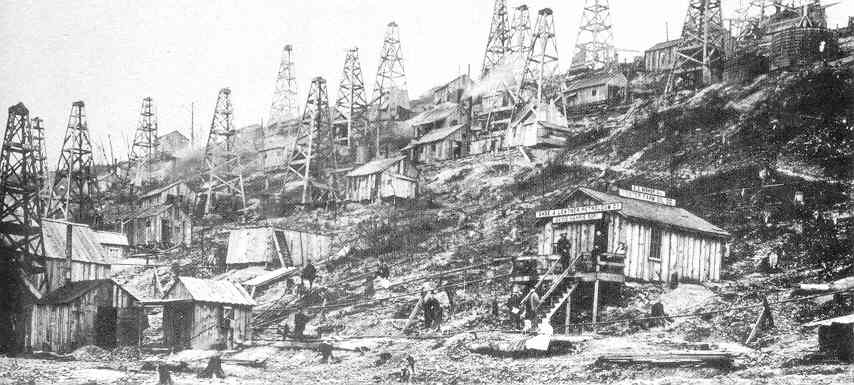
Then he took on the Pennsylvania Railroad Company, to force down shipping rates (although he was even then moving to the use of pipelines), soon finding himself involved in a number of Pennsylvania lawsuits (which would soon become a regular feature of his business) opposing his monopolistic practices. But this hardly slowed him down, instead in 1882 setting up the Standard Oil Trust, a huge financial operation aimed at buying up the various state oil companies. But this not only produced a new outcry against his monopolistic policies, it set the example for other ambitious individuals to also go the “trust” route of setting up large holding companies able to swoop in and buy up smaller companies – in most any economic field. Then he moved into international oil operations, then into the field of natural gas, and finally in the refinement of gasoline (previously considered just a wasteful byproduct of kerosene production), just as the world of automobiles (around the year 1900), with their new internal combustion engines, was opening up.
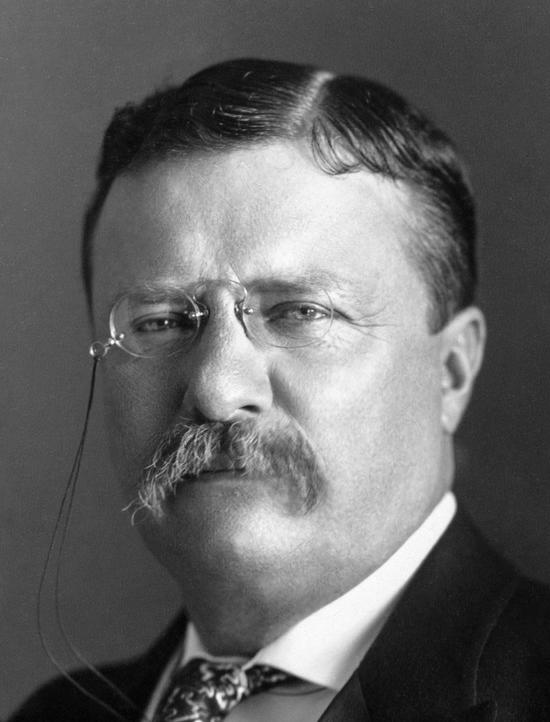 However, by that time, reformers were also very active everywhere calling for laws to be put in place that would correct the growing injustices produced by this change of America from its agricultural lifestyle to the newly growing industrial society and culture. Thus it was that Rockefeller found himself under constant attack from U.S. President Theodore (“Teddy”) Roosevelt, wielding the 1890 Sherman Antitrust Act (originally designed to break up workers’ unions) wherever he could, and Ida Tarbell, publishing a lengthy exposé on Standard Oil’s underhanded business practices – and finally in 1911 with the U.S. Supreme Court handing down the decision that as a monopoly violating the Sherman Act, Standard Oil had to be broken up – into 34 separate companies (eventually becoming Conoco, Amoco, Chevron, Exxon, Mobil, Sohio, Pennzoil, etc.).[3]
It is hard to appreciate today the idea that Rockefeller never saw what he was doing as evil, but simply something that had to be done in order to move industrial progress forward. And in a very evident sense, he did just that, even if it seemed to change the rules of America’s traditional economic game (building a national economy on the basis of a small number of family-run enterprises). He always saw himself as an authentic Christian, teaching Bible at the church he attended, and helping to turn a small Baptist College into the University of Chicago. And he would set up all kinds of charitable operations, helping to create the Central Philippine University in 1905, then founding an outstanding medical research center in New York City, and finally in 1913, establishing the Rockefeller Foundation to support medical research and training – which in 1918 expanded its operations into social research as well.
 Thomas Alva Edison. Although Edison would not become one of these financial giants dominating the American economy, he would be one of the American geniuses that drove the American economy forward, to ever- unfolding progress. He started out humbly as a telegraph, then newswire, operator for the Associated Press, at the same time undertaking various experiments in electricity. His inventive spirit led him to go his own way, to relocate to a friend’s home in New Jersey – and there develop the stock ticker – and then patent (age 22) the electronic vote counter. His experimenting finally led in 1877 (now age 30) to develop a phonograph made from a tin-foil-wrapped cylinder, so amazing that he was invited to Washington to demonstrate its operation to President Hayes.
And with this he was now a very big-time inventor, developing his own research center (eventually two city-blocks in size), and ultimately perhaps his most significant invention, the light bulb … coming up in 1879 with a successful carbon-filament bulb (lasting 12 hours) – but through more experimentation,[4] and discovering the use of a bamboo filament, in 1880 produced a bulb that would last 1,200 hours.
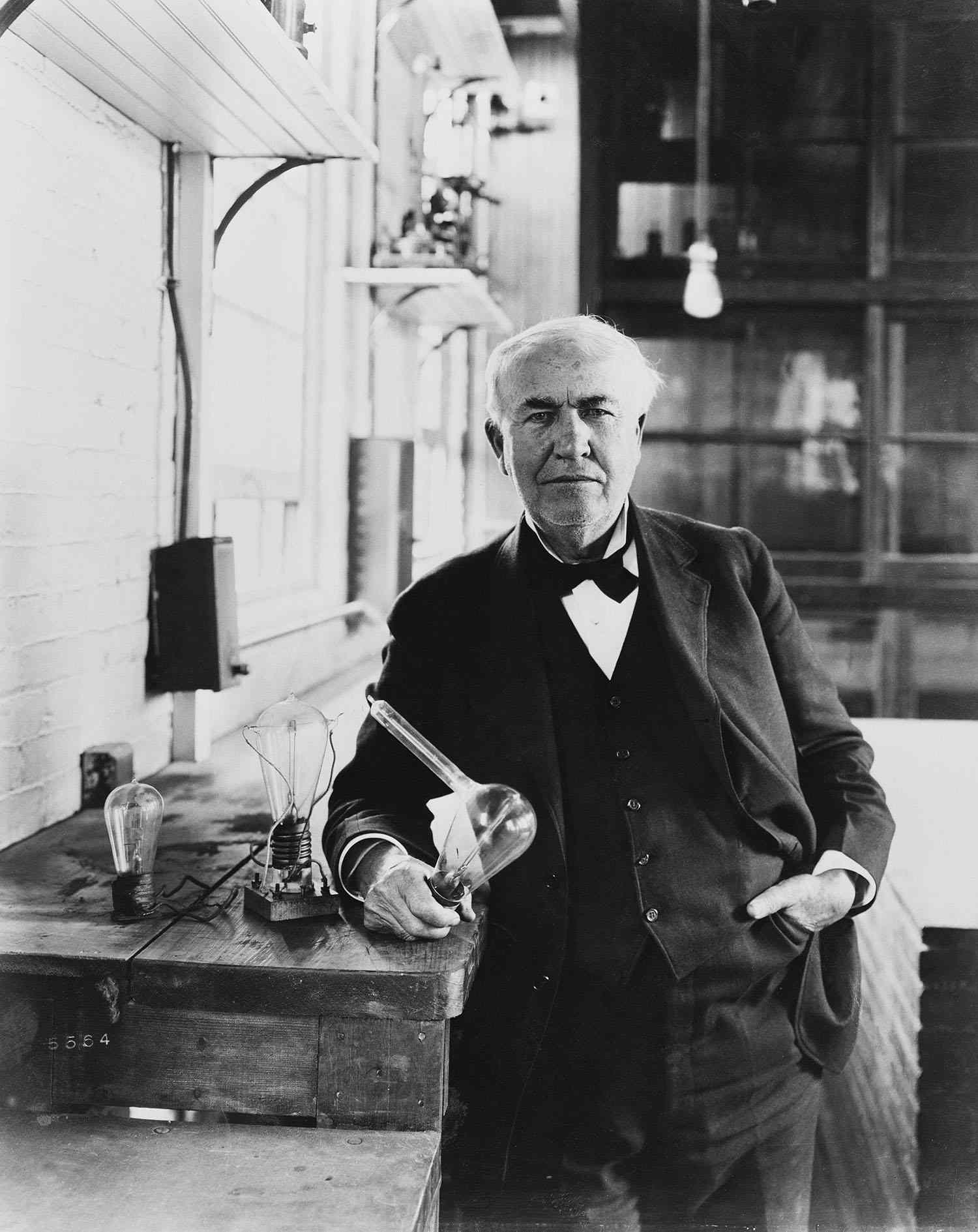
At the same time he ventured into the business world in 1878, to market his lights, setting up (with Vanderbilt’s and J.P. Morgan’s support) the Edison Electric Light Company, soon expanding that (now the Edison Illuminating Company) as New York City’s electric utility company – and in so doing, the 110-volt electric system now standard in all of America (a 220-volt system is used in Europe).
The only truly dark cloud in this picture came in his company’s competition with George Westinghouse over the matter of using direct current (DC: Edison) or alternating current (AC: Westinghouse). Edison not only lost this battle, but was forced by his investors (including J.P. Morgan) out of his company in 1890, which was then reconstituted as an AC company, General Electric – which went on to control three-quarters of the electrical business.
Edison continued his work nonetheless, interested in visual items, everything from the kinetoscope (peep-hole viewer) in 1891 to a movie projector able to cast a film image on a screen in front of a full audience (1896), going on to add a machine able to synchronize sound with the film. This became for him a very prosperous development, as his movie studio went on to produce almost 1,200 short films. And he ventured into other fields as well, the rubber industry, mining, and the x-ray (which he discovered to be very dangerous). He would remain a ball of energy himself, all the way up to his death in 1931.

Edison with his staff
The automobile and airplane industry. This same spirit of American inventiveness was pushing small-shop experiments in the world of transportation. The horseless carriage or automobile was an item of particular interest, with the idea of steam (at that time driving trains and ships) being employed to drive these personal means of transport. Thus as early as 1878, steam-engine-driven carriages were used in the 200-mile (33 hour) race in Wisconsin between two such vehicles. This same idea was developed by the Stanley twins (Francis and Freelan) who produced over 200 such cars in 1898-1899, making them the leaders in the industry.

The Stanley brothers and their Steamer – 1899
They went on (1902) to produce the Stanley Steamer – which in 1906 was able to reach 127 miles per hour over a one-mile course at Daytona Beach. This made their automobile quite popular (in 1917 their annual production rate peaked at 500 cars). But by this time the gasoline-powered internal-combustion engine (ICE) was taking over the market, and in 1924 the Stanley brothers were forced to close their business.
It might be easily supposed that the airplane would have been a later development, getting people moving in the air being much trickier than getting them moving along the ground. But in fact the first heavier-than-air flying machines employing the ICE were under development at the same time as the ICE-driven automobile, both heavily dependent on this new technology (a steam engine would never have worked in the air!).
We know that the Wright brothers (Orville and Wilbur) were the first (December 17, 1903) to actually achieve the flight of this new type of airplane (having previously tested over 200 models in a wind-tunnel they created), flying their plane a distance of 852 feet in 59 seconds of flight, just ahead of other inventors about to do the same thing.
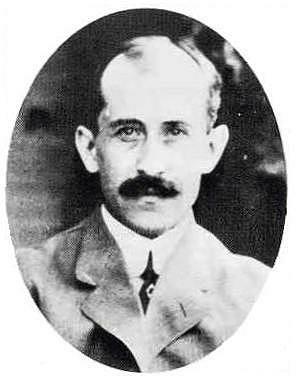

Orville and Wilbur Wright

They would go on to refine and strengthen their airplane, in 1905 flying it 24 miles in just over 39 minutes. And in 1908 the Wright brothers traveled to France to demonstrate the possibilities of the airplane, and encourage its development in Europe. Indeed, the very next year a Frenchman was the first to fly his airplane over the English Channel (and collect a £1,000 reward!) Thus the age of human flight had arrived.
 Henry Ford. It’s important to introduce Henry Ford at this point, because not only did he promote the automobile industry greatly, he actually at this point in time (the early 1900s) streamlined business operations so outstandingly that it created a sense of industrial efficiency that would touch the entire American industrial world, and, for that matter, the European world as well.
This farm-boy from Michigan took an interest in the family’s steam-driven machinery, which led him to become a servicing mechanic for Westinghouse. But he moved on in 1891 to work for the Edison Illuminating Company, becoming a chief engineer by 1893. But he was doing some experimentation of his own on the side, fascinated by the possibilities of the ICE, resulting in his building in 1896 an ICE-driven four-wheeled cycle. Encouraged by Edison (the two would remain close friends, eventually even neighbors, from that point on), he developed his model. And, with some financial backing, in 1899 he formed the Detroit Automobile Company, but which shut down two years later when it did not succeed. But one not to be discouraged easily, he built a stronger model, raced it successfully, and was able to set up a new company in 1901, the Henry Ford Company. But even here he moved on (sold his company, which became the Cadillac Automobile Company), built yet a new model with an even stronger engine (80 horsepower!), had the famous Barney Oldfield race it successfully, and in 1903 was able to open a new business, the Ford Motor Company.

Ford’s 1907 horseless buggy
Up to this point, these automobiles were handcrafted, and very expensive for purchasers. And here is where Ford’s business genius changed the world of production. His goal was to produce a simple but effective automobile cheaply, one that was affordable by the huge market of Middle-Class Americans. Thus in 1908 he introduced the Model-T Ford, $825 in its initial offering that year, but constantly reduced in price annually, as Ford discovered new efficiencies – not only in production but also in distribution (a system of Ford dealerships located widely).
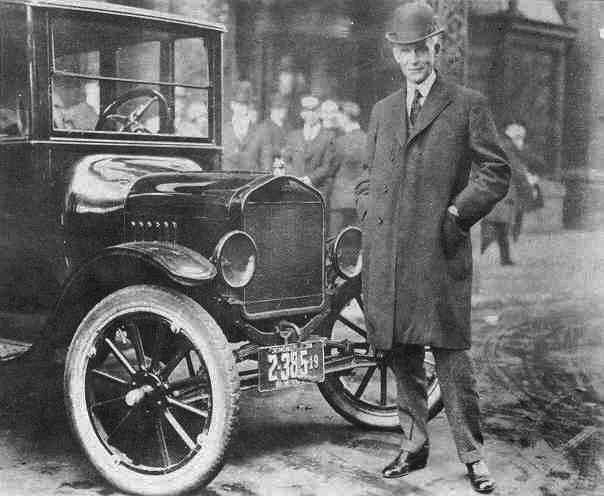
Then when in 1913 he revolutionized production using the moving assembly line – and in 1914 paid his workers the unheard-of $5 per day wage (greatly motivating his work force, who themselves could now afford his cars) – he was able to double the production rate … and sell over 250,000 of his cars (now priced at only $440)! Thanks to Ford, ownership of an automobile was becoming a regular feature of American Middle-Class life.


[1]Charles B. Spahr, An Essay on the Present Distribution of Wealth in the United States, New York: T.Y. Crowell & Co.,1896, p. 69
[2]This would make him the second richest man in American history, ranking only behind Rockefeller. The $100 million would be approximately equivalent to $150 billion in today’s dollars. Interestingly, he lived modestly. All the lavish Vanderbilt estates that were built across the American East were actually commissioned later by his descendants.
[3]Yet Rockefeller remained a significant stockholder in these various companies. And the oil business continued to be personally very profitable for Rockefeller, eventually making Rockefeller the richest man in the world at the time (and by comparison, even still today!)
[4]He once commented about his tireless pursuit of new inventions: “I have not failed, I’ve just found 10,000 ways that won’t work”!
NATIONAL POLITICS DURING THE LATE 1800s
Two things stand out rather notably about America’s national politics in the latter part of the 1800s. First of all, with the Civil War and Reconstruction over with, there seemed to be little of importance that the federal government found itself doing. The nation’s serious dynamics were located in its economic realm, not part of the jurisdiction of the federal government – as the Constitution made very clear. Rather, American economics was driven (as we have just seen) by private individuals, not government officials.
And secondly, this same free spirit driving a virtual economic revolution raised all kinds of new moral-ethical questions. Most importantly, where exactly were the boundaries for the massive self-aggrandizement behind this dynamic? The economic revolution was not only shaking the old American social order to its roots, its lack of any kind of refereeing was producing a huge culture of greed, and what those who still held on to old-fashioned Christian values viewed as sheer corruption.
It has already been noted that the social challenge of widespread corruption had started out in the days of Grant. But the issue merely grew worse with the passing of time. Who or what could be done to keep this economic game America was playing fair to all?
Rutherford B. Hayes (1877-1881). President Hayes attempted to address this problem of corruption, but stirred a lot of political opposition for himself in the process. Ironically, one of his few successes seemed to be in removing Chester A. Arthur from the spoils job at the New York customs-house, infuriating New York boss Conkling in the process. But overall, such anti-corruption action cost Hayes the loss of vital support when it was time for re-election (Grant was even trying again to get the 1880 Republican nomination). And it took 36 ballots before the Republicans finally selected the relatively unknown James Garfield, who then – to the great shock of Hayes – chose Chester Arthur as his running mate (to get the vital support of boss Conkling)!
 James A. Garfield (1881). But once in office, Garfield largely ignored the patronage dynamic and instead chose truly qualified individuals for government positions, pitting himself against Conkling, who actually overplayed his hand, turning many New Yorkers against Conkling.
But the patronage issue would soon come to end Garfield’s presidency, when an irate office-seeker shot Garfield only a few months into his presidency, and he eventually died, having served only six months as president. The nation was stunned.
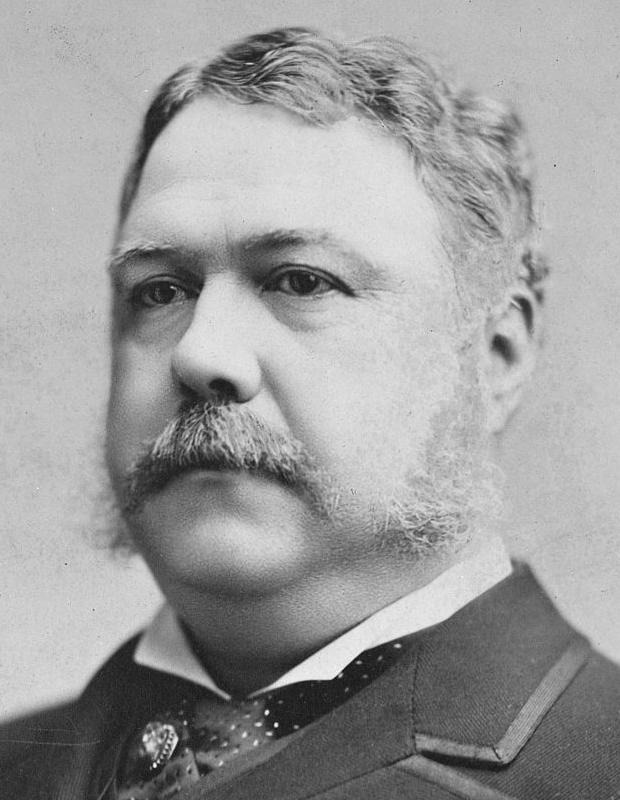 Chester A. Arthur (1881-1885). And thus it was that Arthur became president, but ironically, one who would become one of the country’s leading anti-corruption reformers! Besides vetoing Congress’s patronage bills, he signed into law (1883) the Pendleton Act, which turned an increasing number of civil service appointments over to a Civil Service Commission, charged with making government appointments solely on the basis of proven merit, not patronage.
And then, after finishing out this single term in office, Arthur chose simply to retire (he was suffering from poor health).
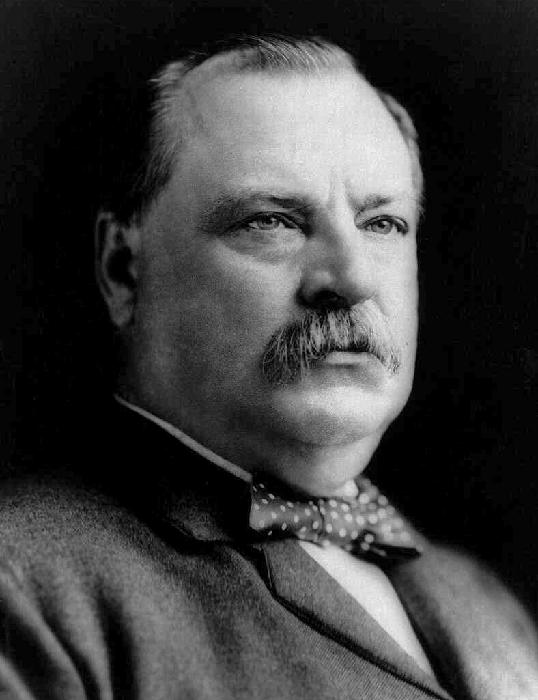 Grover Cleveland (1st term: 1885-1889). The election which brought the Democrat Cleveland to the presidency was fought largely over the issue of personal integrity of the candidates, the Republican James Blaine, unfortunately well known for his involvement in the railroad industry spoils system. Cleveland was known as a man of great personal integrity, which the Republicans attempted to undercut with rumors about the unmarried Cleveland having once conceived a child out of wedlock!
In the end, the election was very close, coming down to the electoral vote of New York, when Cleveland had received only a little over a thousand vote majority out of the million votes cast there. And behind that tiny Republican shortfall had been the Republican Mugwumps,[5] who simply could not bring themselves to support the corrupt Blaine.
And once in office Cleveland resisted as best he could the demand for spoils from fellow Democrats, even reducing the size of the bloated federal bureaucracy (and not just the opposition Republicans in the mix). He moved to strengthen the navy by getting rid of inferior ships built by corrupt contractors. He took back into federal hands western land that the railroads had made no progress in developing. And he cut back government support of farmers and army veterans, which he understood as creating on the part of the recipients a state of dependency rather than personal and social health.
But a huge political issue facing Cleveland was one he could not bring to resolution: the gold versus silver controversy. Supposedly this was simply an economic issue, about which of the two, gold or silver, served best to back the strength of the U.S. dollar. If the matter had been simply that and nothing more, a reasonable policy could have been arrived at. But actually, it really was not just about valuable metal. It was also about the deep social tensions that hit the country as America moved into the industrial age.
Gold was very much less abundant than silver. Being scarce, it was thus much more valuable, therefore a tougher standard supporting the value of the dollar. Bankers and financial creditors, especially the big-money boys back East, pushed hard for the dollar to be based solely on the value of gold alone, requiring banks (including the federal banks) to hold gold as the backing for their printed dollars, making dollars themselves very scarce and thus very valuable. Those supporting the gold standard were termed “Goldbugs.”
Silver, on the other hand, was still flowing quite readily out of the West’s many silver mines, and thus, ounce for ounce, very much less expensive than gold. Dollars backed in value by abundant silver would themselves therefore be much more abundant. And those that found themselves in debt to banks, such as farmers who lived off of bank loans until harvests came around – and also had financed much of their operations through bank-held mortgages – naturally wanted to repay those loans with the cheapest dollars possible. Thus they were strong “Silverites.”
But there was even more to this problem than the matter of the value of the dollar. The gold-versus-silver matter was actually a symbolic or ideological matter[6] that served to align American politics into bitterly opposing groups. The very wealth of America’s rising financial class (mostly back East) was galling to America’s struggling farmers, and their impoverished friends and relatives who had given up the struggle and taken poor-paying jobs in the newly developing industrial world. This all seemed so un-American, especially after so many of those who had fought for the Union during the recent Civil War were finding American society seemingly so insensitive to their social plight. It was just not fair.
Cleveland was forced to make his way through this matter, much as presidents before him had been forced to contend with the slavery issue. But like Grant before him, Cleveland ultimately decided that gold served the interests of the nation best, in making for a very strong dollar. He attempted to cut back the use of silver, which put Congressmen representing the Silverite world of the West, the rural Midwest and the South, in strong opposition to Cleveland.
Then, on top of this issue, there was the one of tariffs … the U.S. government’s primary source of income. Here Cleveland took the position in opposition to the high tariffs (over a third of the value of the product itself) that “protected” American industrial production from foreign goods, and was producing an embarrassing surplus in the government’s budget. Cleveland’s attack on the nation’s high tariffs now embittered the up-East side of the East-versus-West or rural-versus-industrial debate, further undercutting Cleveland’s political position nationally.
And thus it was that Cleveland failed at his effort to be reelected in 1888. He actually won the popular vote, but narrowly lost the vote of the electoral college, solely by the vote of his home state of New York, which – because of the opposition of Tammany Hall – left him only 600 votes short of winning New York’s vote, and thereby the presidential election.
 Benjamin Harrison (1889-1893). And thus another Harrison (grandson of the president who died soon after his inauguration) took office in 1889.
Harrison reversed the direction taken by Cleveland on the gold-silver matter, working with Ohio Senator John Sherman to put the Sherman Silver Purchase Act of 1890 in place, committing the government to the purchase of a fixed amount of silver. This greatly pleased not only rural America but also the silver mining industry, which was suffering deeply from a sharp price loss because of the oversupply of silver. But this policy would push America in an economic direction that would help produce yet another major economic crisis for the country.
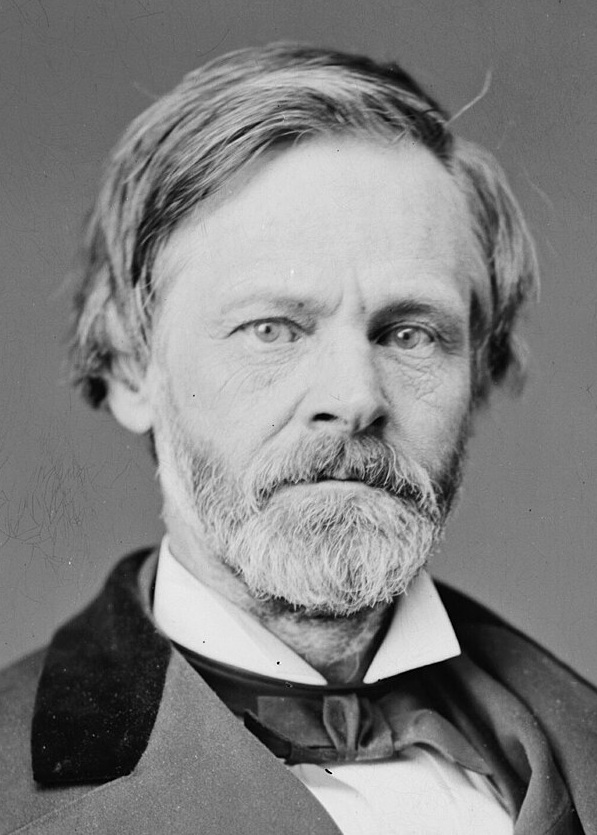 At the same time, Harrison supported yet another effort by Senator Sherman, resulting in the Sherman Antitrust Act of 1890. It was designed to break up the huge financial trusts that controlled America’s rail, steel, and financial industry. But it would also be used to try to take down the organized labor movement, which was also on the rise at the time.
And to his great credit, Harrison attempted to extend civil rights protection to the American Blacks through the action of his Justice Department. But White juries would simply not follow through by convicting those accused of committing civil rights violations against Blacks, and ultimately even Congress and the Supreme Court backed away from his effort. The Blacks would have to wait – a very long time – to possess the civil rights that all Americans were supposedly entitled to.
Ultimately, what would bring Harrison to a single term as president was the economy, worsening as time went by. One of the causes of a huge economic slowdown was the McKinley Tariff of 1890, sponsored by Ohio Senator (and future president) William McKinley, which raised tariff rates even further, almost up to half of the value of the goods produced, making foreign products virtually impossible to acquire. The idea was that America’s high tariff rates would not only protect American industry, but place in American hands the instruments able to force European countries to negotiate a reduction of their own high tariffs against American goods. However the heightened tariffs also made American products so expensive for Americans themselves – including not just the average American consumer but even America’s industrial companies – that the American economy began to decline under the load. And thus Harrison had to go into another national election, with Americans in a very grumpy mood.
Cleveland (2nd term: 1893-1897). Thus Cleveland was returned to office, just in time for the Panic of 1893! As with all such “panics,” events were set off by rumors and then rapidly mounting fears, initiated this time by the failure of the deeply indebted Philadelphia and Reading Railroad Company, which declared bankruptcy just as Cleveland took office. This, combined with declining global wheat prices (a huge American income earner) caused cautious investors to demand the exchange of bonds they held, for gold, which neither private banks nor the federal treasury held in sufficient amounts. Others, seeing such a move, tried to do the same, creating the full panic.
Cleveland succeeded in getting Congress to repeal the Sherman Silver Purchase Act, supposing that this would bring strength back to the dollar … and thus the economy. But instead it merely collapsed the shaky silver industry, and soon much of the rest of American industry.[7] In turn, the unemployment rate went from 3 percent in 1892 to nearly 12 percent in 1893, to over 18 percent in 1894, then in 1895-1898 hanging at the 14 percent figure.
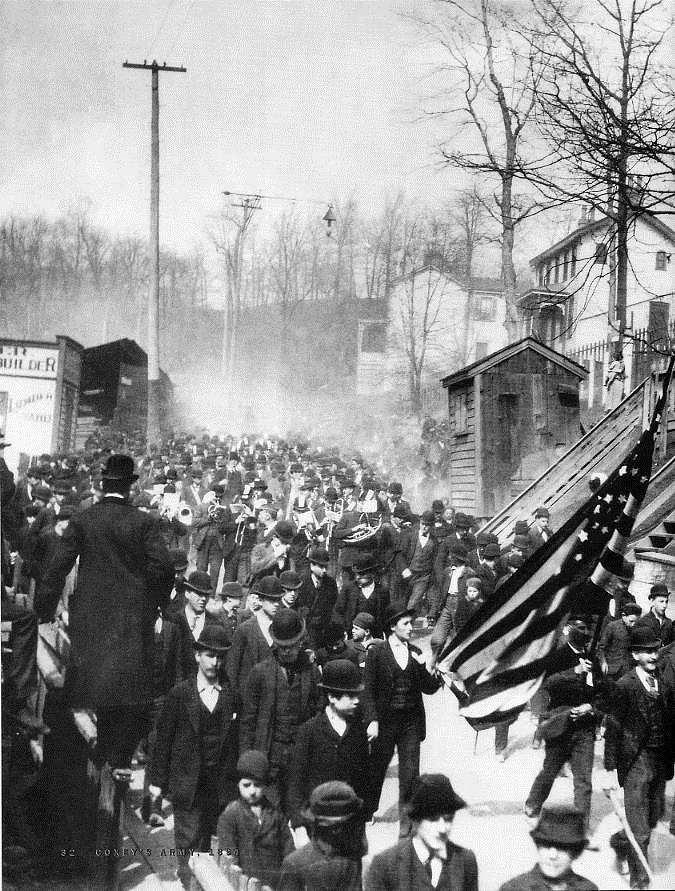
This deepened labor unrest greatly in America, with Jacob Coxey even leading a march of the unemployed on Washington,
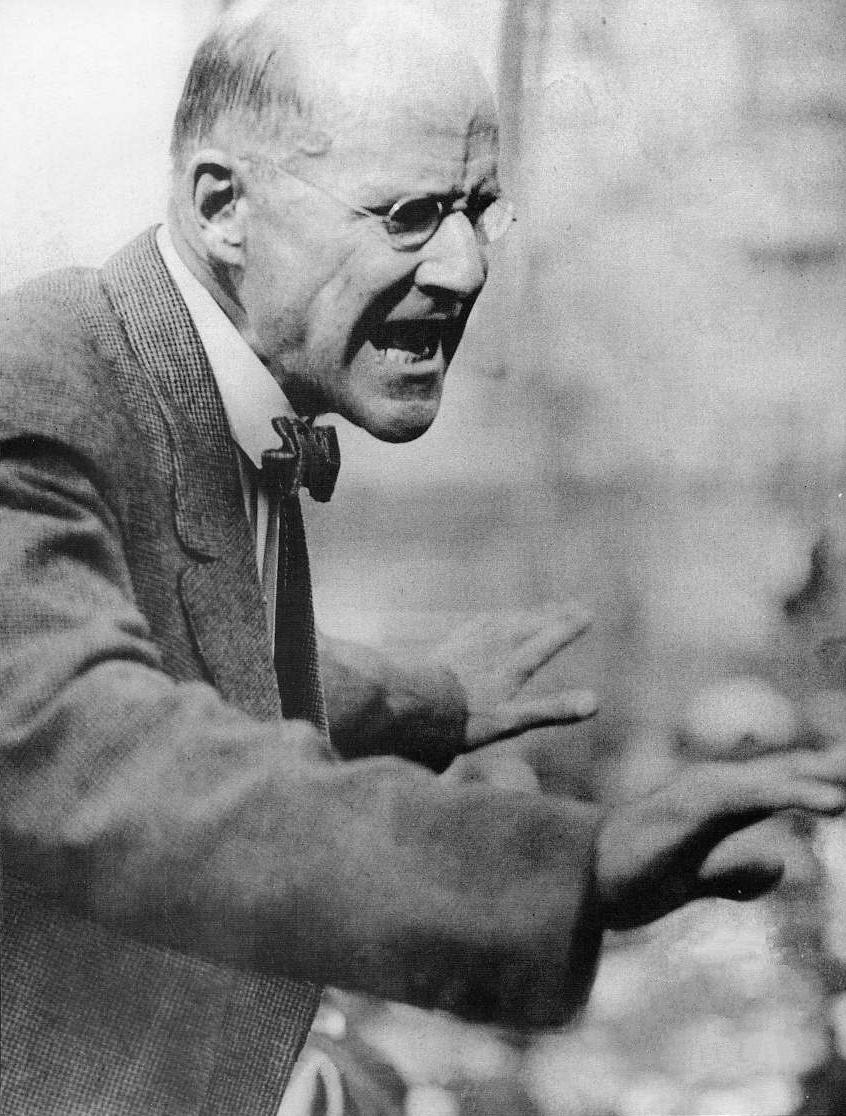 and the Pullman Company undergoing a very violent strike by its workers (led by the American Socialist Eugene Debs) – which soon led to the spread of such strikes to other railroad companies. By mid-1894, 125 thousand railroad workers were on strike, shutting down the country’s vital rail network. This forced Cleveland finally to send federal troops after the strikers, ultimately breaking up the strikes.
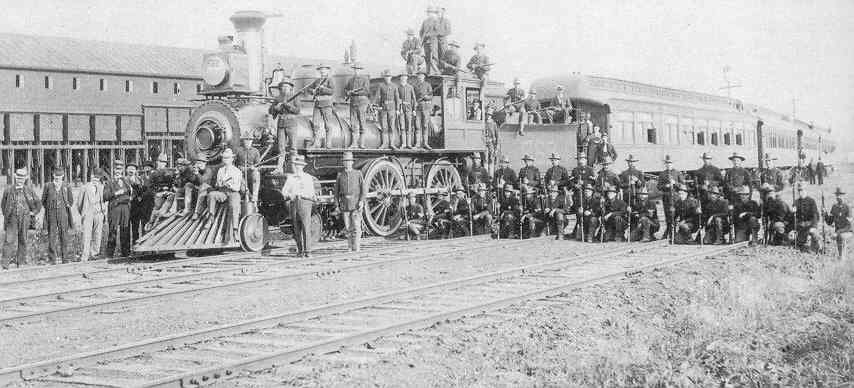
Strike-breaker troops sent to Chicago
But Cleveland was helpless in the face of the broader panic. And this is when in 1895 he finally (after first refusing) took the help of J.P. Morgan in purchasing those 3.5 million ounces of gold in exchange of thirty-year federal bonds. This calmed the panic down somewhat. But still left a lot of dark economic issues unresolved.
Thus it was in 1896, at the Democratic National Convention, Cleveland was pushed aside by a fast-rising William Jennings Bryan, who blasted Cleveland’s gold policies by rousing the convention with his challenge: “you shall not crucify mankind upon a cross of gold!” Thus it was that Cleveland quietly went off into political retirement as a trustee of Princeton University.
 William McKinley (1897-1901) brings the 19th century to a close. Despite Bryan’s energetic campaigning around the country with his strong pro-silver platform (actually Bryan’s Democratic Party was somewhat divided over the gold-silver issue), the Republicans found themselves led by former Congressman, then Ohio governor, McKinley, who “sat on his front porch” (literally!), while his friend, Mark Hanna, skillfully directed McKinley’s campaign, employing all the modern electoral campaign tactics of a well-organized campaign committee conducting endless publicity and a lot of political negotiations with key political figures here and there. And thus it was that McKinley went on to a rather large victory.

McKinley and Mark Hanna and their families
As president, McKinley followed the trail expected of him, holding America’s high tariffs in place (the 1897 Dingley Tariff) and maintaining his pro-gold position (the 1900 Gold Standard Act).
It would be in the realm of imperialism that McKinley’s presidency stood out. But it was also the age of Western imperialism, driving strongly the expansionist urge of all major Western societies. In 1898 he would direct American troops not only to Cuba to help the Cubans secure their independence from Spain, but he would extend that effort to neighboring Puerto Rico, and then all the way to Guam and the Philippines in Asia. And along the way he would seize the Republic of Hawaii as a new U.S. territory.
McKinley would be reelected in the 1900 national election, but go on to serve only six months of that term – when a deranged anarchist shot McKinley at a presidential reception he was hosting at the Pan-American Exposition in Buffalo, New York. This would bring forward to the American presidency his vice-president, Theodore (“Teddy”) Roosevelt, an even more dynamic individual in both the socio-economic and foreign-policy realm.
[5]From an old Algonquin term meaning “a person of importance,” implying that those who bolted from the party were being ridiculously sanctimonious or morally condescending in refusing to support their party’s candidate, Blaine.
[6]Symbolic or ideological, much as the slavery issue had been earlier that century, even to Southerners who had owned no slaves and to Northerners who had no personal regard for America’s Blacks.
[7]Estimates are that 500 banks and 15 thousand businesses failed during the 1893-1898 years of the Panic.
THE CULTURAL-SPIRITUAL CHALLENGES OF THE INDUSTRIAL AGE
A rapidly growing America. From one perspective, America – as it stepped from the 1800s into the 1900s – was going through an amazing period of development. In only a couple of generations Americans had gone from horseback to automobiles, and even to flight. Electricity lit up not only cities but also homes, news of the larger world arrived almost instantly to an increasingly attentive population, personal phones put people in direct communication with each other across even the miles, and wealth reached down into even the middle classes, who knew that they were living better than kings and queens had lived only a few centuries earlier. All this change was very heady stuff.
Also the American population itself was undergoing very rapid growth in numbers, with accompanying social changes. In the forty-year period between 1870 to 1910 the population went from 38.5 million to 92.3 million, growing by about 25 percent each decade (28 percent by 1880, another 27.6 percent by 1890, and another 21 percent for each of 1900 and 1910). This time period also marked a huge shift in the nation’s demography, 10 to 11 million (figures are not exact) Americans moving from farms to America’s fast-rising cities, where they were joined by another 25 million immigrants streaming in from Europe.


This movement was not always a happy event, but one normally necessitated by the need to find life-support in a physical or geographic world that itself had expanded none. Things were getting tight. And poverty was an accompanying feature of this tightness or scarcity of opportunity. And things were merely growing worse with time.


The American Labor Movement. Actually, Americans had begun to take action against this mounting socio-economic crisis years earlier, with the founding in 1869 of the organization, Knights of Labor, originally a union of skilled workers, designed to protect their professional positions in the face of the invasion of masses of unskilled workers (farm boys mostly) into their industrial world. But over time it broadened its membership and pushed for specific items, such as the 8-hour working day … reaching nearly 30,000 in membership by 1880, 100,000 by 1884, and 800,000 by 1886 … involving around 20% of America’s industrial workers.
But then a number of things would bring this organization to rapid decline after that. Its leadership was not skilled in organizational matters. It was heavily Catholic in membership, and drew the opposition of the Catholic hierarchy because of its secretive ways. Also, Chinese laborers were always glad to take the place of the workers when they went on strike for their 8-hour day program. And the organization could not find support within the American press, which depicted it as being merely a group of anarchists. Ultimately, it was most unfairly depicted as the cause of the 1886 Haymarket Square Riot[8], undercutting the organization’s reputation so badly that by the time of the 1893 Panic it had become only a very small operation.
The organizing of American labor was subsequently taken up by the American Federation of Labor (AFL) founded that pivotal year of 1886 by Samuel Gompers as a result of a dispute with the Knights of Labor over competing labor contracts. It united a number of guilds or unions of skilled workers and craftsmen (as opposed to common day laborers) – beginning with the cigar makers’ unions. Then as the Knights of Labor faded away during the later 1880s, the AFL held steady, even picking up new members.
Overall, it supported the idea of capitalism, simply attempting to put skilled workers in a better position to take advantage of the huge profits being accumulated in the industrial revolution sweeping America. Also, its political caution, and distinct patriotism[9] helped bring the U.S. government alongside the AFL in support of its labor program. By 1920, the AFL had grown to nearly four million members.
The American women’s or feminist movement. A huge stimulus to a new women’s movement spread across America was alcohol, and the devastation it caused in so many American families, as husbands would spend what little earnings they achieved drowning their labor sorrows on payday at the local bar, arriving home tipsy and with most of their earnings gone. And thus the Women’s Christian Temperance Union (WCTU) was born in 1874, ultimately striving not for temperance in the drinking of alcohol (a long-standing Christian virtue) but instead for total abstinence (not at all part of the Christian tradition, but soon to be treated as an absolute Christian law).
But the women’s movement moved further, to demand for women the right to vote (women’s suffrage), at first to give the women the political leverage they would need to perform their all-important task of protecting their families. But then it became increasingly clear to the more active in the women’s movement that women should have the same rights as men in all capacities – publicly as well as privately.
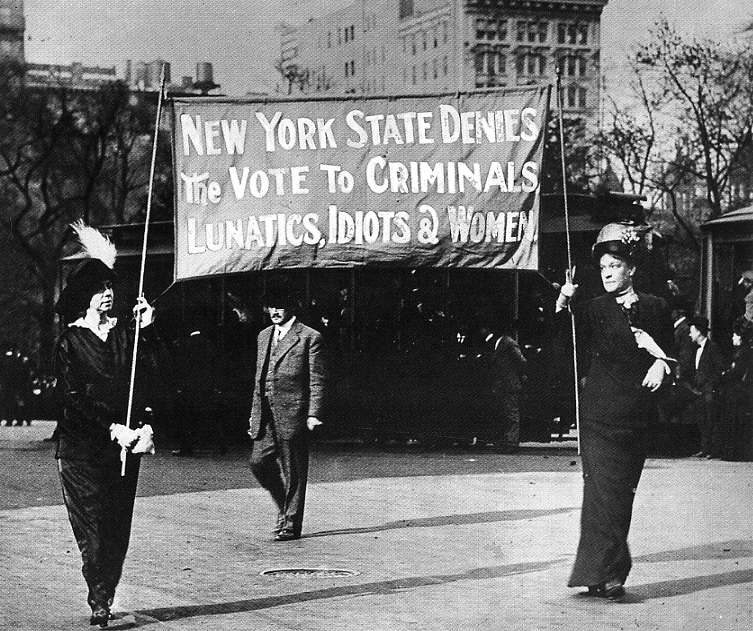
It was time to end the idea that the public domain was strictly the man’s world. Thus the founding in 1890 of the National American Woman Suffrage Association, with long-standing suffragist Susan B. Anthony heading up the organization. But it would take another 30 years of marches and other forms of protest to finally secure the right of women to vote in every American election with the 19th Amendment which went into effect in 1920.[10]
Trust-Busting. Other Americans found themselves greatly distressed at how America’s capacity to create enormous industrial wealth was held in the hands of only a tiny group of Americans – and how industrialism was also degrading so many people to the status of serfs. Americans (and immigrants) were being forced by rising economic circumstances to have to leave the open-air work of farming and submit themselves to lives underground in America’s mines and inside the sweatshops of America’s factories. The work was grueling, paid little, and – to the horror of Progressivists – was totally dehumanizing.

Coal miners back from a day’s labor

“Breaker Boys” at a Pennsylvania coal mine
Indeed, alcohol was becoming the sole source of relief for desperate workers – but also the growing cause of the ruin of America’s industrial working-class families. Something needed to be done to save America’s soul! Thus it was that “trust-busting” would be a key feature of this new spirit stirring Americans to action on numerous fronts.
[8]At a gathering of workers at Haymarket Square in Chicago who were demanding the eight-hour working day, an unknown person threw a bomb at police who were in the process of dispersing the crowd, killing seven officers and a number of civilians. On the basis of scanty or non-existent evidence seven (mostly German) anarchists were sentenced to death by hanging (a number of them had not even been present at the gathering) for their contribution to the tragedy. Only four were actually hanged, as one committed suicide in jail and the two others had their death sentences commuted to life imprisonment, but were pardoned by the Illinois governor in 1893 who (as did many) considered the trial a total travesty of justice.
[9]Such political caution and patriotism was clearly demonstrated during World War One, and in its opposition to the more radical (mostly immigrant) labor organizations such as the “Wobblies” (the Industrial Workers of the World) and the more radical Socialist Party.
[10]Some of the Western states, Wyoming (1869), Utah (1870) Colorado (1893), Idaho (1896), had already taken the lead in this, prior to the end of the 1800s.
THE RATIONALIZING OF WESTERN CULTURE
Europe had been in a state of huge turmoil since the days of Christianity’s split into Protestant and Catholic variants back in the 1500s. The early 1600s had seen the European continent turn bloody over this matter. And in significant ways, America had served for so many as a place of refuge, a way of getting away from all this European turmoil.
And yet European descendants now able to count themselves as Americans never really put the European dynamic behind them. Europe seemed always to be a place of deeper social introspection, much more sophisticated social debate. True, as de Tocqueville observed about America, it had its own ideas about life. But many Americans, especially those of a more philosophical nature – found extensively in the social circles of the rising Progressivists – were greatly attracted to the high level of social thought coming from Europe. In fact, it was considered to be the height of sophistication to go off to Europe to study (the reverse was hardly the case yet!). Thus in so many ways, in the realm of higher thought, America mostly found itself simply responding to European developments that were well underway across the Atlantic.
Europe’s grand fascination with Human Reason. Whereas America seemed to be a land of social development through tough encounters with a primitive environment on the part of multitudes of very ordinary people, Europe was a world that prided itself as being based on well-reasoned order, an order maintained by smaller and more select groups of individuals possessing more enlightened minds, found typically at the upper levels of a long-standing feudal order. Thus it was that by the late 1600s, Europe saw itself as having entered an age of “Enlightened Despotism” – that is, strict rule by “enlightened” monarchs and their small circles of equally enlightened advisors.
But of course, the idea of enlightenment was not limited to royal circles. University-educated intellectuals saw themselves in the same light. And with the rise of Europe’s material prosperity, clearly in place by the 1700s, this self-understanding included also the rising group of industrial entrepreneurs.
This “Age of Enlightenment” had its origins in the early 1600s, with the rise of “natural philosophy” – something we today term as “science.” Very active in this matter were the English Puritans, led by such intellectuals as Francis Bacon, who at the turn of the 1600s celebrated the new discoveries of the workings of the natural world, seeing the hand of an incredibly awesome God in the newly discovered grand designs of nature. Bacon’s “science” was treated as almost an act of worship … as it would be for so many of the other Puritans – who, for the same reason (seeing their natural philosophy as a witness to the glory of God), took the lead in England’s scientific revolution that broke forth in the 1600s. And much the same was the case for the Puritans’ Calvinist cousins over in the Netherlands!
But France seemed to be inspired more by the kind of thinking that René Descartes put forward in the early 1600s, who found in the human mind itself, and its ability to uncover these great new truths, the real object of worship. Human Reason was a kind of god in itself, worthy of grand respect, and of full confidence in its powers to bring eventually all of life – including man’s social life – under rational control.
And the rising field of mathematics, inspired by the Englishman Isaac Newton and the German Gottfried Wilhelm Leibniz (later 1600s), seemed merely to confirm such human power. But Newton also followed the English trend of being more empirical in how he saw such human power brought to reality, believing that nothing could be considered as true until it had been observed to actually work in the real world. Furthermore, he disappointed many intellectual purists with his wandering into Christian mysticism later in life.[11]
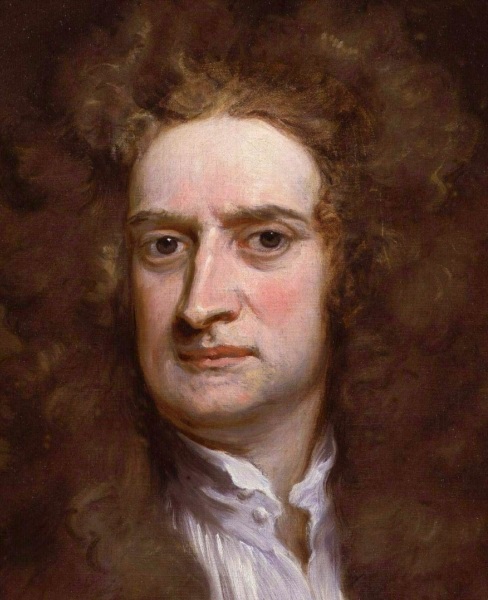
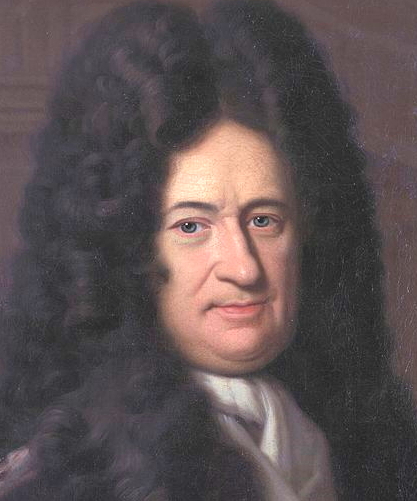
Newton Leibniz
 John Locke (also the later 1600s) was clearly a leader in the thinking that Human Reason should be able to design ever-better social foundations and norms. And by the same logic, he proposed ways to make human thought itself more disciplined, more powerful, in its operation. And as we have already seen, he was invited to put his theories to work in the new Carolina colony, though the results of his efforts were less than spectacular.
 Rousseauian anarchism. The Swiss philosopher Jean-Jacques Rousseau was able to take such “progressive” thinking even down a very revolutionary path, when he came up with the notion (well-received through his publication, The Social Contract in 1762) that what was needed to bring the world to true progress was to dismantle the long-standing and quite artificial social structures that Europe had been living under (the Ancien Régime or Old Order of feudal Europe). This would allow finally “natural man” to rise to a rather instinctive greatness, something that had been lost under the cloud of too much “civilization.”
Indeed, Rousseau gave Humanism virtually a religious quality in the way it made true believers of multitudes of intellectuals, individuals that believed persistently that simply tearing down pre-existing social orders would provide the perfect path to human progress.
Obviously, such Humanists were not believers in the Christian doctrine of “original sin,” something that took a very dim view of the idea of man’s fundamental “purity.” But this doctrine of man’s fundamental purity would henceforth stand at the heart of Western Humanism, in the various “anarchist” forms it would take – everything from Communism and Socialism to Wilsonian Democratization.[12]
But the flaws of such Rousseauian thinking should have been made very clear in the way it led the French Revolution down the road to its “Reign of Terror” in 1793-1794, a clarity however that seemed to never reach the eyes of Humanist devotees – who simply refused to learn from the actual examples that history itself provides most amply. The doctrine was just simply too appealing intellectually and emotionally to be put aside.
 The Hegelian dialectic. However, a German philosopher, Georg Wilhelm Friedrich Hegel took a quite different tack concerning the matter of human progress than had Rousseau, seeing, instead of blissful utopia blossoming out of some primitive return to nature, a world more likely shaped by conflict – by even the necessity of conflict. And Hegel had plenty of evidence of conflict to work with, writing in the years during and after the French Revolution. But he also saw history as a matter of grand divine design, directed by the hand of God itself, a great World Spirit (Weltgeist) that used the natural instinct of man, not towards harmony but instead towards competition and conflict, as the driving dynamic that moved history forward. He claimed that each period in history was the by-product of a conflict between two social tendencies in competition at the time, which in their struggles actually birthed yet a new and higher social form which then took them into the next historical period. He thus saw history as the result of a dialectical process, two (di) forces giving rise to a new and more progressive third force through their struggles.
And just as Rousseau was to have a huge impact in Europe’s mid-to-late 1700s, so too Hegel was to have a similar impact in Europe’s 1800s (pretty much the whole century), tending to move European philosophy down the line of thought that it was in the dynamic of the struggle or competition for dominance in life that life itself took its particular shape in history. Both Darwinism and Marxism would be shaped strongly by this line of thought. But so would be even the rising realm of a tribal-like nationalism that was shaking Europe as it moved into the 1800s.
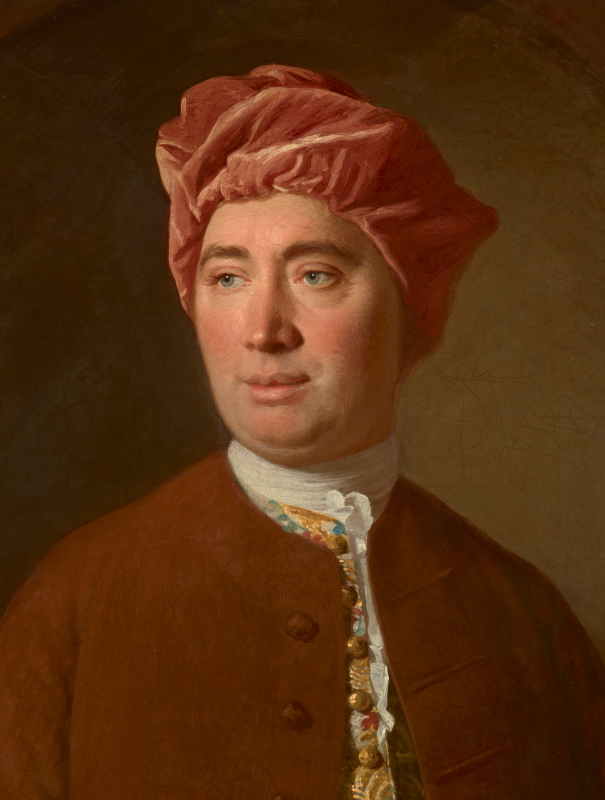 Darwinism. The British themselves had remained very pragmatic in the face of the Rousseauian Idealism going on in continental Europe. The Scotsman David Hume, for instance, made it quite clear that it was most unwise to accept anything as True that had not proved itself on numerous occasions as the way things happened by their very nature. There was no room for fancy speculation on such matters for Hume.
Nor for that matter was it the case for the fellow Scotsman Adam Smith, who studied carefully various societies in order to derive what seemed to be the actual rules of economics – published as his famous Wealth of Nations (1776), nor for the Irishman Edmund Burke, who took the French Rationalists to task in his Reflections on the Revolution in France (1790).
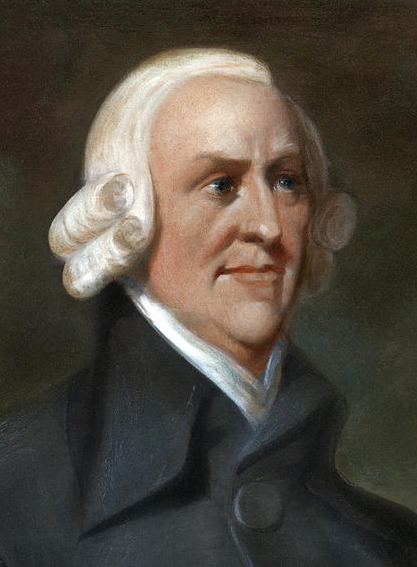
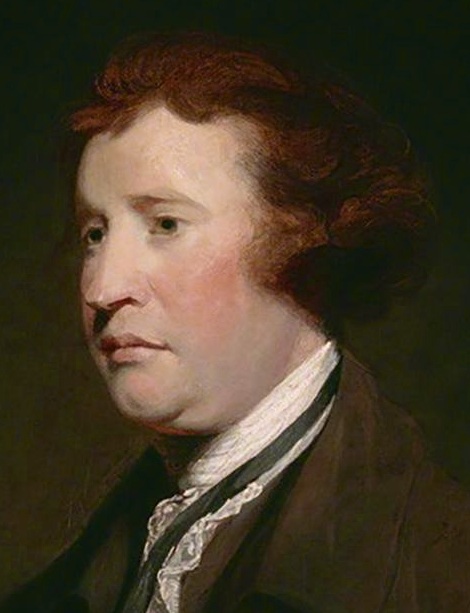
Smith Burke
 But it would be the Englishman, Charles Darwin, who would put in place the idea that serious geological and biological research, such as he conducted during a five-year voyage around the world (1831-1836), was the real source of Truth, one which produced a very different picture of the dynamics of life than Humanism.
In this, he was following up on the earlier works of his own grandfather, Erasmus Darwin, who in his Zoonomia (1796) had explain the role of nature’s very competitive process, which created slow specie progress through what would eventually come to be termed “natural selection” or – more crudely (thanks to Darwin’s colleague, Herbert Spencer) – “survival of the fittest.”
This also followed closely the political thoughts of the British Whig Party, supported by rising entrepreneurs, who justified (thanks also to the earlier works of the English clergyman Robert Malthus and the Frenchman Jean-Baptiste Lamarck) their growing economic power … and the social cruelties it created as a side-effect of the industrial revolution that England was experiencing at the time. They justified such social cruelty (casting the weak aside) as being simply nature’s own very competitive way in which it achieved real progress historically.
Thus Charles Darwin’s contribution was to “prove” this line of thought through his extensive research, finally published in 1859 as On the Origin of Species. He then expanded on this idea in his Descent of Man (1871) … explaining how man himself was not created in full or modern form at the beginning of Creation – such as the Biblical account given in the opening chapters of Genesis states as being the case. Instead, man had evolved very slowly over the ages from a very early primate stage (the famous Darwinian “monkey”), through multiple specie changes, in order to finally become contemporary man.
This seemed to be a very compelling explanation of man’s own origins, compelling enough for numerous intellectuals to put aside Biblical notions as completely unscientific, and thus to be disregarded completely. The Christian world was shocked.
Nationalism, as a rising tribal religion. When Napoleon unleashed his fired-up French citizen-soldiers against the professional armies of Europe’s monarchs, he ran right over the opposition. But he also fired up the peasants of those countries, when the monarchs had to call on their own people, and not just their private armies, to save their thrones. And with this, a huge spirit of “nationalism” was born, actually unleashed!
And it would be a very emotionally charged force for these monarchs to deal with. With popular participation in the defense of the lands went the demand for participation in the politics of those lands as well. Thus something akin to “democracy” began to stir, something that the monarchs were quite leery of, having watched what such “democracy” had done to France in its 1789 overthrow of the Bourbon monarchy that had long-directed that country.
But it was a time of a kind of a “Romantic” stirring that also accompanied this new political awakening of the European continent’s commoners. In Germany, divided into hundreds of small states, the hunger to see an actual German “nation” arise out of the political chaos was deepened by the poetry and writings of such Germans as Johann Gottfried Herder and Johan Wolfgang von Goethe, who, in the 1770s, even prior to the French Revolution, helped birth the Sturm und Drang (Storm and Drive) movement pushing for German national development. Indeed, this political-intellectual hunger stirring in Germany ended up, over the course of 1800s, not only bringing to life various revolutionary movements in Germany (such as the partially-successful Revolution of 1848) but also making German scholarship a leading force in a more broad intellectual awakening that reached deep into European society, and made German scholarship one of the leading forces of 19th century Europe.
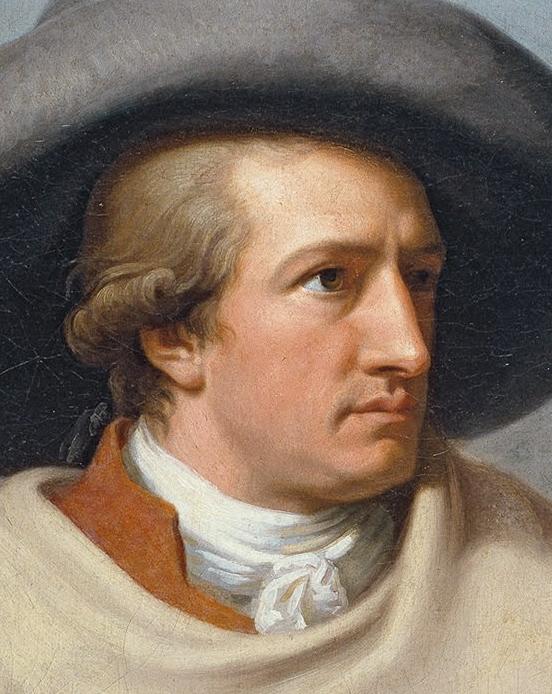
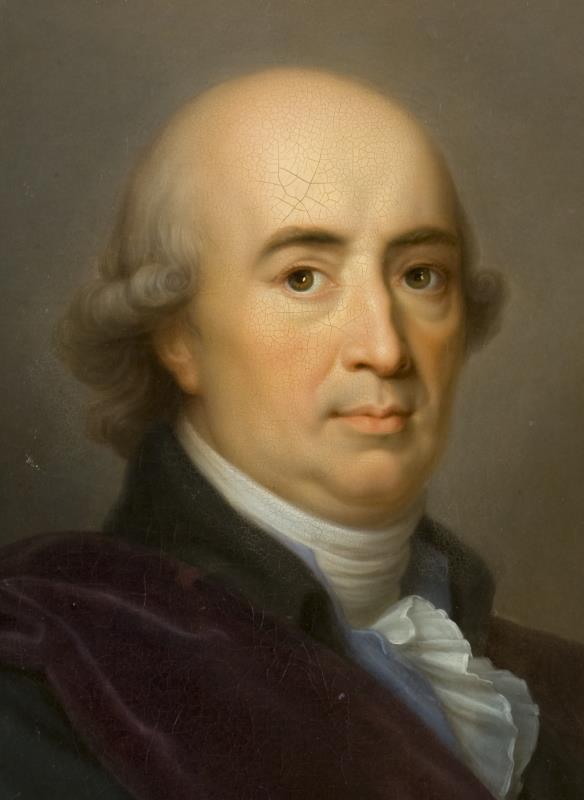
Goethe Herder
 And eventually this romantic hunger in Germany would find its fulfillment in the skillfully played war with neighboring France in 1870, which stampeded all these smaller German states unto a single German Bund or Federation under the direction of Prussia’s brilliant Prince Otto von Bismarck!
In fact, this same thing was happening all across Europe at the time, as everyone, from Norwegians in the North to Italians in the South and Russians in the East to Irish in the West, began their march towards their “national destinies.”
But it was more like a revival of the tribalism that Charlemagne’s feudalism 1200 years earlier had put an end to, with his feudal restructuring of European society, placing Europe under long-standing ruling classes and their dynastic masters. All of that was changing now.
But where was it headed? And who was managing this unleashed force, so that things did not get out of hand?
Tragically, the “Great War” of 1914-1918 (World War One), which bled Europe of a whole generation of young men, made it clear that no one was really able to bring this national-tribal impulse under some kind of civilized management once it was unleashed. Not even American President Woodrow Wilson, who thought (very incorrectly) that he had the answer to the whole matter.
 Marxism/Leninism. Another individual who believed that he had the proper answer to this growing nationalist impulse was Karl Marx, who did not like the lines that nationalism was taking. Like Wilson, who believed that democratic constitutions following the American model (although personally Wilson even preferred the British model) were the proper path to a glorious future, Marx was convinced that it was through a carefully managed industrial-class revolution that the future was best met. And he did his best, Darwin-style (he was a big supporter of Darwin) to prove through his own historical research presented in his 1867 publication, Das Kapital, the iron laws of social development, development determined by the dialectic of class conflict – conflict among the various social classes that emerged historically as a result of the deep changes in economic structuring that occurred over the span of history.
And Marx was certain that the recent Industrial Revolution that was clearly unfolding in Europe was the true millennium that others (such as the Christian world, which Marx did not approve of either) saw headed their way in history. To Marx, the rising of the industrial working class or “proletariat” against the grip of the “capitalist” owners of Europe’s new industries would bring history to its final developmental stage., sort of putting some kind of completion to all historical development.
Thus was born Marxist Socialism’s own quite Romantic offering – actually even something of a religious offering (like Europe’s “nationalism” and Wilson’s “democracy”) to the masses. All they needed to do was to follow Marx’s advice, and rise up against their capitalist oppressors. And voilà, then would automatically follow a “natural” movement of modern society into its final, utopian stage – some kind of workers’ democracy.
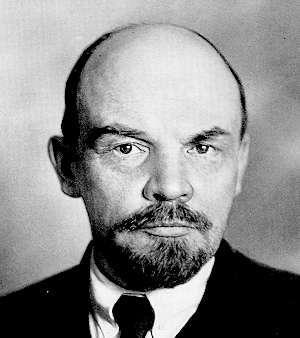 But the Russian intellectual, Vladimir Ilyich Ulyanov, popularly known simply as “Lenin,” was not as certain that the Marxist utopia would come into being of its own accord simply through spontaneous revolutionary action on the part of Europe’s industrial workers. Especially when it came to Russia – where the industrial revolution had only recently got underway, and thus was hardly “ripe for revolution” – Lenin took up the political line of thought that a workers’ revolution was going to need quite a bit of help from political specialists, intellectuals (principally himself and his fellow Bolshevik Party leaders) to take the initiative on the part of the largely undeveloped Russian industrial working class and conduct Marxist revolution for them, in other words, a “people’s revolution” carefully directed by this small Leninist group serving as the “vanguard” of the industrial proletariat.
But it would not be until the midst of the Great War, and all of its bloody havoc – and the way it simply broke down all sense of political authority – that Lenin would have the opportunity to put his ideas into action in Russia. And in doing so, he would plunge the country into a civil war lasting into the early 1920s … killing more Russians than had even the terrible war they dropped out of in early 1918 in order to conduct this proletarian revolution.
The world, which finally was able to pull out of the horrible nationalist slaughter of World War One in late 1918, was forced to look on in horror as the bloodletting continued, actually worsening, in Russia. It was all such a sickening – and frightening –
sight.
Europe vowed that never again would it allow itself to get caught up in such political hysteria. Nice resolve. Too bad it did not last very long.
[11]No, he had not lost his mind as they claimed, but had simply turned that great mind of his to higher things, things that pure Rationalists or Humanists would never be able to – or be willing to – understand!
[12]In America, such Rousseauian thought would lead American President Wilson to believe that all that was needed to bring the world to democratic perfection was to destroy old social orders under the command of traditional “autocrats” (such as Germany), and beautiful democracy would then automatically blossom forth. Tragically, he was able to sell this idea to fellow Americans, and led them off to a very bloody and quite pointless war in 1917.
Other American presidents have also taken up the Rousseauian cause, with equally disastrous results: Kennedy and Johnson in Vietnam, Carter momentarily vis-à-vis the Shah’s Iran; Bush, Jr. in post-9/11 Afghanistan and Iraq; and Obama in Egypt, Syria, and Libya, with his contributions to the very violent “Arab Spring” starting up in 2011.
AMERICAN PROGRESSIVISM
Meanwhile, over in America, by the time the country reached the point of entering the 20th century, there was something of its own social “Awakening” well underway in the country. The industrial revolution had produced deep changes in America’s traditional social profile – some of these changes of a very dark nature. Numerous individuals urged the nation to take on these issues and correct them – helping the county to move forward, to progress. Thus they advocated certain “progressive” social programs, when possible even followed up by “progressive” legislation. And so it was that they became identified as “Progressivists.”
Their Progressivist Movement took on many social dimensions. Most understandably, Progressivism demanded better working conditions for all laborers. Progressivism also fought to place restrictions on child and women’s labor in the factories and mines. Progressivism was also dedicated to the goal of improved public education, especially for the poor living in urban slums. It fought for quality control of foods, especially meats, sold to the public. It pursued a fight for greater protection of the natural environment against the wholesale plunder of the nation’s natural resources. And it included the ideas of turning prisons into reformatories that would reform rather than just merely punish offenders of the law.
Progressivism sought to make local government more democratic and more efficient (often contradictory concepts!) by introducing the ideas of popular recall of corrupt public officials, by putting in place the party primary which allowed the voter rather than the city machine to choose the local candidates for public office, and by the idea of hiring a professional city manager who would be “neutral” in the realm of party politics – as if political neutrality itself was truly attainable by those wielding significant social power.
Secular or Humanist Progressivism. Such Progressivism was not the program of any particular social group – or even political party. The state itself played a rather minimal role in designing Progressivism’s many initiatives – although the state did tend to follow up on social initiatives in many cases with legislation solidifying the gains of the Progressivists.
The Church also played a minimal role directly – although to most people, what motivated all of this Progressivism was the Christian spirit of charity for all, especially the poor and downtrodden. And as most Americans at the time considered themselves as “Christian,” Progressivism needed no special affirmation as a Christian movement (although the WCTU was very explicitly “Christian”).
However, others reacting to the social problems around them were more inspired by a rising Humanism that was once again capturing numerous American hearts. These Humanists were generally professional intellectuals – writers, journalists and educators for instance – who attempted to support those “less fortunate” than themselves.[13] Their caring generally took the form of calling for social justice through governmental action or legal reform. God’s justice played no necessary role in this matter. It was all simply a case of employing human logic – or “social science,” as this logic came to be termed.
Such Humanism was very Rousseauian, in that the Humanists had little doubt about the basic goodness of man. They were not at all supporters of the old Christian idea of a person’s own “original sin” as the major handicap facing human life. Humanists were convinced that if given the right opportunity, humans would naturally demonstrate an amazing goodness of spirit and action.
To the Humanists, all that stood in the way of bringing such human virtue to light was a corrupt society built on corrupt laws and consequently corrupt social practices. Society needed only to reform the social laws that enabled and encouraged these corrupt practices – and the utopian bliss which Humanists were positive awaited mankind would dramatically appear of its own accord.
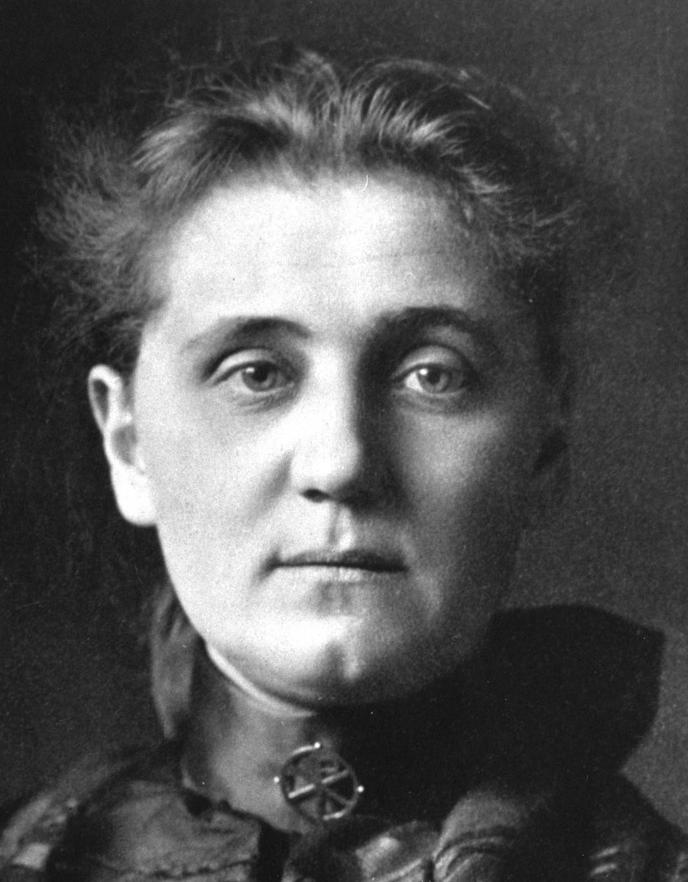 Jane Addams. One of these Progressivists was a most amazing woman – who did not follow the tendency of other Progressivists to be rather socially abstract in their Progressivism (working in support of categories of people rather than with distinct individuals) – Jane Addams. She was a woman of enormous personal warmth, achieving amazing social impact through simply that personal warmth of spirit.
With her mother having died when she was only two, she was raised by her older sisters and a loving father, a very successful Illinois businessman, who himself then died in 1881, leaving her $50 thousand (roughly $1.23 million in today’s dollars). She was thus able to follow a childhood dream of studying medicine in Philadelphia – with the intention of eventually serving the poor, though the dream ended when she had to return to Illinois because, in part, of ongoing back problems acquired when she was a child. But two years later she was able to travel to Europe, and in England became inspired by Toynbee Hall – where, quite exceptionally for the times, various social classes – ranging from aristocrats to the very poor – lived, learned, and worked together. This would become the model for her when she returned to the States and used her money in 1889 to purchase a run-down mansion, the Hull House, in Chicago.
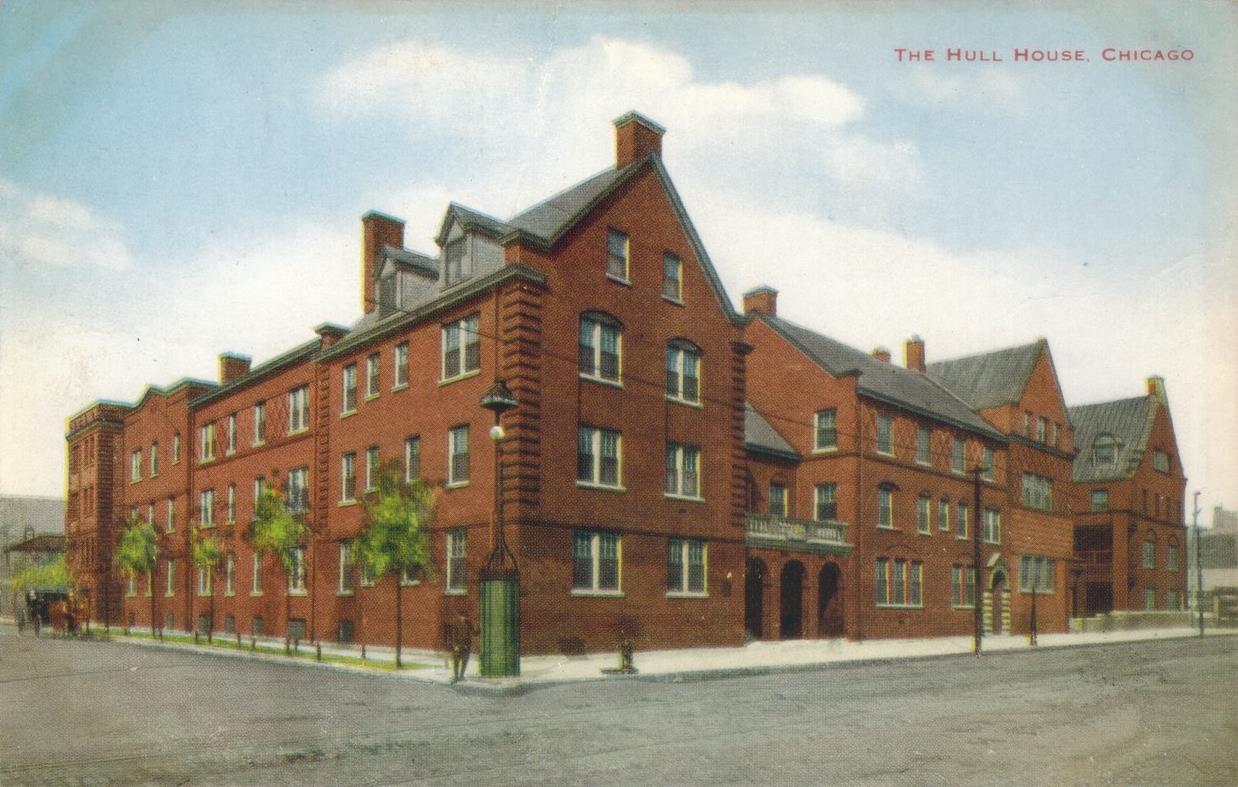
Here too, members of the different social classes[14] (including different ethnic groups) learned to share their worlds, their dreams, their actual futures … from childhood onward. Hull House included, besides a school, an art museum, a library, and a theater, eventually thirteen separate buildings and a playground. Here Progressivism took on a very distinct, very strong, personal quality.
Later in life, when World War One broke out in Europe in 1914, her strong pacifism led her to be elected chairman of the Women’s Peace Party, and the following year also to become a leader in the International Congress of Women – a group trying to find ways to end the war. Sadly, when American President Wilson decided in 1917 that he would be doing everyone a great favor by sending American soldiers to kill Germans in Northern France, her pacifism became viewed as being highly unpatriotic, and she was treated harshly.
After the war she continued her world peace program , and in 1931 she was voted the Nobel Peace Prize by the awards committee virtually unanimously, capping a long career which exemplified in so many ways the very heart of Progressivism. Four years later she died, deeply mourned by the American nation which saw in her only goodness in inspiring hope to the world, much needed at a time when America was going through the Great Depression.
 William Jennings Bryan. We have already met Bryan, the Democratic Party’s presidential nominee in 1896, who captivated the convention with his “Cross of Gold” speech. He too took up the Progressivist crusade, inspired from an early age when he became a “born-again” Christian, building on that character by study at the Presbyterian Illinois College, where he developed a strong sense of the need for greater social justice in America. This then led him to law school, and then subsequently the law practice. But he and his wife, Mary (also a lawyer), felt that greater opportunities awaited them in Nebraska, which they moved to in 1887. There he soon became involved in local Democratic Party politics. He was elected and served as a US Congressman, but then lost the Senate election in 1894 when the Republicans took control of the Nebraska legislature.[15]
But Bryan was a restless crusader – and an excellent speaker – who at that point decided to take to the lecture circuit, to press his case for social justice, especially concerning this matter of how the very wealthy lorded it over America’s poor.
And as the 1893 crisis was understood as being essentially a matter of gold versus silver as the backing of the U.S. dollar, Bryan took on that subject … enthusiastically. And thus it was that in 1896 he was chosen by the Democrats to run for the U.S. Presidency.

He lost the national election that year to McKinley but was re-nominated four years later – again losing to McKinley. By the time of this second election in 1900, the economy had already picked up, and his social advocacy no longer had the urgency about it that it did four years earlier. He would sit out the 1904 election (which Roosevelt won) but run again four years after that in 1908, this time losing to the Republican candidate, Taft.
Part of Bryan’s problem was that he had been clearly an anti-imperialist, at a time when the glories of imperialism were shining brightly, not only in Europe but in America as well. He hated the Darwinism that stood behind this urge, namely the right of the strong to dominate the weak – yea even the necessity of the strong dominating the weak – in order to promote historical “progress.” But he was also at the time a Democratic Idealist, believing religiously that bringing the world to democracy, even by military intervention if necessary, would be the one certain way of progressing the world to a state of true justice, true harmony, true peace. Thus he supported America’s intervention in the Spanish-American War, drawing criticism from fellow anti-imperialists. In short, he found himself standing politically in the middle on the key issue of imperialism, or basically nowhere special.
But he would still be a major party figure four years later when, at the Democratic Party National Convention of 1912, he finally threw his support to Woodrow Wilson (on the 46th ballot!), and was then rewarded by Wilson when Wilson became president – by being brought on Wilson’s cabinet as Secretary of State. But Wilson and Bryan had very different opinions about exactly how America should get involved abroad, especially as Bryan truly wanted America to stay out of World War One, and Wilson favored deeply the “democracies” Britain and France in the contest. Clearly Bryan had moved on past his Democratic Idealism, whereas Wilson was lost in such Idealism. So Bryan resigned his position in June of 1915.
But he did not put his crusading heart aside, especially when he saw Christian morality being undercut by the Darwinist spirit which hit America hard after the war. And thus (as we shall see in a later chapter) he finished out his life defending his faith, in the famous “Scopes Monkey Trial” of 1925.
 Theodore (Teddy) Roosevelt. Another major figure in the Progressivist Movement was none other than President Teddy Roosevelt. He too was an individual involved in almost every aspect of Progressivism, including its more militant varieties. Personally, he was himself a militant when it came to a cause, any cause. Like the robber barons – with whom he often battled (when not befriending them) – he was the picture of Darwinian fortitude, pressing, pressing, pressing forward whatever agenda he happened to be involved with.
Roosevelt was well familiar with struggle in life, fighting to overcome asthma – compensating by becoming a serious athlete (mountain climbing, boxing). But not only was he athletic, he was quite the scholar, editor of the Harvard Advocate, and graduating Phi Beta Kappa and magna cum laude in 1880. He also did research at that time on the War of 1812, which he eventually published (still considered even today as one of the best in print on that war).
He was also quite familiar with personal family loss. His much beloved father had died in 1878 during his second year at Harvard, leaving him deeply stunned. He married four years later in 1882 at age twenty-two, but his wife died two years later in delivering their first child, Alice. Furthermore, his mother had just died in the same house, only eleven hours earlier.
But from all this he came to understand that the only intelligent response to such events in life, no matter how tragic, was never to quit. It was of critical importance to get back on your feet and continue to press forward, more determined than ever not to be defeated. Thus the same year as his wife and mother’s deaths (1884) he was also elected to the New York State Assembly and joined the New York National Guard as a second lieutenant.
He rose quickly in public life, headed up the New York delegation to the 1884 Republican Party national convention where he delivered a keynote speech. But, when Democrat Cleveland won the national elections that year, he retired and headed West to become the “Dakota Cowboy.” Two years later he would marry in London, Edith, who would provide him five more children. And soon after that he was back in full swing in the world of national politics serving in Washington, D.C. for seven years on the Civil Service Commission, before, as a major reformer, becoming New York City Police Commissioner. Then his next step up was to become Assistant Secretary of the Navy, actually advising President McKinley directly on naval events, not only because he was well informed on the matter but because his boss, the Secretary of the Navy, became quite sick.
But this was not even enough service to satisfy Roosevelt, who resigned his position on the Cabinet and went West in 1898 to form up his own military unit, the Rough Riders (individuals ranging from Eastern socialites to the roughest Western hunters, cowboys and Indians!) to lead off to Cuba and then the famous charge up “San Juan Hill.”

With that accomplishment completed, he ran for – and was elected – New York Governor (1899-1901). As such, he strengthened his talents as a serious political reformer, just in time to be brought on as McKinley’s running mate in the 1900 national elections. With McKinley’s election (his second) Roosevelt was raised from this totally boring job to become U.S. President himself upon McKinley’s assassination only 6 months into his new term.
At this point the nation got to see the real reformer in Roosevelt, as he took on “trust-busting” policies to break up the huge concentrations of American wealth in the hands of a very few corporate leaders. But he also signed into law the 1906 Pure Food and Drug Act, along with other legislation designed to oversee the healthiness of the products of both key American industries. And he was very active in getting undeveloped land transformed into national parks, national forests and game preserves.
But Roosevelt committed one huge political fumble, one that would not only impact his own political career, but also the way American politics would develop in the near future. In 1904, as national elections came around, he promised that this second presidential term he was running for would be his last. He would soon enough regret this promise.
Roosevelt’s second term was a bit bumpier. The Supreme Court blocked as unconstitutional his effort to establish a national income tax (to make the rich give greater support to the nation’s public affairs), and for that matter blocked similar efforts of his to bring American social dynamics under greater national supervision.[16] But his biggest problem occurred when in 1907 a major copper company got greedy and went bankrupt in attempting a monopolistic move on the rest of the copper industry, sending shock waves through the world of American finance. Stock values on Wall Street fell away, numerous state and local banks collapsed, and finally the huge Knickerbocker Trust Company declared bankruptcy. America at this point was in full panic mode.
Thus it was that now Roosevelt (like Cleveland before him) turned to J.P. Morgan for help, allowing Morgan to buy out a number of strategic industries facing bankruptcy in order to put them back on their feet. How ironic it was that during his last years in office the strongly anti-monopolist Roosevelt had to turn to one of his targeted monopolies for help!
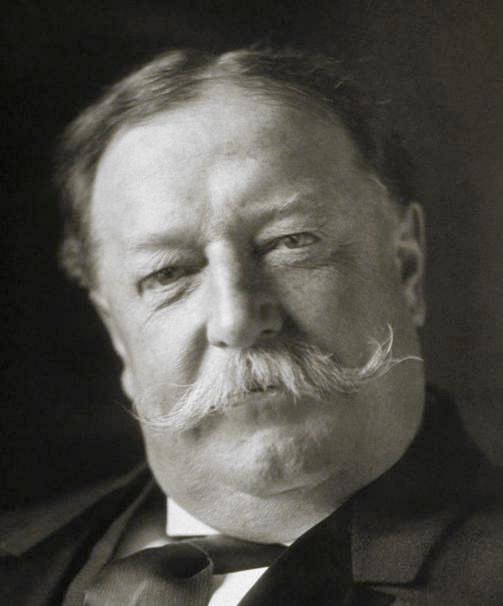 William Howard Taft. We bring up another Progressivist for close study at this point because he took up exactly at the point when Roosevelt had to make good on his promise and step down from the presidency at the end of his second term. William Howard Taft was Roosevelt’s friend, and a logical successor to Roosevelt in the White House in 1908. Once again, the Democrats put Bryan in the running as their presidential candidate, and for the third time he went down to defeat, this time by the Republican candidate Taft.
Whereas Roosevelt was the hyperactive individual, Taft was the more quietly determined reformer, like Roosevelt born of a high-status family (Ohio politics) but a Yale rather than Harvard product. And Taft’s interests were more in the field of law, Taft early on hoping to become a federal Justice some day. He was appointed at age 34 (1892) to the position of Sixth Circuit Court judge.
But he was called from the field of law to the world of politics when in 1900 President McKinley asked him to head up a commission to organize a new government for the Philippines (an American war trophy won in the war with Spain). He accepted, serving the Philippines as something like its own governor, with the understanding that in return, McKinley would make him his next appointment to the Supreme Court. But McKinley’s assassination ended that promise.
But his close relationship with Roosevelt would take him down the path he would head, all the way up to the U.S. Presidency in 1909. The two served together in Washington on the Civil Service Commission, and in turn Roosevelt in becoming President commissioned Taft to negotiate with the Vatican the transfer of massive landholdings the Church held in the Philippines, into the hands of the Filipino commoners. Then, oddly enough, Taft turned down an offer to be appointed by Roosevelt to the Supreme Court, but did accept the request to join Roosevelt’s cabinet as his Secretary of War (like Taft’s father under President Grant), because that position also continued Taft as Philippine administrator (the Philippines were under U.S. “protection” at that point).
Actually at that point Taft had become some kind of personal assistant to Roosevelt, sent on all sorts of missions. So that when Roosevelt ran for election in 1904, he quite naturally asked Taft to be his vice-presidential running mate. Taft accepted, and for the next four years the two would work together very closely.

Then when Roosevelt finished his second term, he kept his promise and stepped out of Washington politics, setting Taft up to take his place. And thus Taft became U.S. President, and an even bigger reformist “trust-buster than Roosevelt.[17]
But Roosevelt was ever so sorry that he had stepped aside, and as the 1912 elections approached, he tried to get Taft not to run again so that he could run as the Republican candidate. But Taft, now a self-made politician, was not interested in Roosevelt’s program, and the two friends parted company, bitterly. Roosevelt was no quitter, and when he narrowly lost the Republican Party’s presidential candidacy to Taft, he and his followers withdrew and set up their own Progressive Party, or “Bull Moose” Party, since the new organization was built entirely on the Roosevelt phenomenon.

But splitting the Republican vote meant only one thing: this would open the door to the White House of the Democratic Party candidate, in this case Woodrow Wilson, who otherwise would have had no chance of getting elected.
And the Roosevelt-Taft split would never be repaired. Eventually when the Republicans were returned to power after World War One, President Harding would appoint Taft as Chief Justice to the Supreme Court, a position Taft would hold until his death in 1930.

Meanwhile Roosevelt would try to get back into the mainstream of national politics, but with no real success at this point. He died just as World War One ended, deeply mourned by the American people.
Their Christian faith. What can we conclude about these key individuals, as to their place in the world of the Christian faith? Roosevelt was of course a very “practical” man, not given much to the idea of miracles and spiritual insights. But his practicality was well understood by himself and others to be strongly Christian in character. He was deeply shaped by Biblical instruction which he received in ample supply (his father in fact taught Sunday School), understanding how “Christian character” stood at the very foundations of American culture. Indeed, Roosevelt himself stated in a speech in 1901:[18]
Every thinking man, when he thinks, realizes what a very large number of people tend to forget, that the teachings of the Bible are so interwoven and entwined with our whole civic and social life that it would be literally – I do not mean figuratively, I mean literally – impossible for us to figure to ourselves what that life would be if these teachings were removed. We would lose almost all the standards by which we now judge both public and private morals; all the standards toward which we, with more or less of resolution, strive to raise ourselves. Almost every man who has by his lifework added to the sum of human achievement of which the race is proud, has based his lifework largely upon the teachings of the Bible … Among the greatest men a disproportionately large number have been diligent and close students of the Bible at first hand.
Bryan was most evidently a man of very strong Christian interest, much like Roosevelt’s understanding that America was built very strongly on the moral foundations of Christianity. We find this same viewpoint in Bryan’s closing argument in the famous 1925 Scopes Monkey Trial, in which he contests the claim of Secularists that human science alone was about to bring life on this planet to perfection, Bryan seeing in such Secularism a lack of moral restraint – such as has thus been making warfare even more brutal, to the point that civilization seems able to commit suicide:
Science is a magnificent force, but it is not a teacher of morals. It can perfect machinery, but it adds no moral restraints to protect society from the misuse of the machine. It can also build gigantic intellectual ships, but it constructs no moral rudders for the control of storm-tossed human vessel. It not only fails to supply the spiritual element needed but some of its unproven hypotheses rob the ship of its compass and thus endanger its cargo. In war, science has proven itself an evil genius; it has made war more terrible than it ever was before. Man used to be content to slaughter his fellowmen on a single plane, the earth’s surface. Science has taught him to go down into the water and shoot up from below and to go up into the clouds and shoot down from above, thus making the battlefield three times as bloody as it was before; but science does not teach brotherly love. Science has made war so hellish that civilization was about to commit suicide; and now we are told that newly discovered instruments of destruction will make the cruelties of the late war seem trivial in comparison with the cruelties of wars that may come in the future.
He sees only the moral teachings of Jesus as able to solve the problems that face the world.
If civilization is to be saved from the wreckage threatened by intelligence not consecrated by love, it must be saved by the moral code of the meek and lowly Nazarene. His teachings, and His teachings alone, can solve the problems that vex the heart and perplex the world.
Although in his long statement he ascribes the power of miracles to God, what he is doing here is essentially defending a Christianity of high moral standards, typical of where Christianity stood in so many American minds and hearts those days.
Addams was actually seminary trained, at her father’s insistence attending the Rockford Female Seminary. But her dream was in personally helping the poor and rejected (her back problems and her lack of feminine good looks caused her to see herself in that same category), as at least a doctor able to tend to the physical problems of others. We can certainly see strong Christian character in these interests … although she was much more global in her appreciation of people’s ability to love and serve others – for her personally almost a matter of natural instinct rather than any particular religious discipline. In short, she never saw herself as standing apart from the realm of Christianity. But by today’s standards she would be classed simply as a Humanist.
And for Taft, it is hard to find evidence as to where he stood concerning Christianity. But we know that he was raised in a home in which his father, a member of the Ohio Supreme Court, dissented strongly in the court’s 1870 decision upholding the reading of the Bible in public schools. Alfonso Taft took the side of Catholics and Jews in the view that this was simply a way of imposing the Protestant faith on America’s youth, and in violation of the most basic of all human rights. He also questioned the accuracy of Biblical translations or the ability of people to understand on their own the meaning of scripture. This does not sound like Taft, Sr., would therefore have been very encouraging of a Biblical upbringing of son William. Again, we would more safely place Taft in the Humanist category.
[13]As intellectuals, they typically approached life through carefully designed programs – rather than direct or personal involvement with the “victims” of society.
[14]She was able to get a good number of socially prestigious women to roll up their sleeves and join her in her ground-level work among Chicago’s poor!
[15]The election of the U.S. Senators by the American voter (rather than by the state legislatures, in accordance with the U.S. Constitution’s Article 1, section 3) would not take place until the passage of the 17th Amendment in 1913.
[16]Indeed, there really was not (not yet anyway) any constitutional warrant for such political activity, as the Framers of the Constitution had been careful to set up a national government of very limited internal or domestic responsibilities, political, economic, or social. Those matters were “reserved” (Constitutional Amendments 9 and 10) to the doings of the states or the American people themselves.
[17]In his four years in office, Taft undertook seventy trust-busting cases under the 1890 Sherman Antitrust Act, as compared to Roosevelt’s forty such cases during his eight years in office.
[18]Christian F. Reisner, Roosevelt’s Religion. Cincinnati: The Abingdon Press, 1922, p. 306.
AMERICA CULTIVATES NEW SOCIAL FORMULAS AS IT HEADS INTO THE TWENTIETH CENTURY
“Democracy” as the new social cure-all. By the beginning of the 20th century, Americans had forgotten that the Constitutional Framers of 1787 had created a Republic of precise laws derived from the disciplines and dictates of America’s pre-existing and quite long-standing social foundations. Those Framers of the American Constitution had no intentions whatsoever to put in place a newly conceived democracy of popular political wills, wills easily maneuvered this way and that by clever demagogues. The Athenian example had made it clear to the Framers that this was to be carefully avoided.
Under the rules of the Constitution, the people would have their voice in the House of Representatives. But that voice would have to work with – or be checked by – the U.S. Senate, where the states would send their very best “ambassadors” to represent the interests of the various states –individuals chosen by the state legislatures (as per the Constitution itself). The president would likewise be elected by representatives of the states as special electors (not by the American people themselves) and the federal judges would be appointed for life by the president, subject to the confirmation vote of the Senate (not the House of Representatives) as would also be diplomats and other executive officers. The United States was intended to be a republic, not a democracy.
But a Rousseauian spirit – similar to what had led the French to their suicidal Revolution in the late 1700s – was overtaking America around the turn into the 20th century. A very Romantic vision about the basic goodness of man – and the corruption of traditional social orders – seemed to infect the thinking of the West’s intellectuals, in America as well as Europe. Of course such Humanism was not new to the West – nor to America, which had gone through waves of such “enlightenment” already several times since its birth three centuries earlier.
Actually, “democracy” was taking its place in American hearts as something of a religion – closely related to the new nationalist thinking that was sweeping hearts away in the Western world. Democracy was a religion that believed as its central article of its faith that “natural” man was by all instincts an angel. According to this Humanist or “democratic” religion, traditional social orders (built on long habit) were keeping that angelic character suppressed, forcing human behavior to become desperate … even criminal. Crime was a by-product of social injustice, not just a matter of breaking the law. Society thus needed to be reformed, its ancient laws changed, new freedoms offered to the people, and happiness would finally reign as the angelic potential in man finally revealed itself.
This was quite a different religion than Christianity, which believed in faith in God, not faith in man, as the way that life took on its glory. The Puritans had built their entire social order on that Christian belief.
But now that belief was being replaced by the idea that man himself – not God – would ultimately be the source of such earthly glory. All that was needed was social reform – led importantly by those who knew how to bring the best out of the people themselves. These select reformers would supposedly not be self-interested, scheming demagogues. These would be the ones enlightened by the new ideas and doctrines coming out as the world entered the 20th century, doctrines that surely had “science” to back them up as being the ultimate Truth in life. All that was needed now was to trust fully the Russian Bolsheviks, the German nationalists, the Washington Progressivists, etc. who had the people’s best interests at heart as they pushed for deep social reform (even Revolution if need be). These enlightened ones were supposedly working out of the purest and highest of motives as they pushed for mankind’s ultimate success. Just ask them.
So forget tradition, change the laws (deeply if need be), and just trust the wisdom of the reformers – who were advancing (from the loftier heights of their writing desks) their various social theories as “democracy.”
 John Dewey. America certainly had its own well-known voices of such “democratic” social reform. One such popular voice was that of John Dewey, an American educator whose writings had a huge impact not only in the growing world of educational philosophy – but on the way Americans moved to a more Humanist or “Liberal” understanding of life itself. Like Rousseau, Dewey believed that under all the social structuring that a person goes through in his or her development there is a basic, instinctive goodness in the human design, one that should be allowed to develop apart from society’s mere traditions, traditions which included bad social habits built up willy-nilly over the generations. Real human progress necessitated a thorough social house cleaning. And the best way to get that done is through enlightened or Liberal instruction of the youth, who had not yet fallen into the habit of doing things simply because it was the tradition to do things this way or that. The youth represented the best material for building a very progressive future.[19]
Dewey graduated from the University of Vermont in 1879 and found a job teaching high school in Pennsylvania for two years before returning to Vermont to teach at a primary school there. But he recognized rather immediately that he would rather study the philosophy of education than actually engage in it, in the elementary/secondary classroom at least. Thus he headed off to graduate school (Johns Hopkins University), got his doctorate and then took a teaching position with the University of Michigan’s philosophy department. He moved on from there to additional teaching positions, in 1889 becoming chairman of the Department of Philosophy at the University of Chicago (1894), where he began to write and publish his social-educational theories. In 1904 he moved on to Columbia University in New York City, and continued to write even more extensively on education, society, human psychology, and social ethics.
His philosophy was standard Humanist theory: social environment determines human behavior; reform the environment in very practical ways and you will reform human behavior. He also, like so many intellectuals of his generation, believed that democracy was the proper formula for solving society’s problems (though critics were quick to point out that he never really explained how democracy was supposed to work in a mass society). He might not have stood out from the intellectual crowd, except that his massive number of publications made him a well-recognized leader in the rising Humanist movement underway in America (he published some 40 books and over 700 articles in his lifetime).
After retiring from Columbia, Dewey continued over the next twenty years to be very active in promoting his Secular (even atheistic) Humanist philosophy, taking a position in 1929 on the board of the Humanist Society of New York, then being one of the composers of the 1933 Humanist Manifesto, and an avid writer and lecturer on the subject thereafter.
And he (and his legacy) would continue after him to help direct the country’s rising Liberal intellectualism in its battle against America’s long-standing moral-spiritual foundations in the Christian faith.
American “Liberalism.” This aiming at America’s youth seemed like a very good approach to social progress by those who were calling themselves “Liberals.” They intended to “liberate” future generations from imperfect, even “failed,” social tradition – to free them up to follow much better social paths, ones laid out for them of course by their enlightened mentors, their Progressive teachers and professors.
But where Liberalism became truly ironic was in the way it looked increasingly to the federal state to take the lead in changing the laws that tradition had put in place. What is interesting is that the word “Liberal” in the European context meant almost the opposite of what it was coming to mean in America. European Liberalism was founded on the fear of an overly aggressive State, one that took on dictatorial powers in order to force its political interests on its subject people. “Liberal” meant to cut back – to “liberate” the people from, not expand – the powers of the state, an idea that the American Framers of the Constitution understood quite well themselves back in the 1780s after having gone through what they had experienced in their recent war of independence against an overbearing British king.
But now American Liberalism proposed to enhance the powers of the federal or national state (just like Lenin’s State Socialism) because the federal state was considered by American Liberals as the country’s best locus for enlightened power, such as would be able to put into place true social progress (the reformers’ own programs, of course).
In Europe such Liberalism would go by the name of Socialism – a term that in America would long remain taboo.[20] But under the cover of careful labeling, the policies of both American Liberalism and European Socialism actually had/have pretty much the same ambition: to let “enlightened” national authorities take the reins of power (social powers taken away from not only the states of Massachusetts, Ohio, Kansas, etc., but also local town councils, school boards and churches, and even fathers and mothers) if you want to see social progress truly blossom.
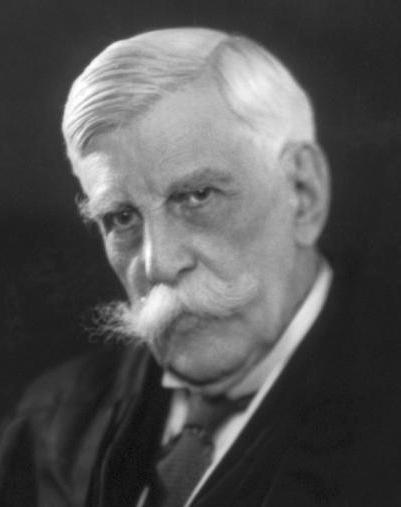 Supreme Court Justice Oliver Wendell Holmes, Jr. Adding considerably to this rising “Liberal” attitude was a very scholarly Supreme Court Justice Oliver Wendell Holmes, Jr., whose legal writings and Supreme Court decisions (often in dissent of the Court’s majority decisions) would shape this rising understanding of proper political-legal dynamics strongly.
Holmes was a well-born product of a prominent Bostonian family, like his father, Harvard educated and close friends with prominent philosopher-writers such as the transcendentalist Emerson and the James brothers, William and Henry, Jr., and both something of philosopher-writers themselves, father and son. But it was military duty in the Civil War – Holmes enlisted in 1861 just as he was graduating from Harvard (and just as the war was starting up), seeing action in numerous battles, and suffering also numerous wounds as a result – that would shape his social-legal philosophy deeply. As he would see things, such sacrificial social service opened his eyes to the world of political realism … and thus the need for the legal system to keep up with such realism. Thus he entitled his legal philosophy “Legal Realism.”
Appointed by Roosevelt to the Supreme Court in 1902, Holmes quickly proved himself to be strongly opposed to the idea of there being some kind of permanent, universal set of legal standards (especially those designed by an unseen deity) that should serve unchangingly from generation to generation.[21] He detested such Legal Idealism (or what today would be termed Legal Originalism).
To Holmes, life changed constantly … and so did society’s particular challenges. And it was the responsibility of the law, even the most fundamental law, to keep up with such changes. And how was it to do so? That was the job of politicians … especially court judges, on whose shoulders fell the responsibility of finding true moral legal principles – in the way they were required constantly to make decisions on the basis of multiple facts and evolving social issues. But through dutiful training and actual experience, such wisdom could be expected of those given such responsibility.
In short, it was up to the wiser elements of society (like Holmes himself, for instance) to define, or redefine, even the most fundamental law as they went along. And so the “Liberal” theory of “democracy from above” got a tremendous push from this very notable 20th century legal philosopher.[22]
The Sixteenth and Seventeenth Amendments to the Constitution (1913). Along with this went also two new Amendments to the American Constitution, changing deeply the way social power had long been shaped in federal America.
The Sixteenth Amendment awarded the federal authorities in Washington the power to tax directly the American people – at the time thought to offer Washington authorities no more than a small supplement to the fees, licenses, etc. that it collected in order to run its operations. There was little understanding at the time that this opened the door for Washington eventually to lay huge taxes on the American people and their economy – in order to run its various programs presumably designed to better America.
The Seventeenth Amendment also involved a huge reshaping of the American Constitution’s checks and balances system when it took the selection of senators away from the states and put that matter in the hands of the people. This was clearly a huge step in the direction of “democratizing” American politics, supposedly taking power out of the often-corrupt political machines operating in the state capitals and placing that power, through the people, into the Washington political arena itself – where supposedly the political doings of America’s wielders of power could be more closely watched, and checked, by an enlightened citizenry (enlightened largely by the information put forward by a Progressivist Press corps).
Power problems. There was no doubt that the state legislators and governors’ offices were frequently the arenas of amazingly corrupt behavior, such as the laws defined and sought to restrict or suppress. But keeping such corruption under control is not an easy task. Power always attracts the interest of people with more active egos, who find it easy enough to get around moral-legal restrictions holding them back in this power-pursuit, because human reason can always find a way to justify virtually anything.
But what these two Amendments did was simply to shift the scene of such grand pursuit of power from the individual states, now to the distant offices of the Washington politicians. And guess what? Political corruption naturally moved in that direction as well.
Worse, handing Washington such new (and potentially limitless) power would mean that the numerous states would find “checking” the power of the central state (which was the big question which the Constitution faced when seeking ratification in 1787-1788) would be nearly impossible at this point. Then who would place the needed checks on such power: the Washington politicians themselves or the national press corps looking for ways to get into the power game itself?
How would America’s citizens effectively protect themselves in this move to “democracy,” when action “behind the scenes” would be almost impossible to detect from Omaha or Dallas or Denver? Could they trust the press (supposedly the eyes and ears of the people) not to get ideologically involved in the process and thus become part of the problem rather than its solution?
No one raised such questions in the rush to “democratize” America in the early 20th century.
[19]Enacting deep social change by taking over the education of a future generation is not a new thing. Back in the 1600s, the Jesuits understood quite well the importance of taking charge of the education of the young, in order to build a purer “Catholic” world. And the Chinese dictator Mao Zedong more recently (1960s) undertook deep “cultural revolution” in China the same way.
[20]That is, until Vermont Senator Bernie Sanders came along in the 2010s/2020s and ran a nearly successful campaign for the Democratic Party presidential candidacy in 2016 on a self-proclaimed Socialist platform!
[21]Actually, he had expressed this view quite clearly in an earlier collection of his lectures and legal writing published in book form in 1881 as The Common Law.
[22]Unfortunately, such “Realist” (or Liberal or Progressive) views as Holmes’s seem quite ignorant of the fact that there is more to goodness and truth than an individual’s – especially a very “enlightened” individual’s – own personal inclination to see things as he or she does.
Too much of just such enlightenment was the problem confronting the 55 delegates who gathered in Philadelphia in 1787 to draft a Constitution for the new American Union. Each of the delegates had his own good idea (like Holmes) as to how things should go, and argued endlessly.
Finally, Franklin took them above their own logic, their own reasoning, to have them put their thoughts before God, and also to listen to each other. Then and only then were they able to get past their personal wisdoms to find a higher truth, one requiring them to let go of their personal takes on matters.
What those 55 men finally secured is incredible wisdom, wisdom of a very lasting variety.
Those that constantly want to reform that wisdom (with their own enlightened ideas of course) threaten to undermine that wonderful legacy. And thus Franklin’s statement, “A Republic, if you can keep it.” He understood full well the dangers that “wise men” would bring to the American Republic in their efforts to “upgrade” that incredible constitutional achievement. As Franklin knew full well, constant effort to upgrade the famous Roman Republic was what had finally destroyed it.
AMERICAN CHRISTIANITY RESPONDS
Christianity again undergoing deep debate. At the time, “Christianity” was so deeply embedded in the idea of America that the ideological developments going on in Europe seemed to have little impact outside of some smaller intellectual circles in America. Even Liberals like Dewey did not at first see themselves as offending Christianity just because he was not working within a deeply Christian worldview. He was simply doing science the way others conducted science in their chemistry or biological labs. What he was doing had nothing to do one way or the other (not at that time however) with Christianity. However, with time, (by the time of the publication of the 1933 Humanist Manifesto) Dewey would find himself taking on a more distinctly anti-Christian role. America needed deliverance from not just tradition, “Christian” as such tradition claimed to be, but from the superstition that accompanied it.
But for the time being, for the vast majority of Americans, still sitting regularly in the pews of the American churches, Christian tradition had not yet been shaken by this “higher” intellectual inquiry going on in the rarified atmosphere of America’s intellectual circles.
“Science” or “religion”? And yet God himself as “providence” or provider of American blessings was losing much of his place in American hearts. The social dynamic driving the country was seemingly handled quite nicely by the progress that science and technology were achieving. And science worked mechanically, no miracles needed. And judging from the considerable material progress America was experiencing at the time, science was more than adequate as the true sustainer of society and its progress.
At the same time, the bedrock of America’s Protestant Christianity – Biblical Scripture as the “Word of God” – had recently come into deep debate … especially in the higher social circles of science and theology. This debate involved an argument between religious “modernism,” supporting the role of science and technology, and religious “traditionalism,” with its support of divine miracles that had no known scientific basis for their occurrence. Which of these contending positions was a thinking person supposed to support: science (materialism) or religion (mysticism), especially as the Biblical writings themselves raised those very questions?
 Christianity attempts a reply. Princeton Seminary had long taken the position under the dominating influence of Charles Hodge (1850s through most of the 1870s) to be unbending in the attitude that every word of Scripture was God-breathed and thus not to be questioned or disputed. In short, Hodge was defending very strongly the principle of the “inerrancy of Biblical Scripture.” But he would find his position increasingly challenged as the 1800s moved towards its close.
 Meanwhile, another approach to this issue was that of those who simply chose to ignore the debate, and focus on the issue at hand: saving souls. One such individual was Crawford H. Toy, a professor at the Southern Baptist Seminary, who won hearts by simply focusing on the spirit of love that stood at the heart of Christianity – rather than theological doctrine. Unfortunately, even that proved to be too much of a compromise for the otherwise creedless Baptists, whose Convention in 1879 forced him to resign his position at the seminary because he was not taking a sufficiently pro-inerrancy stand.
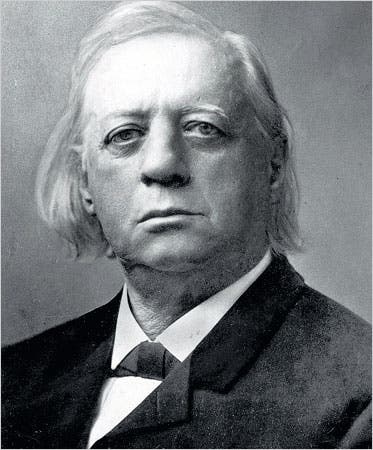 More successful in this middling approach was Henry Ward Beecher, son of the conservative Presbyterian preacher Lyman Beecher and brother of fellow Abolitionist Harriet Beecher Stowe (author of Uncle Tom’s Cabin). As a popular pastor and circuit preacher, Beecher sidestepped the controversial intellectual issues of evolution and Biblical reliability, even stating at one point that he saw no problem with the theory of evolution – as long as it understood God to be at the heart of the process. He preached a very upbeat message of love and a willing accommodation to the changing industrial culture developed around the Christian community. And he proved to be quite successful in developing a stable middle-class message in the face of Darwinism’s intellectual challenge, all the way up until his death in 1887.
 Another individual to take something of a middling approach to the issue of traditional theological correctness and the rising new cultural norm of industrial/scientific Rationalism was Dwight L. Moody, circuit preacher and simple but straightforward evangelist. Moody preached to crowds of mostly middle-class Americans, who were simply trying to make sense of the social changes underway in their once-familiar America. Moody was far from being an intellectual Progressivist with a moral program designed to make the world a better place. Nor did he have any strong views on the burning issues of the Christian seminaries, such as evolution or Biblical inerrancy. He was a classic premillennial who simply looked to Jesus’s second coming to clean up the mess that human sin had made of creation. And that approach to life’s challenges at the end of the 1800s made sense to thousands of people who flocked to hear what he had to say at his various urban rallies held around the country.
 Charles Briggs and Biblical “higher criticism.” But towards the end of the century, a thunderstorm broke over Union Theological Seminary’s Hebrew scholar Charles Briggs’ clear affirmation that text-criticism or literary analysis amply proved among other things that Moses did not actually write the first five books of Scripture but that these writings were the result of the much later collection of at least four different narrative traditions, and that Isaiah did not write the entire work given under his name but that later disciples of the Isaiah school had written the second half of the work.
Although for any who might have understood that the Jewish Scriptures were community narrative (not science), such a revelation should have come as no surprise. Biblical narrative was about finding the path to Truth through divine inspiration, and was not assembled anciently by those with a modern scientific worldview. But Briggs went further, even claiming that the Old Testament was morally inferior to the moral development of modern times.
This so enraged the Presbyterian denomination that in 1893 it not only excommunicated him[23] but tried to block Briggs’ professorial advancement at Union Seminary in New York City. But the seminary refused to dismiss Briggs, and instead the seminary withdrew from the Presbyterian denomination (both Briggs and the seminary joined the more “modernist” Episcopalian denomination).
But Brigg’s excommunication hardly caused the controversy to go away. It merely deepened the controversy, as biblical perfection or “infallibility” became one of the essential doctrines, one of the “fundamentals of faith,” proclaimed by a growing group of Christian traditionalists – who eventually took or were assigned the name “Fundamentalists” … derived from the publication, The Fundamentals, presenting essays over the period of 1910-1915, written by some 65 theologians of various denominations … essays in support of the idea of the infallible authority of Scripture.
The Social Gospel. But the modernizers or religious “Liberals” were hardly cowed by the Fundamentalists. They had other things to do than argue over the points of Scripture and its infallibility. They even backed away from the idea that Christianity was essentially about saving souls from going to hell because they had not yet been saved. Rather, they were advocates of a “Social Gospel” – which conformed nicely to the Progressivist spirit of the times. For instance, Congregationalist pastor Washington Gladden, Baptist pastor Walter Rauschenbusch, and economist Richard Ely were all active in promoting the idea that Christianity after all was about social and economic justice, helping the poor the way Jesus looked to the needs of the poor.

Gladden Rauschenbusch Ely
But once again, looking to material salvation rather than spiritual salvation hardly needed the personal support of God, the guidance of the Biblical word of God, or any kind of Christian spiritual conversion in order to move their program forward. A purely Secular approach to social and economic justice would work just as well.
Spiritual Universalism. But once again, Humanist Rationalism or Secularism hardly met the deeper urges of people to find spiritual connection with the world around them. But some in the Modernist camp simply came up with the attitude that any kind of spirituality would do just fine, something like the Transcendentalists of the early-mid 1800s. Witchcraft was not one of the ideas put forward (at that time). But the spiritual offerings of other religions were – especially the more exotic kinds coming out of the Far East.
Indeed, a number of intellectuals even proposed simply to create some kind of universal religion, combining the moral features of Christianity, Buddhism, etc. Theosophy was just such an example – cultivated outside America by such Humanists as the Russian occultist and author Helena Blavatsky, her British disciple Annie Besant, and the Austrian educator Rudolf Steiner – that was taken up in America by intellectuals seeking to combine science and the mysticism of the world’s great religions, as a form of personal development (also very popular later in the 20th century among very self-focused American hippies!). Thus science could continue to pursue fact and Progressive Liberals could pursue through private faith some kind of universal moral code, even some kind of personal mysticism. And so a sort of spiritual “universalism” came into play in certain social circles, especially among the more modern and thus more enlightened of the Westerners (including Americans, though not in the numbers as was the case for Europe).

Blavatsky Besant Steiner
It is important to note at this point that Islam was not as interesting to such hungry hearts, in part because it was even more fundamentalist in character, and did not conform well to the goal of “personal freedom” sought by Western Liberals. Islam is as hungry for submission to authority as Western modernism is hungry for freedom from just such authority!
The Azusa Street Revival and the AG church. Then into this growing world of enlightened Humanism another Christian revival burst forth – not quite on the order of the two earlier Great Awakenings, but significant nonetheless. Something very strange broke out in Los Angeles in 1906 (something quite similar to what was going on at the same time in Wales in Britain) at a meeting house on Azusa Street.
It started when strange physical healings and “speaking in tongues” broke out at a home – when a Black holiness preacher and guest speaker William J. Seymour was kicked out of church after bringing his Pentecostal message there, and was thus forced to move his ministry to this home. The event soon drew crowds to witness and then participate in this strange behavior, until it became literally an on-going twenty-four-hour-a-day phenomenon. When the crowds collapsed the porch to the house, the revival moved its operations to a Black Apostolic Faith Mission building on Azusa Street, making it quite inter-racial in nature as well as inter-ethnic (Hispanics also attending), even bringing women forward to take leading roles in the revival. Hundreds, then over a thousand individuals would soon be attending the meetings. And thus was formed the Azusa Street Revival.

Healings, speaking in tongues, and almost non-stop preaching took place there, giving rise to the designation of this growing event as “Pentecostalism” because it so resembled the events on that ancient day when a similar spirit formed the foundations of the first Christian community. Individuals of all social backgrounds were touched by a special spiritual power or charisma (thus also becoming considered to be “charismatics”) that seemed to drive this whole development.
Eventually the Azusa Street Revival would burn itself out – but not before birthing the Assemblies of God church in 1914, a Pentecostal/ charismatic denomination that would continue to grow through the 20th century, its growth continuing even to today, to the point where the denomination has around 370 thousand congregations with over seventy million members worldwide.
[23]Commentators have noted that part of his difficulty with the denomination occurred in part also because of Briggs’ abrasive manner when challenged.