CONTENTS
 Johnson – and “Democracy from Above”
 The secularizing of American culture
 The “Revolution of Rising Expectations”
 The president’s worsening war in Vietnam
 The world goes on elsewhere
 The Boomer comes of age
 1968: The Annus Horribilis (the “Horrible Year”)
 Closing the turbulent 1960s
The textual material on this webpage is drawn directly from my work, America’s Story – A Spiritual Journey © 2021, pages 302-336
JOHNSON – AND “DEMOCRACY FROM ABOVE”
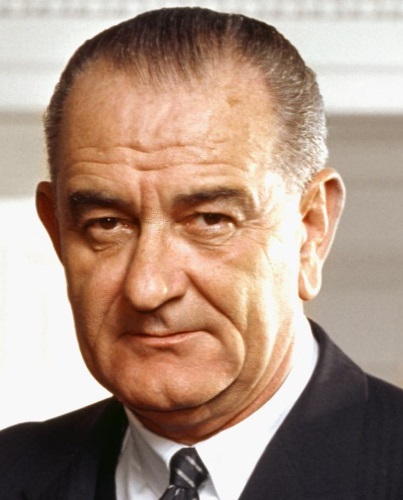 With the assassination of the young President Kennedy in 1963, Vice President Lyndon Baines Johnson (LBJ), a quite sophisticated (in his own way) veteran of Capitol Hill politics, now assumed the Presidency. Johnson did not have Kennedy’s good looks and cultural polish, nor his personal charisma – and was well aware of the fact. He came from Texas good-old-boy cultural stock – and had worked his way up in Washington power through a lot of self-discipline, long hours of work, and political connections he worked hard at cultivating. He was a behind-the-scenes operator, used to getting things done privately rather than publicly. And he was very, very good at getting things done in Washington. That’s why he had advanced all the way to being the most powerful man in the U.S. Senate, before accepting the position under Kennedy as U.S. Vice President.
Now as President, America could expect Johnson to continue to work according to the “Johnson style” – and get things quickly done politically in Washington, things that Kennedy could only have dreamed of someday maybe actually accomplishing. Johnson was a political mover and shaker. And America would indeed be moved and shaken dramatically by Johnson and his government programs.

Senator Green getting the “Johnson Style”
Lyndon Johnson’s political goals outwardly were similar to Kennedy’s: a Liberal Democrat who emphasized the importance of American civil rights and also one who understood that Communism was still the greatest threat to America. However, his political approach in addressing these challenges to America would prove to be drastically different.
A major shift in the idea of American government. At the time Johnson stepped into the American presidency, “government” meant the Americans themselves. The Washington, D.C. “state” did not rule. In fact, at the time of Johnson’s arrival to power as President, Washington had more the feel of a comfortable Southern town than that of some imperial metropolis. But that would quickly change under Johnson.
In any case, in America the people supposedly ruled. A formal government consisting of the people’s representatives existed in Washington solely to service the people and their general will – as the people themselves directed (the power of the voting booth). The economy also belonged to the people and their private businesses. Educational policy belonged to the people and their local school boards. Health care belonged to the people and their doctors.
National government was designed largely to deal with international issues – as had been the intention of the original Framers of the Constitution – and mostly had been the case since then. There was still little sense that the national government in Washington had any important role to play in the nation’s domestic affairs.[1]
Certainly Roosevelt’s New Deal stretched the reach of the Washington government well beyond what the Constitution itself authorized (and got in trouble with the Supreme Court over that) – but at the time it seemed well justified in the hearts of most Americans because of the severity of the Great Depression. In any case the New Deal would back down after it ran out of projects to pursue – although it would leave a political legacy among some Democrats – Johnson included – that felt that it was quite legitimate to look to the Washington government (and its bureaucracy) for help in promoting progressive social programming.
And then there was World War Two in which quite obviously the Washington government took the lead in all things, from the fighting overseas to the mobilization of American economic power on the home front. But the end of the war returned things fairly quickly back to the traditional role expected of Washington: lead foreign affairs, yes – take control of America’s domestic life, no.
True, there was the huge domestic program, Social Security, a pension fund for the elderly managed by the national government. But in this the Washington government was considered to be only the caretaker of this huge pension fund, not the owner of it. Social Security too belonged to the people.
But this traditional understanding of the proper role of the Washington government would change during the five-plus years of Johnson’s presidency – change drastically.
Lyndon Baines Johnson (LBJ) – the man and his making. In an important way, Johnson was still a Roosevelt New Dealer – having early on taken a lead in the world of American politics as a local administrator in Texas of one of Roosevelt’s 1930s New Deal programs. Johnson remained forever convinced that letting the Washington Establishment take command of the country’s affairs New-Deal style was always the best way of going at the nation’s challenges. Nothing would ever change his opinion on that matter.
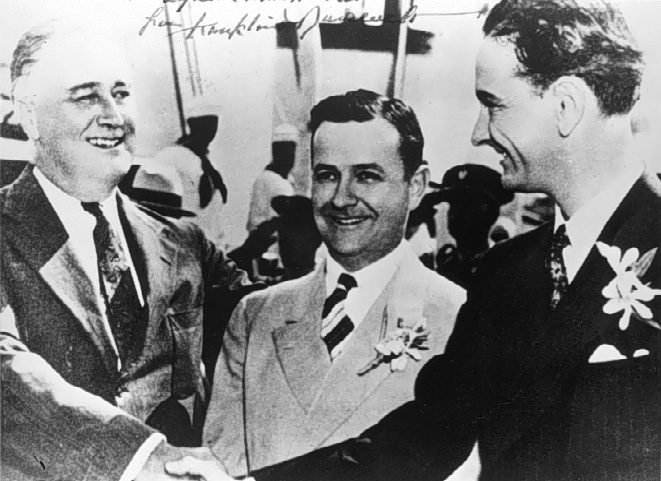
1937 – President Roosevelt, shaking hands with LBJ … with Texas Governor James Allred between the two men
Part of this Johnson approach to life was undoubtedly shaped by his own personal sensitivities – his concern about the racism he saw around him in Texas, something that deeply distressed him. He had grown up on a farm in the tiny and remote community of Stonewall, Texas, in a condition of poverty and humble social circumstances. He attended public school in nearby Johnson City (named after his own ancestors) and went on to Southwest Texas State Teachers College, intending to become a teacher. He took a year off (1928-1929) to teach Hispanic-American children, touching deeply an old nerve when he found himself in the midst of these children’s deep poverty and social discrimination.
But he switched quickly from teaching to politics after only one year of teaching public speaking (!) in Houston (1930-1931), when he became involved in Richard Kleberg’s Congressional campaign. With Kleberg’s victory in 1931, Johnson followed him to D.C., where he found it almost natural organizing fellow Congressional aides into something of a political fellowship. But he also cultivated personal relationships with key politicians such as Vice President Nance Garner and the powerful Speaker of the House of Representatives, Sam Rayburn, a fellow Texan who took a deep interest in Johnson’s political career.
Also interested in Johnson was “Ladybird” Claudia Taylor, also of Texas, but with an Alabama aristocratic background as well. The two of them were to meet in D.C. in 1934, and get married only ten weeks later. Both of them were very decisive individuals!

Johnson and Lady Bird with their two daughters – 1948
But they were to return to Texas the next year for Johnson to become a key part of Roosevelt’s New Deal programming, with Johnson becoming head of the Texas National Youth Administration, most importantly setting up job training programs for Texas youth. And this would dig itself deeply into the Johnson mentality, as the understanding Johnson would hold as to what the proper role of government happened to be. It was there to take care of people in need. Period.
In 1937, financed heavily by his wife, he ran and was elected in a special Congressional election, and would remain a Congressman for the next dozen years. However, with the mounting appearance of a war before them, he joined the U.S. Naval Reserve in 1940. When war finally did break out at the end of 1941, he sought active duty.

LBJ in his naval uniform – 1942
But Roosevelt instead wanted him to stay on in Washington to look into the matter of how government money was being utilized by American industry to support the American war effort (the same thing Truman was doing in the Senate). And thus Johnson helped create and then head up a key subcommittee of the House Naval Affairs Committee investigating such matters.
After the war Johnson was ready to move on to bigger challenges, and in 1948 ran for the position as U.S. Senator, winning the Democratic Party nomination very narrowly (and very questionably). And thus with Texas still very “Dixiecrat” in political character, running as the Democratic Party’s candidate, Johnson easily won also the Senatorial race itself.
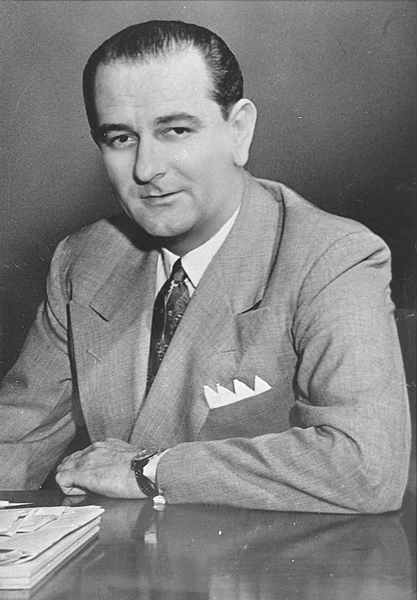
LBJ as US Senator from Texas
Now in the Senate, he continued his role looking into government contracts with private industry. This in turn caused him to rise in importance within the Democratic Party itself. And he soon (1951) was chosen to become the Democratic Party Majority Whip (charged with the task of making sure that all Democratic Party members are present for Congressional votes). He lost the position as “majority” whip in 1953 when the Republicans took over Congress and the White House. But instead he was elected by his party as its minority party leader, the youngest person to have achieved such political distinction. And then when in 1954 the Democrats took back control of the Senate, he found himself as Senate majority leader to be one of the most powerful political leaders in D.C.
And what kind of moral-spiritual qualities came with this man of power? Actually, on his mother’s side he was the descendant of a number of Baptist pastors. But his father was not deeply interested in such a religious life. But Johnson himself grew up in the Disciples of Christ or “Christian” church, a denomination that tried to rise above Presbyterian, Methodist, Baptist, etc. differences, to become broader in its theological character (which becomes denominational itself in time!). Consequently, although Johnson was non-sectarian in Christian identity, he did indeed enjoy himself in the company of a broad span of Christian pastors, although he seemed to prefer the liturgical character of the Episcopalian and Catholic Churches somewhat. Consequently as president, he would move around from church to church, keeping the press guessing as to where he would show up the next Sunday.
Nonetheless, the one person who meant most to him personally as a Christian pastor or counselor was Billy Graham – whose contact with Kennedy had been quite minimal. Graham and Johnson became very close over the years of the Johnson presidency.
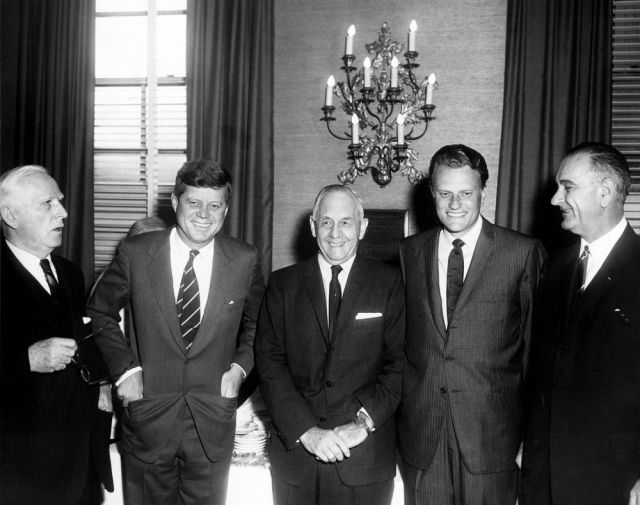
LBJ and Graham (plus Kennedy and others) at the President’s Prayer Breakfast – 1961
Graham was called on to speak at every one of the presidential prayer breakfasts in those years, and Graham met frequently with the president both in the White House and on Johnson’s Texas farm, to pray and offer comfort to a personal friend who was well aware of the troubles his presidency had come to encounter. Johnson even asked him in 1964 as to who he thought would make the best running mate, to which Graham wisely declined to give an answer! Graham stayed with Johnson the president’s last night at the White House, and eventually would be called on to conduct Johnson’s funeral service (1973). But very little of this close relationship was known outside the inner Johnson social-political circle.
Johnson never saw the need to personally inspire, through his own spiritual qualities, a “Christian America.” He did not usually talk about his religion publicly, or bring religion into his public arena. Although he himself personally was a fairly strong Christian, and found himself in personal prayer often over his work, his public working-world was strictly Secular, and would remain that way, even through all the difficulties he would face in trying to lead the nation.
Johnson’s Great Society Program. Johnson was fairly quick in getting into action pushing his own Progressive program for America – one unlike Kennedy’s (and King’s) program that called on the Americans themselves to take up the country’s various challenges. Instead Johnson was going to gather in Washington technical experts of all varieties – and give them the responsibility of designing a vast array of programs (New Deal style) designed to put the finishing touches on America as a “Great Society.” All the Americans themselves had to do was sit back and marvel at what the experts could achieve by way of presenting an expertly-managed America acquire such social perfection that it would knock out the Soviets in the Cold War contest for the hearts of the rising Third World. In short, he had completely reversed Kennedy’s challenge, so that it read something like, “ask not what you can do for your country; ask what your country can do for you!” The government was going to take care of you. Expect it.
Thus it was that on May 22, 1964, Johnson took the opportunity, during a graduation address he had been invited by the University of Michigan to deliver, that he announced the particulars of his new Great Society Program.

He began by explaining how today
we have the opportunity to move not only toward the rich society and the powerful society, but upward to the Great Society.
He pointed out that it was in three areas in particular that his new program was designed to make improvements in American society: improved urban infrastructure, protection of the natural environment, and improved education of America’s youth. Clearly this pointed to massive Washington involvement in the internal affairs of America formerly left in the hands of state and local governments closer to the dynamics of America’s towns and cities across the nation. However, he reassured Americans:
While our Government has many programs directed at those issues, I do not pretend that we have the full answer to those problems.
But I do promise this: We are going to assemble the best thought and the broadest knowledge from all over the world to find those answers for America. I intend to establish working groups to prepare a series of White House conferences and meetings on the cities, on natural beauty, on the quality of education, and on other emerging challenges. And from these meetings and from this inspiration and from these studies we will begin to set our course toward the Great Society.
The solution to these problems does not rest on a massive program in Washington, nor can it rely solely on the strained resources of local authority. They require us to create new concepts of cooperation, a creative federalism, between the National Capital and the leaders of local communities.
“Creative federalism.” What Johnson said in that last statement – “The solution to these problems does not rest on a massive program in Washington” was in fact complete fiction – because that was exactly what he had in mind as he developed his new Great Society Program. And his understanding of things in creating “new concepts of cooperation, a creative federalism, between the National Capital and the leaders of local communities” was that the local communities would be expected to follow the lead of Washington as it laid out this concept of “creative federalism.” And creative federalism it would be indeed!
He was indicating more accurately what he intended to do in his Great Society Program when he said “We are going to assemble the best thought and the broadest knowledge from all over the world to find those answers for America.”
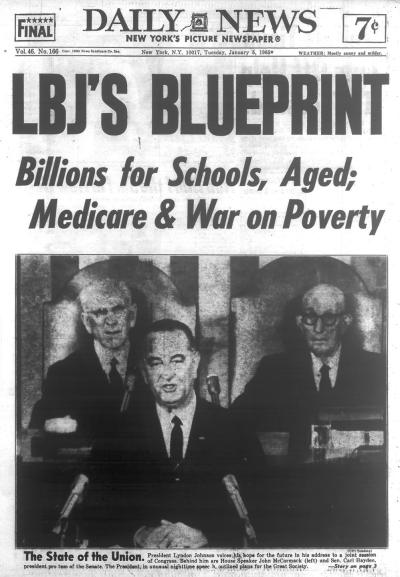
In his 1965 State of the Union Address, Johnson makes it clear that what America needs is welfare on the Rooseveltian New Deal model
“Democracy from above.” Thus it was that Johnson was preparing America to come to the new understanding of “democracy from above.” And as such, he was preparing the Democratic Party to reshape itself around that same idea as to what it would henceforth offer America: a better (or Progressive) government from above. This would leave the (conservative) Republican Party to continue to defend the idea that government in America rightly belonged to its people, not the “more-enlightened” Washington experts.
The 1964 Civil Rights Act. There was not much argument in America (angry Southerners and Northern racists excepted) over the issue of whether or not Black civil rights needed “help from above.” That was one area of Johnson’s Progressivism that had wide support in America. The front-page newspaper photo of the attacks in Alabama on peaceful Black protesters (May 1963) by Birmingham police and their attack dogs – or Birmingham firemen and their fire hoses cruelly aimed at protesters seated along the street – or Alabama Governor Wallace personally blocking the entrance of Black students to the University of Alabama (June 1963) – outraged most Americans – now quite convinced that waiting for the State of Alabama to do the right thing (actually the Constitutional thing) was not going to happen.
Thus in 1964 Johnson was able to persuade Congress to pass a Civil Rights Act (actually originally authored by Kennedy), outlawing the discrimination by way or race, religion, sex or national origin in voting registration, school segregation, employment or hiring, and in public accommodations (restaurants, hotels, etc.)
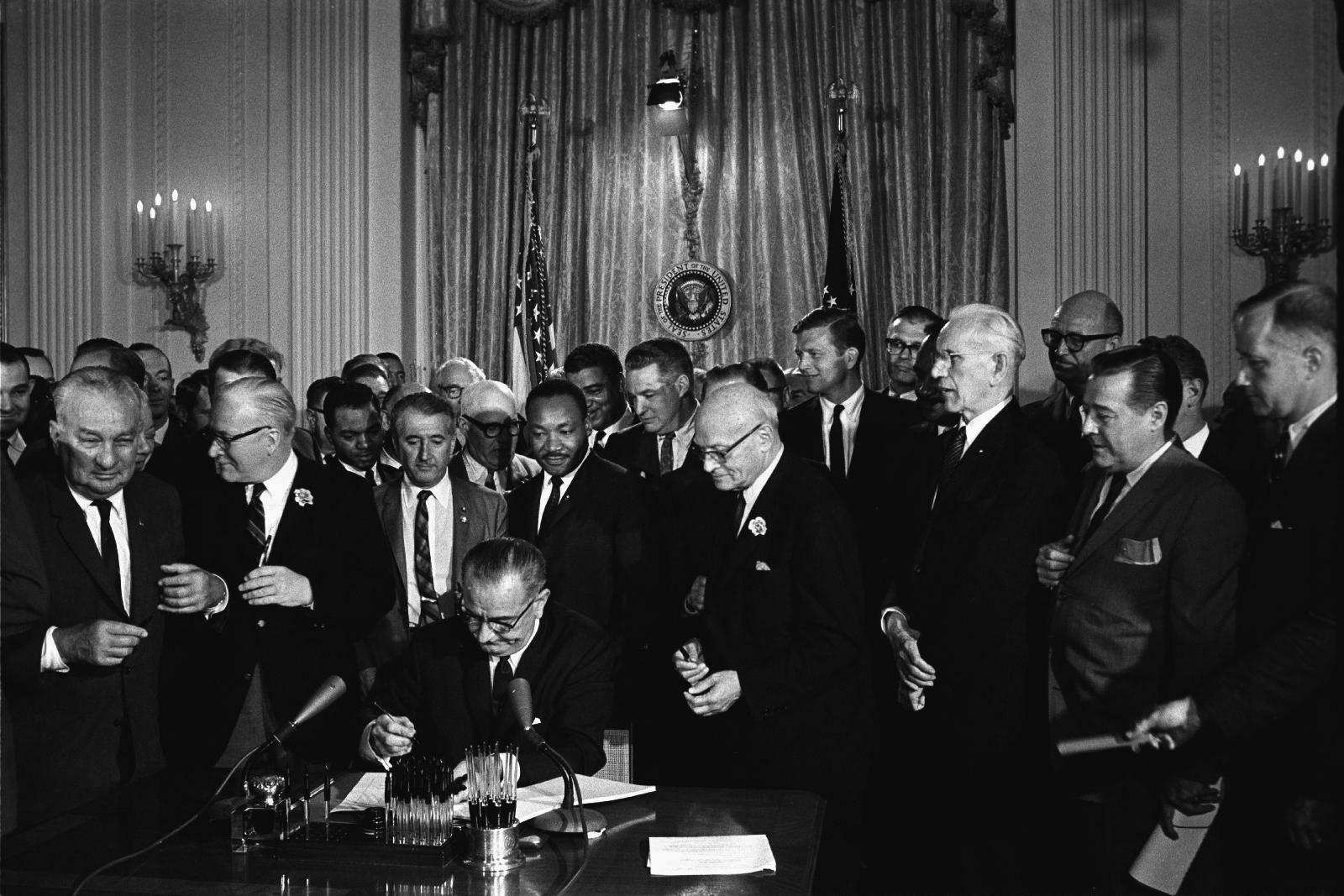
Much celebration accompanied the signing (July 1964) of this wide-ranging civil rights law. But in fact the new law lacked strong enforcement possibilities.
And also it was largely disregarded in the South, where attitudes were widespread that Congress had no right to pass legislation concerning purely domestic matters. Nonetheless, the law did carry enforceable weight in the North, where racist lines still played a role.[2]
The “War on Poverty.” Ultimately, however, the centerpiece of Johnson’s Great Society Program was his “War on Poverty” set up in 1964 and directed by the new Office of Economic Opportunity – overseeing such programs as VISTA – sort of a domestic Peace Corps of volunteers directed to help not Third World countries but instead American communities caught in poverty (inner-city neighborhoods, Indian reservations, rural communities) with job training. Then there was the Job Corps, a federal employment program modeled along the lines of Roosevelt’s CCC, offering the unemployed jobs in Federal Parks and other Federal lands. Another program was Head Start, setting up early childhood education, health service and parent training for children in poverty areas of the country, to help prepare the children about to enter elementary schooling. And there were the Community Action Agencies, supporting local programs designed to help people caught in poverty – programs ranging from the local Head Start operations, to food pantries, to utility bill assistance, to other programs local welfare agencies might want to develop.
Although these programs operated at the local level (obviously, because that is where the challenges were to be found) they were overseen by a Washington bureaucracy that exploded in size over the next few years, as multitudes of individuals flocked to the nation’s capital to find employment in this massive governmental enterprise.
Vietnam: The domino theory. Meanwhile the long-brewing crisis in Vietnam had taken on growing significance. The necessity of acting boldly in Vietnam as well as at home was thus put forward to the American people by Johnson. In explaining this mounting international challenge facing America as the defender of the Free World, he employed a logical line of argument built on the “domino theory.” This theory was that if America did not take a firm stand against aggression in one place in the region and let that nation fall to Communism, then soon the country next door would fall, then the one next to that, and then next to that – like a line of dominoes. The presumption was that Communism was a single-minded force ultimately directed from a single command center: the Kremlin in the Soviet Russian capital at Moscow.
Tragically, the role of nationalism and nationalist varieties within the Communist camp – often in sharp conflict with each other (which Truman wisely exploited) – did not factor into Johnson’s presumption of Communism being a single-minded force. Thus arose the conclusion that America needed to take a rigid stand in Vietnam – lest all the countries in Southeast Asia fall to Communism like a line of dominoes.
The Gulf of Tonkin Resolution (August 7, 1964). To get America on board with him on his plans for Vietnam, he put before Congress in August two incidents that were reported as having occurred just days earlier – when two American navy destroyers stationed just off the coast of Vietnam were attacked by Vietnamese torpedo boats. Unknown to America – and Congress – the second attack indeed did not actually occur – and the first attack was likely provoked by attacks of South Vietnamese commandos on the North Vietnamese coast. In any case it served Johnson well enough – so that he was able to get Congress (almost totally unanimously) to award Johnson special war powers to do what he saw fit about the conflict going on in Vietnam. Johnson would use these powers widely – supposedly to stop the domino effect of Asian societies falling to Communism.
The professionalization of the Southeast Asian conflict. Johnson did not see himself as actually calling the nation to war, as had been the case in World War Two and in Korea. He did not want the Vietnam issue to distract the nation from its more important task of putting his Great Society Program in place. Rather, he supposed he could simply assign American military units (already in being) to head to Vietnam, go ashore at various points along its long coast, fan out from there as they took ground from the enemy, and quickly bring the country under American control. It looked quite clear on a map how this was to work. So, no, America was not going to war. It was simply going to involve itself briefly in a “police action,” one conducted by America’s rather professional army.

In short, American action in Vietnam would be another variety of “democracy from above” – the American soldiers qualifying as the “experts” who would install democracy in Vietnam for the Vietnamese themselves.
The national elections of 1964. Behind much of the speed by which Johnson moved to get his Great Society Program planted – and increased American involvement in Vietnam underway – was Johnson’s awareness that it had only been months since he assumed office as President, and now similarly only months before the time he would have to face voters in the November 1964 national elections. He naturally was eager to see himself actually elected by the American people themselves as their President.
 Facing him as presidential candidate for the Republicans was Arizona Senator Barry Goldwater – who was so bold as to present himself proudly as a Conservative – even authoring a book in 1960 entitled The Conscience of a Conservative. During the 1964 campaign, Goldwater was quick to point out that Johnson’s Great Society program amounted to a huge Washington overreach – and a serious danger to American democracy.
But Johnson conducted an effective campaign depicting Goldwater as a dangerous threat to world peace – because Goldwater, in being pushed by the press corps to give an answer to the question, “would you ever resort to the use of atomic weapons if you saw their need in fighting Communism, even in Vietnam,” in essence said ‘Yes.” How could Goldwater have said “no?” That was a politically loaded question, of course. No one wanted to see those weapons ever unleashed. But as Truman himself understood, possessing the weapons – but going on record as unwilling to actually use them – destroyed all the deterrent value that came with possessing them. A leader had to make it clear that he had the guts to use them if necessary.
But the Democratic Party played Goldwater’s response hugely, in order to heighten the natural fears of the American voter about any form of a nuclear war. The Democrats even broadcast a TV commercial (“Daisy”) implying the nuclear devastation that would hit the world if Goldwater were allowed to become President.

That stuck in people’s mind – more than any other feature of the national elections. Goldwater stood for war. Johnson stood for peace. It was that simple – or so the Democrats convinced the American voters.
Goldwater fought back – pointing out that Johnson’s growing focus on Vietnam was devoid of any realistically achievable goal – and would merely end up destroying multitudes of young American soldiers for no particular purpose. But Americans – at the moment – were well convinced that a strong (but conventional) military stand in Vietnam was needed in order to stop the advance of Communism. Even on this point Goldwater could make no headway against Johnson.
As a consequence, the November elections turned out to be a huge disaster for the Republicans – and an equally huge mandate for Johnson and his programs both at home and abroad. Johnson ended up with 61% of the popular vote, to only 38.5% for Goldwater – and with 486 electoral votes to Goldwater’s mere 52 electoral votes. Goldwater won the electoral vote of only his own state Arizona (barely)… and the Solid South – which was beginning to switch its loyalty (since the Civil War) from the Democratic Party to now the Republican Party.

The 1965 Voting Rights Act. Then when in March of 1965 Alabama state troopers attacked with tear gas, billy clubs, and whips a nationally televised peaceful protest march from the towns of Selma to Montgomery – led by the Rev. Dr. King himself – the vast majority of Americans were convinced that it was time for the Washington government to step in and enforce Blacks’ 15th Amendment voting rights[3], now – not tomorrow or some day in the near future – and by whatever means necessary to enforce the law.

Martin Luther King and 25,000 marchers from Selma to Montgomery calling for Blacks to have the same civil rights in Alabama as Whites – March 1965

Police outside of Selma, Alabama, attempting to stop the civil rights march

Alabama state troopers attacking the civil rights demonstrators
Thus two months later (May of 1965) Johnson was able to get the Senate to approve (77-19) a voters’ rights bill – and then in July the House of Representatives to approve the same bill (333-85) – including most certainly the six Black members of the House. He was then able to sign it into law on August 6th – with the Rev. Dr. King at his side at the well-publicized signing.

President Johnson, the Rev. Dr. Martin Luther King, Jr. and Rosa Parks
at the signing of the Voting Rights Act of 1965 (August 6)
Basically, the law made illegal all the “literacy tests” (having to recite the entire Constitution, for instance) imposed on potential Black voters as a means of keeping them off the voting rolls. Simply as American citizens they were fully entitled to vote in all elections. There would be no more qualifying tests allowed.
Under federal supervision, Blacks now began to register in huge numbers. And the South now understood that segregation was about to lose its political grip south of the Mason-Dixon line! Fair enough!
[1]The 10th Amendment – the famous Reservation Clause – concludes the Bill of Rights: “The powers not delegated to the United States by the Constitution, nor prohibited by it to the States, are reserved to the States respectively, or to the people.” This meant that unless the Constitution had specifically assigned powers to Congress to act in certain matters, all other political activities were reserved to the States and the people, the federal counterbalance of the states checking the powers of the national government – against the tendency of all ruling bodies to want to expand their powers at will. But the 10th Amendment check against the accumulation by the D.C. government of unlimited power would all be put aside as a safeguard during the Johnson years. And the Supreme Court would not challenge Johnson’s assumption of unauthorized power the way the Court did with Roosevelt’s New Deal.
[2]The 1964 Civil Rights Act would continue to serve as the moral foundation for the future expansion of federal involvement in matters of civil rights of an even widening nature: gender, preferred language and sexual orientation, and even the dismissing of the long-held Christian norms in public affairs.
[3]“The right of citizens of the United States to vote shall not be denied or abridged by the United States or by any State on account of race, color, or previous condition of servitude.”
THE SECULARIZING OF AMERICAN CULTURE
Whereas the Dream that the Rev. Dr. King put before America fit very closely the long-standing tendency of Americans to see themselves as serving as some kind of God-appointed people placed on this earth to be a positive beacon light to the world – Johnson’s Great Society made no use whatsoever of the idea that there was anything divine or Godly behind his program. The Great Society did not need to call upon that religious enthusiasm in support of its progressive reforms of American society – because those reforms would be based simply on the logic of social science. In other words, Johnson was intending to take America into yet another period of Human Enlightenment.
The Judicial activism of the Warren Court (1953-1969). The natural tendency of Enlightened Man is to want to put away all thoughts of a Higher Hand in life – or rather, to put themselves in that position instead of looking to a God above to play that role. This is an instinct that reaches way back in the development of human thought and behavior – clearly narrated in the story of Adam and Eve in God’s Garden of Eden. This tendency of man to want to gather as much power as possible into his own hands – to play God himself – was the main reason that those who wrote the American Constitution were so very careful to put checks and balances into their Constitution. It was also the reason they added the Bill of Rights – to block the expected ambitions of American politicians wanting to take control of the governmental process guiding America. The writers of the Constitution wanted the powers of government to remain in the hands of the States and the people. Congress, that is, the national government, would be called on to take political action only on those restricted areas carefully outlined by the Constitution.
Needless to say, the Constitution’s authors were very concerned as to whether or not such Constitutional boundaries would hold. That’s why Ben Franklin issued his famous statement describing the new frame of government: “A Republic – if you can keep it.”
We have already seen how John Marshall early on assumed for the Supreme Court extra-Constitutional powers (powers not awarded by the Constitution itself) in making the “obviously more enlightened” justices of the Supreme Court the ultimate and final voice in what would be considered legal (and thus politically moral) in the doings of American government.
We have seen how those who wrote the Humanist Manifesto in 1933 were calling for a new religious culture based not on “sentimental and unreal hopes and wishful thinking” (meaning a belief in a supernatural God and His presiding hand in the affairs of this world) but instead on “reasonable and manly attitudes.” The Humanists made it very clear in the Thirteenth Affirmation as to how this was to work:
Religious humanism maintains that all associations and institutions exist for the fulfillment of human life. The intelligent evaluation, transformation, control, and direction of such associations and institutions with a view to the enhancement of human life is the purpose and program of humanism. Certainly religious institutions, their ritualistic forms, ecclesiastical methods, and communal activities must be reconstituted as rapidly as experience allows, in order to function effectively in the modern world.
But Humanism would have to wait until the 1960s to find a way to put in place this great project of “reconstituting” America’s religious foundations. And they would do so not by going the democratic route of putting the matter before the American people to decide – that is, put their program to a vote in Congress – but would have their program installed at the heart of American culture by going to the one American institution able to dictate to the rest of the country its particular views on matters: the Supreme Court. Here they would need, at the most, only five people to see things their way – and force those views on the rest of the nation as now being Constitutional law. Jefferson must have been cheering from his grave!
Engle v. Vitale (1962). In fact the voice of Jefferson would play a huge role in the judicial roll-back of Christianity as the moral-ethical foundation of the American Republic. That is because a letter he wrote back in 1802 mentioned the phrase, “wall of separation” – a wall that he claimed was what the First Amendment was all about when it included the anti-establishment clause in that Amendment. Those very words of Jefferson’s (thus by one who had no role whatsoever in drafting either the Constitution or the Bill of Rights) – “wall of separation” – now became themselves Constitutional … according to the ever-vigilant ACLU and now also the 6-1 (with two abstentions) Supreme Court decision. Prayers in public schools (going on at this point for the past 3½ centuries) were henceforth unconstitutional because they violated the wall of separation provision … not mentioning however the “non-prohibiting of the free exercise of religion” clause of the First Amendment – that should have stopped abruptly all further Supreme Court action on this matter.

So … the prayer of a public school in New York supposedly violated the wall of separation prescribed by the First Amendment – despite the fact that the prayer was quite generic in its appeal to God – and no children were required to join in. In short, thanks to Jefferson, the ACLU, and the Warren Court, any such appeal to God was now deemed unconstitutional.[4]

US Supreme Court Justice Hugo Black who wrote a number of the Court’s opinions opposing any religious practice in the nation’s public schools
The follow-up. That point would be driven home in two more cases heard before the Supreme Court the following year, Abington Township School District v. Schempp (1963) and Murray v. Curlett (1963), in which also the reading of the Bible in public school was deemed by the Court to violate the First Amendment’s wall of separation.
Actually, the First Amendment makes no mention of a wall of separation:
Congress shall make no law respecting an establishment of religion, or prohibiting the free exercise thereof; or abridging the freedom of speech, or of the press; or the right of the people peaceably to assemble, and to petition the Government for a redress of grievances.
A “wall of separation” is certainly implied here – but it is a wall designed to protect religion from the effort of Congress or any other government agency to take control of the people’s religion – certainly not to authorize any public officials (such as the Supreme Court Justices) to get in the business of deciding how America is supposed to relate as a matter of religious faith and belief to the challenges of life. The First Amendment clearly states that not only will the State not establish a religion (such as “Religious Humanism”) but also quite clearly take no action “prohibiting the free-exercise” of the people’s religion. But prohibiting the free-exercise of the people’s religious activity it clearly did in these early 1960s decisions shutting down local prayers and Bible reading – violating the very Constitution that the Supreme Court was supposed to be protecting.
Instead the Court was moving ahead to promote the establishment of Secular Humanism of the variety called for in the 1933 Humanist Manifesto. Step by step the Court would over the years continue to move ahead in the direction of removing America’s Christian moral-spiritual foundations – in order to replace them with the “non-religion” of Secularism, which is a religion like any other, one promoting a more “enlightened” Humanist (when not also Darwinist) worldview – as the Humanists themselves affirmed in their Manifesto.
The new Science of Society. Accompanying this effort to remove Christian moral and spiritual norms from American society was the move to replace all social theory with the Secular wisdom that pure science supposedly afforded. This was not a new thing. America had been through this craze before, in the late 1600s and early 1700s, in the early 1800s, and again in the 1920s. The results disappointed Americans greatly – which brought Americans back to their original Christian faith – usually in preparation for a major challenge which was about to rise and threaten the very existence of their society (the War of Independence, the Civil War, the Great Depression and World War Two). But as America entered the 1960s, times were good (and had been so for a quite long time), a younger generation (the Boomers) that had experienced no particular hardship (in fact amazing plenty instead) was just now beginning to enter adult society – and thus once again the natural human tendency to want to be all the God this new America would need was again on the rise.
There definitely was a strong belief arising that America was about to be able to bring the country to perfection – under the guidance of a rising group of intellectuals (lawyers, economists, sociologists, journalists, dramatists) – who during the 1950s had been placed under suspicion by the Vets, but who were now – with considerable backing by Johnson’s Great Society programs – finally able to take their “proper” place at the head of American society.
Playing a major role in this development were the new breed of Behaviorists – psychological and social scientists who were convinced that the scientific method could be properly assigned to human and social research so as to bring forth new insights, new scientific laws, that could better serve as guides on the path to individual and social perfection. The old paths, such as historical analysis long used to find those social patterns that seemed mostly to determine life, needed to be put aside. History had nothing to show a new Behaviorist culture, a new culture that supposed it could find life’s answers simply by applying statistical study to personal and social behavior (like studying the behavior of laboratory mice). Of course it would take some time to build up a body of such precise knowledge. But the expectations were that America was about to enter a huge new age of social science – and leave traditional religious faith and old intellectual habits behind.
The secularizing of American Protestantism. And once again a number of leading voices in the American churches came to the conclusion that Christianity would be best served by making major theological and operational adjustments that would put the Christian faith in a better, more scientific light … that is, more “realistic,” more mechanistic in approach to the dynamics of life and society.
Had the Church not learned from past efforts to “enlighten” Christianity – that this was not only foolish in the extreme, but left the country lost in confusion about its basic worldviews? But here again, certain pastoral voices were calling for the “de-mythologizing” of Scriptural faith – that is (like Jefferson) getting rid of all the miracle stories about God’s intervention in the confused affairs of man. This stripping the Bible of its “superstitions” would supposedly then bring out the essential and most important core of the religion: the moral-ethical teachings of the Judeo-Christian faith.
Of course this left Christianity with nothing to offer the world that Secularism would not also claim to offer: peace and social justice, for example. Younger Americans just did not see the point of signing up with the dwindling Christian community. It seemingly had nothing to offer them that the secular world unfolding before them in the 1960s would not also offer.
Needless to say, by the mid-1960s, once again church attendance – then even church membership – began a decline. This would prove to be a decline that the once-dominant mainline churches would be unable to turn around – despite (or – better yet – because of) major efforts to make themselves more relevant to the evolving culture walking away from them.
Failed efforts at countering this trend. Americans in the pew were shocked by the move of the Supreme Court against Christian practices in play since the founding of the nation itself. A protest naturally went up, picked up by Congressman Frank Becker, who in August of 1963 proposed a constitutional amendment designed to make it very clear that the Constitution in no way outlaws either prayer or Bible reading in America’s schools. The “Becker Amendment” seemed to enjoy widespread support, except it could not seem to get past the careful opposition of the House Judiciary Committee whose chairman, Emanuel Celler, had no intention of releasing the bill for vote before Congress. Finally Celler, when much of the momentum had died down, opened hearings, bringing in not only ACLU lawyers to testify against the bill, but also (interestingly enough) Christian denominational leaders – ones who had made it clear that they did not believe that the Court’s decisions had indeed blocked prayer and Bible study, and thus they believed strongly that this amendment was not needed (how unprophetic!). In the end, Celler made sure that his committee took no action, and let the bill die in committee before its members headed home to get ready for the upcoming 1964 national elections.


Becker Celler
Thus thanks to Celler, the ACLU, and the Christian “leaders,” prayer and consideration of the ancient teachings of the Bible which had guided countless previous generations in bringing their nation to greatness could now be included in the education of America’s rising generations only in violation of the Supreme Court’s new ruling. This was now the law of the land.
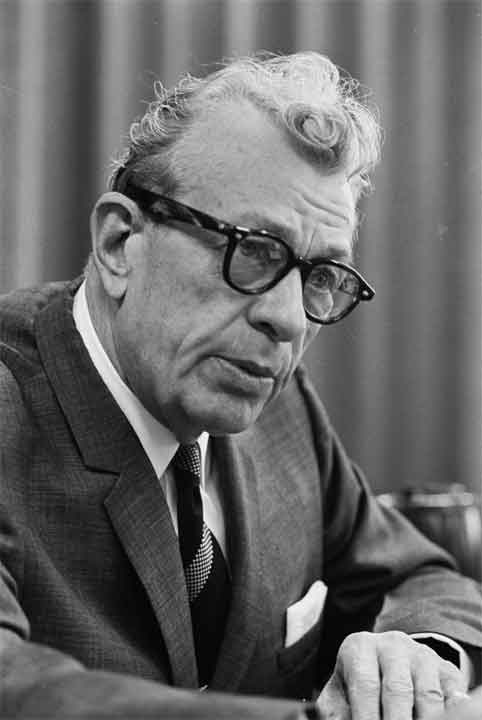 A second attempt to free up prayer and Bible-reading with a constitutional amendment would be made two years later by the Senate’s Republican Party Leader Everett Dirksen. But again, he got no assistance from the denominational leaders, including the National Council of Churches – although he was deluged by letters from the laity in strong support of his amendment. But ultimately party lines determined the outcome of the September 1966 vote when only 49 voted in favor (nearly all Republicans and most of the Southern Democrats) and 37 were opposed (all but 3 of them Democrats). Thus failing to get the necessary 2/3rds vote for an amendment proposal, Dirksen’s effort came to nothing.
But the vote made the deep ideological split developing within America itself very obvious. Clearly Johnson’s Democratic Party was pulling away from Middle America, to head down the Secular (non-Christian, and at times even anti-Christian) road.[5]
[4]What is ironic – even tragic – is that the organization that claims that it is dedicated to protecting the liberties of the people should be the very organization that in bringing these pieces of anti-Christian litigation to court would be employing very authoritarian methods to get the religious liberties of multitudes, even the majority of the Americans, shut down. And it did so simply because those liberties were at odds with the ACLU’s own Secular-Humanist worldview or religion. In this the ACLU was acting the part of a Fascist hit squad rather than the protectors of American liberties.
[5]Still to this day it is not clear why Democrats are so readily opposed to the active role of Judeo-Christianity in the life of the nation.
THE “REVOLUTION OF RISING EXPECTATIONS”
“Affirmative Action.” Given the new drive to social perfection unleashed by Johnson’s Great Society and by the Behavioral Revolution, it was deemed time to do some compensatory work to reverse the impact of past racial discrimination. The blemish of racism needed to be removed immediately – and thus “affirmative action” was required. Actually, Kennedy had initiated the idea in March of 1961 with Executive Order 10925 requiring government contractors to take affirmative action to make sure that their employment was done without regard to “race, creed, color or national origin.” But in September of 1965, Johnson issued a more expansive and more muscular Executive Order 11246 – requiring contractors to take “compensatory action” in promoting the full equality of women and racial minorities in their companies – in other words clearly demonstrating a special favoring of them over White males in their hiring and professional advancement – if they wanted to continue to do business with the U.S. government.
The entitlement mentality develops. Non-WASP (White-Anglo-Saxon-Protestant) minorities – such as the Irish, Poles, Italians, Greeks, Jews, etc. – had consistently faced the challenge of making their way forward in America’s dominant WASPish culture, against subtle or not-so-subtle discrimination. But they worked hard to succeed – not giving up despite the slow process involved in becoming accepted. And eventually they were able to take their place properly in American culture – even as Middle Class Americans.
But Blacks had been in America since its very founding – and the feeling was that they had waited long enough. They deserved immediate integration. They were entitled to it.
And thus expectations ran high – much, much higher than the culture was going to be able to accommodate such a major cultural shift. Frustration set in almost immediately among the Blacks – actually anger, as the litany of Blacks’ long suffering under racism became a theme heard everywhere. And that anger soon enough turned violent. For some Blacks (notably the group of young Black Panthers), the days of King’s non-violent protest were thus over.
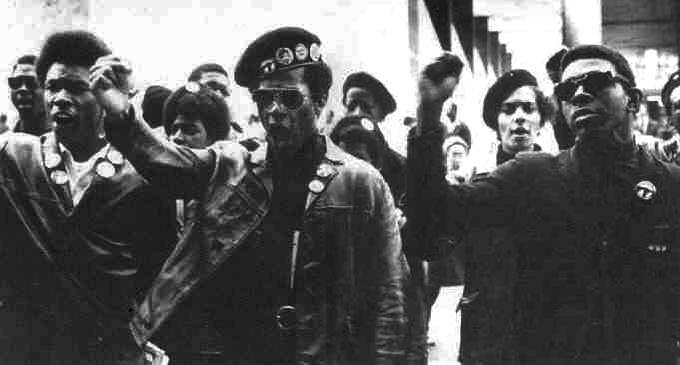
“Burn, baby, burn.” Young Blacks now turned on the system in anger, looting and burning the world immediately around them. In 1965, the Watts section of Los Angeles was looted and burned – with 34 people killed in the accompanying violence.

The Watts section of Los Angeles under assault – 1965

All of this was accompanied by the refrain of “Burn, Baby, Burn” – but also police sirens answering back in refrain as Black Power advocates were carted off to jail, either as self-sacrificing heroes – or dangerous criminals – depending on which side of the ideological divide you found yourself on.
But this was just the beginning. By 1967 Black rage had spread widely across America: In early July, in Newark (New Jersey) the arrest of a Black cab driver turned out young Blacks who looted, firebombed and even engaged in sniper fire at police and firemen trying to bring the city back to order. Eleven people were killed, 600 wounded and whole sections of the city were gutted by fire.

When several days later a pre-scheduled National Unity Conference was held in Newark, the language was one not of unity but of declared war. Black power advocate H. Rap Brown urged the gathering to “wage guerrilla war on the white man.” Los Angeles Black Nationalist leader Ron Karenga stated “Everybody knows Whitey’s a devil. The question is what to do about it.”
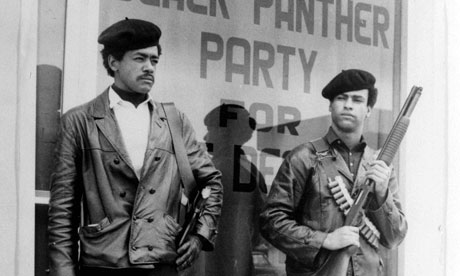
Black Panthers Bobby Seale and Huey Newton
Moderate Black leaders such as King, Roy Wilkins, and Whitney Young, Jr. avoided the conference.
In late July, violence broke out in Detroit. Learning from Newark, Detroit mayor Cavanagh immediately called in the National Guardsmen. But seven thousand Guardsmen, complete with tanks and armored cars, could not restore order. Michigan Governor George Romney (who was understood to be a potential Republican candidate for the Presidential election in 1968) contacted President Johnson for assistance. Johnson held back until Romney confessed before the public that he had lost control of the situation. Then Johnson sent in US paratroopers to retake the city house by house, block by block – similar to a Vietnam military action. When a week later the troops had brought Detroit back to order, 43 people had been killed and over a thousand injured.
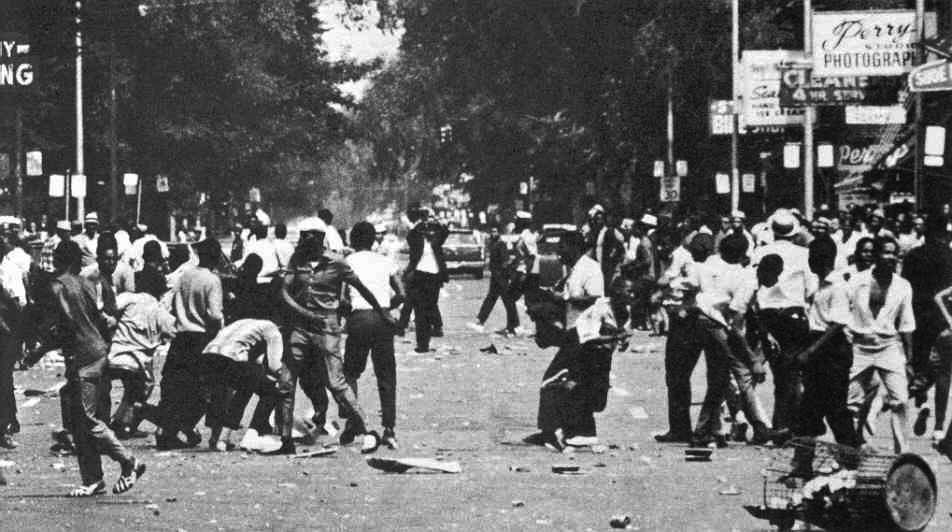
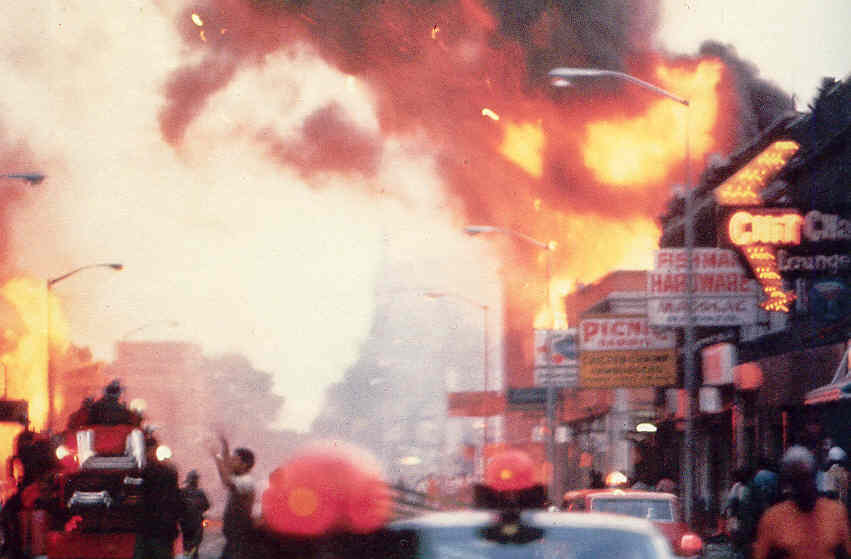
Meanwhile the violence spread to New York City where a 28,000-man police force with experience in riot control restored order to East Harlem after three nights of violence. Two people were killed.
H. Rap Brown had in the meantime moved on to Cambridge, Maryland, and following a Black Power rally there, the town was subjected to looting and arson. Brown was arrested for inciting a riot. As he was led away by FBI agents, Brown challenged: “We’ll burn the country down.”

THE PRESIDENT’S WORSENING WAR IN VIETNAM
Mass confusion in Vietnam. Tragically, it seemed impossible for Americans (including the President – and even his generals) to understand the nature of the political crisis in Vietnam. The Communist enemy wore no uniforms – and in fact was indistinguishable from the people America was trying to save for “democracy.” Most of the people America was trying to save were Buddhist, loving neither Communism nor the Western culture that Americans were trying to uphold in Vietnam. Mostly they wanted to be left alone by everyone so that they could peacefully tend their rice fields.


There were of course pro-American Vietnamese, located especially in Saigon and some of the other urban areas of the South. And the montagnards, the mountain people who centuries ago had originally inhabited the area but had been driven by invading Vietnamese into the mountains for survival, were big supporters of the American presence. But mostly, the Vietnamese were simply proud nationalists who wanted non-Vietnamese (that would be the Americans), out of their country – along with the Communist guerrilla fighters – armed with guns and supplies coming from the North – who were helping to make life in the South miserable. Saving Vietnam for democracy had little meaning to them.
Thus the goals of America’s involvement in Vietnam remained unclear. And the means by reaching these unclear goals were thus equally unclear – especially when it appeared that there were no front lines the soldiers could expand – as the enemy soon reappeared behind American lines once the Americans swept through an area. It was a frustrating war.
So, contrary to Johnson’s original expectations, America’s strong presence in their country did not bring forth exuberant Vietnamese praising and thanking the Americans for their liberation from Communism. Nor was it something that could be quickly resolved (as Johnson had originally expected). Instead American soldiers found themselves encamped behind barbed wire enclosures, venturing out into the countryside in search of an enemy they could not distinguish from the general population, and getting shot at from behind as well as in front. There were no visible lines of military progression that could be seen on a map – but merely an uneasy occupation of sections of territory here and there which changed hands constantly.
Americans were getting killed without any visible signs of progress, except that Americans seemed to be killing more of them than they were killing of the occupying soldiers – though also there were a whole lot more of them than Americans to be killed.
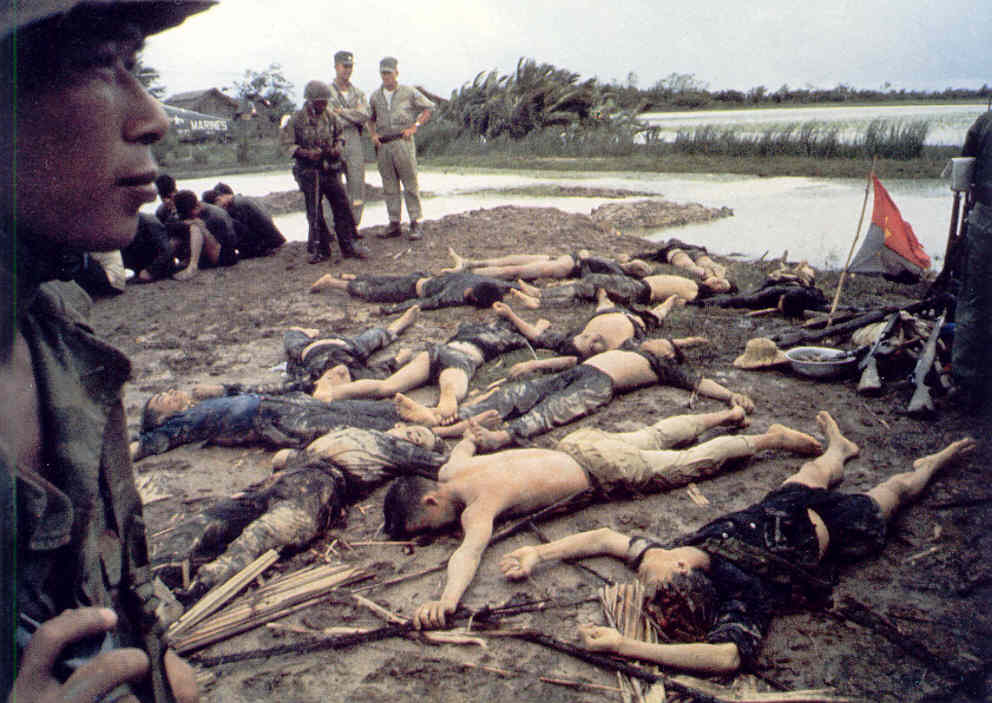
Doing a body count of dead Vietnamese NLF guerrillas

Dead Marines are stacked on a tank near Con Thien
“Them” was not a clear concept – and Americans soon found themselves killing anything that looked suspicious – even whole villages by aerial strafing and bombing. It was an ugly sight – covered in gory detail by a watchful American press.

An F-4C Phantom air strike on a Vietcong-controlled village
But watching all this very closely were the young Boomers – now old enough to be drafted into military service.
What was unusual at the time was how “superpower” America – the leading figure in the NATO European-American military alliance and in fact defender of the “Free World” in general – was so completely wrapped up in the Vietnam issue that America seemed to have no time or interest, and thus played no particular role, in other major international events going on at the time.
De Gaulle attempts to undercut American leadership in Europe. De Gaulle’s dislike of the Anglo-Saxon world (British and American) reached all the way back to World War Two, when De Gaulle did not receive the attention he felt he deserved as self-appointed leader of the Free French. Also he suffered from a sense of rejection when after the war the French were not interested in designing a new French republic that would give him the powers and thus prestige he felt he deserved. Thus he went into political retirement – that was up until 1958 when a military coup he directed brought him to power, thanks to the terrible confusion France was experiencing due to the independence movement of Muslim Algerians desirous of taking Algeria out of the French Union. In setting up the new French Fifth Republic De Gaulle finally had the political formula that he wanted by which to govern France.

But De Gaulle had one more political item to attend to: the humiliation of the British and the Americans. First he vetoed the application of the British in 1963 when they finally decided to join the European Economic Community … a deep humiliation indeed. Also he turned on NATO, headquartered in his country, but clearly led by America. In 1959, the year after coming to power in France, De Gaulle pulled his French Mediterranean naval fleet out of NATO and then demanded that the British and Americans remove all their nuclear weapons from the country, a move designed supposedly to bring as much of Europe as possible under the French nuclear umbrella instead of that of his Anglo-Saxon opponents. But the other NATO members were not interested. In 1963 De Gaulle went further and pulled his more strategically important French Atlantic fleet out of NATO, hoping that others would do the same (none did). He then also moved to strengthen diplomatic relations with Mao’s China and Soviet Russia, demonstrating France’s new “neutrality” in the Cold War. In 1965 he demanded that all French dollar holdings be converted into American gold, and sent the French navy to America to collect that gold. But once again, no other nation joined him in this gold-run designed to collapse the dollar’s international status. In 1966 he ordered all foreign troops (mostly American) out of France[6], with NATO responding by moving all its operations (including even its civilian headquarters) out of France and north to Belgium, helping Brussels, already the administrative seat of the European Community, become even more the administrative center of West European society!
In all this, Johnson did nothing, perhaps because there was nothing he could have done about such behavior. De Gaulle was a very determined American opponent.
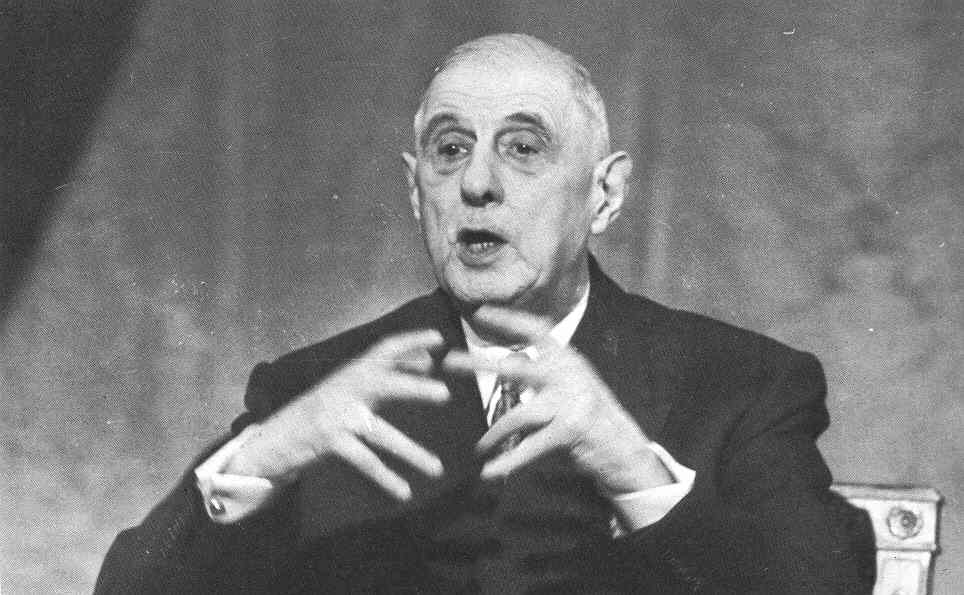
Finally the French themselves had enough of De Gaulle’s imperiousness and in 1968, when the French refused to ratify a new constitutional amendment that De Gaulle wanted in order to give himself even more power, he quit, expecting France to fall apart and the French to come on bended knees pleading for his return. They did not, and France moved on quite well without him.
Mao’s China. With the collapse of the Chiang government in China (and its transfer to the huge island of Taiwan) America had focused its “China policy” entirely on Taiwan – and had simply ignored developments going on after that in China, which actually helped Mao greatly in securing his Communist hold over mainland China.
But his fellow Communists in China tended to ignore Mao now that Communism was securely in place in their country. After all, Communism was about the modern industrial world, not the world of the traditional peasant countryside – which stood behind Mao and his accomplishments. But Mao was not one to be put aside – and thrust himself forward again as China’s savior when he regained political control by offering to show how, under proper direction, Chinese rural society could do industrialism more quickly than its urban society. With his “Great Leap Forward” program, put into effect in 1958, he planned to have China’s thousands of tiny villages undertake iron production in their new small smelters. Supposedly the combined effort of all these villages going at this project would make China now a major producer of iron – in Mao’s eyes a key indicator of China’s move into industrial leadership.
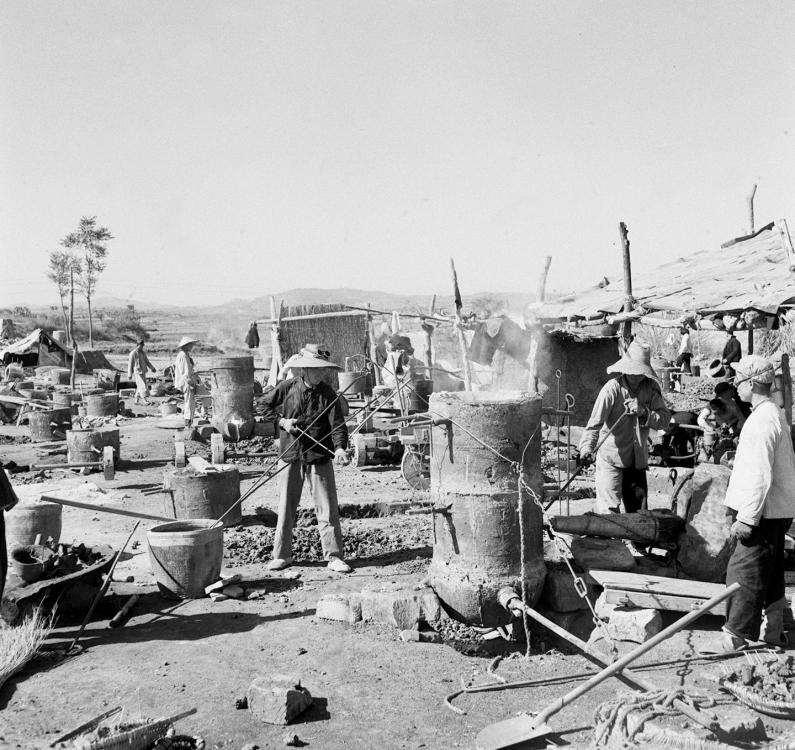
Actually all this did was to produce inferior-grade iron – which had no real industrial use, and take millions of farmers away from their fields where China’s food should have been produced. As a consequence, millions of Chinese (anywhere from 20 to 40 million?) began to die – of hunger, of exhaustion, or simply of human discouragement. Finally, Mao had to scrap the Five-Year Plan, even before its full run. It had obviously been an enormous failure.

But again, Mao was not one to be put aside. Thus in 1966 he came forward with another of his moments of grand insight: he would push the Communist Revolution forward in the form of a grand Cultural Revolution, revolutionary ideology planted in the hearts and minds of the more trainable Chinese youth (Mao was finding the adult world less amenable to his “revolutionary” thinking). Indeed not only would he instruct (brainwash basically) China’s youth with the thoughts of the Great Leader himself through the reading, reciting and even singing of his words found in Mao’s Little Red Book, he would activate that youthful spirit by having it become the vigilant eyes and ears of the Revolution, ferreting out any “anti-Revolutionary” activity – even thought – found in the older Chinese generation.
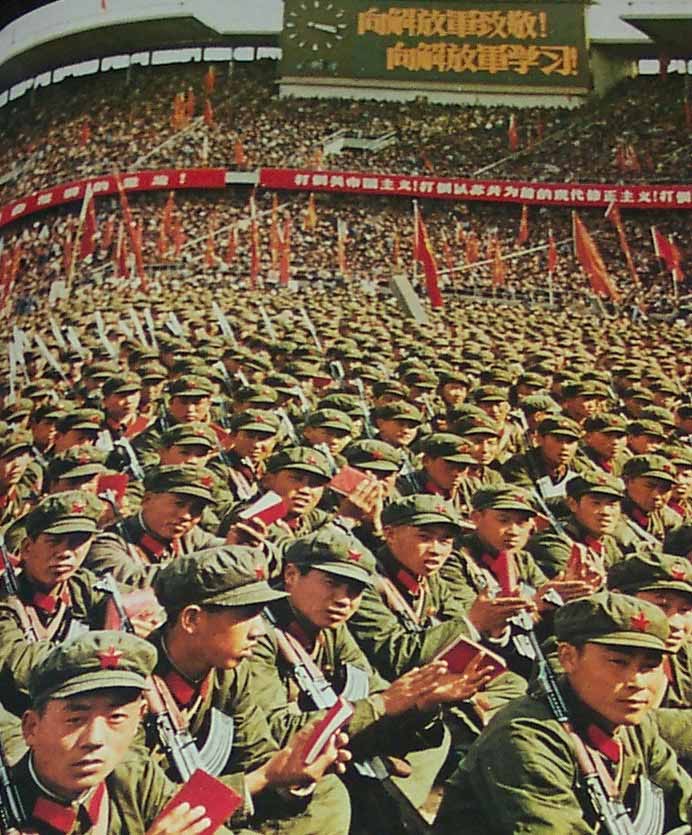
Thousands of the Chinese Red Guard gather to study Mao’s Red Book

… as well as thousands of young ladies
Not only the West’s Christianity but also China’s traditional Confucianism came under fierce attack, as the youth “liberated” the country from “unprogressive” social norms.
Thus young vigilante “Red Guard” youth took over the schools, the town halls, the local communities themselves, setting up their own judicial councils to try and punish anti-revolutionary activity found still existing in the country.


Consequently, once again Mao simply shut down Chinese society, as schools, businesses and local community operations came to a halt under this new Red Guard regime. Finally, by 1968, even Mao realized that he had gone overboard with his Cultural Revolution, and in 1969 was even forced to call in the Chinese Army to get things back under control!
The Arab-Israeli “Six-Day War” of June 1967. Another event that took place in these years, one that America actually might have been able to direct to fairer results – but basically looked the other way as events unfolded – was a disastrous war conducted between the new state of Israel and its Arab neighbors. Israel had been created in 1948 by masses of Jews, the ones fortunate enough to have escaped death in Hitler’s concentration camps, flooding to Palestine, in order to set up a state where they would no longer be bothered by a hostile non-Jewish world. Unfortunately, Palestine was not uninhabited, but instead was fully inhabited – the portion that was not desert anyway – by Arabs, both Christian and Muslim in religion, as well as Jews who also had been part of Palestinian society since time immemorial. And other than the desert, there was nowhere else for these Palestinians to go if the Jews were absolutely determined to take over fully the part of Palestine that could support human life.
Consequently a very ugly battle for the land resulted, one that would be ongoing, not only as long as there were still Palestinians left to contest the Jewish invasion of their homeland but even as long as there were other Arabs in that part of the world outraged in seeing their fellow Arabs in Palestine driven from their homes, farms and businesses.
And that fellow-Arab world included Egypt, right next door to the new Israel, where Egyptian President Nasser was posing himself as the leader not only of Egypt but of all the Arab world, through his newly-created United Arab Republic. And he had as his rallying cry to promote his Arab candidacy the call to do something about the “Jewish problem” in Palestine. Thus not only was he developing a military well beyond any immediate need for Egyptian national defense, he was talking loudly (part of his political campaign) about his intentions to lead the Arab world in delivering Palestine from its occupiers.
But Israel was in not in the mood to wait around to see exactly how he was planning to advance his candidacy, and, without any warning, struck hard at Egypt, fully destroying the Egyptian air force with its planes still on the ground, and thus making it impossible for the Egyptians to offer air cover to their ground troops now facing an advancing Israeli army and its covering air force.


It was a slaughter for the Egyptians … as the Israelis rolled quickly all the way up to the Suez Canal – which now found itself shut down as a result of the war.
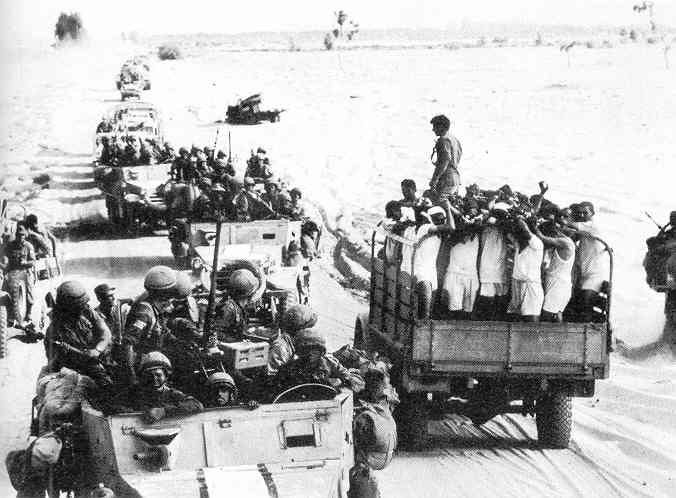
Israeli soldiers advancing toward the front; Egyptian prisoners being brought to the rear
Then foolishly Jordan and Syria decided to come to the aid of Egypt, and Israel crushed their forces as well, all of this in a mere six days (thus the term “Six-Days War”).
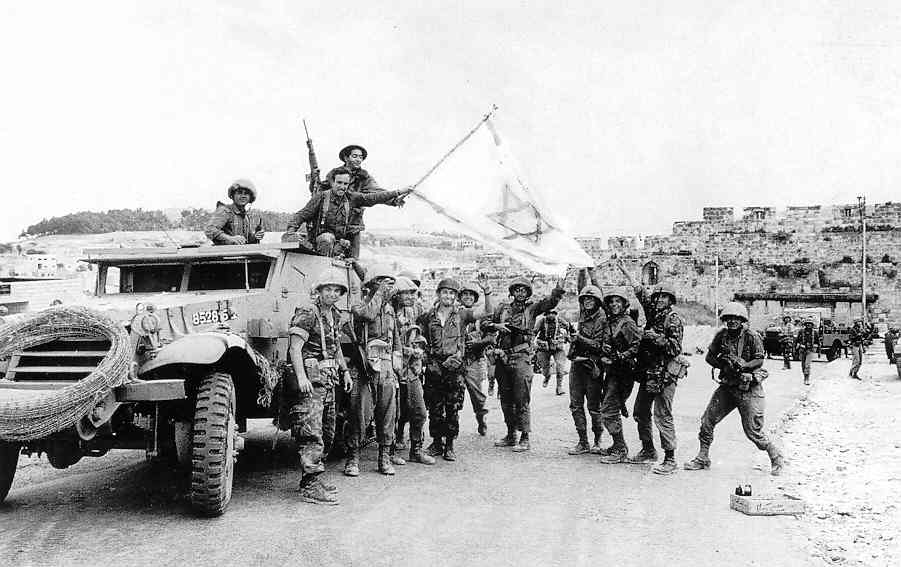
This was the event – not that America had any part in it – that brought Americans finally to want to offer full support to Israel in its contest with its Arab neighbors (America had been fairly neutral about this complex matter prior to this). The very one-sidedness of the news coverage of the 1967 Jew-versus-Arab conflict made this rather inevitable (there were not many Arabs running America’s news organizations!).
But what was not inevitable – actually quite strange – was the way that Evangelical Christians came out so strongly in favor of Israel against Palestine’s Arab population, not realizing what a high percentage of the Palestinian population was Christian. Evangelicals seemed not to understand that chasing Palestinian Christians from the land would not advance the gospel in that part of the world (Israel was not a big supporter of the Christian gospel!). But unlimited Evangelical support for Israel was indeed the case. And indeed it would come to be that way for all the nation, America now dedicated to supporting Israel at all costs (it would have the opportunity to be more proactive in this regard within another five years, with the outbreak of the Yom Kippur or October War of 1973).

The American media followed the war almost exclusively from the Israeli perspective … drawing America broadly into an on-going pro-Israeli position in the Arab-Israeli dispute
The “Prague Spring” and the Czechoslovakian Crisis of 1968. Another major international event that Superpower America did not participate in – or even influence in the smallest way – was a spontaneous uprising of the Czechs in 1968 against the Soviet domination of their country. The Czechs had formerly been very productive members of Europe’s industrial world, that was until the country fell into the hands of Soviet-backed Communists in 1948. The Czech economy had done very poorly since then, even in comparison to other subject nations within the Soviet bloc or Empire.
 Surprisingly, it was the Czech Communist leader himself, Alexander Dubček, that decided that the country must open itself up to greater personal initiative, that is capitalism itself, in order to get the Czech economy up and running again. But such independent-mindedness, especially from a Communist who was supposed to be getting governing instructions from the Kremlin (Communist headquarters in Moscow) – and from there alone – could be a real danger to the Soviet Empire.
Thus after some efforts to talk the Czechs back from this program – with no results (the Czechs themselves were very enthusiastic about this new “Prague Spring”) – in mid-August (1968) Soviet leader Leonid Brezhnev ordered hundreds of thousands (some say as many as half a million) troops and 1200 tanks to roll into Czechoslovakia and put an end to the program.


The world was loud in its denunciations. But ultimately it (along with America) did nothing, and moved on to other matters.
[6]American Secretary of State Dean Rusk sarcastically asked de Gaulle: did this order to evacuate all U.S. troops from France include the 50,000 American war dead buried in French cemeteries?
At around this same time, the Boomers were just reaching early adulthood, and eager to become heroes by challenging on all fronts any form of suspicious social authority – something they had been prepared for since their early school years. Unfortunately, the authority at hand to challenge was not some conspiring Communist intruders into American life. That fear had proved groundless. Instead, the only authority that otherwise stood before them available to be challenged by young crusading hearts was their middle-class parents’ own highly patriotic political cultural legacy.
Boomer Progressivism. Much had been made publicly about the blemishes afflicting American society – and the need for deep reform. Clearly to the Boomers, the America that their middle-class American parents lauded as the best of all possible worlds was an idea itself that needed to be rejected as foolish – even dangerous – blind patriotism. Thus – with considerable encouragement from the intellectuals who commanded the university classrooms the Boomers attended in increasing numbers – virtually in every aspect of middle-class life that was put before the Boomers as traditional cultural legacy they found some element to be challenged, if indeed not even the whole middle class cultural package to be put aside in the name of serious progress.
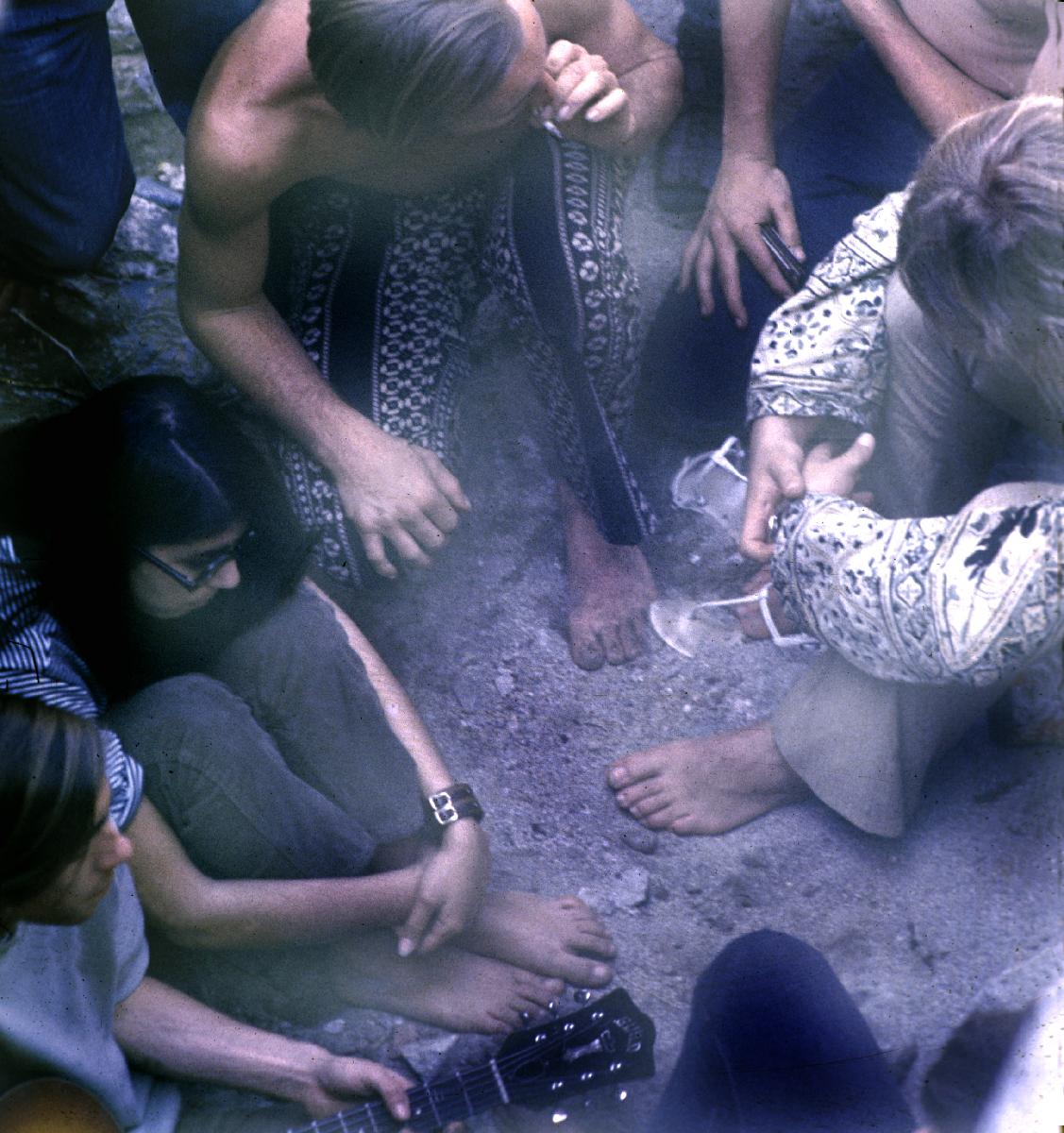
“Come together.” But this huge emphasis on resisting all forms of social authority did not satisfy the human heart and its natural desire to find its basic identity within some kind of social context. Communalism thus became one of the forms – if not the major form – this instinct took. Boomer communes were first modeled by older members of the Silent Generation who returned from overseas service in the Peace Corps – impacted by the communal life typical of the villages they lived and worked in during their two-year time abroad in Third World countries. Hippie communes thus began to spring up among the Silents – but soon were picked up by the rising Boomer generation as well as an ideal social form.

Hippie communes had very little in common with the American Middle-Class family – but were gatherings where Boomer music, drugs and free sex were readily available. Soon hippie communes became standard as a social prototype chosen by the Boomers in their quest to belong.
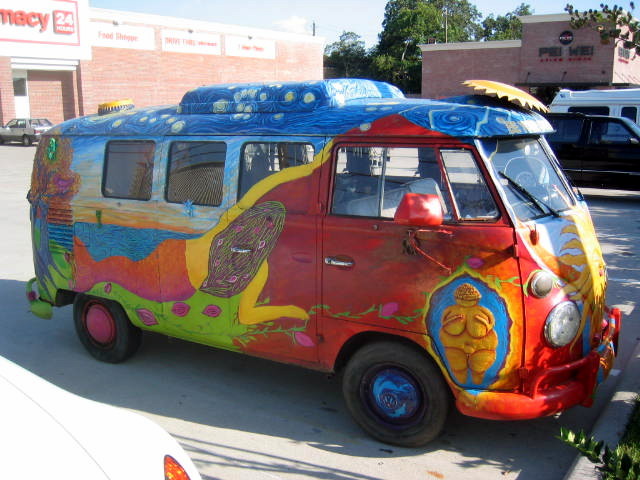
The fundamental conformity of Boomer “individualism.” Indeed, for a generation raised to resist all social authority and do its own personal thinking, the Boomers turned out to be amazingly conformist – clothing and hair styles – even the swaggering walk – as well as music, topics of social interest and even language styles modeled closely on the personal styles of Joan Baez and Bob Dillon – the coolest of the early Boomer social models (soon to be joined by other Boomer social models such as the Beatles, the Rolling Stones, Janice Joplin, Jimmy Hendrix, etc.). This tendency to conformity included even VW minivans decorated with peace and sex symbols – the minivans themselves symbols of the mobility and rootlessness of Boomer life.

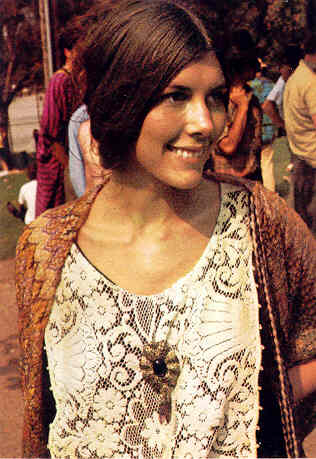
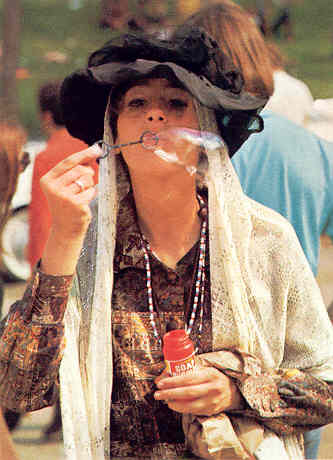

… even Hare-Krishna devotees!
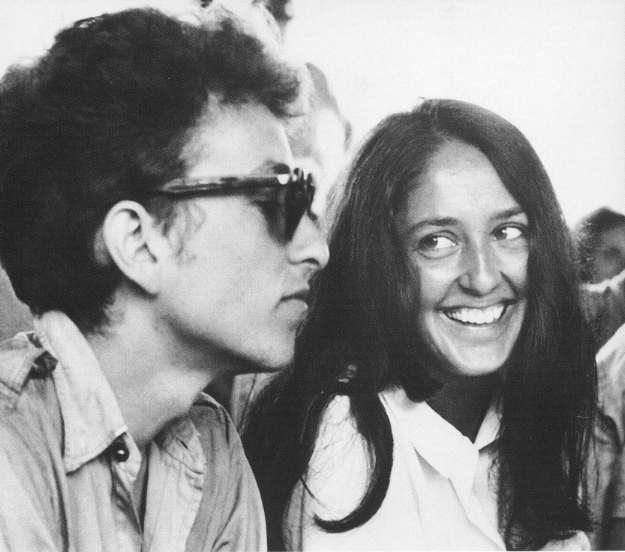
Bob Dylan and Joan Baez
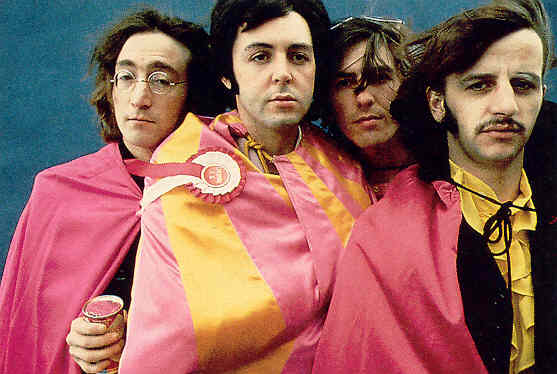
The Beatles
Drugs. Boomers enjoyed indulging in social drugs, ranging from marijuana, to LSD, to heroin. It certainly helped them get in the social mood in their communes. And they enjoyed seeing the shock on the faces of the Vet generation watching this drugged up social development rising among their Boomer children. Drugs were cool. After all, this social trend started out at Harvard, the citadel of American intellectualism, with the LSD experiments of Professor Timothy Leary.

And American troops had found marijuana to be very comforting in facing a war that seemed unwinnable – and without any military honors coming their way for their wartime service and sacrifice. So they brought their marijuana habits home to America with them after completing that service.
Drug usage itself became a key element of the Boomer identity. Helping to clarify the pattern was the Beatles music group – making the transition from the innocent “Love, Love Me Do” and “I Want to Hold Your Hand” (1962) – to the nonsensical “We All Live in a Yellow Submarine” (1966) – to the LSD-inspired “Lucy in the Sky with Diamonds” (1967).
Protest. Besides drugs, relief from social boredom was offered in what the Boomers had best been prepared for: protest against social injustice – injustice usually in the form of some aspect of Vet society.
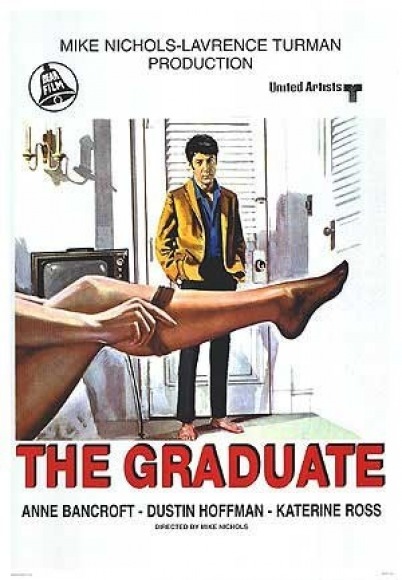
Dustin Hoffman starring in the hit movie “The Graduate” – 1967
He portrayed a listless youth who was unwilling to be drawn into the plastic world of his parents, who was seduced by a close friend of his parents (the hypocritical and scheming Mrs. Robinson), and finally found freedom by breaking himself and his girlfriend (Mrs. Robinson’s daughter) free from the clutches of the shallow adult world.
Christianity. The Vet generation’s close attachment to Christianity as its fundamental civic religion was not protested. It simply was not taken up as the Boomer religion – through the simple strategy of Boomers just not bothering to attend church.
Feminism. Then there was the cause of feminism. In 1963 Betty Friedan published a book, The Feminine Mystique, one that would not only announce the startup of a new round of militant feminism, but serve as the basic Bible of young college-educated women, instructing them as to how to combat the male domination of the professional world.
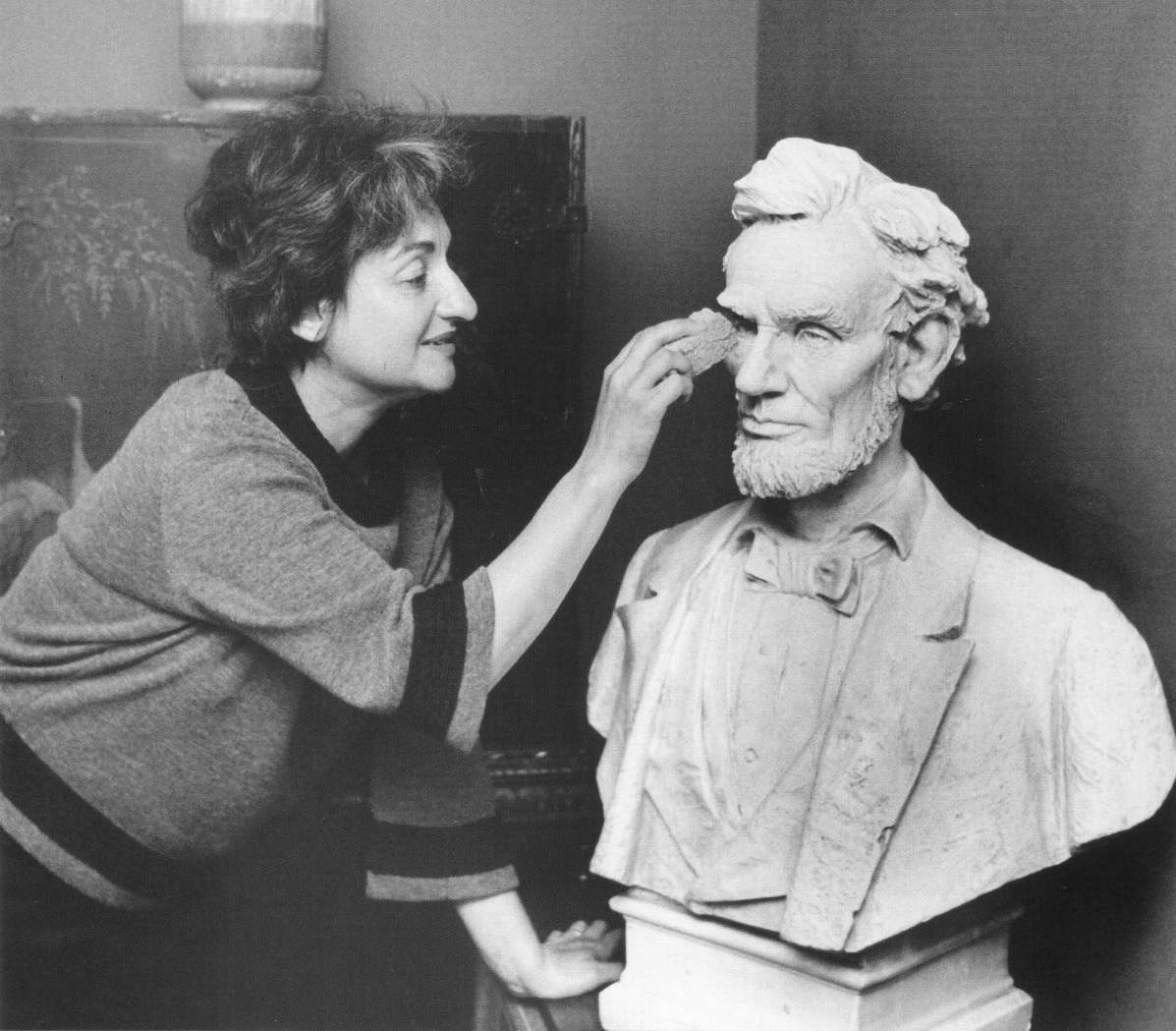
Betty Friedan cleaning a Lincoln Statue! … ?
Marriage and the family (that is, the fundamental institution of Middle-Class America) took a huge hit with Friedan’s call to arms. In her book she depicted family life not only as the underpinning of male tyranny but also as terribly stifling of a woman’s intellectual abilities. Women needed to find escape from the marriage trap – and discover their real purpose in life in the professional world. Of course they could expect to find sexual discrimination awaiting them there. But this was the point of the book: it was time for women to rise up (like the Blacks) against this world of (male) domination and secure for themselves the right to take as much control of American society as had long been held by men. And thus the battle of the sexes got underway.
Black civil rights. Marching in protest against Southern racism certainly stirred the hearts of young Americans. But it was mostly the older Silents who joined the pastors, professors and journalists who headed to the South to support the social and political rights of Southern Blacks. Boomers would eventually join the ongoing civil rights movement – sort of – at least from a distance. Anyway, by the time the Boomers had emerged on the political stage, the Black militants such as the Black Panthers had taken over the Black civil rights movement – and Whites were not invited to become part of their campaign.
Against President Johnson’s war in Vietnam. Boomers did, however, have one great crusade to undertake, one that would put heroic touches to their lives: the need to end the Vietnam War – and the accompanying military draft that was carrying young American males off to a conflict that was deadly – and apparently pointless.
Thus the Boomers were beginning to voice loudly their opposition to “Johnson’s war.” Why should America’s youth be drafted to serve in a distant war whose morality was questionable? Boomers were beginning to identify the motivation behind the entire Vietnam venture war as being simply raw imperialism – American imperialism. This was pure evil: the strong dictating their social-cultural organization to the weak – the very thing the Boomers had been carefully programmed to resist – as heroically as possible.
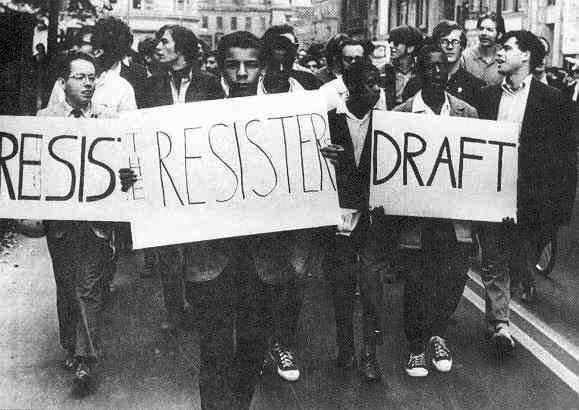
An anti-draft march – 1965
Thus the Boomers began to do what they had long been trained to do: protest political authority whose actions to them seemed entirely wrong. In October of 1967 they gathered in mass in front of the Pentagon to call for an end to the war.

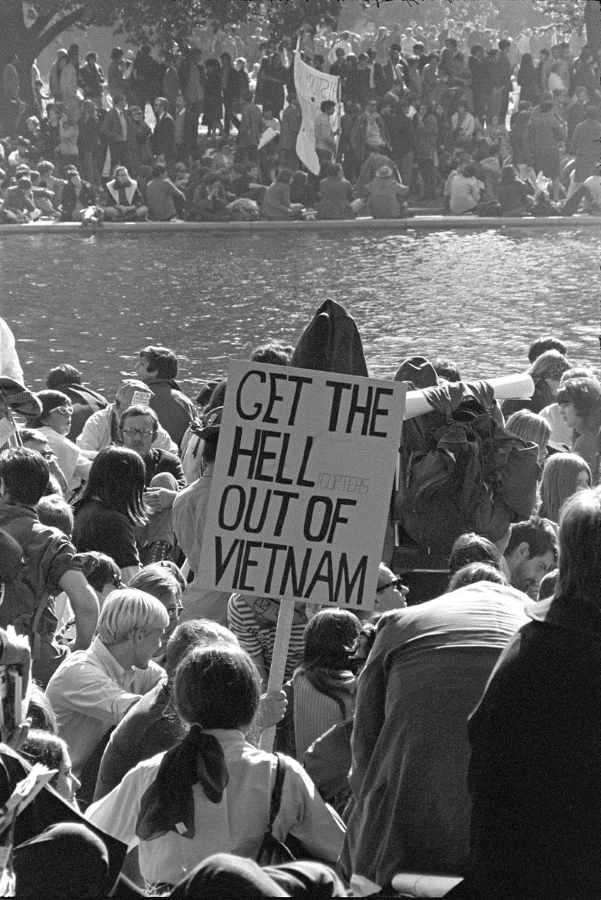
The deep split between the Vet and the Boomer generations. The Vet parents were perplexed – even irate. The Vets were an unshakably patriotic group, standing with the government no matter what (“my country right or wrong”). Anyway – wasn’t America trying to bring democracy to Vietnam? Did the Boomer youth not see the importance of setting up a viable democracy in South Vietnam – one that would act not only as a barrier against Communist expansion coming from the North – but like America itself, serve as a beacon of light, lighting the way to other countries in the region to find democracy for themselves as well? How in the world could the Boomers be missing the point?
And thus it was that a vicious war of words broke out between the two generations – words mostly of just an emotional rather than truly rational character to them. Indeed, complex concepts such as democracy, imperialism, Fascism, and Communism became mere slogans rallying intense support or opposition rather than actual argument or reasoned debate that the two generations hurled at each other.
Tragically for America, this Boomer-versus-Vet battle produced a generational division that would never find healing – a lack of healing in part due to the involvement in this Boomer crusade by numerous American intellectuals, individuals who understood the Boomers as valuable allies in their own quest for vengeance for the mistreatment they – or at least their older colleagues – had suffered at the hands of the Vets in the 1950s. Thus it was that the causes for this generational split were broad and vague in nature – but at times violent nonetheless.
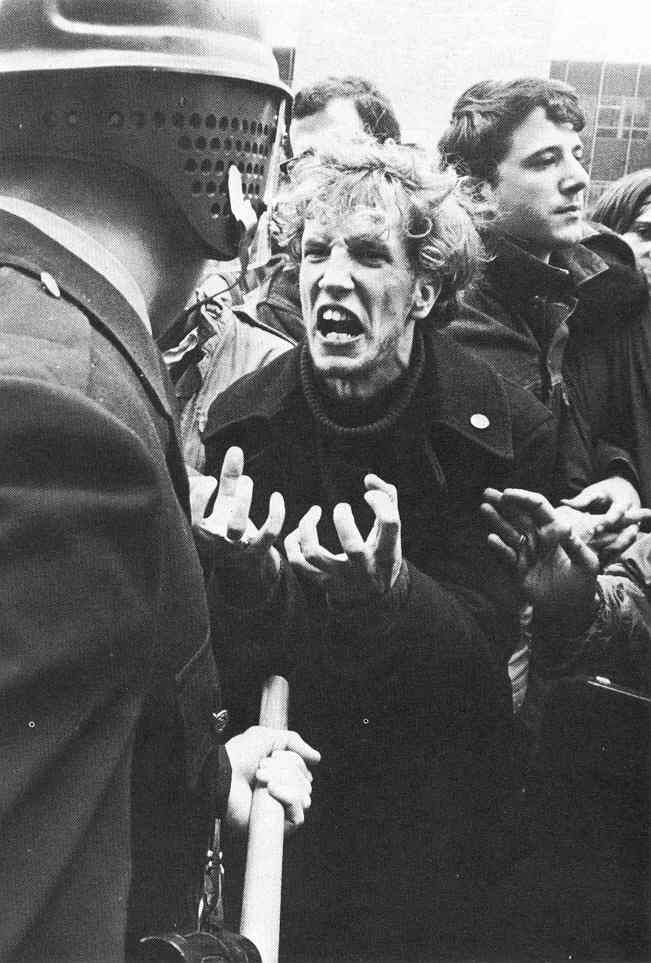
“Dirty Fascist” screams an angry University of Wisconsin protester at police – October 1967
1968: THE ANNUS HORRIBILIS (THE “HORRIBLE YEAR”)
Tet (January-February). 1968 was a very pivotal year for the Johnson Administration, because Johnson’s Great Society and his Vietnam “police action” were put to the test, and found wanting. At the beginning of 1968, the “Tet Offensive” of the Communist Viet Cong broke out across South Vietnam, reaching all the way into the supposedly secure capital of Saigon – where even the army guards protecting the American Embassy were shot down.

It was a bold move – a desperate one actually on the part of the Viet Cong, one in which they nearly wiped themselves out in the effort. But the American media covering (in gory detail) the disaster there had no way of knowing that. Instead, it was portrayed as a major Viet Cong victory, making Johnson’s assurances that America was making great progress in Vietnam appear to be a horrible White House lie.
Consequently, the Viet Cong, with much help from the American press, succeeded in the goal of any war: to make the enemy want to quit. After Tet, that was exactly what many Americans wanted, especially those loudest in these matters. Kids poured out onto the streets, even filling the small park in front of the White House with protesters chanting day and night: “Hey, hey LBJ, how many kids did you kill today?”

“Hey, hey, LBJ … How many kids did you kill today?”
An anti-war protest in San Francisco – 1968
Johnson’s announcement (March). Thus in a regular television broadcast, Johnson surprised the country by announcing (this tidbit was not included in the speech handed out to the press previous to its presentation) that he would not be running for reelection that November. The country was shocked. Johnson seemed simply to be bailing out as US President.

King’s assassination (April). Then in April came the assassination of Dr. King, who was in Memphis supporting a garbage workers’ strike (he had switched to supporting all the poor of America regardless of race).[7]

Rev. Dr. King’s aides point to where the sniper shot that killed King came from – Memphis, April 4, 1968
Blacks responded in what was becoming a rather typical fashion now, going on a rampage plundering neighborhoods and then torching them, in American city after city. Police had to be called in to protect the firemen who were being shot at by the rioters, and afternoon curfews, requiring everyone to be inside their homes, had to be imposed to bring order back to America. It took several days to get things calmed back down again.
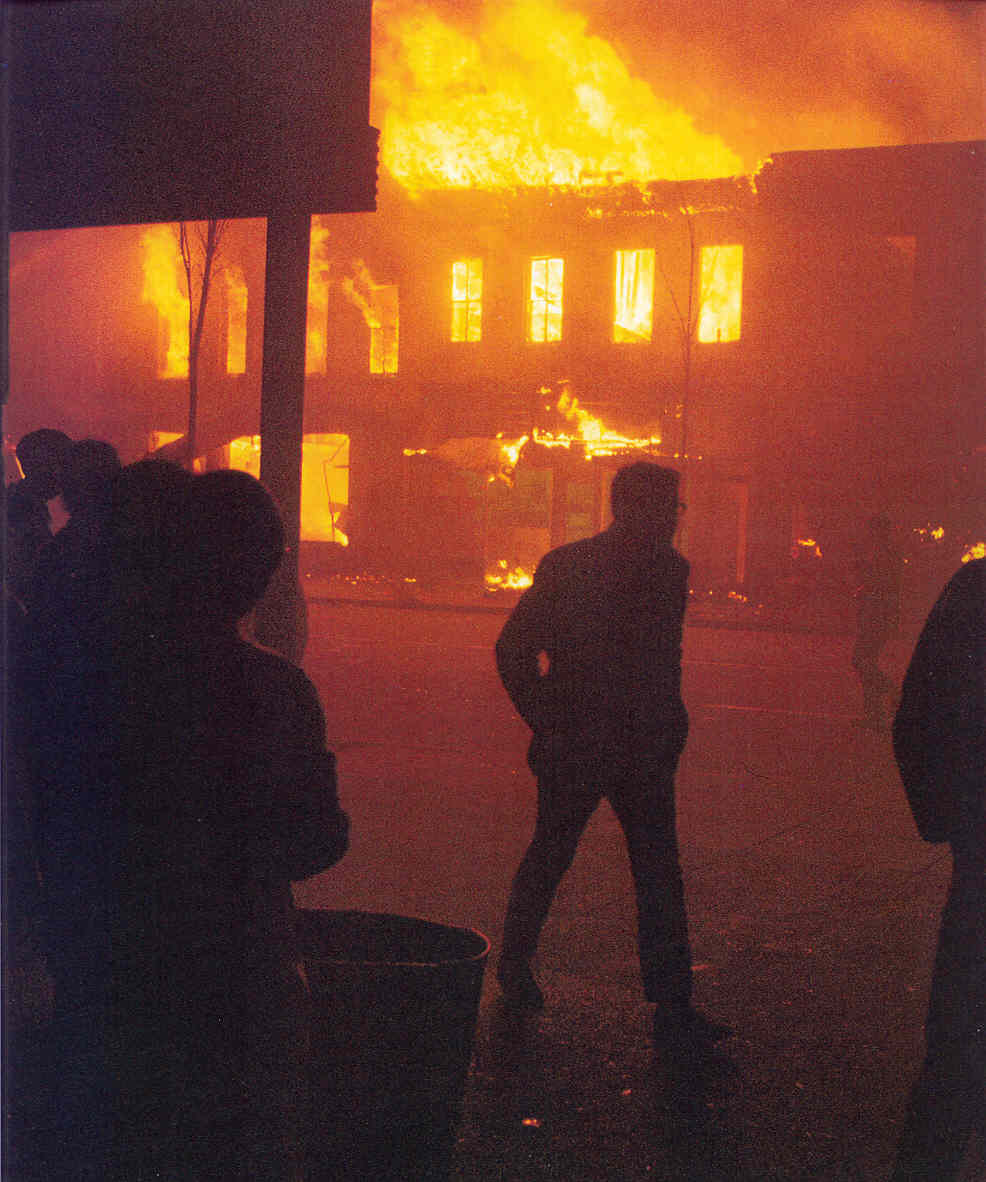
Washington, DC burning

National guardsmen in Washington, DC
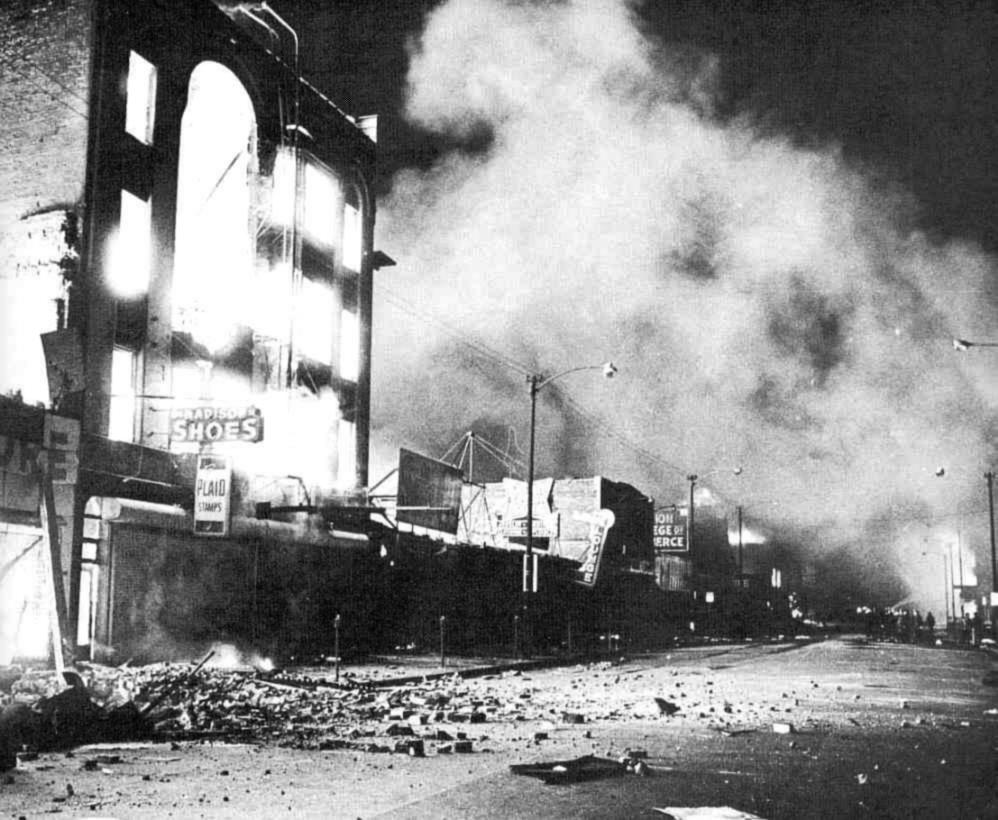
Chicago burning
This was definitely not how Dr. King would have wanted to be remembered. But this was no longer about Dr. King. This was about Black power, and Black Panther militancy. White man’s world needed to be destroyed.
Thus so much for Federal poverty and educational assistance offered by Washington to the Black minority community in order to put the icing on the cake of the Great Society. It all seemed so pointless now.
The hippie takeover of Columbia University (April-May). But White Boomers were not intending to be left out of the action. Thus students took over the offices at Columbia University in New York City in late April – and shut the university down completely, to the anger of those students anticipating graduating soon.

Fighting broke out between student groups. Finally, the police were brought in to reopen the university.

But it would be a much-changed institution (student applications and alumni financial support would drop away dramatically) as a result.
The Poor People’s March on Washington. (May-June). Soon after this, a peaceful demonstration of poor people (of all races) converging on Washington went ahead as scheduled in Mid-May. But without its leader, Dr. King – and because of the heavy downpours which soon turned the encamped demonstrators’ tent city into a quagmire of mud – it too seemed all so pointless. The days dragged on through much of June, and little seemed to have been accomplished through the effort.

The second Kennedy assassination (June). Then in the midst of all this, in early June, Robert Kennedy was assassinated by a Palestinian-American youth, bitter about Kennedy’s support of Israel. Kennedy was the individual most likely to be the Democratic Party’s nominee that November, and thus also most likely to be the next U.S. president. What was going on? Like everything else at the time, it all seemed so pointless.
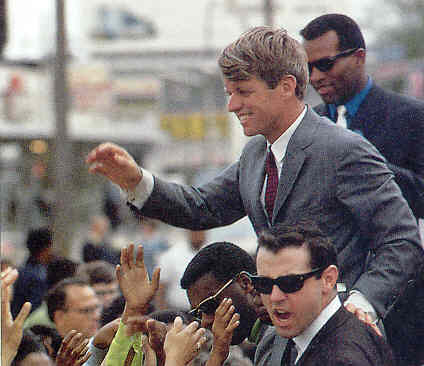
Bobby Kennedy stumping for the Democratic Party presidential nomination – 1968

Bobby Kennedy shot at the Ambassador Hotel in Los Angeles – June 5, 1968
Rioting at the Democratic National Convention (August). Then there was the Democratic National Convention held in Chicago in August, to find a new candidate for the presidency now that Kennedy was gone. Masses of “Yippies” (militant “hippies”) descended on Chicago to protest (what exactly?) and to take on the “pig” police, turning the area around the convention center into a war zone, as police (nearly qualifying as rioters themselves at one point) and Yippies attacked each other, resulting in numerous people (including delegates) getting hurt badly. And the scene inside the convention was just as ugly, with Chicago Mayor Daley cursing the convention speakers, the television crews catching the complete madness with their cameras. Again, it all seemed so pointless.


Protesters hurling back tear gas at the Chicago Police. Then the police seem to “lose it” and themselves turn riotous


Chicago police attacking a newsman who had just complained about their treatment of some young people in a car

John Evans of CBS News, himself wounded by rioting Chicago police, interviews another victim – 1968
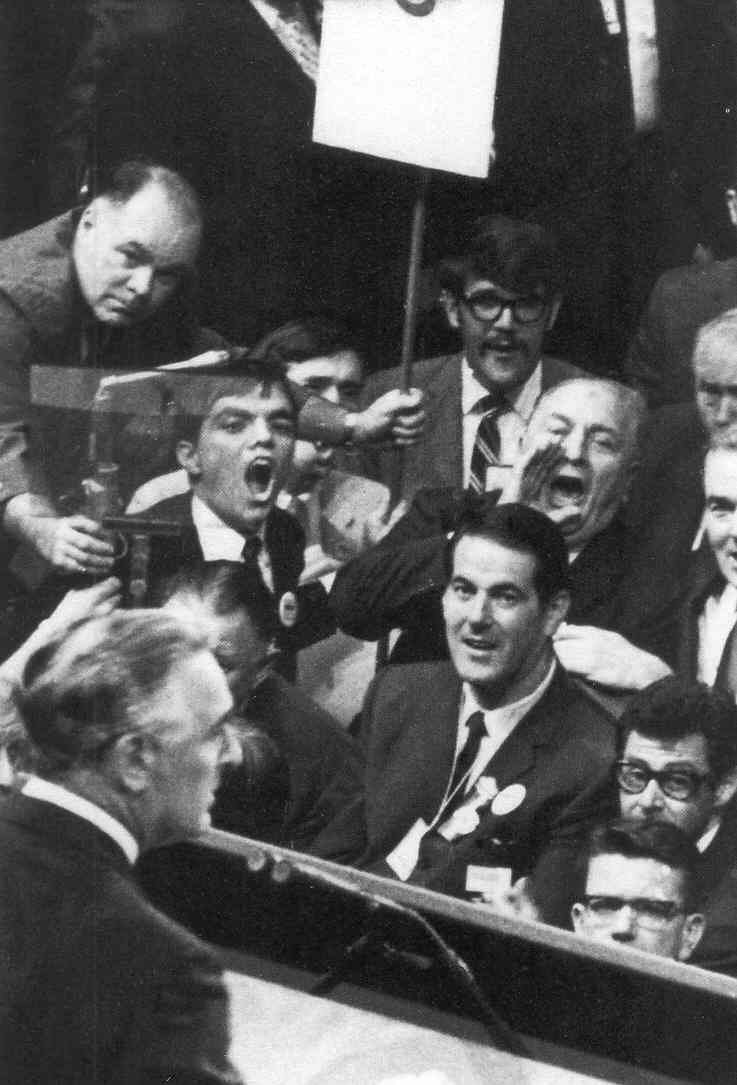
Senator Abraham Ribicoff and Chicago Mayor Daley squaring off at the Democratic National Convention about the tactics of the Chicago police (Daley’s shouted response: “F… you, you Jew son of a b….”)

Democratic Party presidential candidate Hubert H. Humphrey and his defeated rival George McGovern
[7]By another one of those strange interventions of what I at the time called fortuna, I found myself at the Washington National Cathedral the Sunday before King’s assassination (at this point attending more for sentimental than for theological reasons), with King as the featured pastor. He spoke prophetically (as it turned out) about how his focus on Black civil rights was coming to an end, as he took up a new line of work in promoting America’s poor, Black and White. He was in fact, planning a Poor People’s March on Washington for the next month (May). He was stepping back from the Black Movement – which had been taken over by the Black Panthers, whose brand of politics he did not approve of. Tragically he had no idea of how indeed his work in favor of Black civil rights was coming to an end. And I gave that last prophetic sermon of his much thought that week, as I saw the racial unity that he sought so earnestly go up in the smoke of burning American cities.
The November 1968 elections: Nixon to the White House. The selection of Richard Nixon as the Republican Party’s candidate at their National Convention was a huge contrast – by way of the quiet order in which it was conducted.

Nixon flashes “V” for victory sign at a Republican campaign rally in Ohio – October 1968 (the anti-Nixon press loved to lampoon this Nixon gesture)
And that atmosphere helped immensely to bring out Vet voters, tired of all the political commotion consuming their country. Thus it was that Nixon won the election, drawing 43.4 percent of the popular vote to the Democratic Party’s candidate Senator Hubert Humphrey’s 42.7 percent (Third-Party Southern Democrat George Wallace with 13.5 percent), although the electoral college vote was strongly in Nixon’s favor 302 to 191 (Wallace with 46).
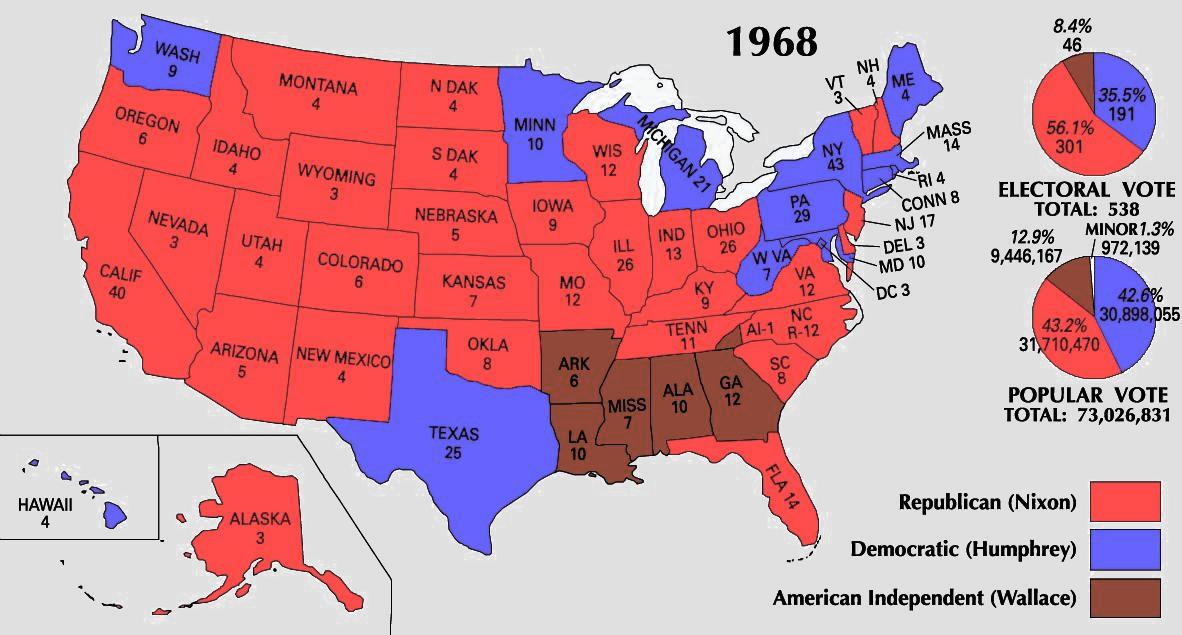
This was hardly what the Boomer activists and their intellectual mentors wanted. These two social sectors were so ideologically opposed to Middle America at this point that they seemed totally unable to accept the verdict of the vote. How in the world could “Public Enemy Number One” have managed to get himself into the White House? They would do everything possible to nullify his presidency.

The Nixon family – Christmas 1969 (from left: David and Julie Eisenhower, the President, his wife Pat, and Tricia Nixon)
 The making of Richard Nixon. Nixon was born in 1913 in Whittier, California, a very Quaker community, to a family which was also Quaker. Family tragedy made life hard for young Nixon, a younger brother having died in 1925 and an older brother also badly ill with tuberculosis. In fact, a Harvard Club prize he was awarded because of his excellent grades he was not able to use, because the family could not afford the rest of the Harvard education costs, due to the expense of the older brothers’ medical treatments. Thus Nixon attended the local Whittier College, and then, with a substantial scholarship, Duke Law School, graduating summa cum laude (“with highest honors”) from the latter in 1937.
However, despite these accomplishments, with his older brother having died in his senior year in college, and with the Depression in full force and law jobs hard to find upon law school graduation, Nixon’s Quaker faith was tested in the extreme. From this point on, that faith would remain a very private matter.
In returning home to California to practice law there, he met and two years later (1940) married a local school teacher, Pat Ryan.
Then with America’s entry into World War Two, the Nixons moved to Washington, for him to take a job in the growing D.C. bureaucracy, with him then being able to leave this unloved work to become a lieutenant in the Navy. He would see service in the South Pacific as an administrative officer, serving in that role until 1946, although he would remain in the Naval Reserves, rising in rank over the years, until his retirement as commander in 1966.
In that year 1946, he was urged by the local Republican Party to run for Congress, defeating the Democratic incumbent Jerry Voorhis, and thus beginning his Washington political career. We have already noted his work in Congress with the House Un-American Activities Committee (HUAC), investigating the Communist presence within Washington’s own officialdom, automatically making him an enemy of self-identified intellectuals who felt he was unfairly attacking those of their particular social profile. They would never forgive him for what he did in those post-war years. But his work did bring him to the attention of the Republicans who brought him alongside Eisenhower in the 1952 presidential campaign, which the two won, making Nixon now U.S. Vice President. And Eisenhower put him to work doing some travel and diplomacy for him, especially in the effort to cultivate a “thaw” in America’s Cold War with Russia.
This put him in position to run as Republican presidential candidate in 1960 when Eisenhower completed his second term as president. And he came very close to defeating the more charismatic Kennedy, but ultimately failed in the effort. He then ran for California governor two years later. But found that California press coverage was very negative, making him furious about the treatment he received by the press.
Then he went into some kind of wilderness years. But he used the time fruitfully to visit the larger world, meet with a grand variety of leaders of other countries, and learn first-hand the more subtle ways of the world – and the politics and cultures that made for such variations.
Nixon’s political “Realism.” In this, he would become very much a supporter of the idea of Realpolitik, the German term applied to the varied use of diplomacy, bluff – and, when absolutely necessary, very carefully calculated economic and military assault (war) – in reference to the strategies of Prussian Chancellor, Otto von Bismarck, who skillfully used all these techniques to assemble a new German nation in 1870. Thus Nixon found himself replacing his older approach, mostly ideological (which America largely follows in its own domestic and foreign politics), with the subtleties of a chess player, who sees diplomacy as a game of power, and careful power moves in support of a very carefully measured “national interest,” rather than all-out crusades for this or that grand political ideal.
 And now as president, he would strengthen this approach to his duties in appointing the Harvard professor and political Realist, Dr. Henry Kissinger, as his National Security Advisor, then also as his Secretary of State. And the two of them would go at the international problems facing the country in quite new ways, opening the doors to better relations with both Russia and China, and also re-strategizing America’s involvement in Vietnam, something unfortunately that most Americans, including most importantly his dedicated “Liberal” opponents in Congress, in the press, and in the world of academics, would never quite understand. And America (and Southeast Asia) would suffer horribly because of this lack of understanding.
Nixon, the Christian. Nixon’s tendency to keep his religious faith private meant that although he definitely knew the Bible well, was a man of prayer, and spent a lot of time before God seeking divine counsel, little of that appeared in public. He even held Sunday worship at the White House itself, calling on pastors of a wide range of faith to lead these services[8] – though clearly his favorite was Norman Vincent Peal of New York City’s Marble Collegiate Church. And he was especially close, on a very broad basis, with the evangelist Billy Graham, with whom he met often for prayer and discussion.
But he also understood deeply the role that Christianity has long played in American life. For instance, in his 1972 Thanksgiving Address he emphasized the fact that Puritan founder John Winthrop was most correct in identifying America as God’s “city set upon a hill,” that it was important to follow the Puritan heritage in being “the light of the world,” and that it had always been America’s call by God, and source of the country’s greatness, to provide spiritual leadership to that world. He also stated that every American president had found cause to turn to God, ultimately leaving office with a very deep religious faith.
Sadly, though Nixon personally was a man of very high moral self-discipline (thanks to his Quaker upbringing), his moral credentials would come to be measured in history solely on the basis of the Watergate scandal, where his paranoia about the public treatment he got from the Leftist Congress and press led him to get involved in an illegal coverup of what some of his subordinates had done quite unnecessarily during his 1972 reelection campaign.
Thus Nixon’s personal tragedies continued to follow him, all the way through even his White House years. Thus Nixon is still today not really remembered for all the ways he served his country extremely well as president. It seems instead that he will always be remembered by generations to come as Nixon, the evil president.
The Apollo 11 Moon Landing (July 20, 1969). Actually, in entering office in January of 1969, Nixon was hoping that an event occurring the next summer would give America something positive to rally around: the landing on the moon of two American astronauts – and their moon walk to gather rock samples – and even more amazing, their safe return to the earth a day later. This helped America politically, a little anyway.

Crew of the Apollo 11 (left to right: Neil Armstrong, commander; Michael Collins, pilot of command module Columbia; Edwin “Buz” Aldrin, Jr., pilot of the lunar module Eagle)

But it did at least pretty much close out the space race America had been engaged in since the Russian Sputnik launch back in 1957. America – which had been engaged in this contest through four Presidencies (Eisenhower, Kennedy, Johnson and now Nixon) – had finally won! The Russian opponents would not attempt their own version of the event – something that would have awarded them only a humiliating second-place trophy.
Ted Kennedy and Chappaquiddick (July 18, 1969). But while America was focused on events going on at the moon, another event took place at exactly the same time – an event which would challenge American politics deeply. On the night of July 18th, the car of Senator Ted Kennedy (youngest of the Kennedy brothers) was headed to a small island (Chappaquiddick) when it went off a narrow bridge and turned over in the water. Kennedy was able to get out.
But left inside was a pretty young “Boiler Room Girl” – who had been attending something of a reunion of the former campaign staff of the recently deceased Bobby Kennedy. She was left to either drown or suffocate (trapped in the car possibly for as long as two hours) – no one is quite sure which. In fact the whole incident raised all kinds of questions (why Kennedy got out and she didn’t; why she was in the car in the first place; why they were headed in the direction they were going; why he didn’t go immediately for help; why he didn’t report the incident to the police until the next morning – when they had already discovered her body).

Ted Kennedy and Mary Jo Kopechne

Kennedy being led away by police for failure to report the accident
Amazingly, Kennedy got off with merely a suspended sentence (leaving the scene of an accident) – and the matter was soon dropped. Even more amazing, his political career hardly suffered – as not only did the Democratic Party give him a pass on this event, he very soon became the leading moral voice of the Democratic Party in its assault on the “evil president” Nixon.
The Kennedy name had real power – like the European royal dynasties of Habsburgs, Valois, Bourbons, Tudors, Stuarts, Romanovs, etc. Even in democratic America names like Adams and Roosevelt (and eventually Bush and Clinton) had a special power. And in Massachusetts, the name Kennedy would continue to have unchallenged power – all the way up until Senator Ted Kennedy’s death in 2009 (still in office at the time).
The Manson murders (August 1969). The next month America was shocked to hear of a number of murders undertaken by a California hippie community – murders directed by their sleazy guru, Charles Manson.
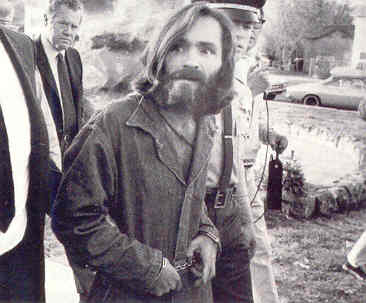
The very nature of the murders was grossly bloody – and though somewhat ritualistic – generally pointless. The murderers and their leader were soon apprehended. But they too could give no sensible reason for these shocking events.
Was this what typical hippie communal life (also typically dominated by an aggressive Alpha male) was ultimately destined to become? There were no good answers. Anyway, communal life was lessening as the Boomers, moving into the 1970s, now seemed mostly interested in pursuing their own personal careers out there in the professional world.
The Woodstock Music Festival (August 15-17, 1969). In mid-August as many as 400,000 music-loving Boomers descended on an open-air music festival – to listen to an endless array of the musical greats of their day – and to enjoy the basic Boomer lifestyle of drugs and sex (although amazingly restrained on both counts, considering the size of the crowd).


Janice Joplin

Jimmy Hendrix


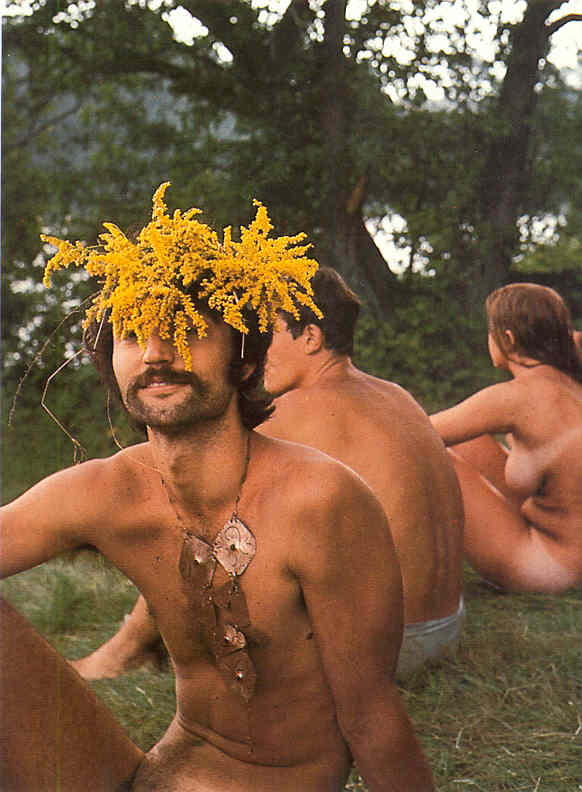

In a way it marked the summit point of the 1960s hippie era – unprecedented in the way it pulled a huge amount of talent together – but also a summit that would never be achieved again. It would serve as a lasting symbol of a great age – one that would be looked on nostalgically by the Boomers as they took their places in the adult world.
The “Days of Rage” (October 8-11, 1969). But they would not move into the world of the 1970s by giving up (not immediately anyway) their crusading spirits. In October, the very radical Boomer protest organization, Students for a Democratic Society (SDS) called for a campaign in Chicago they termed “Days of Rage.” The rage was aimed in a number of different directions – in part, of course, about the war still underway in Vietnam – but also over the trial of the “Chicago Seven” who had instigated the violent student protests at the Democratic National Convention in Chicago the previous year. They demonstrated their rage by smashing store and car windows as they marched through the city – finally clashing with the police (as they fully intended) with the result of the injury of a number of protesters – and police – and the arrest of many of the protesters. The protests nonetheless continued the next day – and the next – although the numbers involved began to quickly diminish.
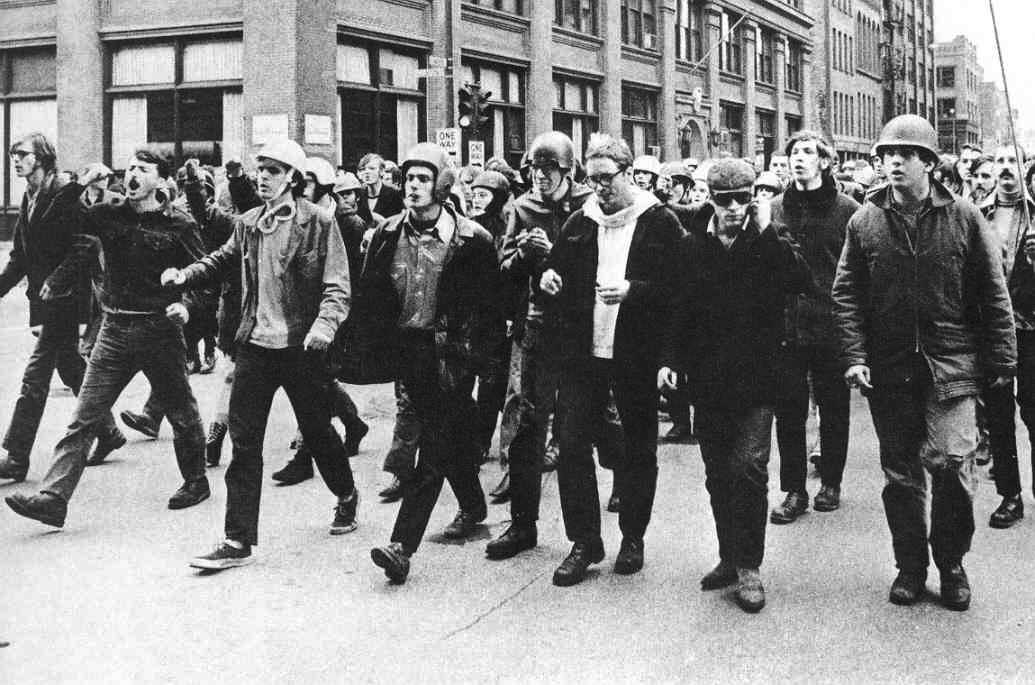
The point of it all was never quite clear. But it spoke volumes about the way Boomer youth were so easily mobilized for action, violent action if necessary, in pursuit of some social ideal – any social ideal – as long as it was indeed ideal (meaning: more of the nature of a slogan demanding action than any well-thought-through social policy).
America’s new political logic. And even though the street-based protest movements would decline in number in the 1970s (although there would still remain a number of the more professional of the Boomer protesters who would continue to show up for almost any kind of a demonstration, anywhere and for any cause), the crusading spirit of the Boomers would in general continue to impact Boomer ideas of how American politics ought to proceed.
This would show up in the new social-political and even cultural attitudes that would find their way into Congress – where politics would become more and more a matter of bringing ideological opponents down to humiliating public defeat – rather than coming at America’s huge challenges, admittedly from different political directions, by seeking authentic social progress through the skilled art of political compromise. Somehow this older but well-proven political style would get lost in the new political atmosphere. The Boomers – and their intellectualist mentors – would much rather conduct crusades against fellow members of society than find ways to move in strong unity in facing the larger problems facing the society as a whole.
As the Beatles’ song Revolution (1968) put matters so elegantly:
You say you want a revolution,
Well, you know
We all want to change the world
This spirit of radical protest pumped political adrenaline and helped maintain a revolutionary high among the youthful crowd. The Boomers were in no mood to give up what they understood as the meaning of life itself, the purpose of their very existence. And America’s Progressivist leaders – in Congress, in the academies, in the press – were always ready to find a similar purpose for themselves as sponsors of exactly just such political activism. Consequently, the 1970s (and after) would offer in-your-face testimony to the belief of the Boomers – and their moral mentors (such as Ted Kennedy) – that their loud and aggressive moralizing/crusading political style was the best way to serve the nation’s true political interests.
[8]In 1973 the atheist Madalyn Murray O’Hair tried to get a federal court to shut down these White House services.