CONTENTS
 “Unity”?
 The making of Joe Biden
 Into the Biden era
 Biden and the world
Much of the textual material on this webpage is drawn directly from my work, America’s Story – A Spiritual Journey © 2021, pages 482-491. The rest is material added since the 2021 publication of America’s Story. This material parallels the material found on my two other websites, spritualpilgrim.net and wakeup-america.com.
Biden’s inauguration day. For a brief but wonderful moment it appeared that America was going to be able to move on past the ugly ideological warfare that had consumed American politics for way too long … when in his inaugural address Biden announced that he intended to serve as president for all Americans … and not just for those (the Democrats) who had voted for him. He wanted unity to be the hallmark of his presidency.
And then, that same afternoon, he headed off to the White House and, with full photographic coverage, proceeded to sign 17 new presidential orders … all of which were designed to undo the Trump legacy and put the Democratic Party’s ideological agenda in its place as national policy.
So was all this “unity” talk just political gloss? Was Biden merely a tool of the ultra-Left wing of the Democratic Party, as some claimed?
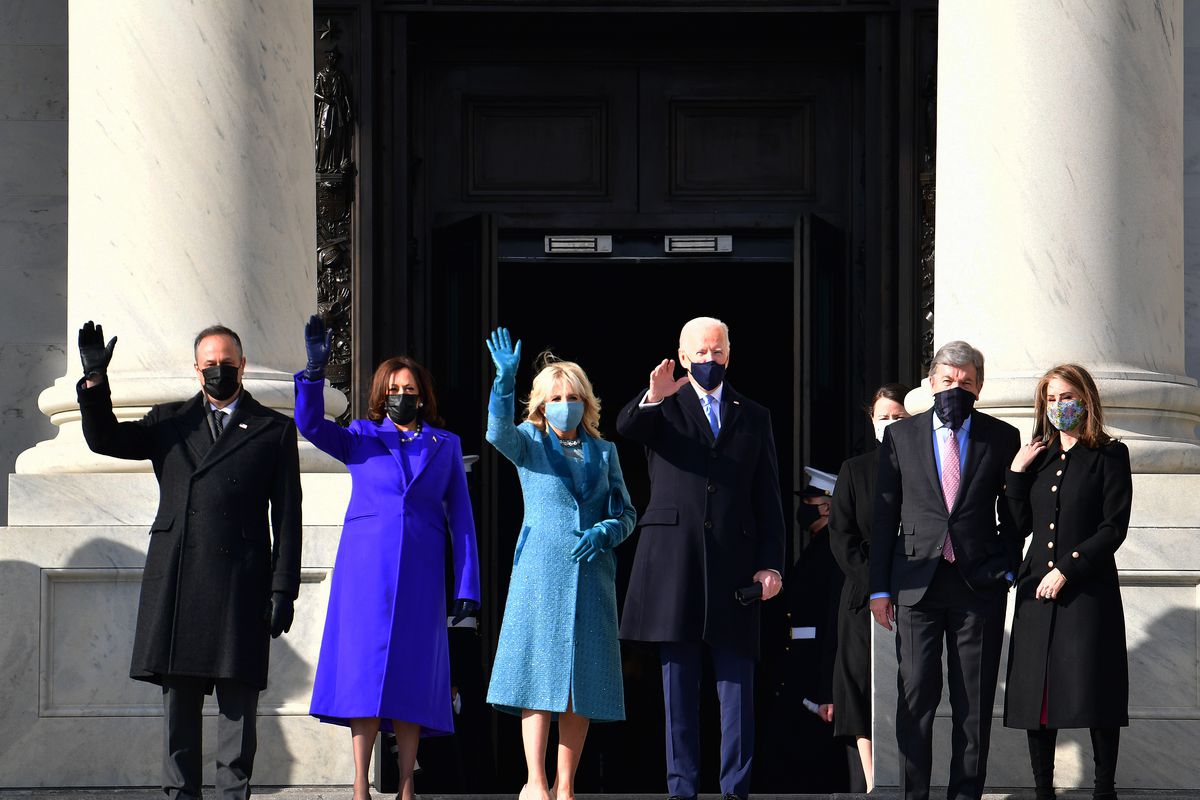
A required proper-presentation before the adoring public … complete with Covid-inspired masks!


Biden is sworn into office
The new President now addresses the nation
He talks of the glory of democracy … referring to how it proved itself in choosing him to be president! … in contrast to the violent mob that so recently raided the Capitol building. He talks about the importance of reuniting America … against extremism, violence, etc … and lies. He stresses the importance of tolerance … and listening to each other.
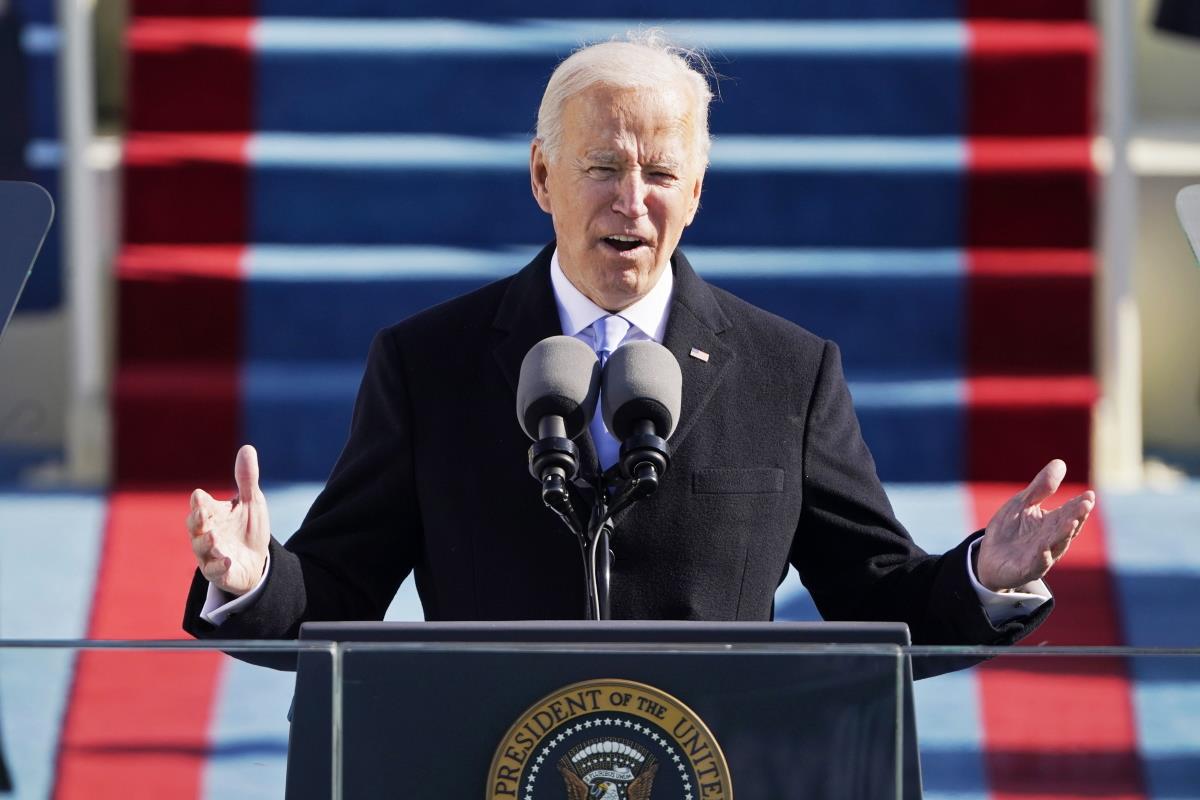
He gives the idea that he will be one who will lead through consulting with others … rather than just dictating policy.
Time will soon (very soon) reveal how well he will live up to those excellent political-moral ideals.

In any case, typical of such events, former presidents (Clinton, Bush Jr. and Obama) and other key officials make their presence felt.
But … where did all the masks disappear to?

Tragically not-present is former President Trump
Biden’s Washington universe. Actually, it must be pointed out that as much as Trump was a total “Washington outsider” – and was hated for it – the new President Joe Biden was a “Washington insider” – and admired by the Washington political Establishment (most notably the Washington press corps) for it. From age 30 on, when he was first elected to the U.S. Senate (as its 6th youngest freshman senator ever!) representing nearby Delaware, Biden had lived for 48 years in a world connecting his relatively nearby Delaware home with his job in Washington. In short, the “universe” that Biden lived in, and had done so for almost half a century, was a very singular universe, one that worked in a very precise, Capitol Hill way, backed up by Washington’s huge bureaucratic universe. This was the world such as Biden knew it, from end to end. Indianapolis, Kansas City, Fort Worth, New Orleans, etc. had no personal meaning for Biden. As a Washingtonian, Middle America was just simply not his world. True, there was Wilmington, the one part of America outside of Washington that Biden was familiar with. But that served him simply as a Washington suburb.
And just as he was a Washington insider, so also was he a solidly Democratic Party veteran. The party too was his world, a force that fed his spirit, shaped his vision, and commanded his total loyalties.
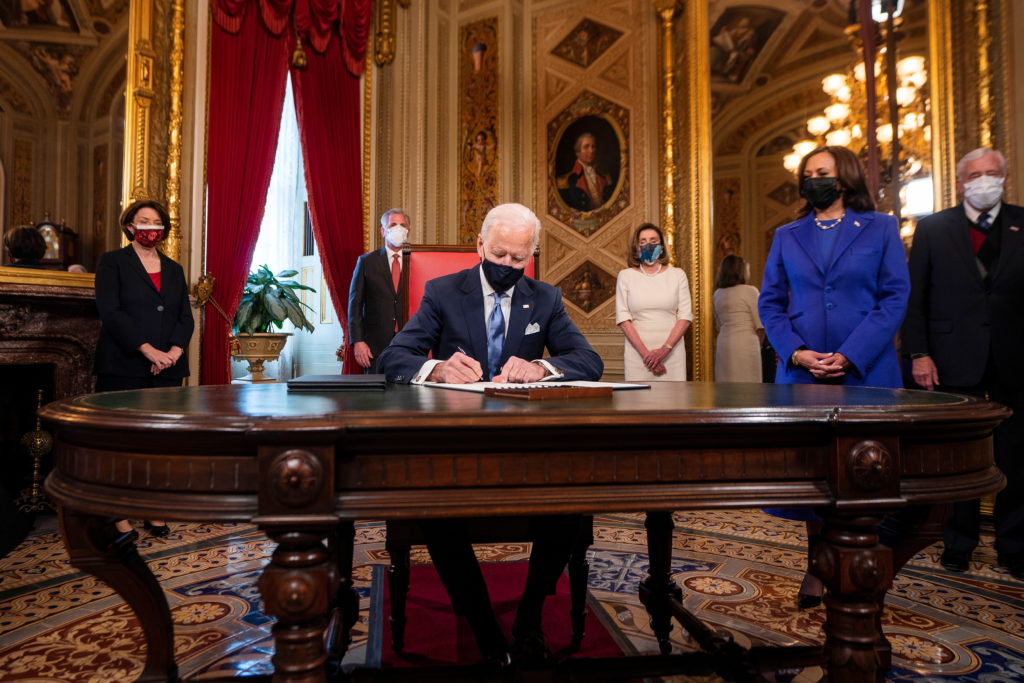
Here he is going to work, even on his inauguration day itself … issuing 17 executive orders on that day alone. And everyone is back in proper presentation (for the press photo-shoot), masked and standing six feet apart!
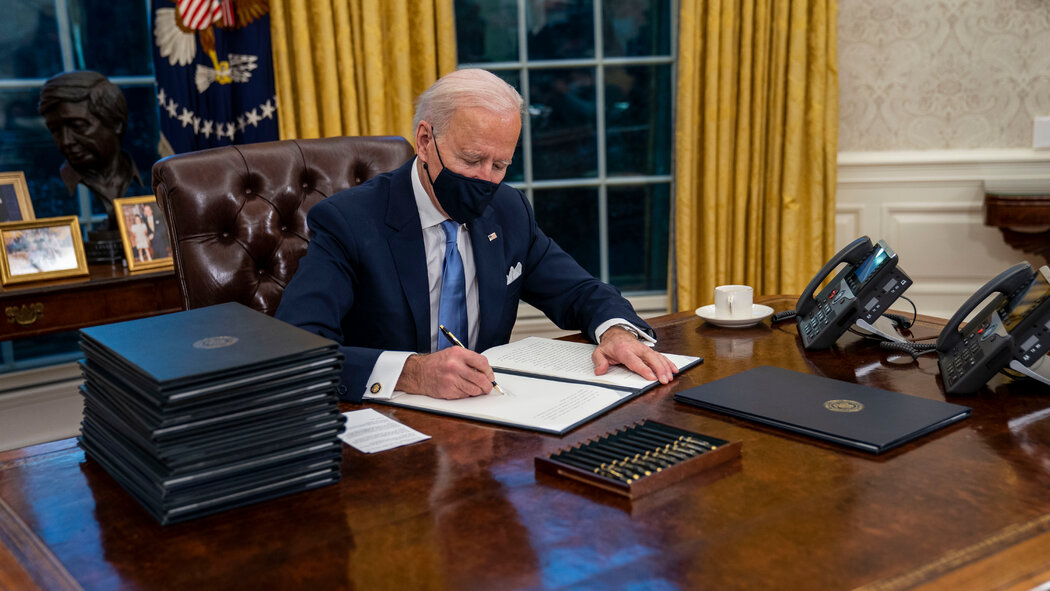
For one who just hours earlier claimed to want to work together with others … this kind of ruling by unilateral presidential decree seems to be a major contradiction

Of particular interest is action relating to the pandemic (upping mask requirement for federal workers) Looking on are Vice President Harris and Dr. Anthony Fauci (the government’s top infectious disease expert)
Born into Middle America. Biden was born in November of 1942 – thus qualifying him as a socially compliant “Silent” rather than as a renegade “Boomer” – to an Irish-Catholic family. These two items would also define him deeply as he moved forward in life.

Joe Biden at age 10 (1953)
His father was a hardworking furnace cleaner in Scranton, Pennsylvania. Then, when Biden was 13, the family moved to Delaware, where the father worked as a successful used-car salesman. In short, Biden was raised in very typical Middle American circumstances. It was a good start.
But he was also a quite ambitious youth, who sought greater things for himself in life. He worked hard to earn the money so as to be able to attend the prestigious Archmere Academy. Here he performed well as a student and athlete. He then went on to the University of Delaware, ostensibly to major in political science and history, though it would appear that his real major was sports, girls and parties.

Biden at the University of Delaware
And that is what led him at spring break first to Florida and then Nassau, where he met Neilia Hunter – and got more serious again about things. He brought up his grades, and was accepted in 1965 to Syracuse University Law School – where he would also live close to Neilia. Indeed, the two would marry the next year.
Unfortunately, try as he might, he was not a great competitor in the world of legal academics, and ranked grade-wise 76 out of his graduating class of 85 students. But in 1969 he passed the bar exam, took a position as a public defender, and subsequently formed a law partnership with a friend. However, he found corporate law to be uninteresting and criminal law poorly paid. Thus the very next year (1970) he ran as the Democratic Party candidate and was elected to the New Castle County Council, beginning his public career.

Biden and his sister Valerie during his 1970 run for a position on the New Castle County Council
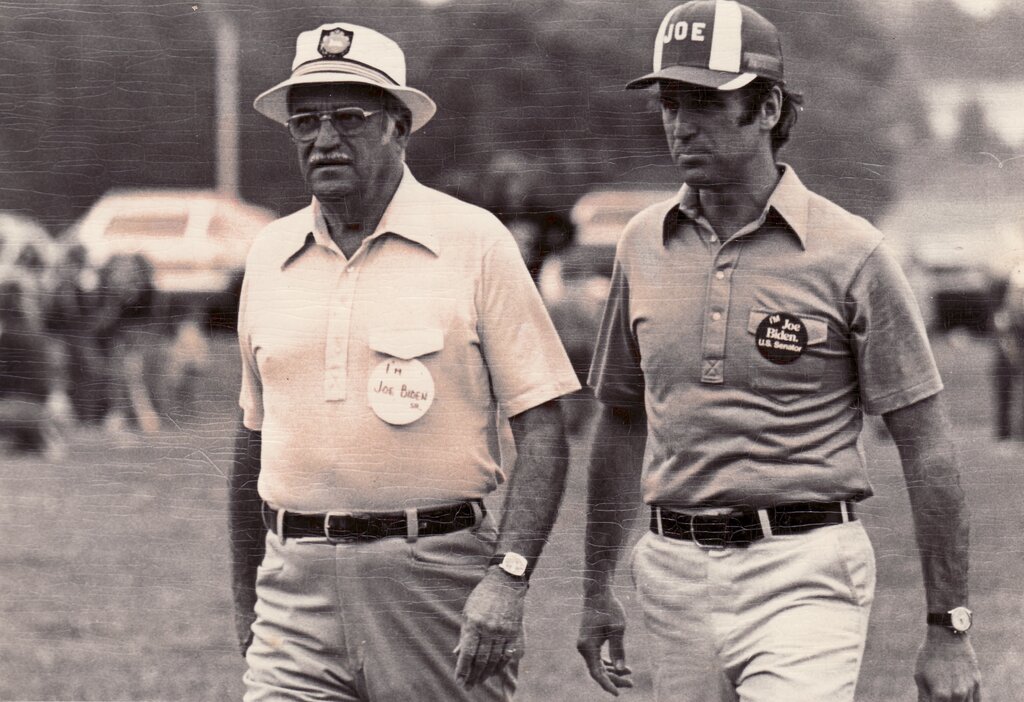
Biden and his father
US Senator (1972-2009). Most amazingly, at only age 29, he decided to run for the U.S. Senate against the veteran Republican Caleb Boggs. Actually, Boggs had wanted to step down from the position, and ran again only upon the urging of his fellow Republicans. But Biden was the ambitious one, he and his family working hard to bring him to public notice, and by election time the next November Biden managed to pull ahead of Boggs.

Biden with his wife Neilia and sons Hunter and Beau

Joe and Neilia Biden and daughter Naomi
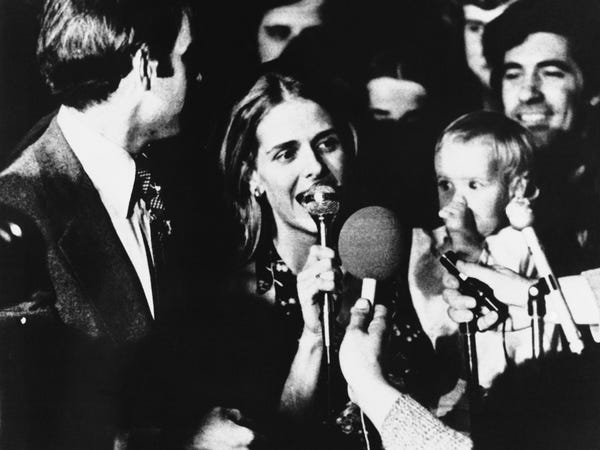
Neilia speaking on election night (with daughter Naomi on the right) – November 1972

Biden … upon announcement of his 1972 victory in the race as U.S. Senator (from Delaware)

Biden and Neilia celebrating Joe’s 30th birthday with their sons Hunter and Beau – November 20, 1972
And then, before that month was out, deep tragedy hit Biden and his family, when his wife and daughter were killed in an auto accident, and his two boys Beau (age 3) and Hunter (age 2) hurt badly.

Beau and Hunter survived but had to be hospitalized
Biden was shattered … and considered not taking up his new office as U.S. senator. He confessed later that he even felt suicidal … and was very angry at God.
It is easy to understand the anger Biden was feeling against God, and his numbness when he thought of his approaching responsibilities as U.S. Senator. He thought about simply quitting … even life itself.
But Senate leader Mike Mansfield worked hard to get Biden not to quit but instead to take up his calling as U.S. Senator. And so he did. But as it was, Biden would be sworn into office, not in Washington but at the hospital bedside of his son Beau.

January 1973 Biden is sworn in as U.S. Senator (son Beau in the foreground)
Biden would meet three years later in 1975 and marry in 1977 his second wife, Jill Jacobs.

Joe with his sons Beau (left) and Hunter … and his wife Jill Jacobs.
He met Jill on a blind date arranged by his brother in 1975

Joe and Jill in their early years together – 1975
In the Senate his career path was fairly typical, as were also his Democratic Party loyalties, especially during the latter part of the 1970s when he came to work closely with the Carter Administration.

Senator Biden and President Carter in 1978
(Biden had been the first Senator to support Carter in his 1976 decision to run for the presidency)

They would remain close
Joe and Jill were very much Catholic in religion
which Joe often made very clear

Jill and Joe meet Pope John Paul II at the Vatican – April 1980

Vice President Bush leads Biden in a swearing-in ceremony – 1985
During the 1980s he achieved the position as the ranking minority member of the Senate Judiciary Committee, in time to “Bork” Reagan’s Supreme Court appointment (Bork was too conservative for Biden’s taste), and then in 1991, as that committee’s actual chair, he was one of the opposing votes to the Supreme Court appointment of Clarence Thomas.
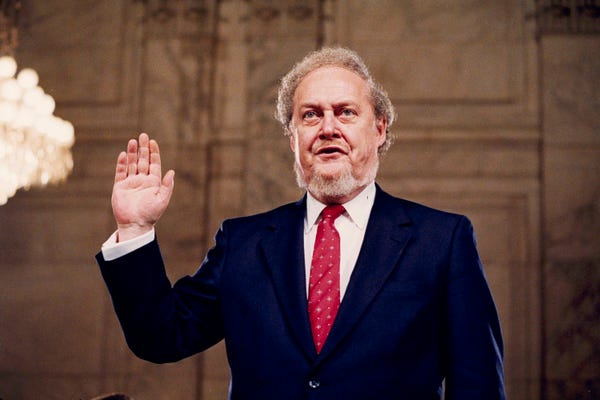
In 1987, President Reagan nominated Judge Robert Bork for the position as U.S. Supreme Court Justice. The appointment went to the Senate for confirmation – September 1987 … and the preliminary hearing was assigned to the Senate Judiciary Committee, which Biden chaired (chairman 1987-1995). There Bork was opposed strongly by Biden … who was chiefly responsible for Bork’s failure to be appointed as U.S. Supreme Court justice.

Biden “Borking” (cutting down the appointment) Bork
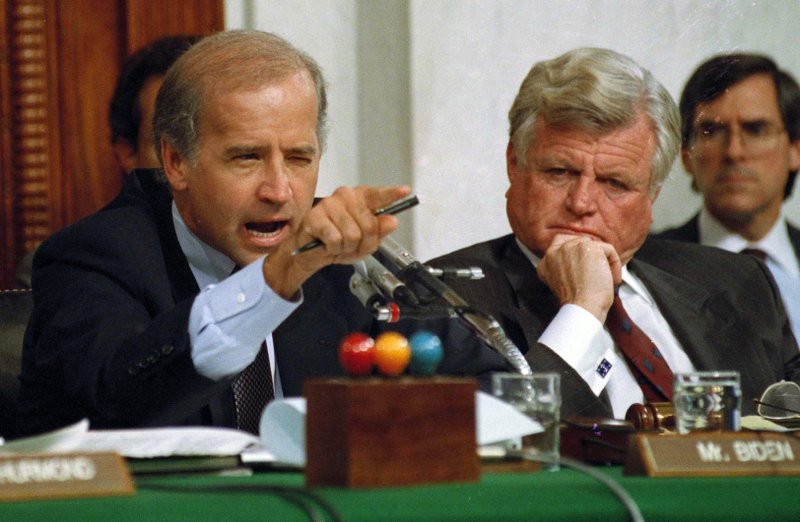
Then Biden doing the same … “Borking” Supreme Court appointee Clarence Thomas in 1991 … although the appointment ultimately passed in a full Senate vote (largely along party lines)
Biden later claimed that he did not do enough to protect Anita Hill from the demeaning inquiry of the other male members of his Judiciary Committee, though in fact that was their job … to scrutinize Hill’s accusations of Thomas’s “inappropriate behavior,” especially when other women who had worked with Thomas told a very different story than Hill’s. Ironically, sitting next to him is Ted Kennedy … hardly the bastion of moral purity that Biden presumes he is defending.
But he was also active on the Senate Foreign Relations Committee, opposing Bush, Sr.’s decision to intervene in Kuwait against Saddam Hussein. But he was much more supportive of Clinton’s decision to get involved in Yugoslavia, in fact, now as ranking minority member of the committee, he advocated a strong stand in Bosnia even before Clinton himself had decided to do so. He would also be a strong supporter of American intervention in Kosovo.

to take on the ethnic cleansing crisis engulfing that highly divided society
Then in the years of the Bush, Jr. Administration, Biden served as the Committee’s actual chairman, at least during the years 2001-2003 and 2007-2009. Initially he was a strong supporter of Bush’s intervention in Afghanistan and Iraq.

Here he is in Afghanistan, meeting with Afghan women’s rights leader Sima Samar – January 2002
He then backed away from that position, offering the proposal that Iraq be simply federated into three different ethnic regions (Arab Sunni, Arab Shi’ite, and Kurdish Sunni). But he could gather no serious support for the proposal. Then in 2007, he found himself strongly opposed to the “troop surge” in Iraq, which to his surprise (and the surprise of many) actually quieted things down in Iraq.
Presidential runs. Then in 2007, something he had long had his eye on, namely the U.S. presidency, seemed to be a possible goal to be pursued.
Actually he had undertaken just such an effort back in 1987, and had the effort backfire badly when reports came out that he had plagiarized a law school paper and had exaggerated greatly his standing at graduation, the negative publicity being the probable cause of a serious life-threatening brain aneurysms and a pulmonary embolism, which had him hospitalized in February and then again in May. He dropped out of the race, and was even away from the Senate for seven months.

Biden announcing his decision to run for the U.S. presidency at the end of Reagan’s term in office – June 1987
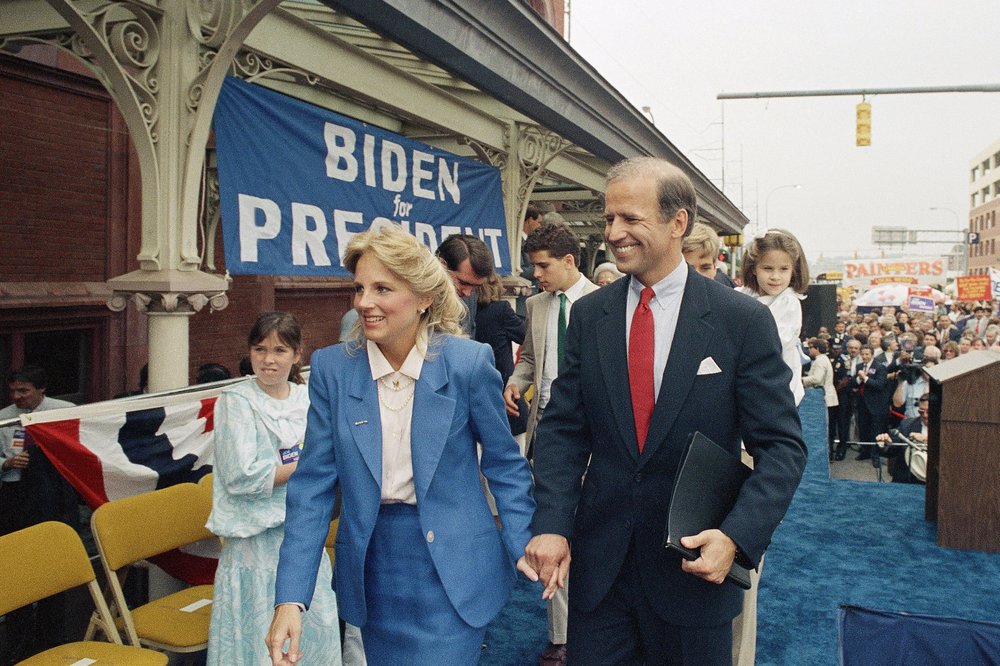
Joe and Jill begin their campaign

Biden had to undergo two critical surgeries. Here he is with son Beau after the first operation. He would return to his Senate work seven months later.
And now he tried again in 2007 as the Bush, Jr. presidency was coming to a close.

Here he beams after signing candidacy papers in time for the all-important New Hampshire primary
But he found himself up against strong Democratic Party contenders, Hillary Clinton and Barack Obama.

Biden, Obama and Clinton prior to the start of a Democratic presidential primary debate – 2007

And he campaigned hard for the presidential job
Thus it was that he dropped out of the race early on when the Iowa primary brought him only one percent of the vote!
Vice President (2009-2017). But Obama needed someone to “balance” his ticket, and asked Biden to join him as his running mate. And so Biden was elected Vice President in 2008 and re-elected as such four years later.
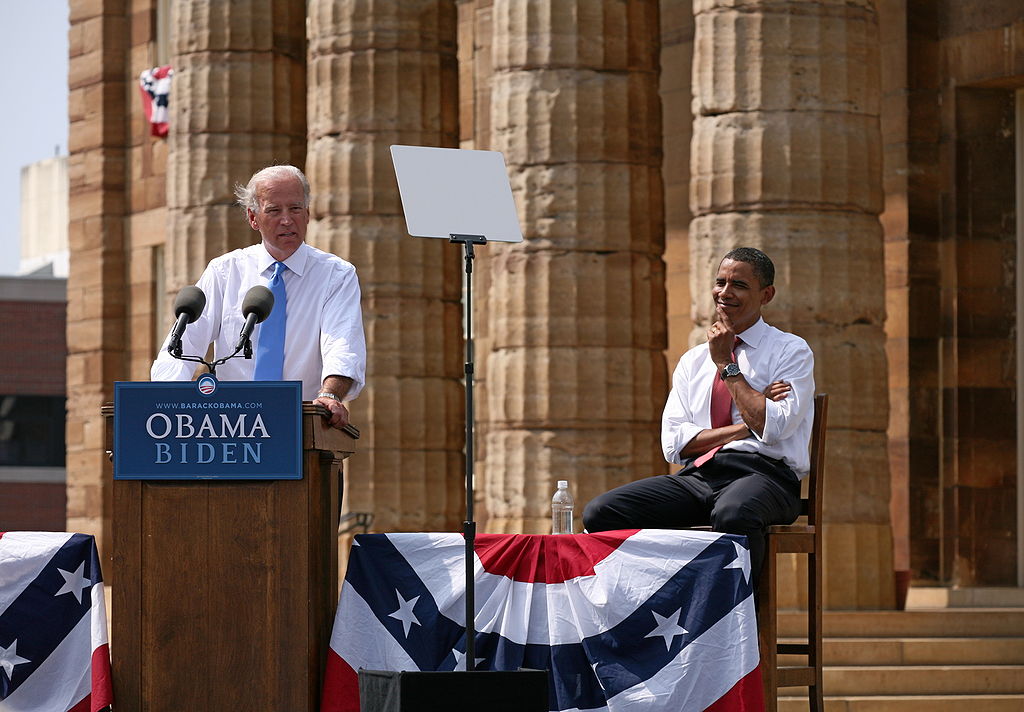
Biden and Obama campaigning together – 2008

November 4, 2008 Obama and Biden celebrating together at their election night party

Biden and Obama would work together closely. Here Obama is congratulating Biden for his work helping get a debt-ceiling bill passed in Congress – 2011.
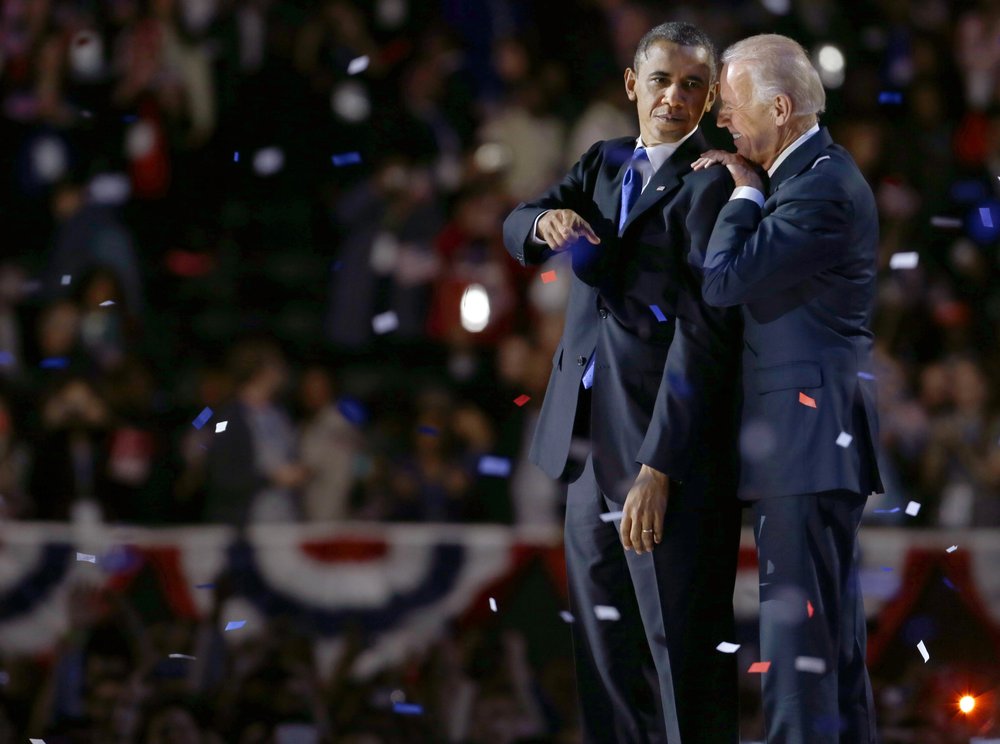
November 7, 2012 – Another election night party, with Obama and Biden understanding that they had defeated Republican candidate Mitt Romney (and his running mate Paul Ryan)
However during his second term, Biden found himself to be less strategic to the Obama Administration.
But even more hurtful to Biden was the loss to cancer in 2015 of his 46-year-old son Beau. Beau had conducted himself most admirably in the field of law, military service and presently as Delaware’s Attorney General, earlier turning down the idea of running for the US Senate – because he did not want such a gain simply because of his family “legacy.” The death of Beau came as a huge, crushing blow to everyone.

Joe and his son Beau at the 2008 Democratic Party national convention

Beau’s casket being carried into church in Wilmington – June 2015

Biden at his son’s funeral
And it was a reason that Biden announced that he would not be running for public office in 2016. He would throw his support to Hillary.
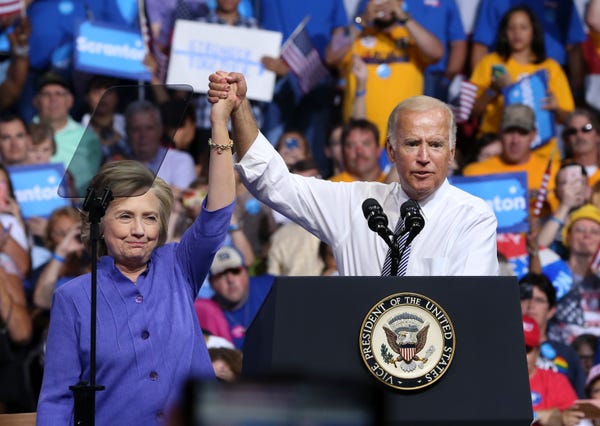

Biden meeting with Mike Pence, soon to be his replacement as Vice President

Biden tears up as Obama, in one of his last acts as outgoing president,
awards Biden with the Presidential Medal of Freedom (January 2017)
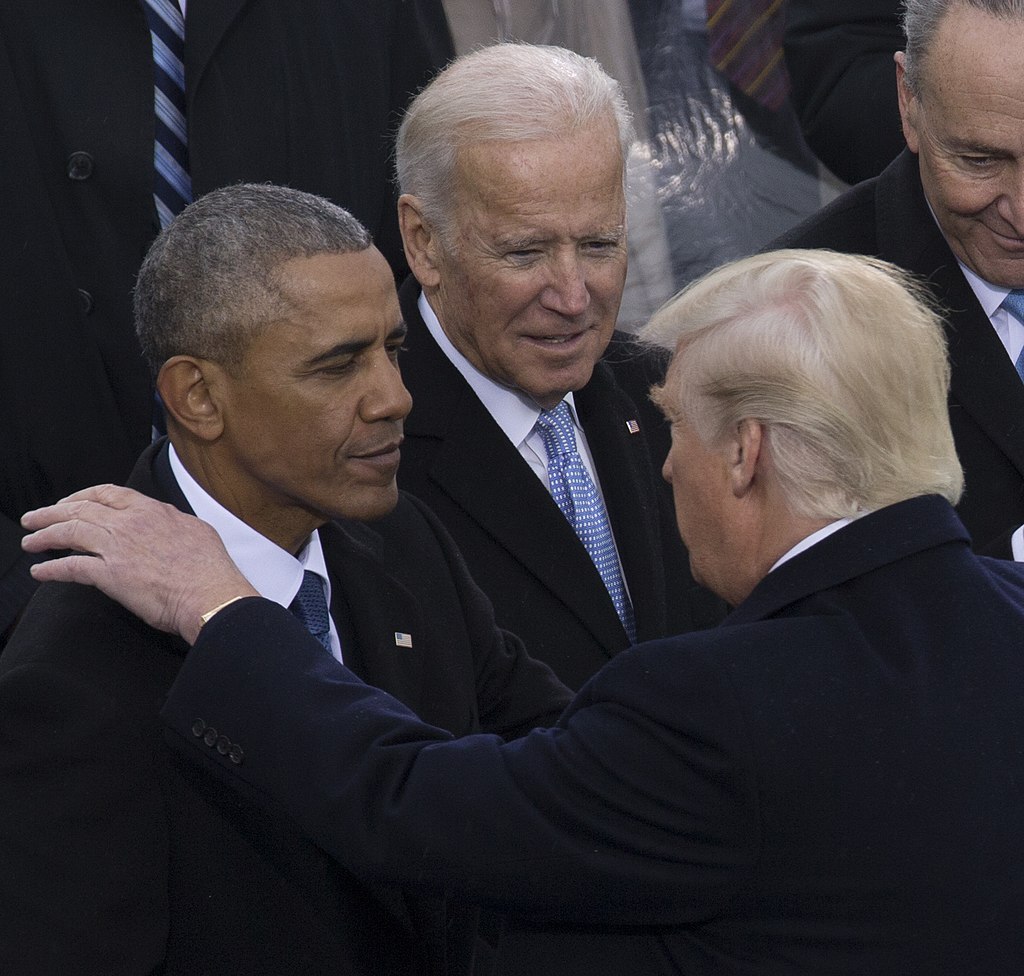
Obama and Biden greeting Trump at his inauguration – January 20, 2017(Trump would not return the favor four years later at Biden’s inauguration)

Hunter did not deny the relationship with Hallie. Instead, he asked his dad to bless the relationship … which Biden did: “We are all lucky that Hunter and Hallie found each other as they were putting their lives together again after such sadness. They have mine and Jill’s full and complete support and we are happy for them.”
But two years later (during Biden’s run again for president) the two would separate.
The 2020 presidential campaign. The next couple of years Biden busied himself teaching (University of Pennsylvania), writing a memoir (Promise Me, Dad), and doing a lot of public speaking, not only keeping himself visible before the public eye but making him quite rich from speaker’s fees and a writing contract.
However, as the 2020 election season came around, he was ready to announce his candidacy (April 2019), even though if elected he would take office at the age of 78 – an unheard-of age to be taking on such a responsibility. And he would be running against the very aggressive Trump, who had the reputation of knocking down anything that got in his way.
But run Biden did, finally securing the Democratic Party presidential candidacy, and then going on to win the election.

Biden announcing his third run for the U.S. Presidency – May 18, 2019

Joe and Jill Biden kicking off their campaign together in Philadelphia

Biden at one of a huge series of Democratic Party debates – January 14, 2020
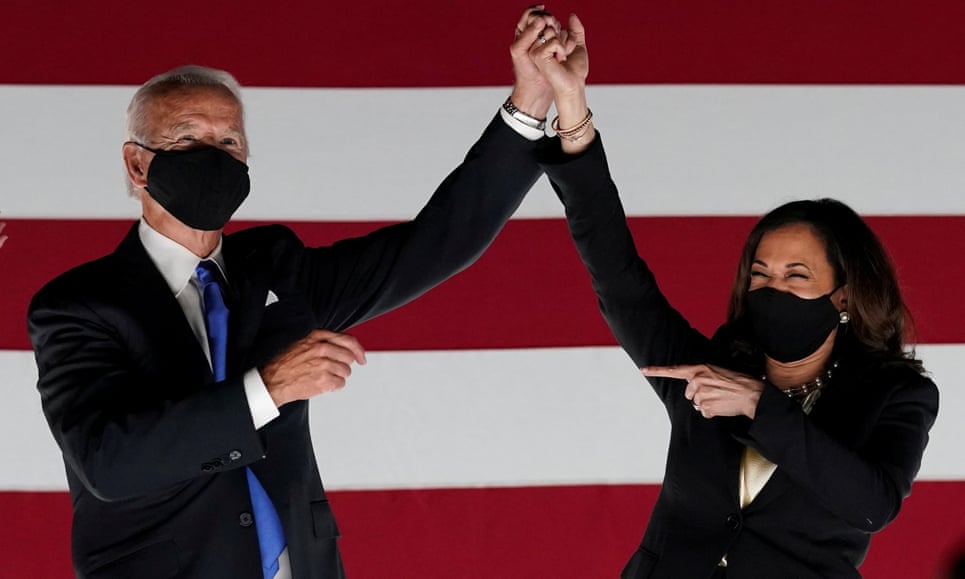
Biden announces Kamala Harris – as the required “woman of color” – to be his vice-presidential running mate – March 2020
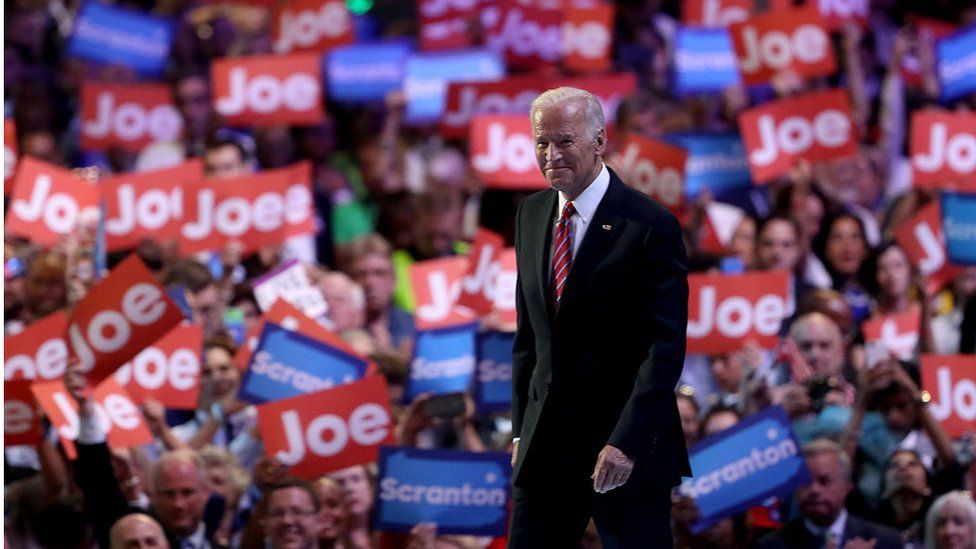
Biden getting his official nomination at the Democratic Party national convention (August 17-20) in Milwaukee … participants greatly reduced in number because of Corona-virus restrictions (but notice: no masks!)

Trump and Obama at their 2nd (and much less crazy) presidential debate – October 22, 2020. But at this point 40 million Americans had already voted by mail … and the ratings did not really change anyway … despite this being a much more civil debate.
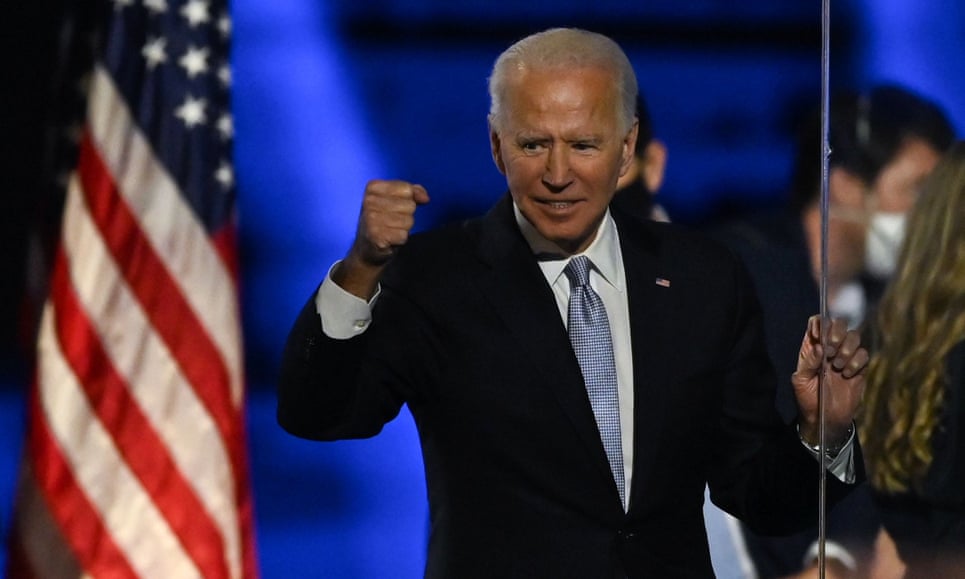
Biden speaking before a Wilmington gathering upon the announcement of his electoral victory – November 2020

INTO THE “BIDEN ERA”
Very quickly a number of public issues pushed forward as America turned in new directions in the new Biden Era.
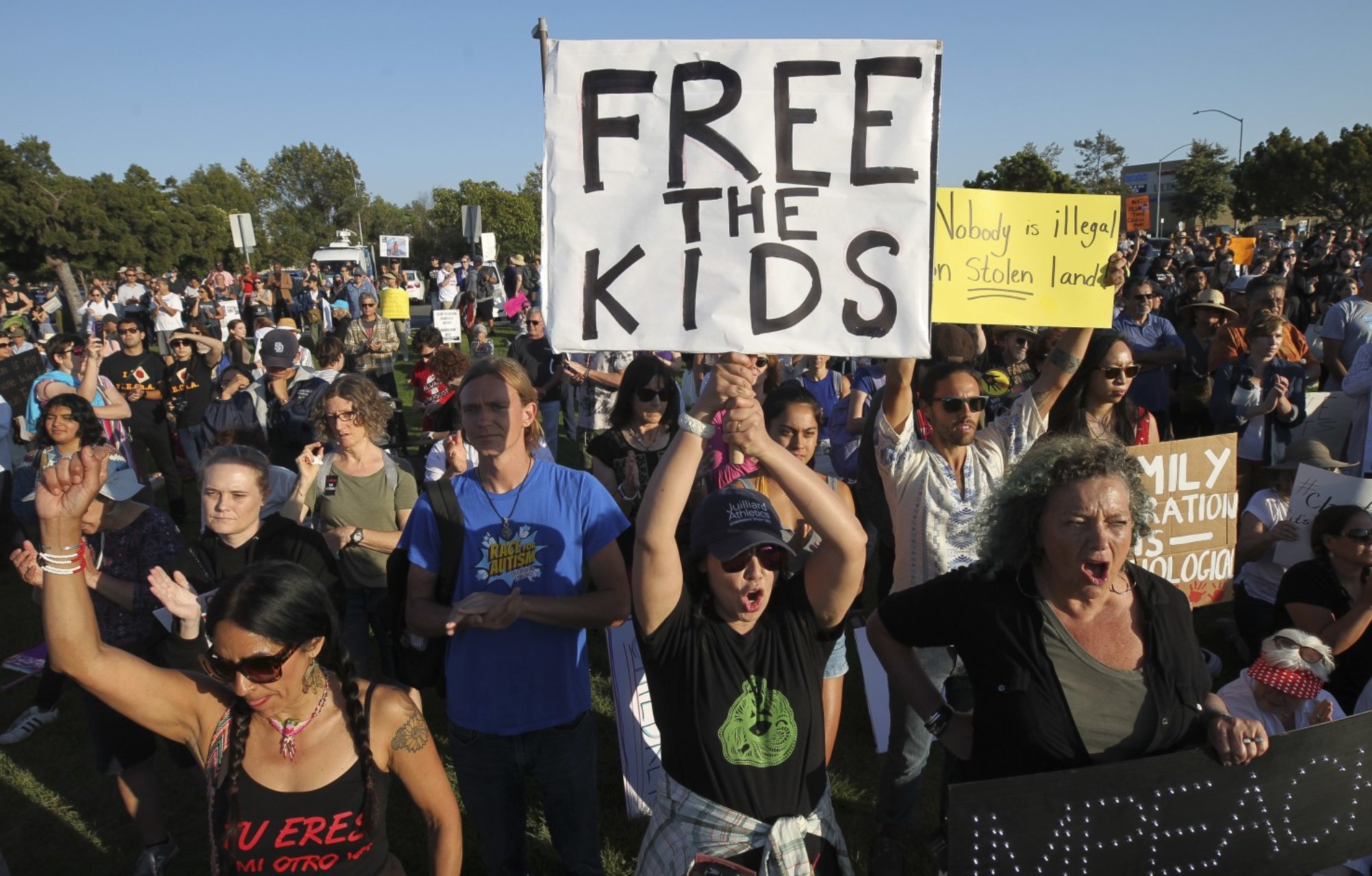
The rush for the American borders. Not surprisingly, America is a very attractive destination for those Central Americans – and a huge number of Haitians – wanting to escape the poverty, crime, horrible hurricanes, and more recently the Covid-19 pandemic. But is America itself ready to accept a flood of such people, a flood that would certainly change deeply the very social-cultural character of the nation?
Biden, in his run for the presidency, made it very clear that he and the Democratic Party were strongly in favor of opening its doors to just such a flood of people … claiming humanitarian motives in doing so. The Republicans, backed by a strong Trump resolve, were highly opposed … advocating instead more walls and tighter restrictions designed to slow up and possibly even halt an apparent flood.
And of course this supposedly placed Biden and the Democrats on superior moral ground as the more “humane” party … in comparison to the “inhumane” nature of the Republican position. But in fact, those that understood the politics behind both positions in this debate also understood that the Democrats were looking forward to a grand increase in their electoral support by bringing these immigrants into the American political process – probably with quick amnesty for them as “illegals,” followed up by an equally speedy naturalization process.
It is well understood by both parties that these immigrants come from a culture that promised welfare (socialism) in return for their support … and that these immigrants, by political instinct, would certainly be receptive to the same offering in their newly adopted homeland. In short, they are most likely to vote Democrat if given the choice … and both parties know this.
But one fact is inescapable, namely, that it is the supposed humane character of Central American Socialism that is the reason their economies failed, most cruelly in Honduras … but bad elsewhere in Central America. And with this economic collapse has gone the collapse of the moral foundations of these societies… as the people scramble for whatever material support they can find, even if it comes violently. Thus an exploding crime rate has also accompanied this economic collapse in those countries.

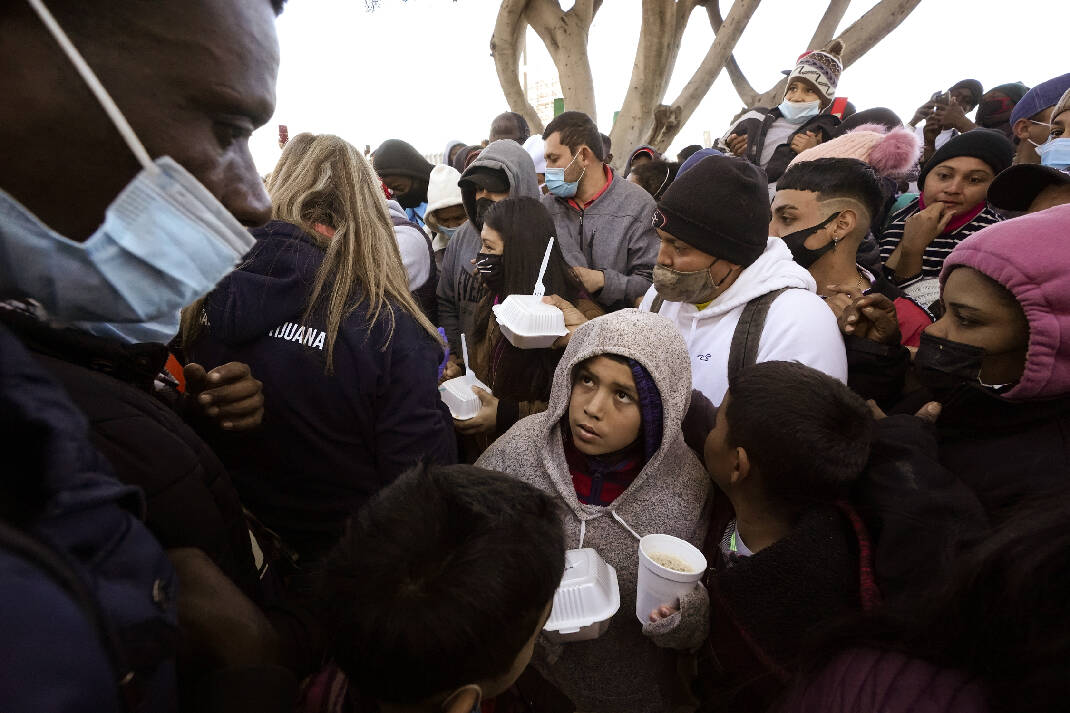
Guatemalan soldiers attempting to restrain a caravan of Hondurans heading north to America … through Guatemala – January 2021

The rights and duties of the American voter. Another issue which follows the lines of the immigration debate is this matter of how much discipline does the American voting process need in order to maintain its integrity (the Republicans) or the broadness of its reach (the Democrats). It is well-known that many American residents do not vote, for various reasons. The Democrats suspect that those non-voters would likely be Democratic Party voters if they would but just turn out. Therefore it becomes imperative for the Democrats to make the vote as easy as possible for everyone. And Covid-19 certainly strengthened that position, with the sending out of ballots that could simply be mailed in, well ahead of voting day, and even in some cases in an allotted time period after that date. The Republicans fought this move, claiming that mailed-in votes have no way of being authenticated as to who it was that actually voted … and how many times they might have voted, and what ultimately happened to those mailed-in ballots.
Trump even went on to claim that he had lost the vote in a number of states because of the ease by which fraud was brought into the new voting dynamic … although he could offer no actual evidence for this claim. But it did raise the question: what can be done to preserve the integrity of the vote?
Republicans want the vote to be done the old way: at a voting station, by a person on record as eligible to vote in that district, and with proper identification, usually just a driver’s license … although identification cards are supposedly available everywhere for non-driving adults. Democrats answer that such restrictions are designed merely to discourage the nervous voter (supposedly a Democratic Party voter) and thus should be disallowed by law, which the Democrats are working on getting put through (again, principally by way of the federal courts).
This became such an emotional issue that even corporate America jumped in on it … with the state of Georgia finding itself at the center of a deeply emotional battle over its tightening the disciplines of voting in that state. Georgia’s new standards were actually no more restrictive than, say for instance, New Jersey’s … except that New Jersey is generally considered to be a reliably Democratic Party state, whatever the disciplines, and Georgia is something of a critical swing state. Thus there was a call by Democrats to boycott Coca-Cola and Delta Airlines, headquartered in Georgia … in order to bring pressure to bear on Georgia to back down on its new identification requirements for voting in that state.
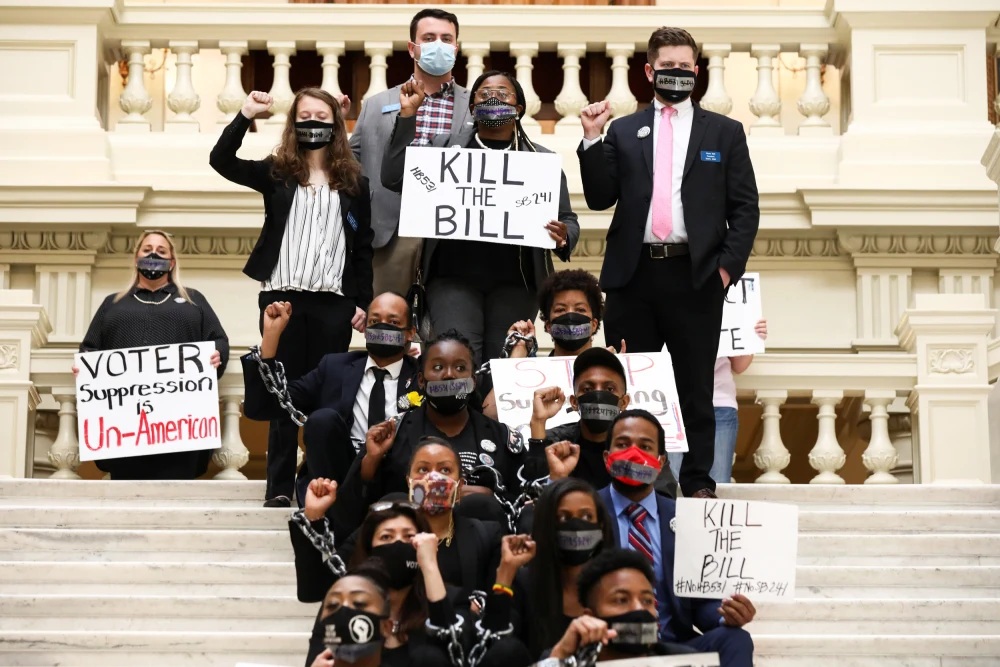
Protesters on the steps of the Georgia State Capital – Atlanta – March 8, 2021
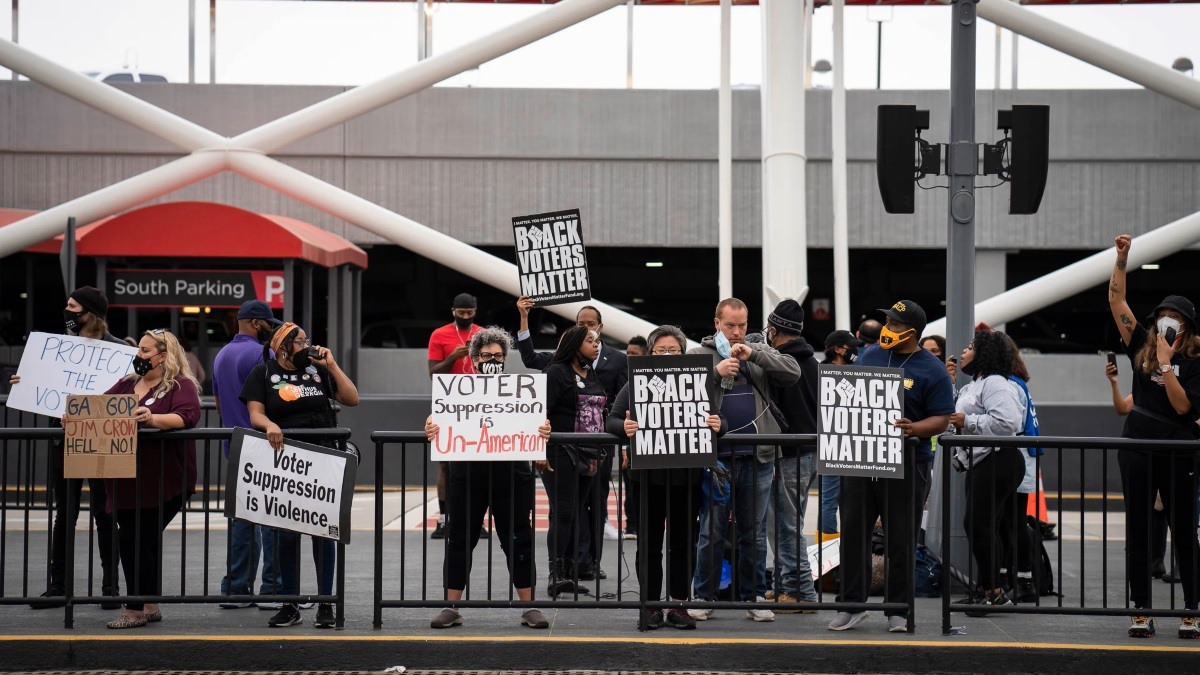
Protesters calling for a boycott of Delta Airlines (headquartered in Atlanta) – March 25, 2021
The Atlanta Journal-Constitution
Likewise the All-Star baseball games were pulled out of Georgia as punishment for the state’s new rulings … and American Airlines and Dell went on record in their loud opposition to the Georgia voting issue.
Congress of course jumped into the issue with its “For the People Act” (H.R.1), passed in the House along purely party lines, 220-210 … but held up in the Senate, not able to secure a majority there, The idea of this bill was to take away from the states their constitutional right to determine their own voting procedures, and give that right over to a federal commission … as if federal commissions were never politically partisan! Also, it eliminated all identity checks … making it possible for even illegal immigrants to vote. It is easily understandable therefore why the Democrats supported this measure and the Republicans opposed it.
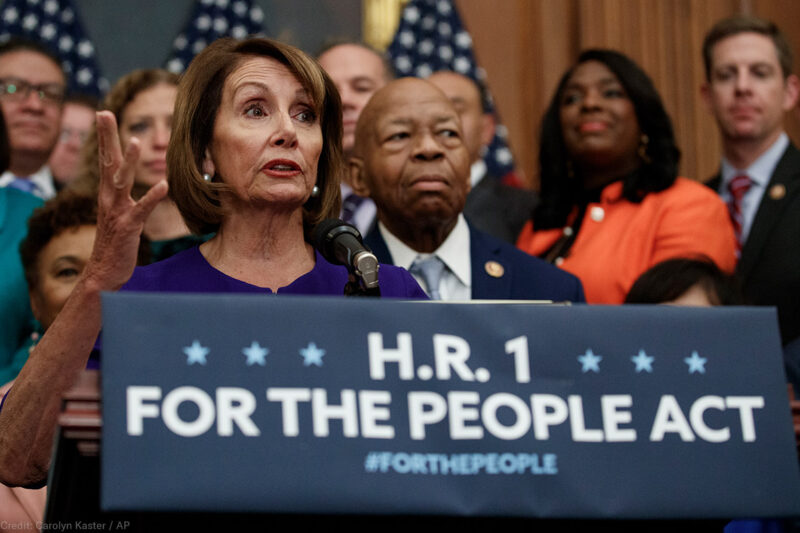
Nancy Pelosi explaining H.R. 1 (For the People Act)
And ultimately, it would be yet another step in ending the checks and balances system of the American Constitution, giving federal authorities in Washington yet another major piece of power by which to govern the country.
Making Washington, D.C. a new “state.” In early January of 2021, a bill was introduced with 202 co-sponsors (Democrats, naturally) to create a new state entitled “Washington, Douglass Commonwealth” (named after Frederick Douglass), with two voting Senators and one Representative allotted it, members of the Democratic Party to be sure. Whether this would require amending the Constitution (changing the provisions of the 23rd Amendment) or not was debatable, and how the American voting public at large stood on this matter also seemed debatable – depending of course on whose poll you consulted. Of course, Biden and Harris were also supporters of this action … though it seemed to gain no ground with the passing of time.
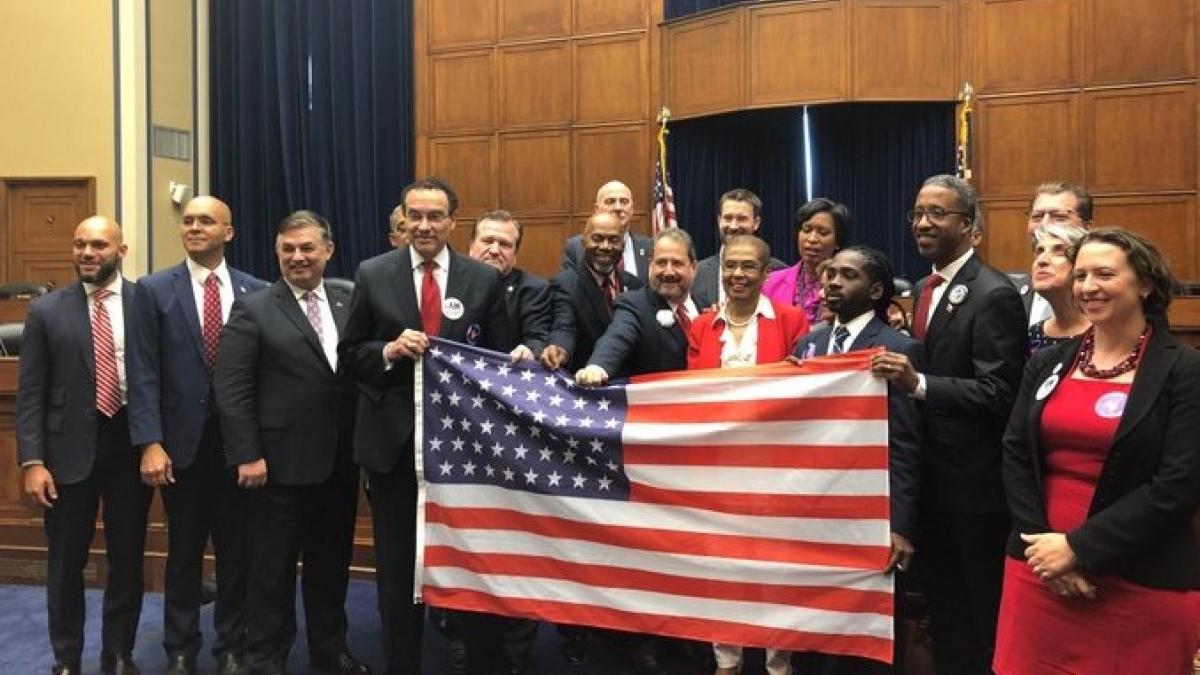
Congressional delegate Eleanor Holmes Norton and a new American flag with 51 stars … representing the inclusion of D.C. as a new state, Washington, Douglass Commonwealth. The House passed the bill enabling this development … along party lines (216-218) in April of 2021. But it stalled in the Senate.
But this effort was renewed in Congress at the beginning of 2025 … and then again in 2026 in Norton’s effort to make May 1, 2026 “D.C. Statehood Day.”
“Reforming” the Supreme Court. There has been much anger among Democrats over the fact that Trump was able to nominate three individuals to the Supreme Court, ending the small majority that the Left-leaning justices once commanded. Consequently, the Democrats have put forward the idea of “reforming” the Supreme Court … by adding four more justices to the bench, that is, by “packing” the Court with Biden nominees – something designed to swing the Court back to the Left politically. Roosevelt attempted such a “reform” in 1937 … and it backfired greatly – not even Roosevelt’s Democratic Party allies willing to go down this road when it appeared clearly that the American people were convinced that such “reform” was merely another form of political authoritarianism that Roosevelt was increasingly being accused of … at a time, the 1930s, when authoritarianism seemed to be a general trend around the world.
Remembering the Roosevelt episode, Biden moved cautiously on the matter, merely setting up a 36-member commission to “study” the issue carefully (April 2021). The Commission submitted its recommendations that same December. But ultimately, not much came of the effort.
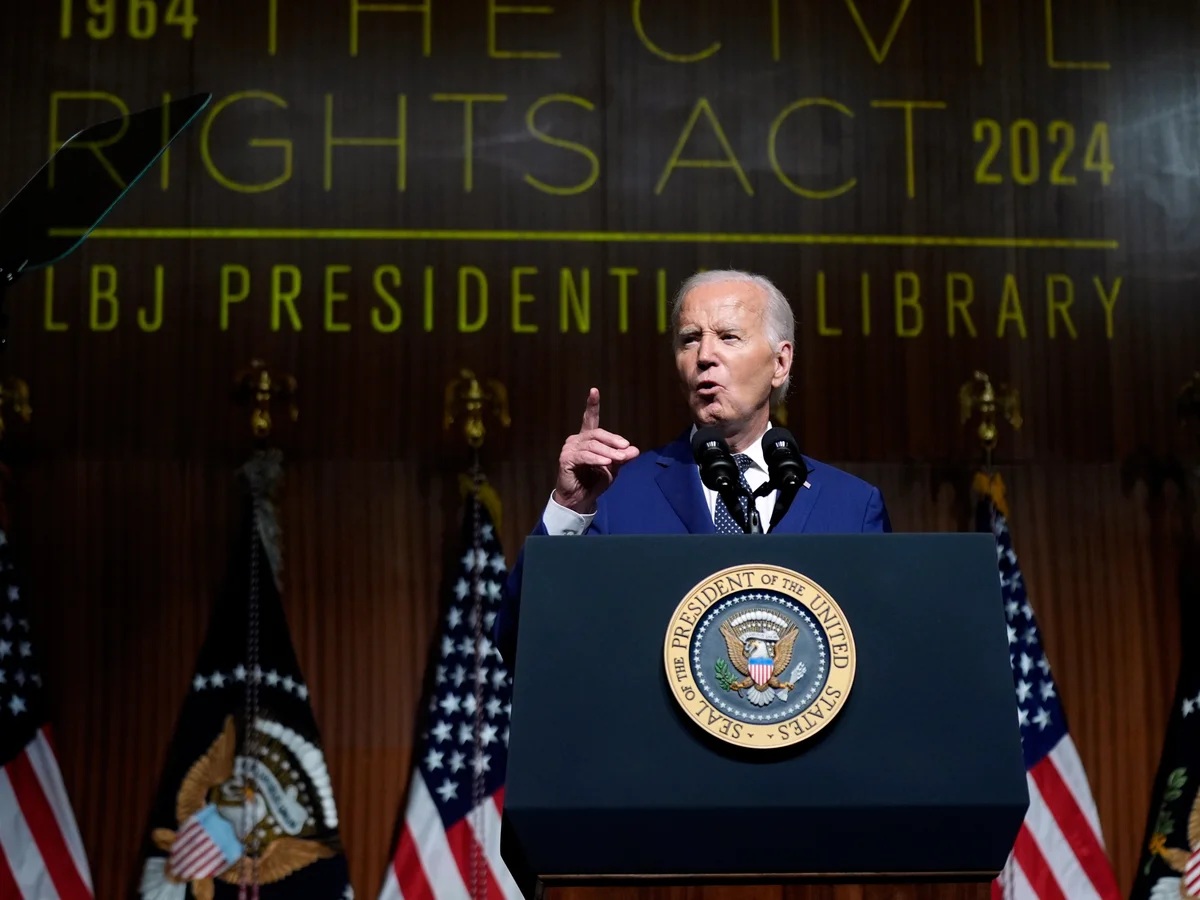
Biden taking a new tack on the matter, again calling for reforms of the Supreme Court (18-year term limit, a new code of conduct) – July 2024 (soon after his decision to step down from the 2024 presidential race).
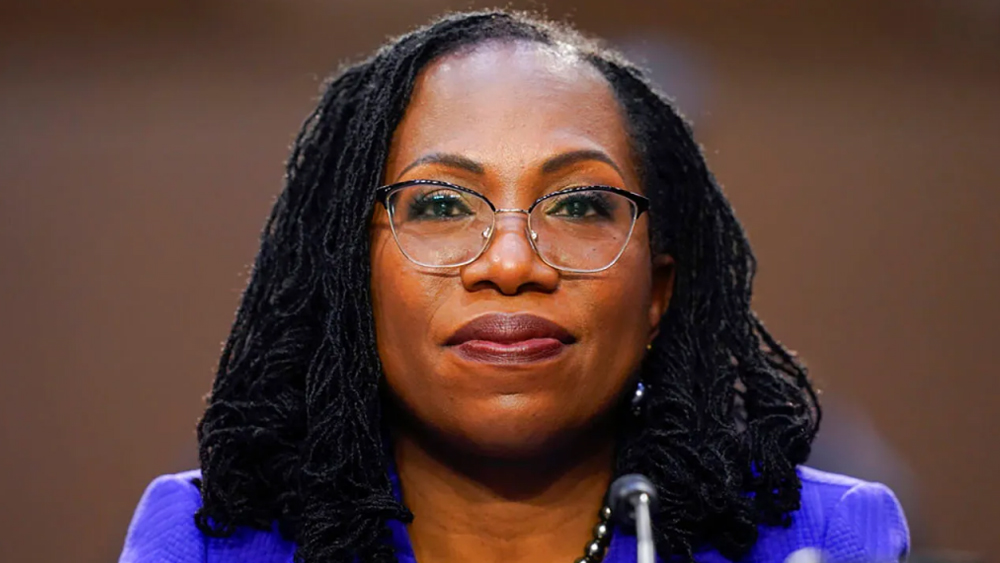
Biden’s Supreme Court appointment. When Stephen Breyer retired from the Supreme Court in 2022, most unsurprisingly, Biden looked to yet another “woman of color,” Ketanji Brown Jackson, to fill his vacated position … although it simply amounted to the replacing of one political Leftist with another of the same political outlook.
The debate over High-tech’s censoring of internet communications. Not surprising, considering the cultural power they command, some of internet’s biggest communities have jumped into the political arena. A former president of the United States, Trump, was banned from having any further public voice by Facebook, Google, Apple, Amazon, and a number of other internet biggies … for political-moral reasons of their own. But they do have the power. And they are most willing to use it.
This in turn raises some deeply serious questions. As anyone should know, a person, group, society, or whatever, can easily find any reason it wants – and justify it morally any way it wants – in order to manipulate and control the public voice. In short, these major sources of the public voice are completely free to shape and control that voice any way they want.
But such unlimited power inevitably leads to self-justifying tyranny. And for a free society such as America has proudly seen itself to be (relatively so, anyway), such control raises all kinds of questions … and fears. And questions and fears can go in most any direction.
What can America do to keep the public conversation open – and within bounds – and without the conversation referees (Facebook, etc.) deciding which part of the conversation they are going to allow and which part are they going to shut down?
This is only going to be an even more important matter in the fast-developing world ahead of us. And yet no one seems to have any good ideas on the matter. All that is heard is just more ideology, supported by clever moral argument. But it needs clarification and broad agreement in America … before such unashamedly authoritarian powers as China and Russia take a larger hand in the world of internet communication.

The Federal state’s growing share of the American economy. Biden and the Democrats pushed hard for a multi-trillion-dollar federal “infrastructure” program put forward by the Democrat-controlled House – which the Senate did its best (complements of a Democrat and Republican balance in the number of seats each holds in the Senate) to pare down in size … to avoid a further expansion of the government’s debt – growing rapidly and with no seeming restraint.
Biden claimed he would bring a $3.5 trillion budget closer to a balance by enacting new corporate taxes, raising the rate from 21% to 28% of corporate earnings … with the Republicans replying that to maintain corporate profitability, companies would be required to raise the prices of their goods and services to cover the new tax expenses, thus adding to an inflation rate that is already growing rapidly.
Furthermore, the Republicans wanted the Democrats to cut back on their “infrastructure” shift to this larger governmental role in managing or controlling the American economy … claiming that the Biden plan simply moved the country closer to Socialism. But the Democrats answered that these measures were badly needed … in order to move to a “carbon-free” energy world, improve local water-treatment operations, improve American education, and increase welfare support (the latter very important especially if the Democrats are going to be welcoming masses of immigrants to the country).
The Republicans of course indicated that they were willing to support about 30% of that figure … focused solely on “physical infrastructure,” such as roads and bridges.
Meanwhile, Democrats complained about how unfair it was that the Republicans were employing the filibuster rule to stall action on the program … even though they certainly were big supporters of the filibuster when the Republicans previously held the majority in the Senate. There always exists the possibility of getting around the filibuster by employing special “budgetary” techniques. But even then, with a 50-50 vote split in the Senate (which however Vice President Harris could break with her vote), trying to get around this opposition set a precedent that the Democrats realized that they might regret in the future.
In short, “infrastructure” was/is about ideology and politics … and not just about material development of the nation’s physical infrastructure by the federal government – which itself had only very limited constitutional support prior to Roosevelt’s New Deal and Johnson’s Great Society.
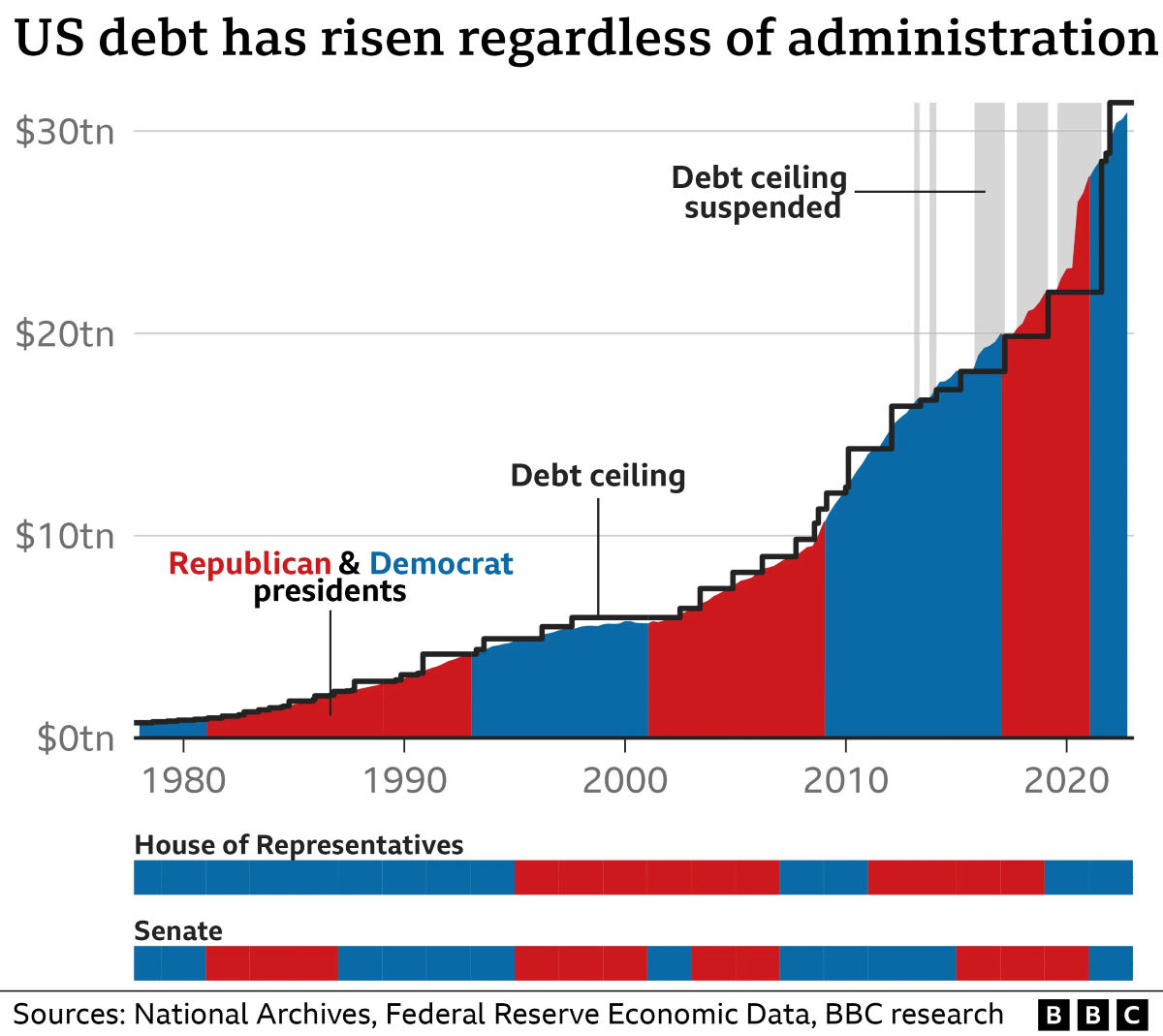
By the end of 2023 it had hit the remarkable figure of $33 trillion, with $1 trillion being added to it every three months at that point. Something drastic needed to be done to slow down this fiscal horror. But what?
The last time federal spending was brought under control was during the years of the Clinton Administration (1990s) … thanks to the strangle-hold the conservative Republican leader Gingrich had on government spending (which was not at all appreciated at the time by either the Democrats in Congress or the Liberal press!)

The Left-Right split in America deepens as the Supreme Court takes on the matter of Roe v. Wade.

Protesters gather outside Kavanaugh’s Maryland home – May 18, 2022. Someone had revealed that the Supreme Court was about to overturn Roe v. Wade
National Review

Angry pro-abortion protesters in front of the Supreme Court building – June 24, 2022
The Mainichi – Japan’s National Daily
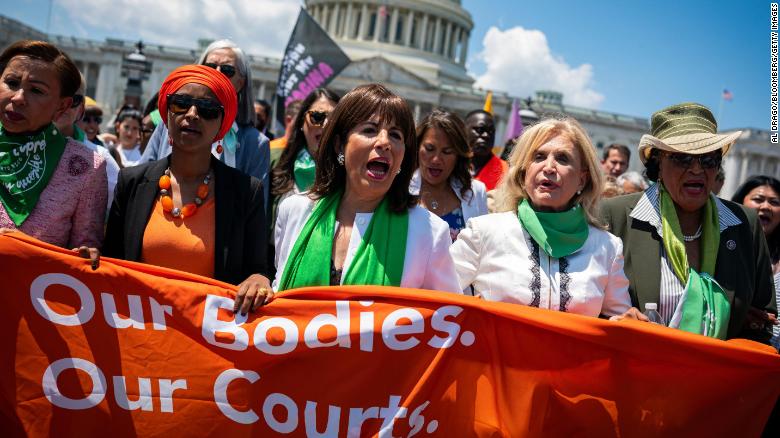
Democratic Reps. Nydia Velazquez, Ilhan Omar, Jackie Speier, Carolyn Maloney, and Alma Adams march from the Capitol to the Supreme Court to protest Roe v. Wade decision … and to be arrested (along with 11 other Congresswomen) – July 19, 2022
CNN
Going after Trump. The anti-Trump movement in Congress continued … led by Congress’s House Select Committee (created in July of 2021) which was investigating the January 6th events … and which was trying to come up with criminal charges against Trump (fraud, criminal conspiracy) which would put him out of political business and possibly even away in prison.
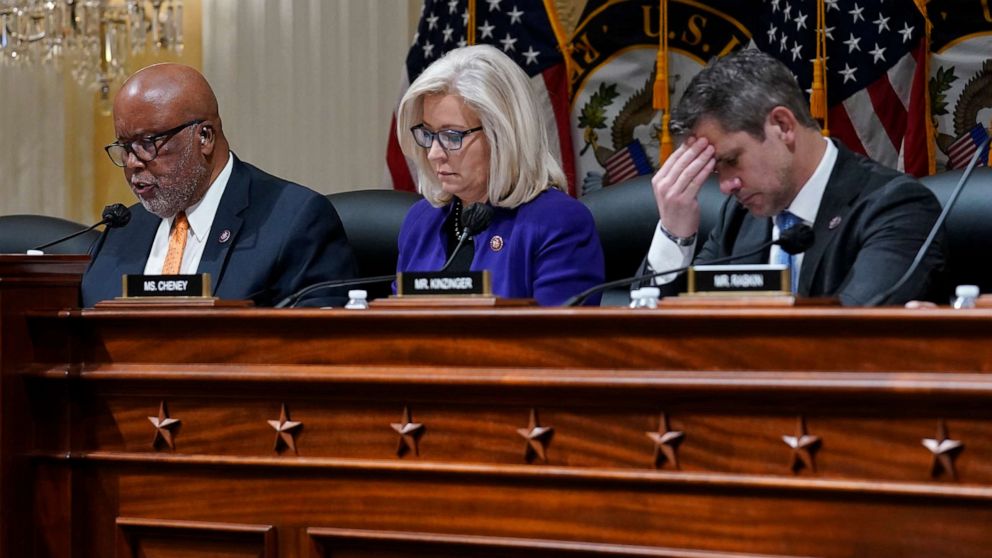
The Nancy-Pelosi-appointed House Committee is made up of 7 Democrats and 2 Republicans. One of the Republicans is Liz Cheney … who, for personal reasons, clearly wants to see Trump put away … and the other is Adam Kinzinger … the only two Republicans willing to serve on the committee.
Serious charges (which include prison terms) were also aimed at Trump officials for “contempt of Congress” when they have been ignoring the committee’s subpoenas demanding their appearance before the committee.
The committee submitted its January-6th report in December of 2022 calling for the Department of Justice to bring criminal charges against Trump. Special Counsel Jack Smith then began to put together just such a case … although when Trump was elected president in 2024 Smith brought the proceedings to an end (but only after releasing documents and findings calling for such a case) − in conformity to the Department of Justice’s policy of not prosecuting a sitting president.
The beginnings of another Christian New Awakening … at Asbury University? A massive Christian revival developed at Asbury University in Kentucky … starting up in February of 2023 and by that fall involving thousands of students. From there this spirit of Christian revival quickly spread to other college campuses.
It seems that Gen Z youth are not buying the secular worldview passed on to them by their Gen X parents … and Boomer grandparents before them. They have seen exactly how much personal happiness, personal worth, personal sense of purpose that a very greedy secular world can offer people … and are not buying the secular legacy.
Somehow they are turning back to the approach to life by which American generations prior to their Boomer grandparents went at life: following a personal sense of God’s leading spiritually through faith in Christ … and by way of the Truth of Biblical Scripture. They are hungry for such Truth, such purpose, such “connectedness” to the larger world – the “way” that earlier Americans lived by … and brought America to greatness.
We will see where all this takes America as it moves on to other – time-tested – strategies than the ones crippling America today.
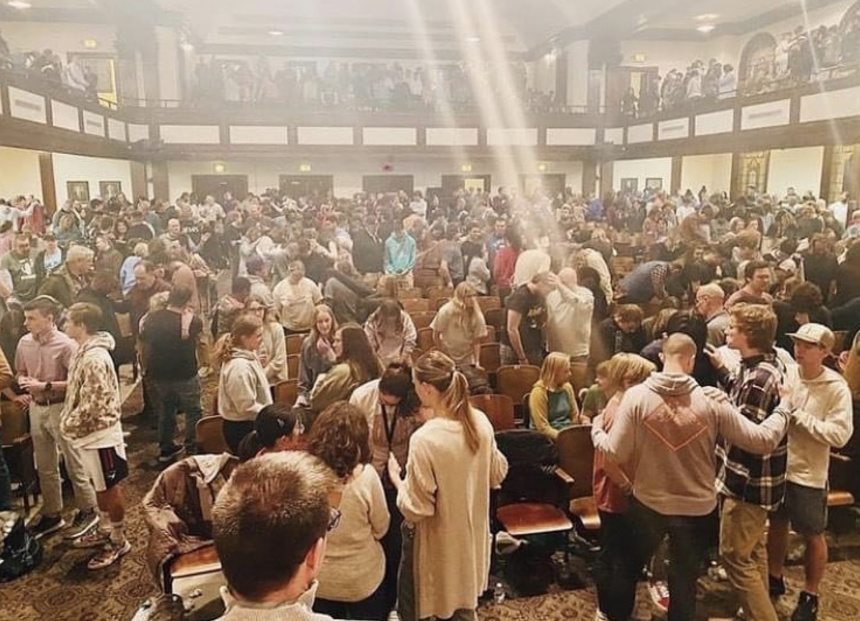
The beginnings of another Christian New Awakening … at Asbury University?
The Afghan catastrophe (August 2021)
First of all, it must be noted that Trump, not Biden, was the one who initiated the idea of a full termination of American involvement in Afghanistan, when in February of 2020 Trump negotiated an American pullout with the Taliban, scheduled for May 1st of 2021 – Trump presuming to be reelected in the coming November elections and thus able to preside over this event.
Bush Jr.’s decision in 2001 to send the US military into Afghanistan after al Qaeda – and then resorting to pro-Western nation-building in that country when nothing came of the anti-al-Qaeda effort – was a terrible idea … on a number of fronts. Billions of dollars would have to be devoted to curbing the Taliban’s power … and building some kind of pro-Western political system in Afghanistan to counter the Taliban. And once the program was put in place, it would take years, even generations, of ongoing American support to lay the cultural groundwork that would give this nation-building effort some degree of sustainability. After all, American troops are still in Germany, Japan, South Korea, Kosovo … serving just such a purpose: protecting the social groundwork laid out by an America that in the mid-20th-century took up major responsibilities as one of the world’s global superpowers.
In short, nation-building is a huge responsibility that should never be undertaken on the basis of a mere political whim. And pulling out abruptly for a mere short-term political gain can have only one result: social catastrophe.
What seems to have inspired Trump to undertake this pullout was that Americans had tired deeply of the country’s involvement in an Afghanistan that seemed to have no further relevance to American politics.
But worse, Trump seemed to have believed that the Taliban would of its own hold to the various conditions (support of an orderly American pullout and certain personal freedoms for the Afghans even after the American departure) of the agreement – and thus began to pull American troops out of Afghanistan, with only 2500 still left in the country as of the end of his presidency … and even those still on schedule for a final pullout in May.
In coming to office as president, Biden took up the same policy … although there were advisors who warned him of the dangers of a full pullout. But Biden assured even the press, which now was awakened to the potential problems involved in a full pullout, that he expected the Taliban to respect the terms of the agreement. However, he simply would not face up to the fact that with the removal of the American troops, America would have no means to enforce the terms of that agreement. So, just a few months into his presidency (April), he announced a full American pullout, to be completed by the end of the coming August.

Biden on April 14 (2021) announcing his intention of pulling out all American military support from Afghanistan as of the end of August
America was therefore invited to watch a disaster that had all the characteristics of a similar American pullout from Vietnam a half-century ago. Not pretty!
With this announcement, political morale of the pro-American Afghan social-political system began to collapse. Indeed, the speed of the Taliban takeover of regions, towns and villages apparently surprised even the Taliban. And as the end-of-August deadline approached, the country’s capital, Kabul, resembled the scene of Saigon when in the mid-1970s Congress terminated American support of the South Vietnamese society and government. It was a horrible scene of people grabbing onto airplanes as they began their takeoff from the country.

Panic sets in as Biden’s August pullout date approaches


Horrible panic on the part of Afghans who had hoped to be able to escape a Taliban-controlled Afghanistan
However, by the end of the month thousands of people, locals as well as American citizens, were brought out of the country.

Some refugees made it all the way to Dulles Airport in DC
Yet shamefully, with the last American soldier pulled out, large amounts of military equipment remained left behind (supposedly dismantled … but also quite able to be repaired by clever hands).

Taliban leader Anas Haqqani surveying some of the military equipment the Taliban has inherited

Taliban who have taken control of the Afghan President’s Office – August 2021
And by no means were all the people who would certainly be hunted down by the Taliban airlifted out of the country … likely including some Americans still remaining in the country.
All in all, it was a grand American disaster. And China had to be loving to watch America sneak off from a serious global responsibility … quick to bring notice to the rest of the world that it would be wise not to put trust in America’s promise of great-power protection. And indeed, America was not looking at all like a great power at that point.
Did the president(s) of the United States not understand any of this dynamic? What did they think they were achieving from this tactical retreat? Was there some hidden strategic advantage to be gained that would compensate for the obvious political loss from this move? If so, it would remain a mystery.
And again, China had to be loving all of this!
Russia attacks Ukraine
A conflict between Russia and Ukraine had been going on for quite some time, Putin refusing to recognize Ukraine as an independent nation … and supporting Russian-speaking separatists bent on splitting off the Russian-speaking portion of Eastern Ukraine (principally the Donetsk and Luhansk oblasts) as either independent countries – or even as lands rejoined to Russia. But Ukraine would have none of that and had sent troops to counter the separatists … and the Putin support they were getting. Thus in the period 2017-2019, it appeared that things had settled back under Ukrainian authority. But the conflict continued … at least on a small scale.
Then in February of 2022, Russian troops invaded Ukraine … as Putin explained, to “de-nazify” Ukraine. At the same time, Russian missiles hit hard Ukraine’s capital Kyiv (and other sites).

February 24, 2022 – The Russians invade Ukraine … after a deep buildup of Russian forces along the Ukrainian border, Putin claimed that by doing so, he was “de-Nazifying” Ukraine


Russian tanks invading Ukraine
In general, the world reacted strongly against Russia, the United Nations General Assembly (not the Security Council where Russia had a veto) demanding that Russia withdraw immediately from Ukraine. The International Court of Justice responded in a like manner … even eventually (2023) issuing an arrest warrant for Putin. But most importantly, Biden, joined by Canada and the European Community, moved quickly to put economic sanctions in place against Russia … and ultimately to start shipping military items to Ukraine. But notably, most Third World countries did not join the sanctions. But neither did Serbia and NATO member Turkey … nor did China or India.
But most surprising was Ukraine’s ability not to collapse under the Russian assault … but to fight back boldly – thanks to the leadership the country had under its president, Volodymyr Zelensky. With Ukraine not collapsing as Putin had hoped, the Russians were ultimately forced to pull back troops in the Ukrainian north … although they held their ground in the Russian-speaking territories of eastern Ukraine.

Russian tanks destroyed by the Ukrainians – February 2022
Ukrainian President Volodymyr Zelensky shows no sign of surrendering to the invading Russians

Zelensky addressing the Ukrainian people

Zelensky out among his troops

Contrast: A leader (Zelensky – above) versus a dictator (Putin – below)
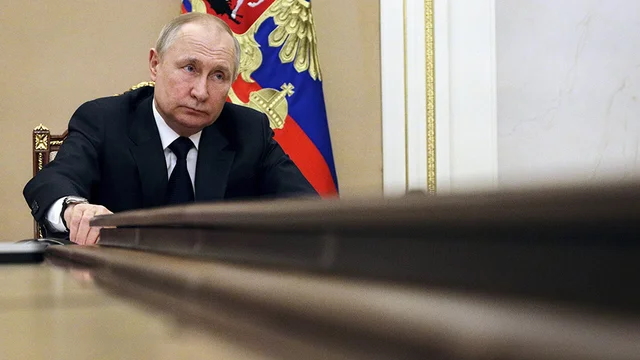
Putin discussing nuclear options over Ukraine with his far-off cabinet
Meanwhile, the killing and wounding of Ukrainians (and Russian soldiers) continued as the war dragged on, as of mid-2023 some 16 million Ukrainians being forced to flee their homes … half of those leaving the country as refugees.

The Kharkiv subway station as a refuge from Russian bombing

Ukrainians fleeing the battle zones – February 2022
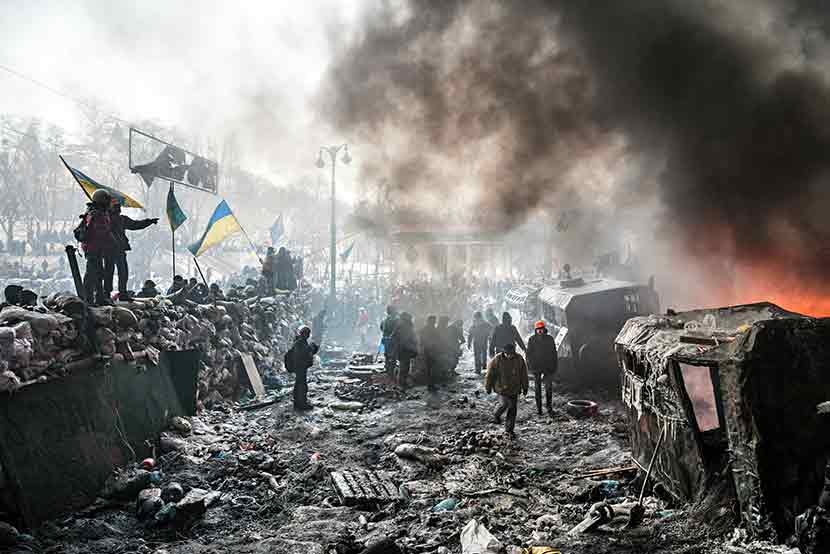
But … Ukraine slowly being destroy by Russian invaders – March 2022

The Ukrainian city of Mariupol is slowly being destroyed by the Russians – March 2022

The Kharkiv city hall after a Russian attack

And the damage Russia continues to inflict on Ukraine only mounts (mid-2023)
And Biden (and his European allies) continued to send military items in vast numbers (ammunition, missiles, tanks, helicopters, planes) to help Zelensky … at least to hold the line (advancing against the Russian position in eastern Ukraine was just not possible). And that’s where things stood, all the way to the end of Biden’s four years in office.
Israel and Hamas go at each other
In early October of 2023, without any warning, the Palestinian political organization Hamas, sent battalions of its militants from Palestine’s Gaza Strip into southern Israel, killing some 1,400 civilians … and abducting 251 people as hostages. And they took pictures to impress the world with their well-intended cruelty.

Some of the 5000 Hamas troops involved in the invasion of Israel and the taking of 251 Israeli hostages … and the killing of 1200 other Israelis – October 7, 2023

October 2023 – honoring Israelis taken hostage or killed by Hamas when they attacked Israeli communities, military bases and a music festival
BBC
But what it was that Hamas thought it could ultimately achieve in all this remains a mystery. Israeli Prime Minister Benjamin Netanyahu was not going to be intimidated … but in fact rise to the occasion as an even stronger leader – morally self-authorized to strike back deeply at Hamas, and the Palestinians supporting that organization. Basically that was considered by Netanyahu to be the entire population of Gaza.
Thus the Israeli response was even more destructive – grandly more destructive – than what Hamas had just carried off. Nothing was exempt from Israeli bombing, not homes, not schools, not hospitals … all justified because Israel claimed that these were also hiding places for Hamas operatives.

Israel strikes back in city after city – October 9, 2023


America quickly split along pro-Israel and pro-Hamas lines. Since the mid-1960s, American support had gone most unquestionably to Israel, in its many conflicts with its Arab neighbors. But sympathy had been recently growing in favor of the Palestinians … because it was increasingly understood that the Palestinians (Christians as well as Muslims) had been treated rather cruelly by the Jews who moved massively from Europe to Palestine at the end of World War Two … and had continued to expand their population (despite repeated agreements to limit that expansion) ever deeper into the lands that the Palestinians had formerly (since ancient times) inhabited.
Most interesting, conservative (or “evangelical”) Christians felt that it was their duty to support Israel … having little actual understanding of how that very support had been responsible for shutting down the Gospel Light in the Holy Lands when Jews drove Christian Palestinians from their towns and homes. And also most interestingly, it was now younger, more Liberal Americans determined to finally bring support to the Palestinians … those suffering massive destruction of their world by Israeli bombardment and other military action.
And Biden tended to play something of a middle man, even immediately flying to Israel to try to work out some kind of settlement between the warring parties (although mostly he seemed to be supporting Israel). But nothing came of that effort. Indeed, ultimately, America had no serious role to play in this grand tragedy … a tragedy that continues (like the Ukraine crisis) to drag on.