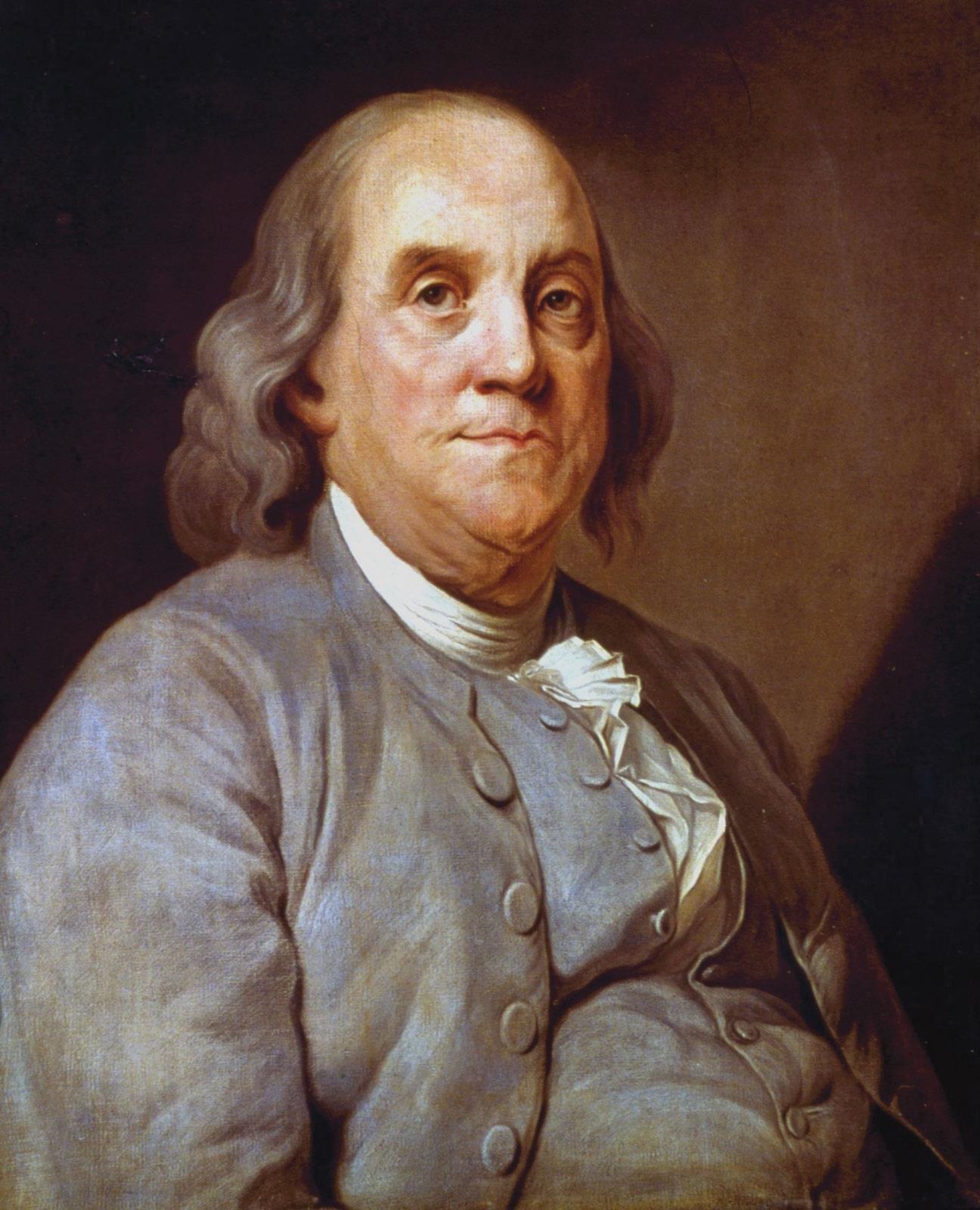
“A Republic … if you can keep it. ” Those were the famous words of Ben Franklin in response to the question posed to him at the end of the quite closed 1787 Constitutional Convention … called – as everyone knew quite well – to construct a political system designed to continue the unity of the 13 newly independent American states now that the war with Britain had passed.
A “republic” … drawn from the Latin res publica or “thing of the people.” Okay. That was hardly surprising, because in one way or another the American states had largely been governed not by some king, royal bureaucracy, or privileged aristocracy but by the people themselves, through their regularly elected (though frequently reelected) representatives.
But … “if you can keep it.” What did he mean by that? Although his questioners were probably well aware of the fact that societies rise and fall in history, they were probably not as well informed as the highly educated Franklin about how that process actually works. No doubt Franklin was well aware of classical philosophy, such as the writings of the ancient Greek Aristotle, who made it very clear that societies thrive solely on the moral foundations that direct the thoughts and actions of any people … regardless of how their society is shaped politically, whether governed by a single individual, a small group of people, or the people themselves. And like Aristotle, Franklin was well aware of Greece’s downfall because those moral foundations got played with by ambitious politicians. And he certainly was personally aware of how easily America’s own moral foundations could be manipulated into full confusion by similarly ambitious American politicians. So, a successful republic depended heavily on the durability of its moral foundations … ones not to be messed with by clever politicians.
But why should Franklin have any doubts? Were not Americans exemplary moral creatures? Look … he just went through a hot summer locked in conference with a group of politicians − mostly lawyers − who argued most cleverly and almost constantly as they defended their own states’ particular interests in how this unity system should actually turn out. The arguing became so bad that Franklin himself had to rise to the occasion and remind them of the higher moral obligations that they should be serving. And he was very precise in mentioning that those came from God alone, through prayer and spiritual consultation, using Biblical text to make his point. He reminded them that in the dark days of the recent war with England, the American leaders had every day looked to God in prayer to direct them. If now they thought themselves better able than divine guidance to build this new political system … they ought not to expect much of worth to result. After all, weren’t they tiring of this endless round of rational argument?
How do you think Franklin would feel if he could see what the American Republic has become today? Our news media has become politically and morally partisan 24-7 entertainment, quite aware that its high audience ratings depend on keeping social tensions high. Congress achieves nothing but deepening this moral division. The Supreme Court has moved to fill in the national law-making gap resulting from Congressional deadlock. But even it too has become deeply divided ideologically.
Noone seems concerned about the mounting wealth gap between America’s richest 1% − owning possibly almost a third of America’s total wealth − and the rest of society, especially those situated in the lower 50% of the rank in wealth − owning collectively possibly as little as only 2 to 3% of the nation’s wealth. We’ve been there before, in the late 1800s, with the rise of the Industrial Revolution. But anti-trust legislation at the beginning of the 1900s served to get things moving back to a more equitable distribution of the nation’s wealth. But today, we seem to find little interest on the part of those in higher office in doing anything about this renewed problem. The Republic’s moral system seems to have fallen asleep.
We have to be very careful at this point that a worsening moral situation does not become even worse. We have been through total moral breakdown before … namely the vicious Civil War that tore this nation apart in the mid-1800s when we found that debating the slavery issue merely drove the contending parties (North vs. South) into ever-deeper moral rivalry. Failing to look together to a higher moral authority, it took war to resolve the issue … though it would take the South another full century to get over the racial legacy that slavery produced.
So … what are we going to do to get America back on stronger, higher moral grounds … so that our ideological adversities do not drive us into deeper contention? Like Ben Franklin advised his fellow Constitutional Founding Fathers … we need to look beyond our self-serving, and most cleverly presented, ideological views … and put ourselves once again before God. He and he alone is bigger than our clever reasoning. He and he alone knows what America needs to do at this point. So … it is time to bring our nation back to serious prayer and spiritual consultation … back to our great Christian legacy.
Miles Hodges is a writer, historian and political analyst who explores the question of why societies behave as they do … especially in this matter of their rise and fall.